

Top 11 ChartHop Alternatives for People Analytics and Compensation Planning
Explore ChartHop alternatives for people analytics & compensation planning for CFOs and HR teams managing pay bands, merit cycles, equity, and headcount plans.
By 2026, workforce decisions in U.S. growth-stage companies are increasingly shaped by board scrutiny, investor expectations, and stricter pay transparency regulations. Compensation planning, headcount modeling, and people analytics now sit at the intersection of finance, legal, and talent strategy. For CFOs and People Ops leaders managing rapid scale, the ability to explain why pay decisions were made is just as important as executing them.
While ChartHop popularized org visualization and people data modeling, growth-stage companies in SaaS, fintech, e-commerce, and professional services often require deeper compensation workflows, tighter budget controls, and clearer executive-level forecasting. As a result, demand for ChartHop alternatives for people analytics & compensation planning has increased, especially for platforms that unify compensation cycles, headcount forecasting, and DEI reporting without adding operational complexity.
In this article, we’ll examine what ChartHop offers, the essential features finance and HR leaders should evaluate in alternatives, and the top platforms purpose-built for people analytics and compensation planning at scale.
Key Takeaways
- ChartHop alternatives increasingly serve CFO-led governance, along with HR visualization.
- Compensation planning and people analytics must connect directly to budget and burn models.
- Pay equity, auditability, and regulatory readiness are now table stakes.
- Manager collaboration and workflow automation reduce cycle time and risk.
- The best platforms unify HR, Finance, and recruiting decisions in one data model.
What Is ChartHop?
ChartHop is a people analytics and workforce planning platform designed to centralize employee data, org structures, and compensation insights in one visual layer. It connects HRIS, payroll, and finance systems to provide real-time visibility into headcount, pay distribution, and organizational changes.
For CFOs, FP&A leaders, and People Ops teams, ChartHop is commonly used for org charting, compensation analysis, and scenario modeling. However, as organizations scale, many outgrow their compensation execution depth, workflow control, or budget governance capabilities, leading teams to explore more specialized alternatives.
Now, let’s explore what specific features you should prioritize when searching for an alternative.
8 Features to Look for in a ChartHop Alternative
When evaluating tools beyond ChartHop, U.S. CFOs, FP&A leaders, and People Ops teams should focus on capabilities that support both strategic workforce planning and compensation governance across merit cycles, headcount forecasts, and financial plans. Key features include:
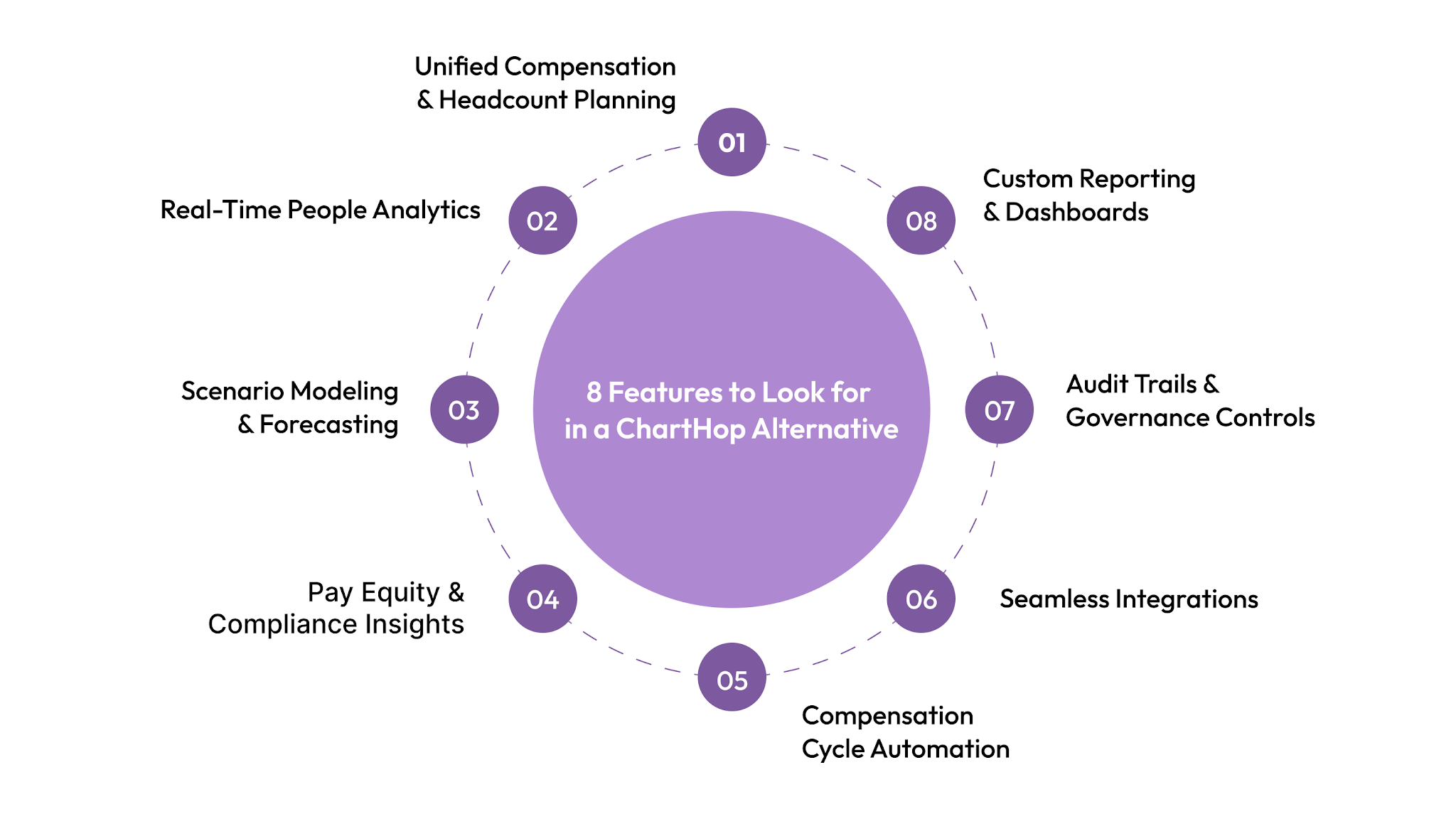
1. Unified Compensation & Headcount Planning: The platform should integrate pay bands, merit cycles, bonus budgets, and equity adjustments with headcount forecasting to provide a single source of truth for workforce spend.
2. Real-Time People Analytics: Access dashboards that show live headcount, compensation distribution, turnover risk, and labor cost variances to support executive decision-making and burn analysis.
3. Scenario Modeling & Forecasting: Tools must allow simulation of hiring plans, salary changes, and promotion strategies to evaluate financial impact against budget and runway.
4. Pay Equity & Compliance Insights: Built-in analysis should highlight pay gaps by gender, race, or location, with compliance checks for U.S. regulations such as the Equal Pay Act, FLSA, and state-level pay transparency laws.
5. Compensation Cycle Automation: Automated workflows for approvals, raises, and bonuses reduce cycle times and prevent manual spreadsheet errors that compromise forecast accuracy.
6. Seamless Integrations: Secure APIs to sync with HRIS, payroll, ERP, and ATS systems eliminate data silos and ensure up-to-date workforce information for cross-functional teams.
7. Audit Trails & Governance Controls: The platform should log decisions, rationales, and approvals to support internal and external audits and defend compensation decisions with documented evidence.
8. Custom Reporting & Dashboards: CFOs and HR leaders need flexible report builders that extract key metrics for board reviews, DEI compliance, and compensation strategy presentations.
Also Read: How Employee Disengagement Impacts Attrition Rates
Once you’ve identified the right features, let’s look into the key benefits of switching to an alternative for enhanced people analytics and compensation planning.
7 Benefits of Using ChartHop Alternatives for People Analytics
For U.S. mid-sized and growth-stage organizations, moving beyond ChartHop can achieve meaningful strategic advantages in compensation governance, workforce cost predictability, and cross-functional alignment. Key benefits include:
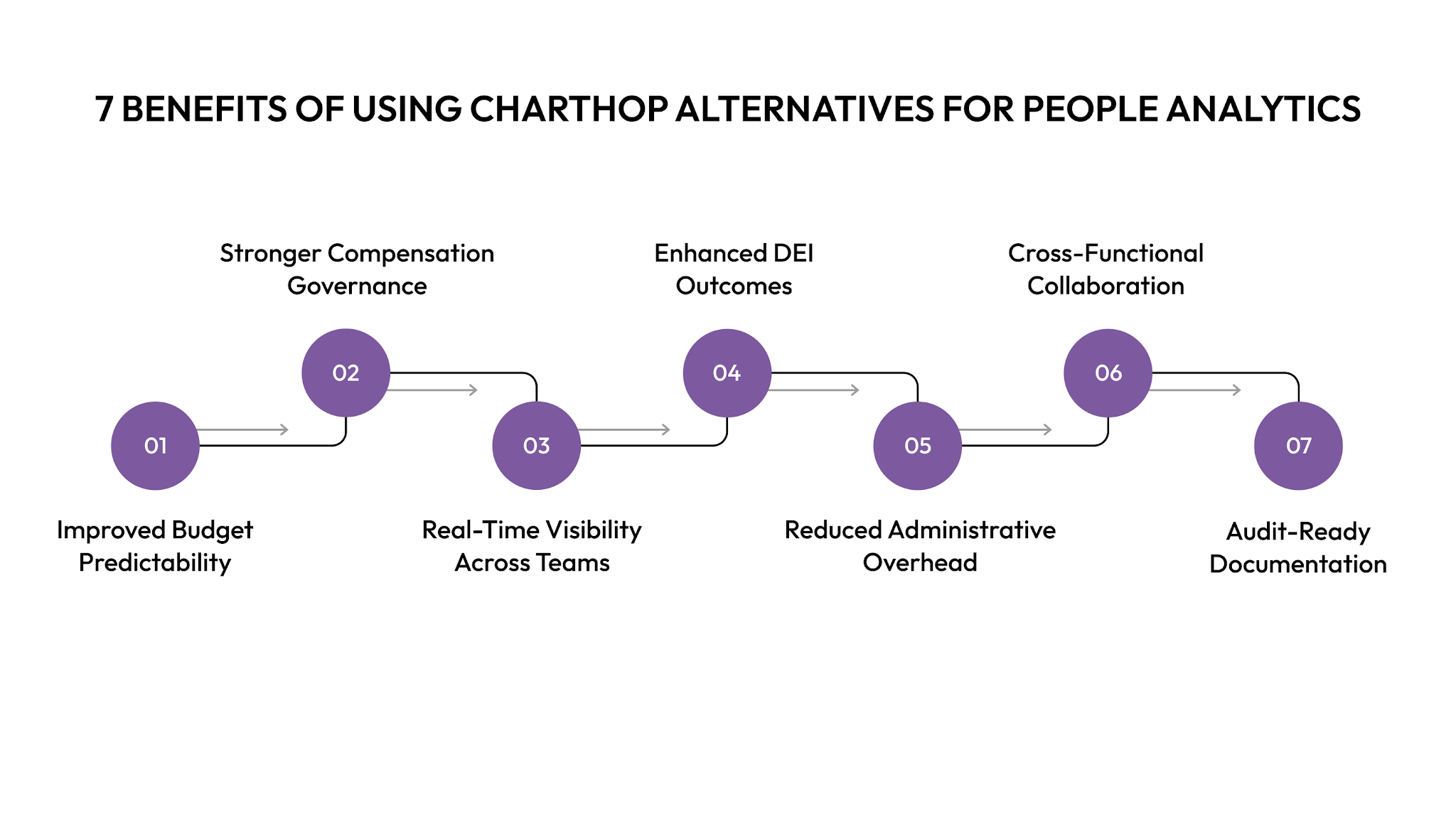
- Improved Budget Predictability: Alternatives with headcount forecasting and scenario modeling allow CFOs and FP&A teams to project total workforce spend, assess the impact of merit cycles, and align pay decisions with quarterly and annual financial plans.
- Stronger Compensation Governance: Platforms with automated workflows, approval hierarchies, and documented rationales help enforce pay policies, maintain defensible merit decisions, and support compliance with U.S. labor laws, including the Equal Pay Act and state pay transparency mandates.
- Real-Time Visibility Across Teams: Finance, HR, and People Ops gain access to live dashboards showing pay band distributions, turnover risk, and budget utilization, facilitating faster, data-driven decisions and responsive planning.
- Enhanced DEI Outcomes: Tools with built-in pay equity analytics help HRBPs and People Ops teams identify and close gaps across gender, race, and location, supporting organizational DEI goals and reducing legal exposure.
- Reduced Administrative Overhead: Automating compensation cycle tasks eliminates manual spreadsheet work, mitigates errors, and accelerates merit and bonus reviews, freeing HR and Finance to focus on strategic priorities.
- Cross-Functional Collaboration: With seamless integrations to HRIS, payroll, ERP, and ATS systems, these alternatives enable real-time data sharing between HR, Finance, and recruiting, reducing silos and increasing planning accuracy.
- Audit-Ready Documentation: Comprehensive logs of approvals, scorecards, and compensation rationale support internal audits and defend compensation decisions during external reviews or compliance assessments.
Also Read: How to Create an Effective Merit Matrix
Now, it’s time to explore the top ChartHop alternatives that can provide the solutions you need.
Top 11 ChartHop Alternatives for People Analytics and Compensation Planning
As organizations reassess how they manage workforce data, compensation decisions, and headcount risk in 2026, many are looking beyond ChartHop for more specialized or cost-efficient platforms. The tools below address distinct people analytics and compensation planning needs across mid-market and scaling teams.
1. CandorIQ
CandorIQ is a unified compensation and headcount planning platform built for U.S. mid-market and fast-scaling organizations where HR, Finance, and leadership need tight alignment on pay decisions and workforce costs. The platform replaces spreadsheets and disconnected tools by bringing compensation structure design, annual and off-cycle reviews, offer management, and headcount forecasting into one governed system.
With real-time collaboration, geo-adjusted compensation support, and clear approval workflows, CandorIQ helps companies maintain pay equity, budget discipline, and transparency as they scale distributed teams.
Key Strengths
- Compensation & Payband Builder defines pay bands by level, location, and department; applies location-based adjustments, visualizes pay distribution, and maintains version-controlled audit trails.
- Compensation Cycle automates merit and bonus reviews with approval logic, real-time budget tracking, collaboration comments, and Slack or email notifications.
- Candidate Offers presents total compensation clearly across salary, equity, bonus, and benefits, with growth projections and built-in FAQs to reduce back-and-forth.
- Headcount Scenario Planning models future org structures, compares multiple hiring scenarios, and assesses financial impact before committing to spend.
- Headcount Requests & Approvals standardizes new hire requests with embedded budgets and approval routing and syncs to ATS and finance systems.
- Workforce Management tracks open roles, filled seats, attrition, promotions, and actuals vs plan through role-based dashboards.
- AI Agent generates compensation recommendations, forecasts workforce impact, and analyzes gaps using natural language queries with analyst-level precision.
CandorIQ vs ChartHop
Pricing
CandorIQ uses custom, quote-based pricing depending on employee count and modules selected. It is designed for mid-market and growth-stage companies (50–5,000 employees) that need structured compensation and headcount governance without enterprise complexity. Request a quote.
2. Visier
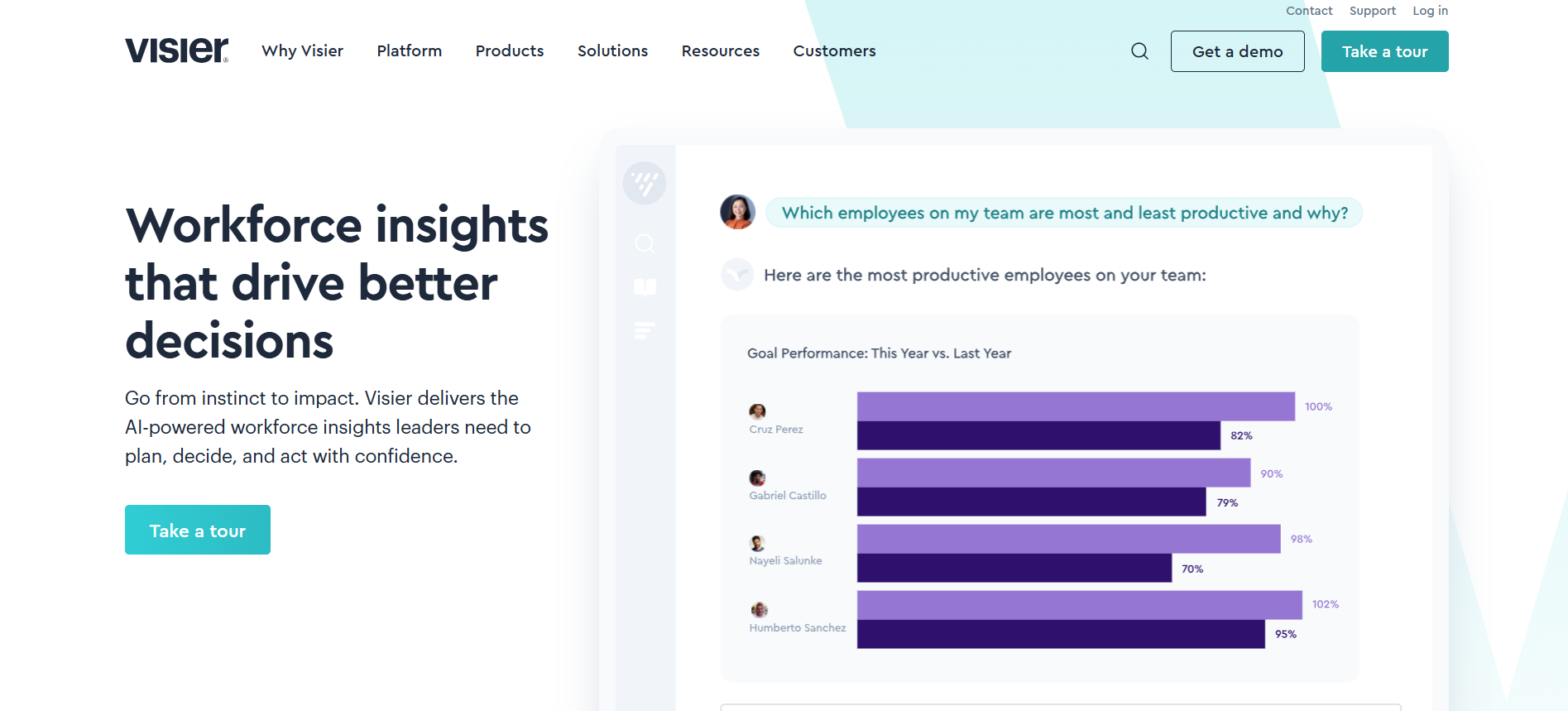
Visier is an advanced people analytics platform built for organizations that need deep, predictive insights into workforce trends, headcount dynamics, and labor cost drivers. It’s widely used by mid-sized to enterprise companies with complex workforces, including hourly-heavy environments. For CFOs and FP&A leaders, Visier excels at surfacing risk signals around attrition, overtime, absenteeism, and productivity, before they impact budgets.
Key Strengths
- Predictive analytics for attrition, overtime risk, and workforce safety
- 2,000+ pre-built people analytics questions based on real-world benchmarks
- Headcount planning and workforce cost modeling
- DEI, absenteeism, and overtime compliance tracking
- Open data hub unifying HR, payroll, and recruiting data
Visier vs ChartHop
Pricing
Visier follows a custom pricing model based on organization size and use case.
3. Lattice
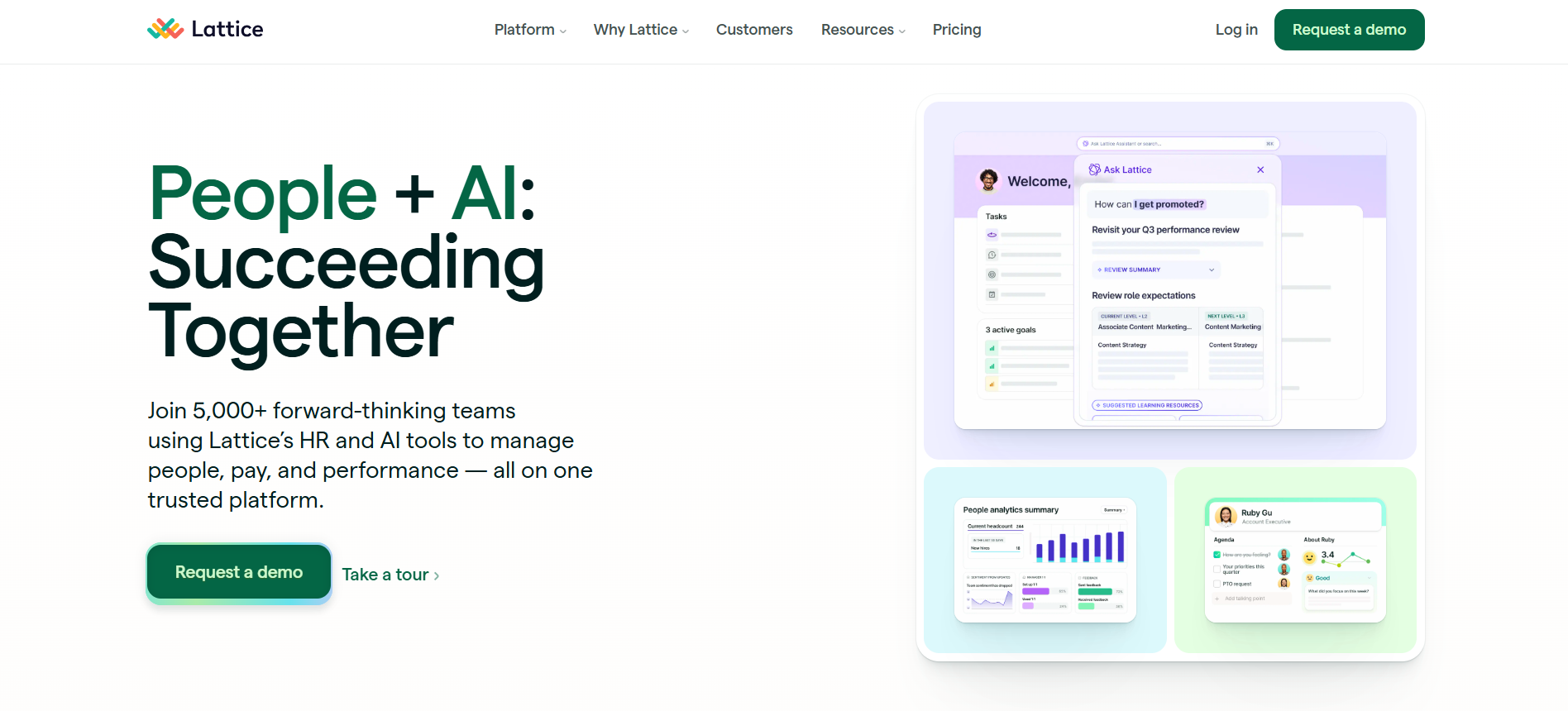
Lattice is a people management platform designed to tightly connect performance management, engagement, and compensation decisions. It’s especially well-suited for growth-stage U.S. companies where HRBPs and managers play an active role in merit cycles and promotion decisions. Unlike ChartHop’s data-heavy approach, Lattice emphasizes manager enablement and structured decision-making tied to performance outcomes.
Key Strengths
- Performance reviews tightly linked to compensation decisions
- AI-driven insights from feedback, engagement, and reviews
- Customizable review, calibration, and merit workflows
- Compensation planning module for raises and promotions
- Strong manager and employee experience
Lattice vs ChartHop
Pricing
Lattice pricing is modular:
- Grow (Performance & Engagement): $4/user/month
- Compensation Module: $6/user/month
Pricing scales based on selected modules and team size.
4. Deel
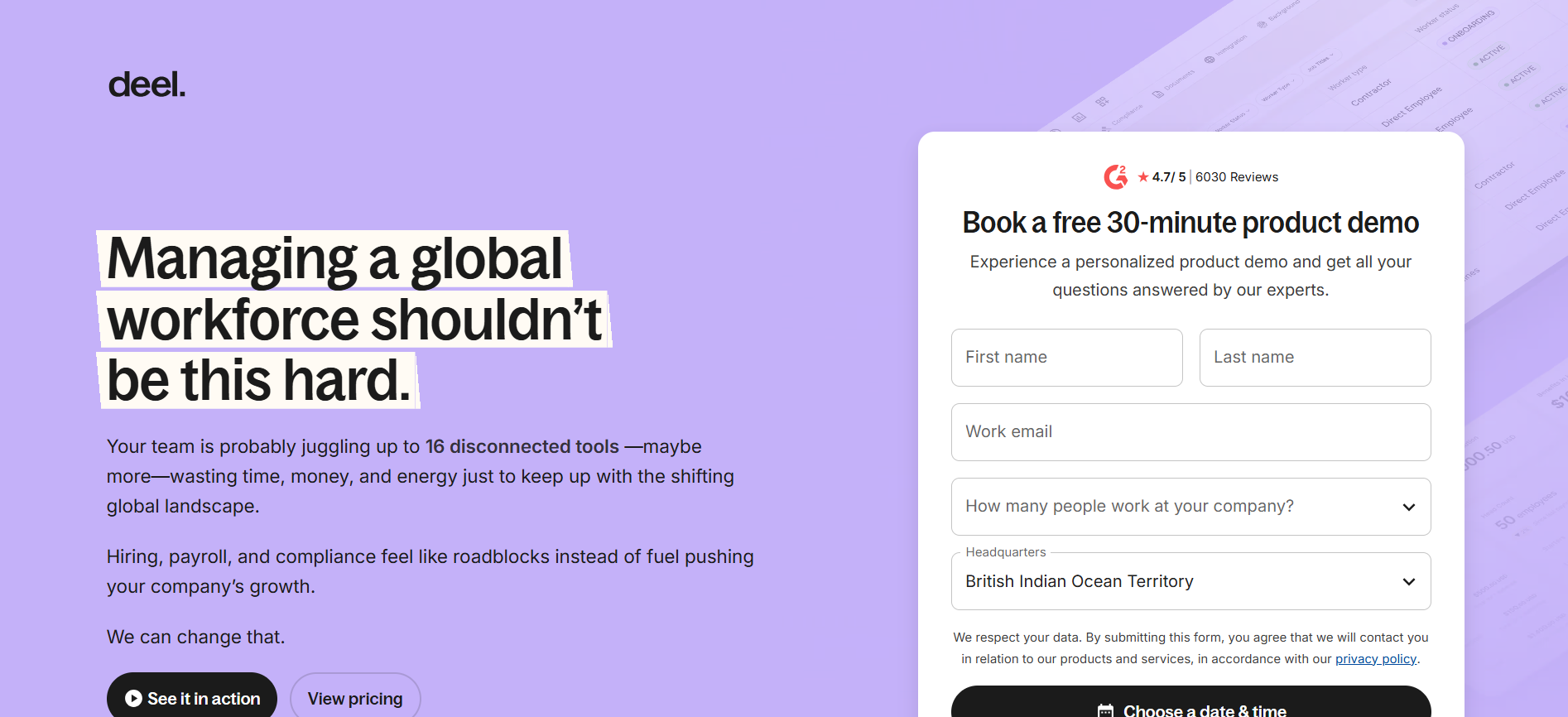
Deel is a global HR and workforce management platform built for U.S.-based companies managing distributed employees and contractors across 150+ countries. While not a pure people analytics tool like ChartHop, Deel is highly effective for CFOs and People Ops teams that need real-time visibility into global headcount, payroll costs, and compliance exposure across jurisdictions.
Key Strengths
- Global payroll, contractor, and Employer of Record (EOR) management
- Real-time headcount and workforce cost visibility across countries
- Predictive and prescriptive analytics for turnover and hiring efficiency
- Built-in compliance support for local labor, tax, and employment laws
- Strong data privacy, security, and audit controls
Deel vs ChartHop
Pricing
- Contractors: Starting at $29/contractor/month
- Employer of Record (EOR): $599/employee/month (annual)
- Global payroll (own entity): Custom pricing
Pricing varies by country and service type.
5. Paylocity
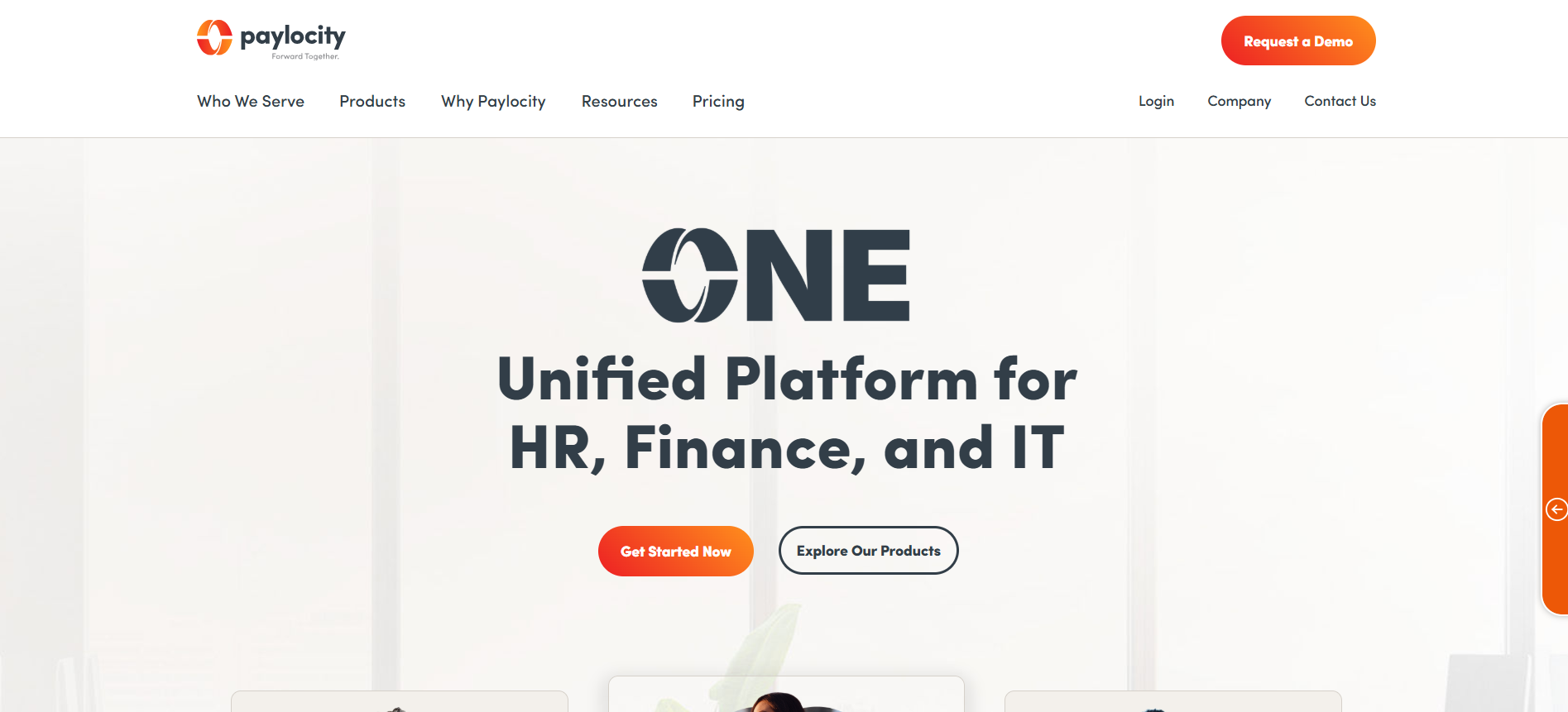
Paylocity is a U.S.-focused HCM platform that combines HR, payroll, and people analytics into a unified system for mid-sized organizations. It’s particularly strong for CFOs and HR leaders who want actionable insights, beyond dashboards, around labor costs, attrition risk, and DEI outcomes tied directly to compensation and workforce planning decisions.
Key Strengths
- AI-powered workforce analytics and predictive modeling
- Modern Workforce Index (MWI) for attrition, labor cost, and DEIA insights
- Compensation modeling and workforce planning tools
- Integrated payroll, benefits, and compliance automation
- Manager-friendly dashboards with guided recommendations
Paylocity vs ChartHop
Pricing
Paylocity uses custom pricing based on employee count and selected modules.
6. Teramind
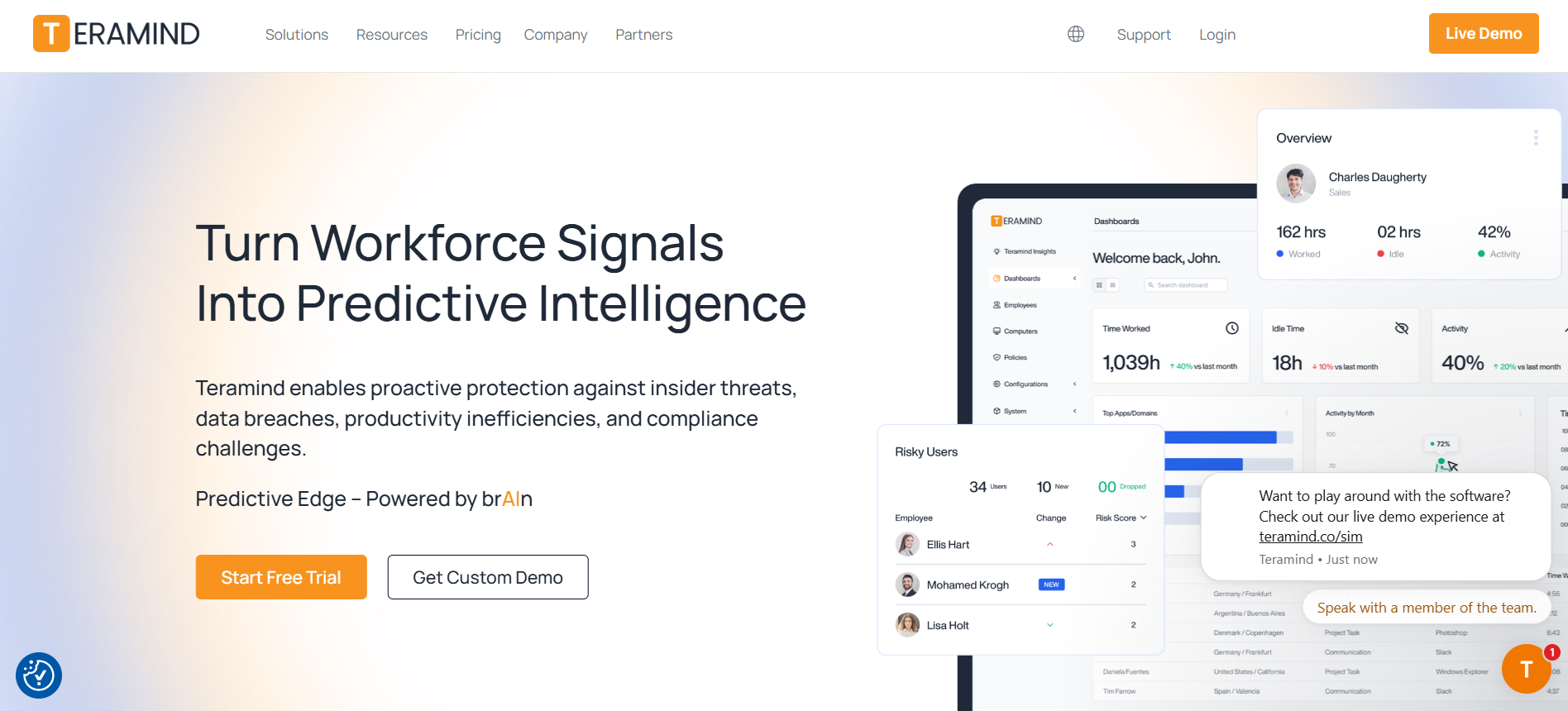
Teramind is not a traditional people analytics or compensation planning platform, but it plays a complementary role for U.S. mid-sized organizations focused on productivity risk, compliance, and insider behavior. CFOs and People Ops leaders use Teramind to understand how work actually happens, which can inform workforce efficiency, role design, and operational cost controls alongside compensation planning tools.
Key Strengths
- Deep user behavior analytics with session recording and activity tracking
- Advanced data telemetry to identify productivity bottlenecks and resource misuse
- Insider risk detection, data loss prevention (DLP), and compliance monitoring
- Real-time alerts and automated policy enforcement
- Cloud-based or on-premise deployment for regulated environments
Teramind vs ChartHop
Pricing
Teramind pricing varies by deployment model and feature set, with plans typically priced per user per month.
Also Read: Why Compensation Packages Matter to Potential Employees
7. One Model
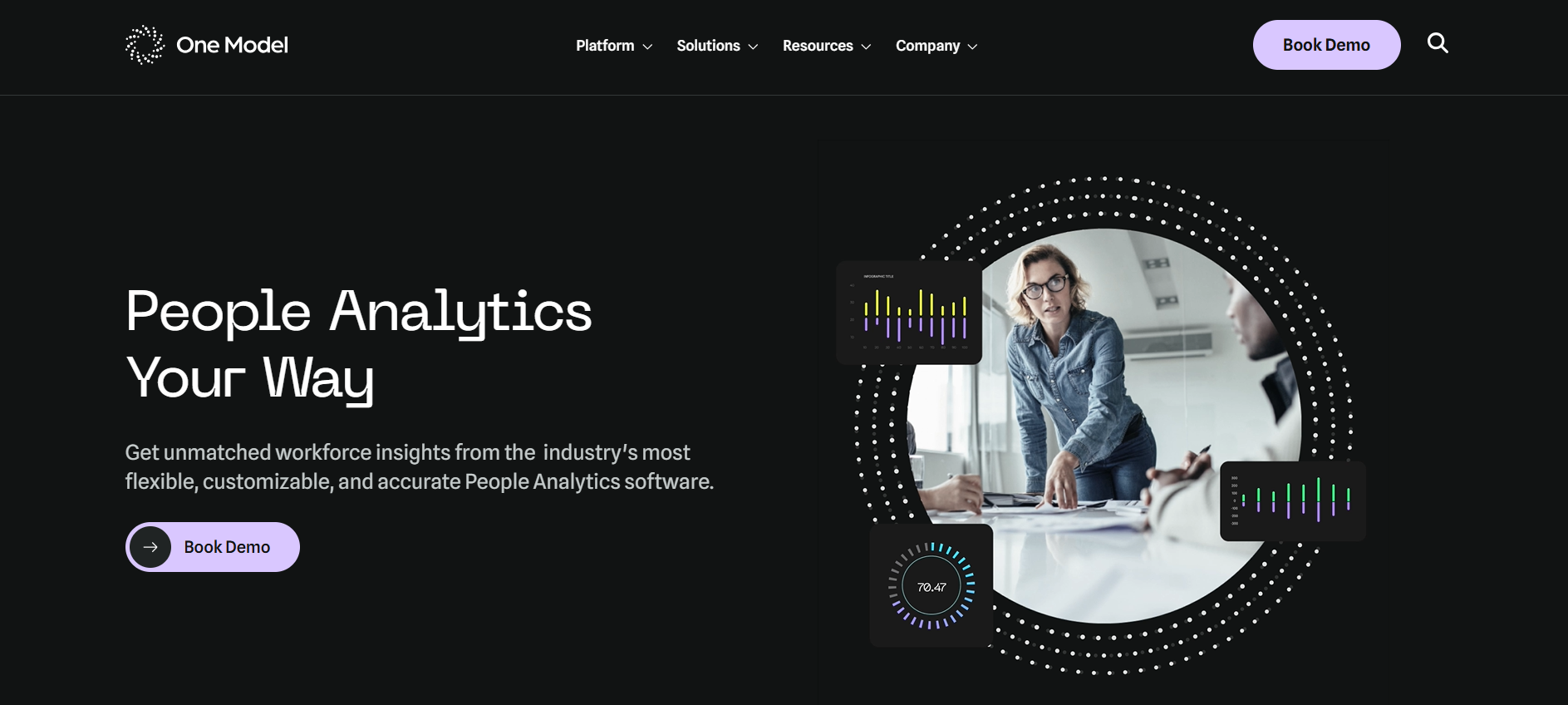
One Model is an enterprise-grade people analytics platform built for organizations that need to unify HR, finance, labor market, and operational data into a single analytics layer. It is well-suited for CFOs, FP&A leaders, and People Analytics teams who require advanced modeling, forecasting, and contextual workforce insights beyond ChartHop’s visualization-first approach.
Key Strengths
- Unlimited workforce contextual data sources across HR, finance, sales, and CX
- Advanced data modeling with pre-defined metrics and analytics frameworks
- AI-powered predictive insights for workforce planning and talent decisions
- Strong collaboration via shared dashboards, alerts, and storyboards
- Scales well for complex, global organizations
One Model vs ChartHop
Pricing
One Model uses custom, enterprise-level pricing based on data volume, integrations, and analytics depth.
8. IntelliHR
IntelliHR is an all-in-one HCM and people analytics platform designed for organizations that want to tightly link employee sentiment, engagement, and retention with workforce decisions. For U.S.-based mid-sized companies facing attrition pressure, IntelliHR helps HRBPs and CFOs understand how compensation, headcount changes, and management actions directly influence employee experience.
Key Strengths
- Built-in eNPS tracking with customizable pulse surveys
- AI-driven sentiment analysis to surface engagement trends early
- Clear, manager-friendly analytics connecting pay and headcount to satisfaction
- Automated workflows for onboarding, retention, and compliance
- Strong reporting templates for executive and board-level visibility
IntelliHR vs ChartHop
Pricing
IntelliHR offers custom pricing based on company size and modules selected. Pricing is typically per employee per month, with quotes provided after a demo.
9. Tableau
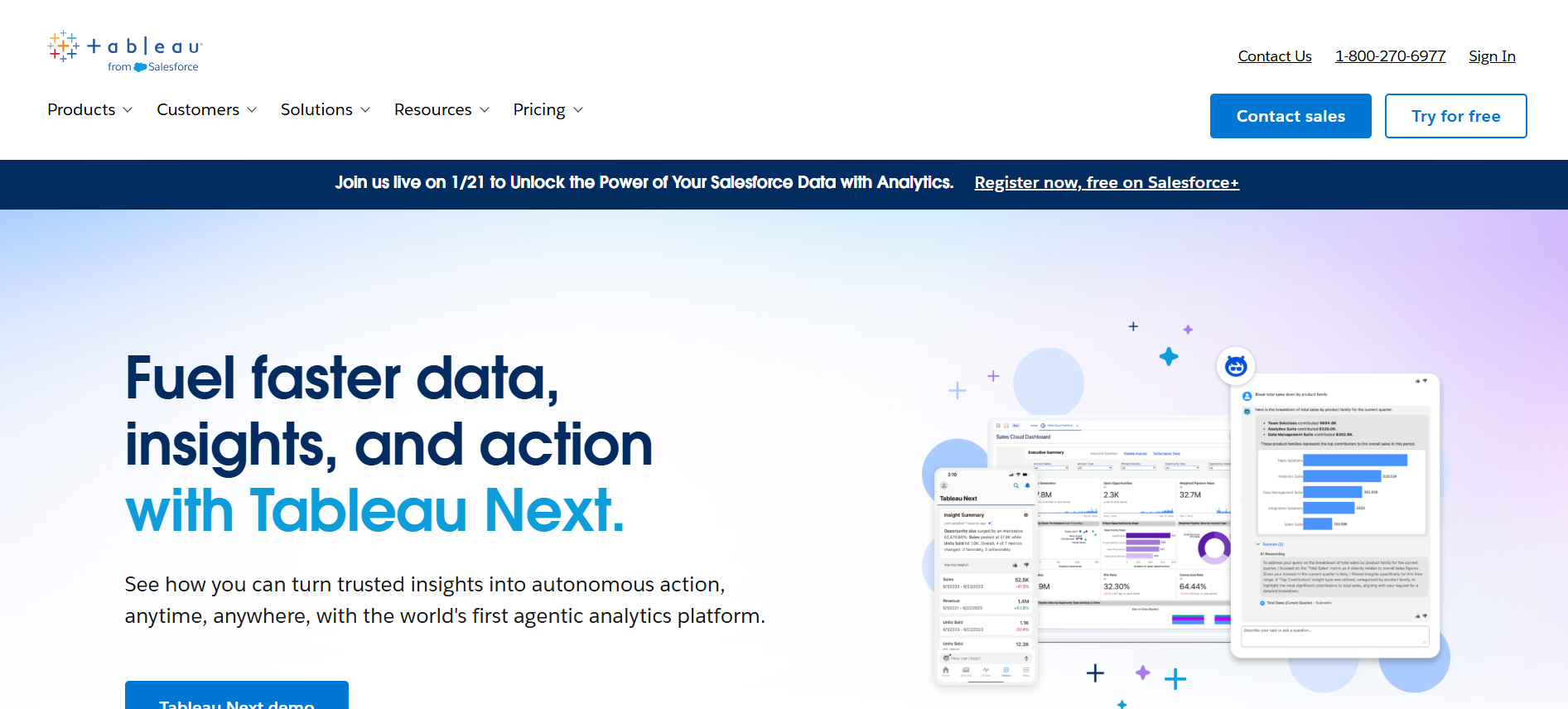
Tableau is a leading data visualization platform used by HR analytics and FP&A teams to turn complex workforce data into executive-ready dashboards. While not a compensation planning system, Tableau is valuable for CFOs and People Analytics teams that need deep, customizable views into headcount, compensation trends, attrition, and DEI metrics across large datasets.
Key Strengths
- Highly customizable dashboards for workforce and compensation data
- Real-time data tracking and anomaly detection
- Strong self-service analytics for HR and finance stakeholders
- Scales well for large, data-heavy organizations
- Flexible slicing of compensation, headcount, and demographic data
Tableau vs ChartHop
Pricing
Tableau pricing starts at approximately $70 per user per month for Creator licenses, with Viewer and Explorer tiers available.
10. Crunchr
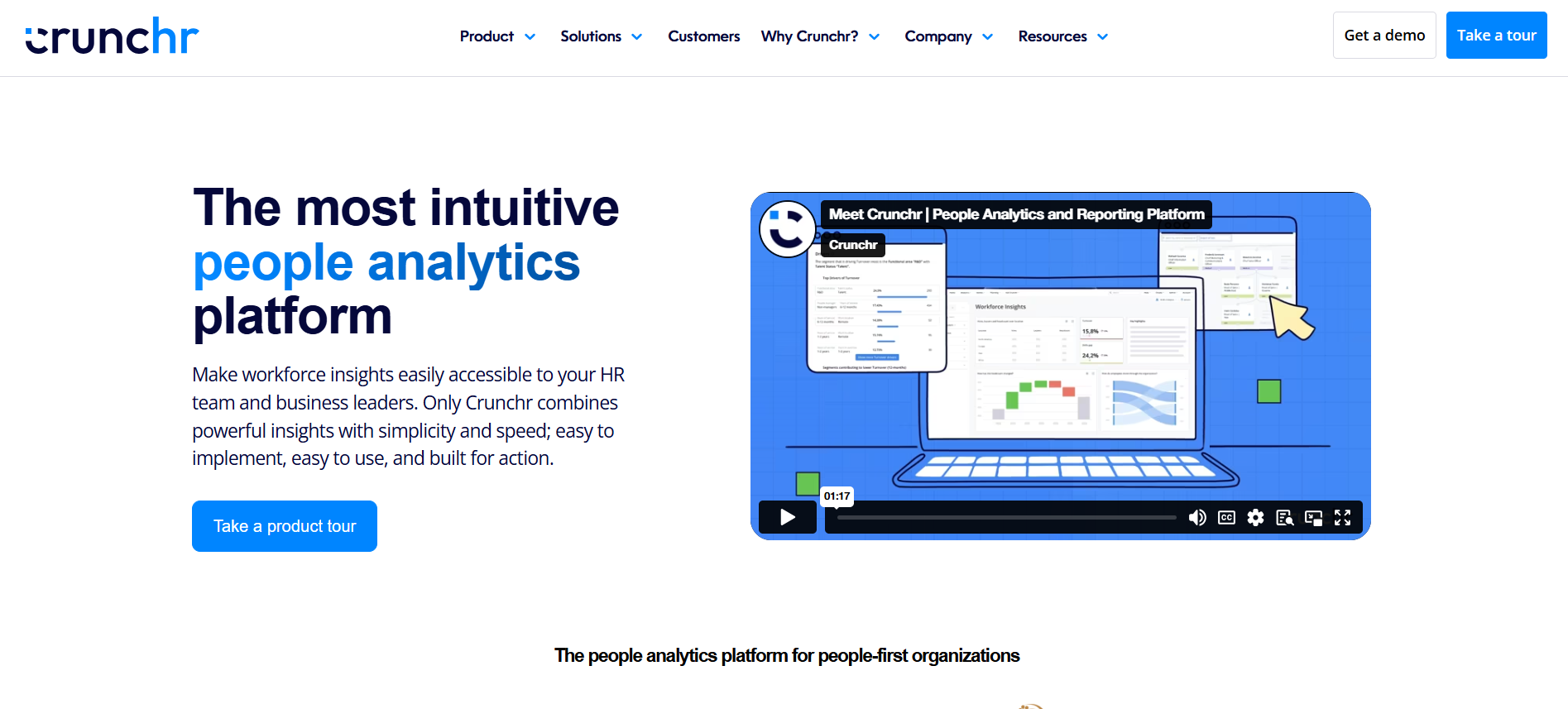
Crunchr is a people analytics platform built to make workforce insights accessible across HR, Finance, and business leaders. For U.S. mid-sized and growth-stage organizations, it helps CFOs and HRBPs translate complex workforce data into clear, decision-ready insights supporting compensation governance, succession planning, and retention strategies.
Key Strengths
- Unified workforce data model combining HRIS, compensation, recruiting, and engagement data
- Advanced dashboards and visualizations for headcount, attrition, and performance trends
- Predictive analytics to forecast workforce risks and outcomes
- Competency and skills analytics for succession and internal mobility planning
- Benchmarking against industry and peer groups
Crunchr vs ChartHop
Pricing
Crunchr does not publish pricing publicly. Licensing is typically annual and based on employee count and analytics modules selected.
11. UKG Pro
UKG Pro is an enterprise-grade HRMS with strong analytics across recruiting, talent management, and workforce operations. It is well-suited for U.S. organizations managing high-volume hiring and complex compliance needs, offering leaders visibility into talent pipelines, labor costs, and workforce productivity.
Key Strengths
- Recruiting and candidate funnel analytics for large hiring volumes
- Workforce management, time, attendance, and compliance tracking
- Business intelligence tools for talent and labor insights
- Customizable dashboards for HR and finance stakeholders
- Mobile access for managers and employees
UKG Pro vs ChartHop
Pricing
UKG Pro uses custom, quote-based pricing depending on employee count, modules, and implementation scope. Costs are typically higher and best suited for mid-to-large enterprises.
Also Read: Proven Job Tier-Based Compensation Method for Fair Pay in 2026
Now that you have options, let’s look at how to select the right alternative tailored to your specific persona and needs.
How to Choose the Right ChartHop Alternative
Choosing a ChartHop alternative requires aligning people analytics and compensation planning capabilities with distinct decision-makers across Finance, HR, and Recruiting. The right platform must support each persona’s responsibilities while maintaining shared governance and data integrity.
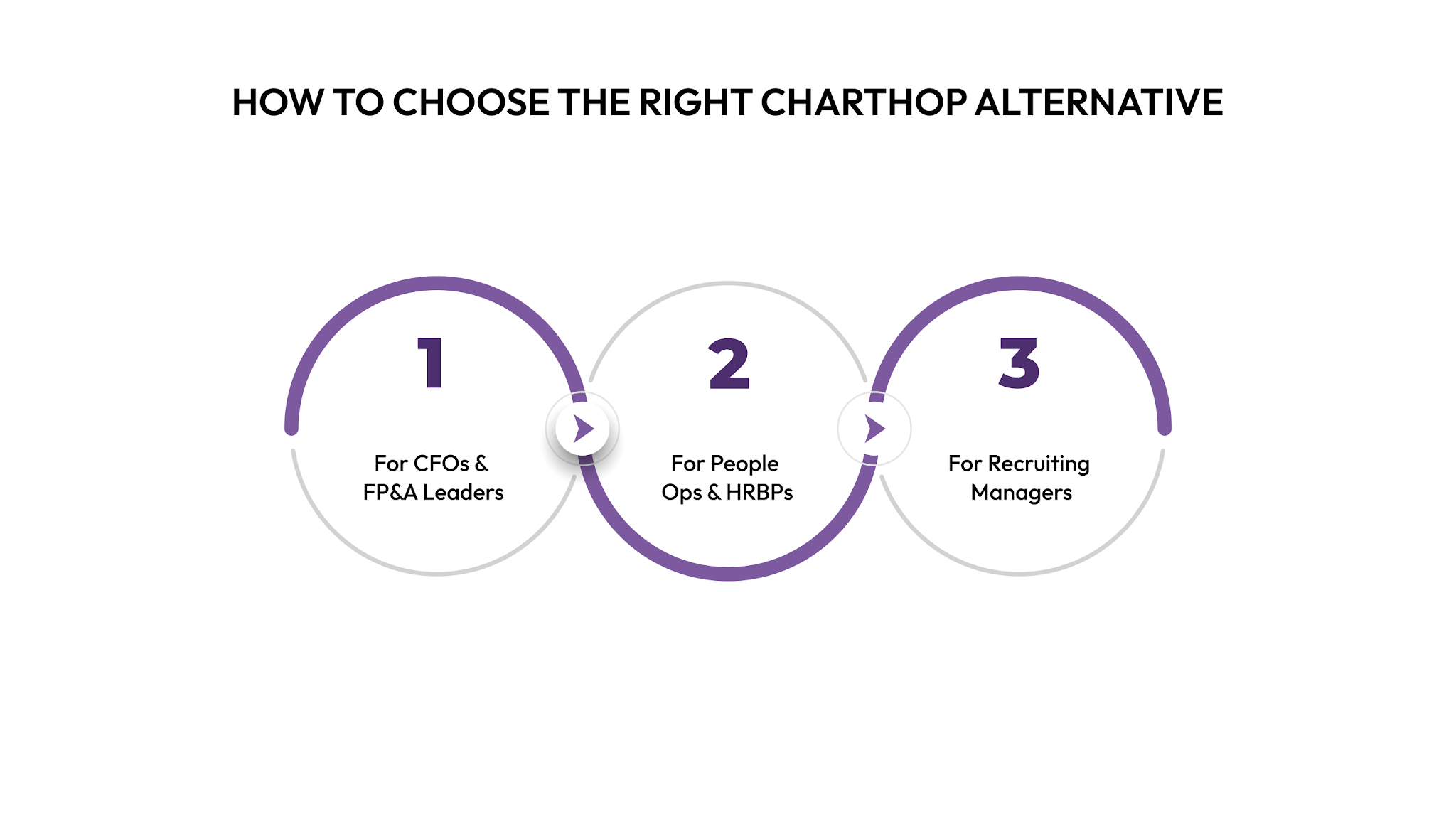
1. For CFOs & FP&A Leaders
Focus on platforms that provide workforce cost predictability and defensible financial governance.
- Look for real-time headcount cost modeling tied to compensation changes, promotions, and attrition
- Prioritize tools with scenario planning, burn-rate forecasting, and audit-ready compensation history
- Ensure support for the Equal Pay Act, FLSA, and state pay transparency reporting to reduce regulatory risk
- Avoid analytics-only tools that lack budget enforcement or compensation-cycle controls
2. For People Ops & HRBPs
Choose solutions that operationalize compensation cycles, in addition to visualizing data.
- Merit and bonus cycle workflows with approvals, manager guidance, and rationale capture
- Pay band versioning by role, level, and geography to maintain internal equity
- Cross-functional visibility so HR, Finance, and leadership work from the same data
- Automation that replaces spreadsheets without increasing admin overhead
3. For Recruiting Managers
Select platforms that connect offers to the approved compensation strategy.
- Guardrails that enforce pay bands during offer creation
- Market benchmarking to justify offers without overpaying
- Visibility into downstream budget impact before extending offers
- Tools that accelerate approvals without bypassing governance
Also Read: Effective Performance Appraisal Examples and Phrases
Discover how CandorIQ enabled Tailscale to launch a global merit cycle in under two weeks with automated compensation planning; read the full case study.
The right ChartHop alternative depends on whether your priority is CFO-grade cost control, HR-led cycle execution, or recruiter-facing offer clarity; choose the platform that aligns directly with your role’s decision ownership.
Conclusion
As compensation planning becomes a finance-led governance function, organizations need more than org charts and dashboards. The best ChartHop alternatives for people analytics & compensation planning provide real-time cost visibility, structured pay governance, and audit-ready workflows that scale with growth.
For CFOs, this means predictable workforce spend and reduced compliance exposure. For HR and recruiting teams, it means faster cycles, clearer guardrails, and stronger alignment with business strategy.
Get a tailored CandorIQ demo to explore a modern alternative to ChartHop with end-to-end compensation planning, forecasting, and pay equity visibility.
.png)
FAQs
1. What should CFOs prioritize when evaluating ChartHop alternatives?
CFOs evaluate platforms on headcount forecasting accuracy, compensation cost modeling, audit trails, and the ability to link people data directly to budget, burn, and equity outcomes.
2. Can ChartHop alternatives support U.S. pay equity and compliance requirements?
Yes, advanced tools support Equal Pay Act analysis, state pay transparency reporting, FLSA classification checks, and defensible audit logs for regulatory reviews and internal investigations.
3. What capabilities matter most for People Ops and HRBPs?
People Ops teams need configurable workflows, compensation cycle automation, manager collaboration, and clean data models that reduce manual reconciliation between HRIS, payroll, and finance systems.
4. How do people analytics tools help recruiting leaders specifically?
Recruiting leaders benefit from integrated offer modeling, market benchmarks, approval routing, and visibility into internal pay bands to prevent offer exceptions and close candidates faster.
5. What ROI should mid-market companies expect from replacing ChartHop?
Mid-market organizations typically see ROI through shorter compensation cycles, fewer equity risks, reduced spreadsheet errors, and faster budget alignment across Finance, HR, and leadership teams.
Ready to modernize your workforce and compensation strategy?
See how CandorIQ brings workforce planning and compensation together with AI.