

Why Compensation Packages Matter to Potential Employees
Discover why total compensation, not just salary, drives attraction, trust, and retention. Learn what modern candidates value most.

For most candidates today, a job offer is more than a paycheck. It is a signal of how much a company values its contribution and a reflection of its culture, stability, and fairness. Salary is still central, but it now shares importance with equity, benefits, time off, and flexibility.
The conversation around pay transparency has also transformed how job seekers interpret offers. A survey of job-seekers found that 91% want to see a salary range in job postings, and over 80% of respondents said that a transparent salary range gives them a more favorable impression of the company. In a competitive hiring market, the way an organization presents its compensation package often determines not just who joins, but who stays.
In this blog, we explore why compensation packages matter more than ever to potential employees, what they truly include, and how HR and Finance can work together to build offers that attract and retain top talent.
Key Takeaways
- Candidates evaluate total compensation, not just salary. Equity, benefits, flexibility, and growth opportunities are critical decision factors.
- Transparency drives trust. Clear pay ranges and total compensation visibility make employers more credible and competitive.
- Collaboration is essential. HR and Finance alignment prevents inconsistencies and improves hiring velocity.
- Structured tools outperform spreadsheets. Automation, benchmarking, and geo-based pay bands keep offers fair and consistent.
What a Compensation Package Actually Includes (Beyond Salary)
A compensation package is the total value an organization offers in exchange for an employee’s work. It combines financial and non-financial elements that together define the employee experience and long-term satisfaction. Understanding this full scope is essential for attracting candidates who are evaluating both immediate pay and overall value.
A modern compensation package includes:
- Base salary: The fixed component aligned to the employee’s level and market rate.
- Variable pay: Incentives such as performance bonuses or commissions.
- Equity or stock options: Long-term incentives that allow employees to share in company growth.
- Benefits: Health insurance, retirement contributions, and other core financial protections.
- Paid time off (PTO): Vacation, sick leave, and parental or wellness days.
- Perks and allowances: Learning stipends, flexible work budgets, or professional memberships.
- Flexibility and culture: Hybrid work options, autonomy, and work-life balance policies.
Two roles with similar base salaries can differ greatly in overall value once equity, benefits, and time-off policies are factored in. Communicating these components clearly through total compensation summaries helps candidates understand the real worth of an offer and prevents confusion during negotiations.
Also read: Complete Guide to Employee Compensation and Benefits
.png)
Why Compensation Packages Matter to Potential Employees
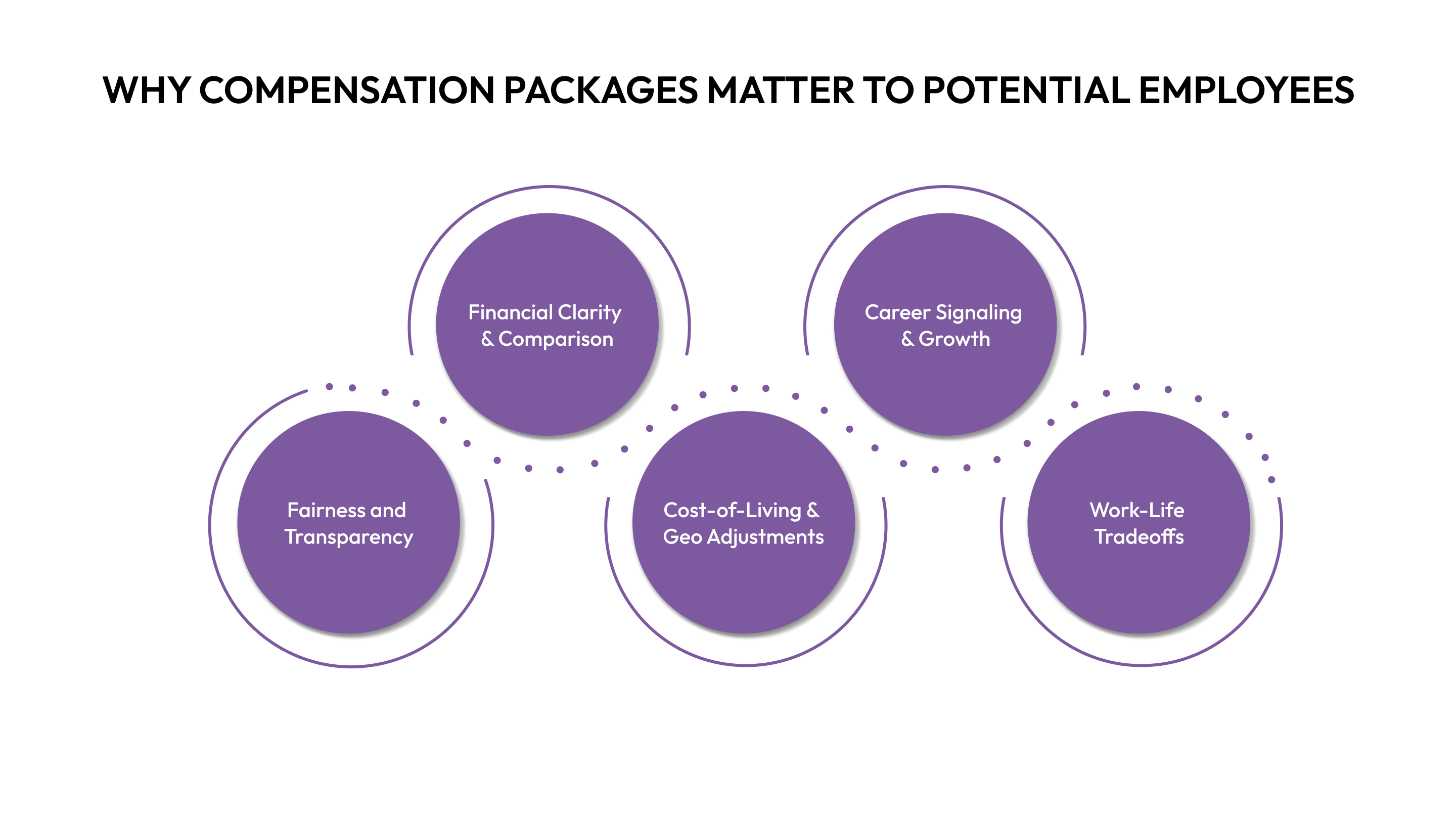
A well-structured compensation package is more than a financial tool. It shapes first impressions, demonstrates fairness, and communicates long-term opportunity. For many candidates, the structure and clarity of compensation tell them more about an organization’s values than any interview conversation.
1. Fairness and Transparency
Transparent pay practices build trust from the start. When companies publish pay ranges and explain how decisions are made, candidates perceive fairness and inclusivity. Many states now require salary disclosure in job postings, but beyond compliance, transparency shows that an organization values equity.
2. Financial Clarity and Comparison
Candidates compare offers the way consumers compare products. They look beyond salary to understand healthcare costs, stock value, and bonuses. When total compensation is presented clearly, it builds trust and allows both sides to negotiate from a position of mutual understanding.
3. Cost-of-Living and Geo Adjustments
As remote and hybrid work expands, location-based compensation has become standard practice. Explaining how geographic pay differentials work shows respect for employees’ circumstances and helps maintain fairness across regions.
4. Career Signaling and Growth
Compensation structures also communicate growth potential. Defined pay bands, progression criteria, and regular merit reviews help candidates visualize how they can advance over time. This sense of direction creates stronger engagement from the first interaction.
5. Work-Life Tradeoffs
Modern employees often weigh flexibility and well-being against base pay. Research shows that over 63% of professionals would accept a slightly lower salary for improved work-life balance and mental health support. Including these elements in a compensation package makes it more competitive and human-centered.
5 Must-Know Differences Between Pay Equity and Pay Equality
Understanding Merit-Based Pay: Benefits and Implementation
What Candidates Weigh Most When Comparing Offers
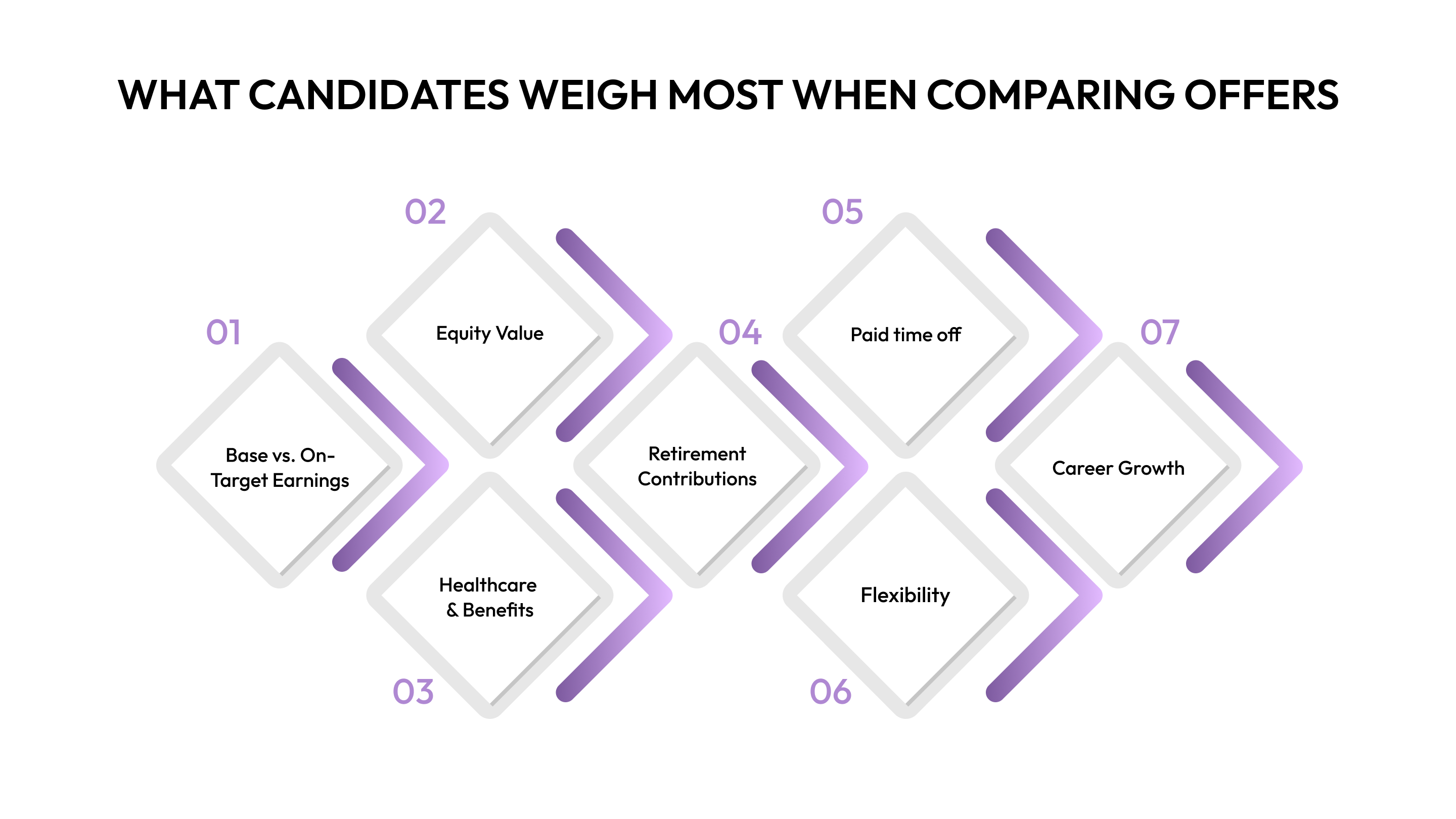
When candidates receive multiple offers, they do not look only at the base salary. They consider the complete financial and personal impact of each opportunity. The clearer and more transparent your package presentation is, the easier it is for them to see your organization as the more reliable choice.
Here are the most common elements potential employees evaluate:
- Base vs. on-target earnings (OTE): Understanding fixed pay and achievable bonuses gives a full picture of annual potential.
- Equity value: Candidates want to know the type of stock plan, vesting schedule, and projected value at maturity.
- Healthcare and benefits: The quality of coverage and out-of-pocket expenses directly affect perceived value.
- Retirement contributions: Employer matches or profit-sharing options often differentiate two similar offers.
- Paid time off: The number of vacation and personal days reflects how the company values rest and balance.
- Flexibility: Remote work, hybrid policies, and flexible scheduling strongly influence decision-making.
- Career growth: Access to learning programs or clearly defined progression paths can outweigh short-term pay differences.
When you provide these details in one consolidated summary, you eliminate confusion and reduce negotiation cycles.
Related: How to Calculate Total Employee Compensation
Common Gaps in Employer Offers (and How to Fix Them)
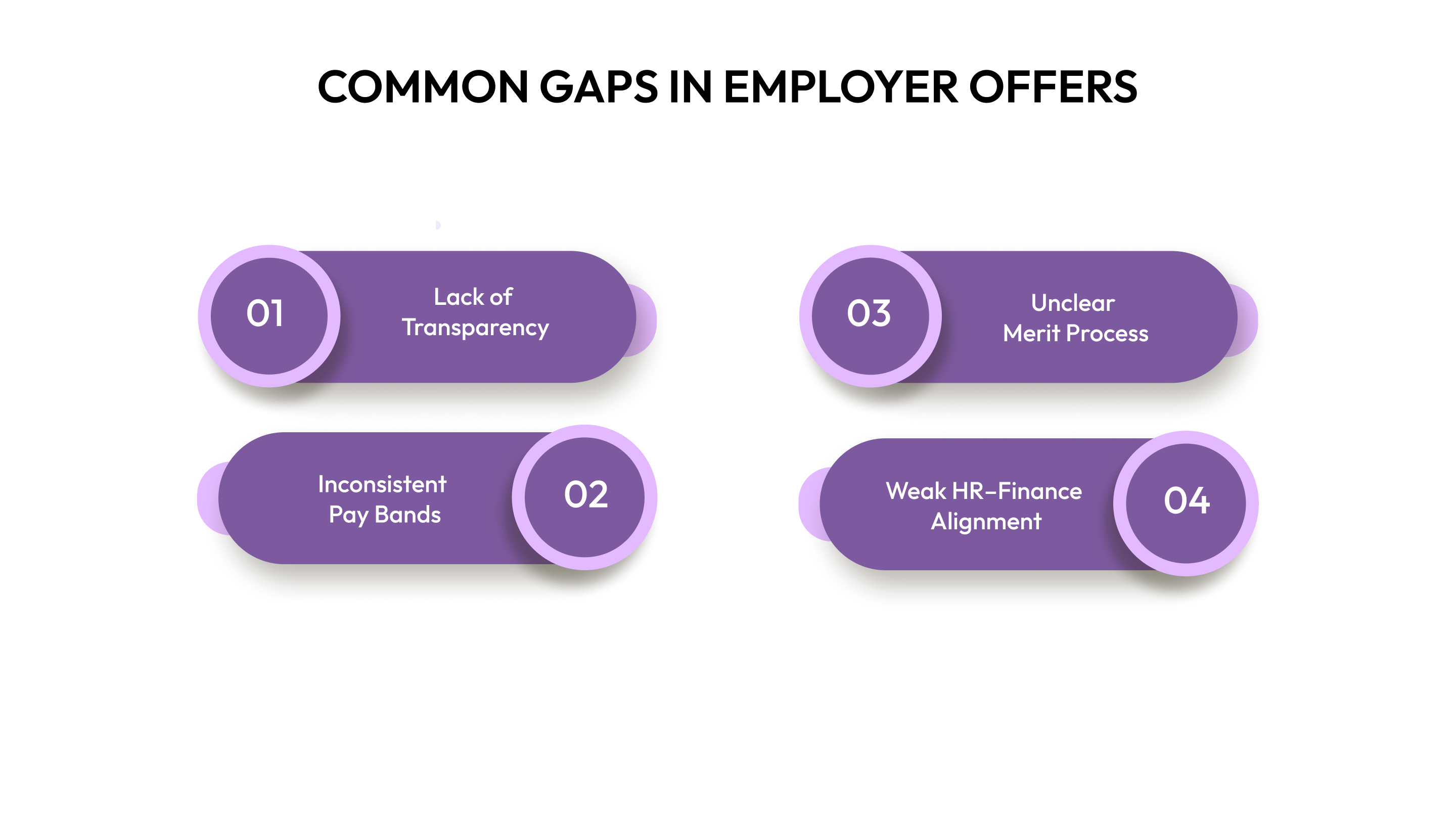
Even when organizations offer competitive pay, they sometimes lose candidates due to poor communication or misalignment. Recognizing these common gaps and addressing them early can significantly improve offer acceptance rates.
Here are key issues many employers face:
- Lack of transparency: Candidates do not see a total compensation breakdown, which causes uncertainty.
- Inconsistent pay bands: Different teams or geographies may apply pay levels inconsistently.
- Unclear merit process: When promotion or raise criteria are not communicated, candidates sense instability.
- Weak HR–Finance alignment: Disconnected workflows can lead to delayed approvals or conflicting messages during hiring.
To improve this coordination, HR and Finance teams can adopt structured compensation workflows and shared visibility tools. This alignment ensures every offer reflects both the company’s budget and its values.
.png)
Also read: Creating an Internal Alignment Compensation Strategy
How HR and Finance Can Create Candidate-Ready Compensation Packages
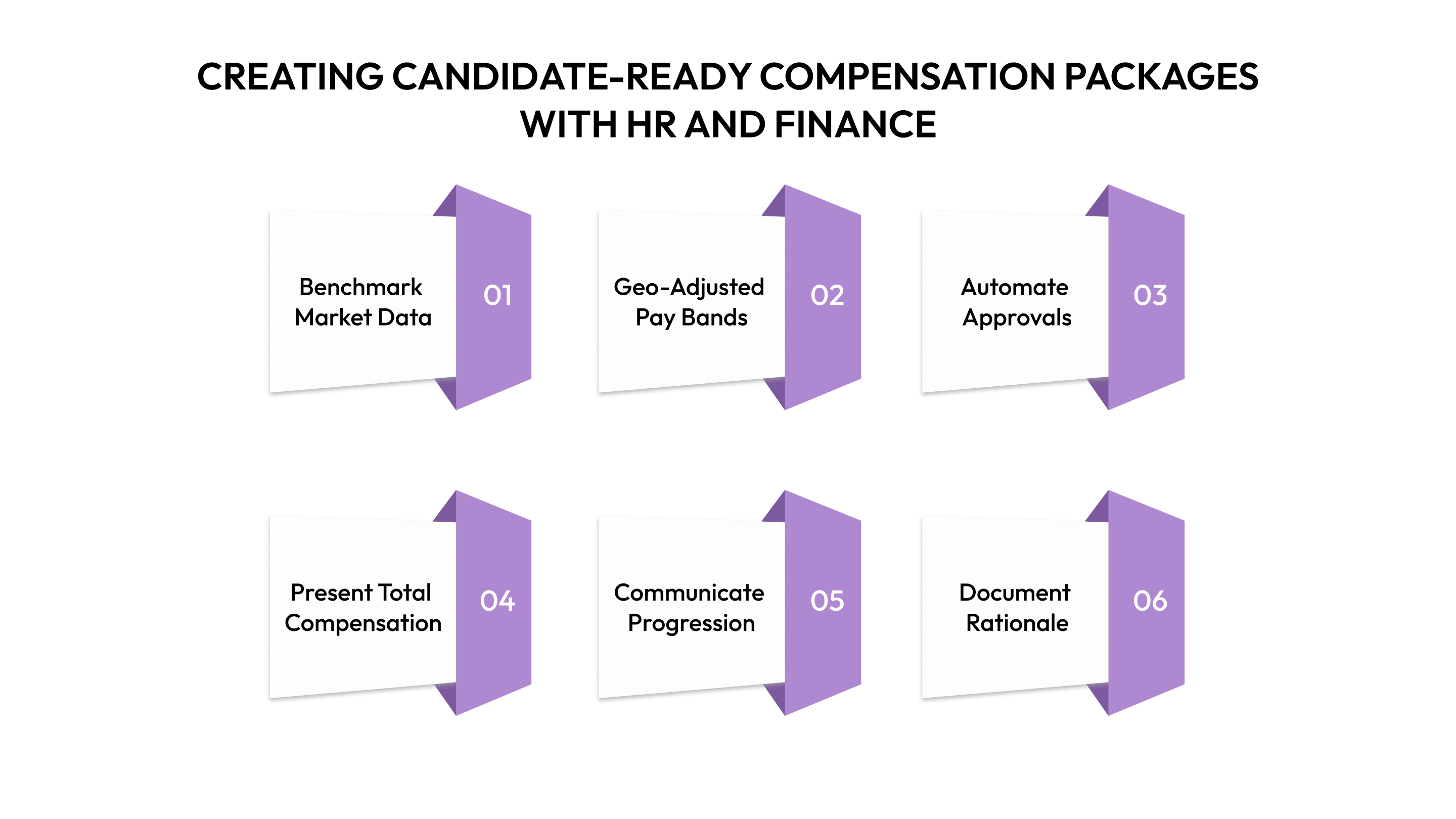
Building a compelling compensation offer requires planning and collaboration. HR and Finance must work together to ensure pay structures are equitable, data-driven, and easy for candidates to understand.
Here is a simple framework to follow:
- Benchmark market data: Use credible datasets to define salary ranges by level and geography.
- Create geo-adjusted pay bands: Ensure regional fairness while keeping compensation competitive.
- Automate approvals: Streamline offer approvals with digital workflows to reduce back-and-forth communication.
- Present total compensation visually: Include salary, bonus, equity, and estimated benefits value in one transparent view.
- Communicate progression clearly: Outline how performance and tenure can lead to pay growth.
- Document rationale: Record decision-making for compliance and fairness audits.
These practices create a consistent and efficient process that aligns strategic hiring goals with financial governance.
Related: Objectives and Goals of Compensation Management.
How CandorIQ Helps Employers Create Stronger Compensation Packages
Building compensation packages that balance fairness, transparency, and efficiency is not easy. HR and Finance teams often rely on spreadsheets, disconnected systems, and manual reviews that slow hiring and create inconsistencies. CandorIQ brings structure, data, and collaboration into one unified platform, helping organizations design and manage offers that win the right talent.
Here’s how we simplify the process:
- Payband Builder: Define geo-adjusted salary ranges and ensure consistency across departments and locations.
- Candidate Offers Module: Present total compensation clearly, including salary, equity, and benefits, with interactive visual breakdowns.
- Compensation Cycle Automation: Streamline merit and bonus reviews with approval logic, notifications, and audit trails.
- Scenario Planning: Model hiring plans and compensation costs instantly to forecast headcount impact.
- Unified HR-Finance visibility: Align budgets, headcount, and compensation data in one secure system.
With CandorIQ, HR and Finance leaders can build trust and efficiency into every offer, transforming compensation packages from manual checklists into strategic business tools.
Conclusion
A well-designed compensation package does more than close a hire; it creates trust, engagement, and loyalty from the very start. Candidates see transparency as a reflection of company culture and long-term integrity. When HR and Finance communicate total value clearly, employees feel respected, and that sentiment strengthens retention.
At CandorIQ, we believe compensation should empower both employers and employees. Our platform gives teams the visibility, automation, and collaboration they need to build offers that are transparent, data-driven, and aligned with company goals.
We at CandorIQ help HR and Finance leaders turn compensation into a strategic advantage, improving equity, accelerating offer cycles, and ensuring every pay decision reflects fairness and intent.
Book a demo to see how we can help your team attract top talent and build lasting trust through smarter, structured compensation.
FAQ (Frequently Asked Questions)
Q1: What is a compensation package, and why does it matter to job candidates?
A compensation package is the total set of rewards a company offers in return for an employee’s work, including base salary, bonuses, equity, benefits, paid time off, and perks. It matters to candidates because it helps them evaluate the full value of an offer, compare it to alternatives, and decide if the role aligns with their financial and personal goals.
Q2: How do candidates compare one offer’s compensation package to another?
Candidates typically look beyond base salary and assess factors such as variable pay (bonuses/commission), equity value, health and retirement benefits, paid time off, flexibility (remote/hybrid work), and career growth potential. A clear breakdown of all these elements enables easier, more informed comparisons.
Q3: Why is transparency in compensation packages so important?
Transparency helps build candidate trust, reduces misalignment between expectations and actual offer value, and signals fairness and equity. Companies that publish pay ranges and clearly articulate how compensation decisions are made tend to attract better applicants and reduce turnover risk.
Q4: What role do non-salary elements (benefits, equity, flexibility) play in compensation packages?
Non-salary elements often tip the balance for candidates when salary differences are small. Benefits like health insurance or retirement matching, equity that offers upside, and flexible work policies all contribute to perceived value and can influence acceptance, engagement, and retention.
Q5: How can employers ensure their compensation packages appeal to potential employees?
Employers should benchmark market data by level and geography, build structured pay bands, communicate total compensation clearly, ensure fairness and equity in pay practices, and integrate HR and finance workflows so offers align with budget and strategic goals. These actions help create offers that are both attractive and sustainable.
Ready to modernize your workforce and compensation strategy?
See how CandorIQ brings workforce planning and compensation together with AI.