

HR Trends in 2026: HR Teams as Strategic Business Partners
Explore the top HR trends in 2026 and learn how HR teams are evolving into strategic business partners that drive company growth, culture, and success.
What if HR wasn’t just about hiring and payroll but about driving business success? In 2026, that’s exactly what HR teams are doing.
HR is no longer a back-office function. Today, it’s a strategic partner, shaping company culture, improving employee experience, and using data to support business decisions. Whether it's managing hybrid teams, aligning talent with company goals, or fostering a positive workplace, HR is at the core of driving organizational growth.
In this blog, we’ll explore the key HR trends for 2026 and how HR teams are becoming essential players in the success of modern businesses. Let’s dive in.
Key Takeaways
- HR in 2026 is about more than just payroll and hiring; it's about driving business success.
- HR teams are becoming strategic partners, shaping company culture, improving employee experience, and using data for decision-making.
- Key trends include managing hybrid work models, aligning talent with business goals, and prioritizing employee well-being.
- HR is also leading the charge in diversity, equity, and inclusion (DEI) initiatives.
- The role of HR is shifting from administrative tasks to strategic leadership, helping companies scale and succeed.
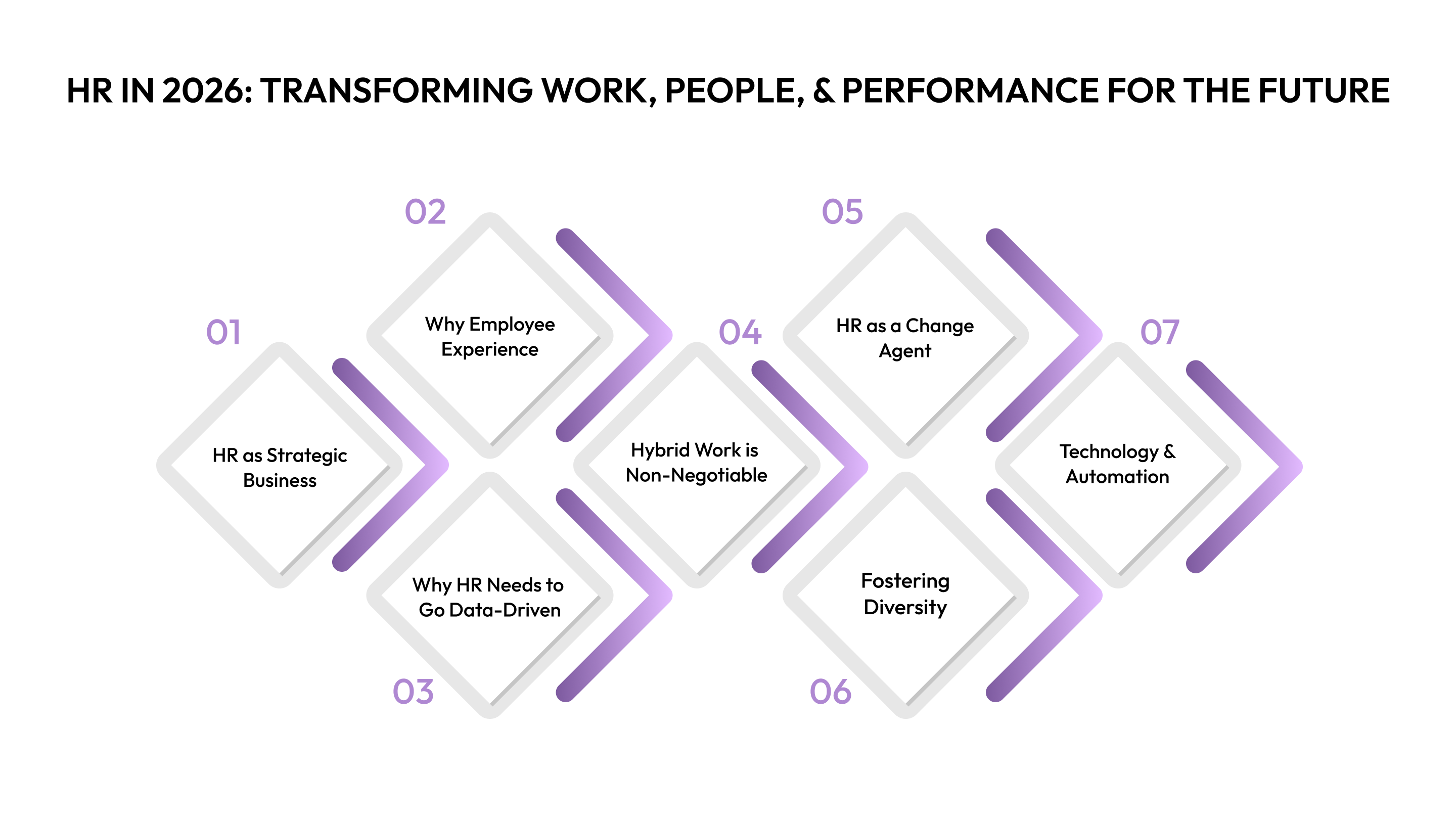
1. HR as Strategic Business Partners
HR is now serving a pivotal role in defining organizational success, ensuring companies don’t just survive but thrive in a rapidly changing world. Here’s how:
Actionable Strategy:
- Collaborate with Leadership: HR teams now work closely with executives to align business strategy with workforce planning, so the right talent is in place to meet company goals.
- Align Talent with Business Objectives: It’s vital to place the right people in the right roles, ensuring that talent supports long-term business success, from innovation to performance improvement.
- Support Organizational Agility: HR helps companies adapt to change, from managing hybrid teams to evolving workforce needs.
Example: When a company shifts focus to digital innovation, HR ensures the right skills are hired and developed to support that strategic direction.
2. Why Employee Experience is the HR Focus in 2026
In 2026, HR teams are putting employee experience at the forefront, recognizing that employees who feel valued and supported perform better and stick around longer.
The reality is, employee experience goes beyond perks. It’s about making sure employees are engaged, empowered, and aligned with company goals.
Actionable Strategy:
- Well-Being is Non-Negotiable: Employees expect more than just a paycheck. They want a workplace that supports their mental health, work-life balance, and personal growth. HR is leading the charge with wellness programs and flexible work options to ensure employees thrive.
- Engagement That Goes Beyond Perks: It’s not about offering free snacks or a ping-pong table. It’s about making employees feel heard, valued, and included. Regular feedback, appreciation, and opportunities for growth are the key to keeping your team invested in the company’s success.
- Building Truly Inclusive Workplaces: Diversity, equity, and inclusion (DEI) aren’t just trends; they’re essential. HR teams are making sure every employee feels safe, supported, and encouraged to contribute their best work.
Example: Companies investing in mental health resources and career development programs aren’t just checking a box; they’re creating a culture where employees feel cared for, leading to better retention and higher productivity.
Also Read: Creating an Effective Employee Compensation Plan
3. Why HR Needs to Go Data-Driven in 2026
HR teams are increasingly using data to shape strategies, optimize hiring, and improve employee retention. In 2026, HR is shifting from intuition-based decisions to data-backed strategies that help drive business results.
It’s not just about having numbers; it’s about using them to create actionable insights that lead to smarter, more efficient HR practices.
Actionable Strategy:
- Smarter Hiring with Data: HR uses data to identify the ideal candidate profile, ensuring better matches and higher performance.
- Objective Performance Reviews: Data helps assess employee performance, track development, and provide actionable feedback.
- Predict Turnover: With predictive analytics, HR can spot early signs of disengagement and take action to retain top talent.
Example: Companies using data to track engagement can quickly address areas of low morale, improving retention and overall employee satisfaction.
Modern platforms like CandorIQ empower HR teams with data-driven insights, streamlining workforce management and aligning talent strategies with business goals.
Also Read: Compensation Management Software Guide for HR Teams in 2025
4. Why Hybrid Work is Non-Negotiable in 2026
In 2026, hybrid and flexible work aren’t just perks; they’re a must. Employees expect flexibility in how and where they work, and HR teams are stepping up to make it happen. The challenge? Finding a balance that supports productivity while maintaining a strong company culture.
Actionable Strategy:
- Set Clear Hybrid Guidelines: Define when employees need to be in the office versus when they can work remotely. This ensures consistency while giving people the flexibility they want.
- Keep Company Culture Alive: Use virtual team-building and regular check-ins to make sure remote workers still feel part of the team.
- Offer Work-Life Balance: Flexibility isn’t just about location—it’s about when people work. Offering schedule flexibility increases satisfaction and retention.
Example: Companies allowing employees to set their own office days based on team needs are seeing better engagement and job satisfaction. HR’s job? Make sure the balance works for everyone.
5. HR as a Change Agent in 2026
HR isn’t just managing employees; it’s driving change. From digital transformation to cultural shifts, HR is taking the lead in helping companies manage change while keeping employees aligned and engaged.
Actionable Strategy:
- Drive Organizational Change: HR teams lead the charge during change. Whether it’s restructuring or a new business model, they ensure smooth transitions and keep employees focused on company goals.
- Champion Digital Transformation: HR is guiding employees through new tech, providing the training and resources needed to adapt to changing systems.
- Support Employees During Transitions: Communication, feedback, and training are critical. HR is making sure employees have the support they need to succeed in new environments.
Example: Companies undergoing digital shifts rely on HR to upskill employees and manage cultural changes. HR’s role is to ensure employees stay engaged and equipped for the future.

Also Read: How to Create Customizable Compensation Plans That Drive Results
6. Fostering Diversity, Equity, and Inclusion in 2026
DEI isn’t just a buzzword; it’s central to HR’s strategy. HR teams are focusing on building an environment where everyone, regardless of background, has a fair shot at success. From hiring practices to pay equity, HR is making DEI a priority at every stage of the employee lifecycle.
Actionable Strategy:
- Inclusive Hiring: HR is using tools that eliminate bias and ensure diverse candidate pools, making sure the hiring process is fair from start to finish.
- Pay Equity: Regular pay audits and transparent salary bands are helping HR close any pay gaps, ensuring equal compensation for equal work.
- Building an Inclusive Culture: HR is running initiatives to ensure every employee feels heard, respected, and empowered to contribute to the company’s success.
Example: Companies are setting clear DEI goals, from hiring targets to mentorship programs for underrepresented groups. HR is making sure these initiatives are tracked, measurable, and impactful.
7. Technology and Automation in HR: The Future of HR Operations
HR technology isn’t optional; it’s essential. Automation is freeing up HR professionals to focus on strategic initiatives, while data-driven tools are enabling them to make faster, more informed decisions. HR tech is transforming everything from recruitment to performance management, and companies that aren’t using these tools risk falling behind.
Actionable Strategy:
- Automate Repetitive Tasks: Use HR tech to handle payroll, benefits, and routine reporting. This frees up time for HR teams to concentrate on higher-value work like talent development and employee engagement.
- Use Data for Smarter Decisions: HR analytics tools help teams track performance, predict turnover, and assess employee engagement. Data-driven decisions lead to better hiring, retention, and growth strategies.
- Enhance the Employee Experience: With self-service portals and AI-driven platforms, HR teams are giving employees more control over their experience, from benefits to development opportunities.
Example: Companies using AI-driven recruitment tools can quickly identify top candidates, reducing time-to-hire and improving candidate fit. HR’s role is to ensure these technologies are used effectively to support business goals.
How CandorIQ Supports HR Teams in 2026?
As HR continues to evolve in 2026, CandorIQ is here to streamline and optimize every aspect of HR operations. From compensation management to performance tracking, CandorIQ offers the tools HR teams need to drive business success while creating a positive employee experience.
Key Features:
- Data-Driven Decision-Making: CandorIQ’s analytics tools help HR teams use data to inform hiring, performance reviews, and employee development strategies, ensuring better outcomes.
- Streamlined HR Operations: Automate administrative tasks like payroll, benefits, and recruitment, allowing HR teams to focus on more strategic initiatives that drive growth.
- Flexible, Scalable Solutions: Whether managing hybrid work models or scaling for growth, CandorIQ provides HR teams with the tools to adjust quickly to changing business needs.
Final Thoughts!
HR in 2026 isn’t just about managing tasks; it’s about driving business success through strategic people management. You've seen how HR is transforming into a key player, shaping company culture, aligning talent with business goals, and driving organizational change. Now, it’s time to act.
The complexity of managing hybrid teams, ensuring DEI, using data effectively, and driving employee engagement can feel daunting, especially as your company grows. But the right tools can make all the difference.
That’s where CandorIQ comes in. With a platform built for modern HR needs, it streamlines everything from compensation management to performance tracking, helping HR teams work smarter, not harder.
Ready to modernize your HR approach? Book a demo with CandorIQ today to see how we can help you unlock your HR team’s full potential in 2026.
FAQs
1. What are the 5 recent trends in HRM?
Recent trends in HRM include the use of HR technology for automation, a focus on employee well-being and flexible work arrangements, data-driven decision-making in recruitment and performance, the rise of hybrid work models, and an emphasis on diversity, equity, and inclusion (DEI).
2. What does a modern HR department look like?
A modern HR department is a strategic partner, using technology to automate administrative tasks and using data to optimize recruitment, performance, and retention. It focuses on talent management, company culture, and inclusivity, especially in remote and hybrid environments.
3. What is the biggest challenge the HR department faces today?
The biggest challenge HR faces is adapting to hybrid and remote work models while maintaining productivity, communication, and company culture across distributed teams.
4. How is HR using technology to improve operations?
HR is using technology to automate tasks like payroll, benefits, and recruitment. Tools like HR analytics and AI-driven systems help improve performance tracking, hiring, and employee development.
5. How does HR contribute to organizational growth?
HR contributes to growth by hiring the right talent, aligning employees with business goals, and fostering a positive culture that drives engagement and productivity.
6. Why is diversity, equity, and inclusion important in HR?
DEI is important because it promotes a fair, inclusive workplace, attracts diverse talent, and enhances company performance by ensuring all employees have equal opportunities.
Ready to modernize your workforce and compensation strategy?
See how CandorIQ brings workforce planning and compensation together with AI.