

Top HR Metrics to Track for Success
Discover the top HR metrics to track for success, including key performance indicators that drive talent management, employee engagement, and organizational growth.

What if the secret to unlocking business growth lies in the numbers behind your people? For scaling organizations, HR metrics are not just reports; they are powerful insights that drive efficiency, engagement, and alignment with broader business goals. Yet many growth-stage companies face hurdles like fragmented systems and poor visibility into compensation and headcount planning.
In fact, Gartner reveals that 55% of HR leaders struggle to integrate workforce data effectively to meet business needs. This blog on the top HR metrics to track for success will guide you through overcoming these challenges with a unified approach to measuring and optimizing your HR strategies.
Key Takeaways
- HR metrics, including time-to-hire, employee turnover rate, compensation-to-performance ratio, and employee engagement score, help to drive strategic workforce decisions.
- Transform data into action by setting clear objectives, consolidating systems, spotting trends early, and benchmarking against industry standards.
- Focus on retention and cost optimization through metrics like internal mobility rate, cost per hire, and headcount forecasting accuracy to reduce turnover and control recruiting expenses.
- Leverage unified platforms to eliminate fragmented spreadsheets and gain real-time visibility into compensation planning and workforce analytics for better business alignment.
What are HR Metrics? Why are They Important?
HR metrics are quantitative measurements that track the performance, efficiency, and effectiveness of human resource activities within an organization. They offer a data-driven way to evaluate areas like recruitment, retention, compensation, time-to-hire, training effectiveness, and employee engagement.
Importance of HR Metrics
Here’s how HR Metrics are Important:
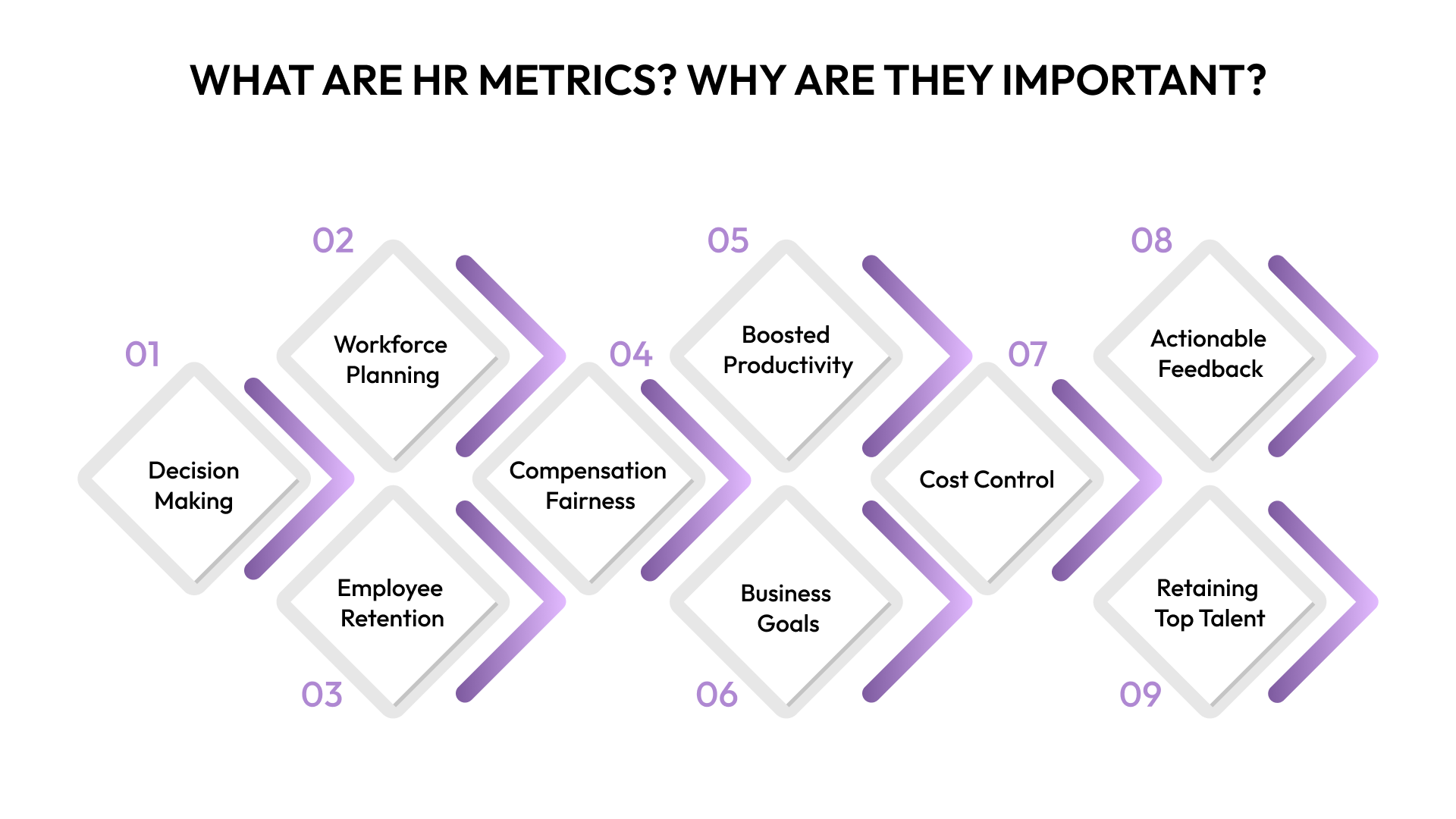
- Informed Decision-Making: HR metrics provide data-driven insights, helping HR and leadership teams make better decisions regarding hiring, compensation, and employee development.
- Improved Workforce Planning: Tracking metrics like headcount forecasting and turnover rate ensures your workforce is aligned with business goals and growth plans.
- Enhanced Employee Retention: Metrics such as employee engagement score and turnover rate highlight areas where retention efforts are needed, helping reduce costly turnover.
- Compensation Fairness: Using metrics like the compensation-to-performance ratio ensures employees are fairly compensated, promoting equity and motivation.
- Boosted Productivity: By measuring metrics such as time-to-hire and training completion rate, you can streamline processes, reduce inefficiencies, and foster employee growth.
- Alignment with Business Goals: HR metrics help align HR efforts with broader business objectives, ensuring HR strategies directly support the company’s success.
- Cost Control: Metrics like cost per hire help optimize recruiting budgets, ensuring cost-effective hiring practices.
- Actionable Feedback: Continuous tracking of HR metrics provides real-time feedback, allowing for quick adjustments and improvement of HR operations.
- Attracting and Retaining Top Talent: Data-driven HR metrics help shape competitive compensation and development programs that attract and retain high-performing employees.
Now that you understand why these metrics are game-changers, let's dive into the nine specific ones that can make or break your workforce strategy.
Also Read: The Future of HR in the Age of AI
.png)
Top 9 HR Metrics to Track for Success
Tracking the right HR metrics is essential for building a successful and sustainable workforce. By focusing on the following key metrics, HR teams can drive strategic decision-making and align talent management efforts with company goals.
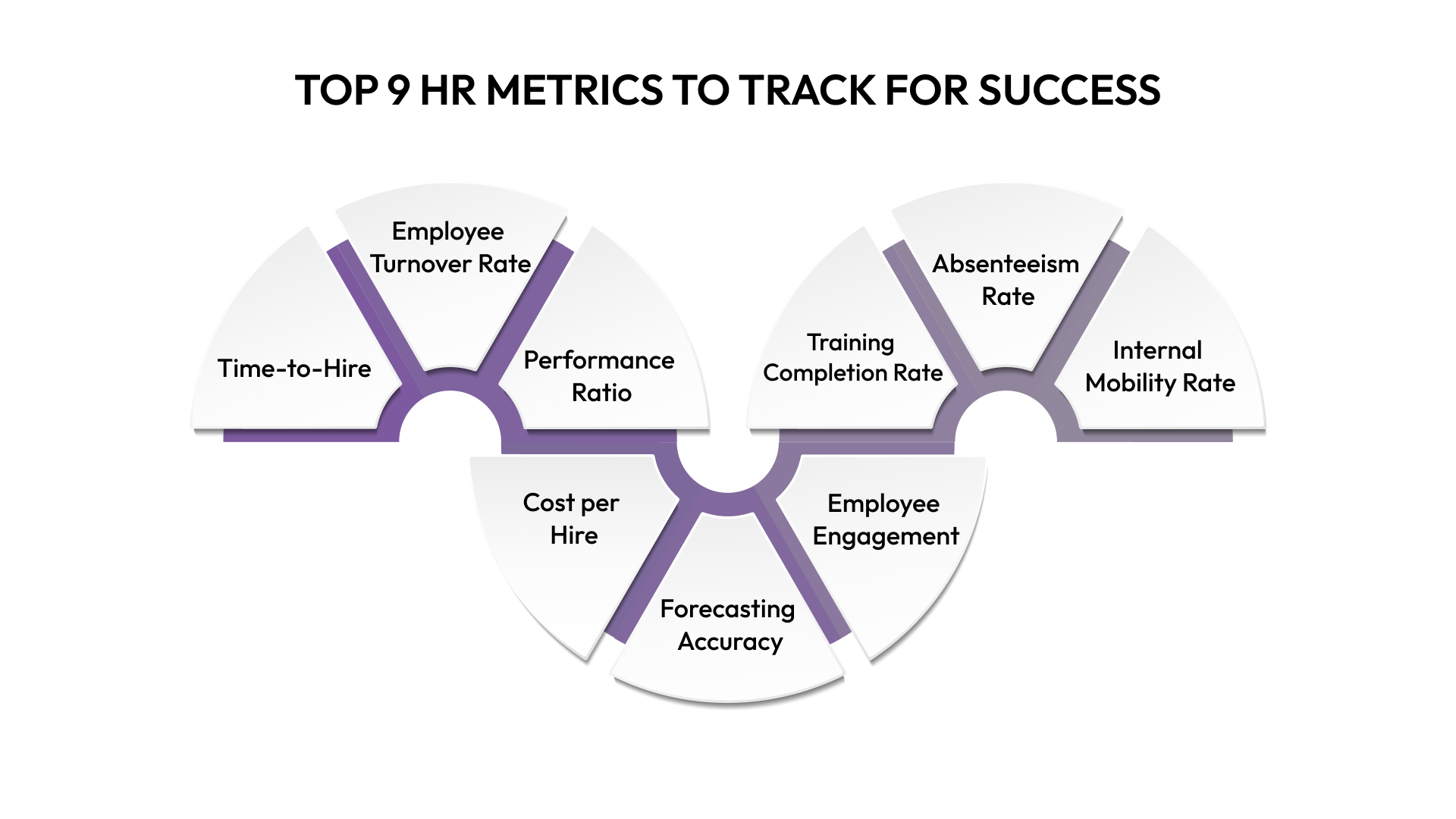
Here's a breakdown of the top 9 HR metrics you should track for success:
1. Time-to-Hire
Time-to-hire measures the number of days it takes to fill an open position, from the job posting date to the candidate's first day.
- Why It Matters: In a fast-paced business environment, the quicker you can hire, the faster you can onboard talent and drive productivity. A longer time-to-hire may lead to missed opportunities, understaffing, and overworked employees.
- How It Helps: Tracking this metric allows you to identify bottlenecks in your hiring process and optimize it. Faster hiring processes help maintain productivity and reduce operational strain.
But here's the thing: Hiring fast is only half the battle. What really matters is keeping those great people you just worked so hard to find.
2. Employee Turnover Rate
This metric calculates the percentage of employees who leave the company over a certain period.
- Why It Matters: High turnover rates can be costly and disruptive, signaling issues with employee satisfaction or engagement. Monitoring this rate helps identify underlying causes, such as poor leadership or inadequate compensation.
- How It Helps: By monitoring turnover, you can pinpoint reasons for attrition and implement strategies for improvement, such as employee engagement programs, better work-life balance, or more competitive pay.
Using CandorIQ’s Employee Total Rewards tools, you can track attrition rates alongside other key metrics, such as engagement scores, to better understand retention drivers and improve your workforce strategy.
When you dig into why people are leaving, you'll often find it comes down to one thing: they don't feel fairly paid for what they bring to the table.
3. Compensation-to-Performance Ratio
This ratio compares an employee’s compensation to their performance, ensuring that high performers are fairly rewarded.
- Why It Matters: When compensation is directly tied to performance, it motivates employees to excel. An imbalance, where low performers are overpaid, can demoralize top talent and reduce overall productivity.
- How It Helps: Tracking this ensures that your compensation structure promotes fairness, equity, and motivation. It helps HR align rewards with individual contributions, improving overall performance.
Once you've got compensation dialed in, you'll want to keep an eye on how much you're actually spending to bring new people through the door.
4. Cost per Hire
This metric tracks the total cost associated with hiring a new employee, including recruiting fees, advertising, and HR staff time.
- Why It Matters: Monitoring cost per hire helps HR teams assess the effectiveness of their recruitment strategies and keep hiring budgets in check. Over-spending on recruitment can harm a company’s financial health, especially in fast-growing organizations.
- How It Helps: By tracking cost per hire, you can evaluate the effectiveness of your recruitment channels and methods, helping to optimize spending and ensure better resource allocation
By using CandorIQ’s Headcount Scenario Planning, you can optimize your hiring process, align recruitment efforts with budget constraints, and ensure that costs per hire stay within reasonable limits.
Getting smarter about your hiring costs becomes a whole lot easier when you can actually predict how many people you'll need to hire in the first place.
5. Headcount Forecasting Accuracy
This metric measures how accurately HR teams can predict future hiring needs based on business growth and trends.
- Why It Matters: Inaccurate forecasting can lead to over- or under-staffing, both of which affect business performance. Accurate forecasting ensures you hire the right people at the right time.
- How It Helps: Monitoring this metric enables better alignment between HR and finance teams, ensuring that the hiring process matches the strategic goals of the organization.
Of course, all the hiring planning in the world won't help if your new team members aren't actually excited to be there and do great work.
6. Employee Engagement Score
This metric measures the level of employee engagement, often through surveys that assess job satisfaction, motivation, and organizational commitment.
- Why It Matters: High engagement correlates with improved productivity, lower turnover, and a more positive work environment. Engaged employees are more likely to go above and beyond, contributing to the overall success of the business.
- How It Helps: Regular tracking helps HR teams understand how employees feel about their roles and the company, enabling them to take proactive steps to improve engagement, such as refining management styles or offering career development opportunities.
Here's something interesting: the most engaged employees are usually the ones most eager to learn and grow. That's where training comes in.
7. Training Completion Rate
This metric tracks the percentage of employees who complete training or development programs.
- Why It Matters: Continuous learning is key to employee growth and performance. A low training completion rate may indicate a lack of resources or motivation for professional development.
- How It Helps: Monitoring this metric ensures that employees have the necessary skills and knowledge to perform at their best. It also ensures that training investments are yielding results.
CandorIQ helps align compensation with skill development, ensuring employees are incentivized to complete training and progress in their careers.
When people feel skilled and confident in their roles, they tend to show up more consistently. That brings us to tracking attendance patterns.
8. Absenteeism Rate
This metric tracks the number of days employees are absent from work, excluding vacation and planned leaves.
- Why It Matters: High absenteeism can signal disengagement or burnout. It can also negatively impact team productivity and morale.
- How It Helps: Tracking absenteeism helps identify patterns and root causes. Proactively addressing these issues can prevent burnout and keep teams fully staffed and efficient.
When your people are showing up engaged and ready to contribute, that's when you can really start thinking about their career growth within your company.
9. Internal Mobility Rate
This measures the percentage of employees who are promoted or move to different roles within the organization.
- Why It Matters: Internal mobility fosters employee growth and shows that the company values its workforce. It also helps retain talent and reduces turnover by providing career advancement opportunities.
- How It Helps: Monitoring internal mobility helps HR teams identify career development opportunities and ensure employees are progressing in line with their career goals, which can help retain top talent.
CandorIQ’s Workforce Management tools track promotion rates and ensure that internal mobility aligns with strategic goals, helping to maintain a motivated and loyal workforce.
So you've got all these metrics, now what? The real magic happens when you turn those numbers into decisions that actually move your business forward.
Also Read: Effective Compensation Benchmarking for HR Teams in 2025
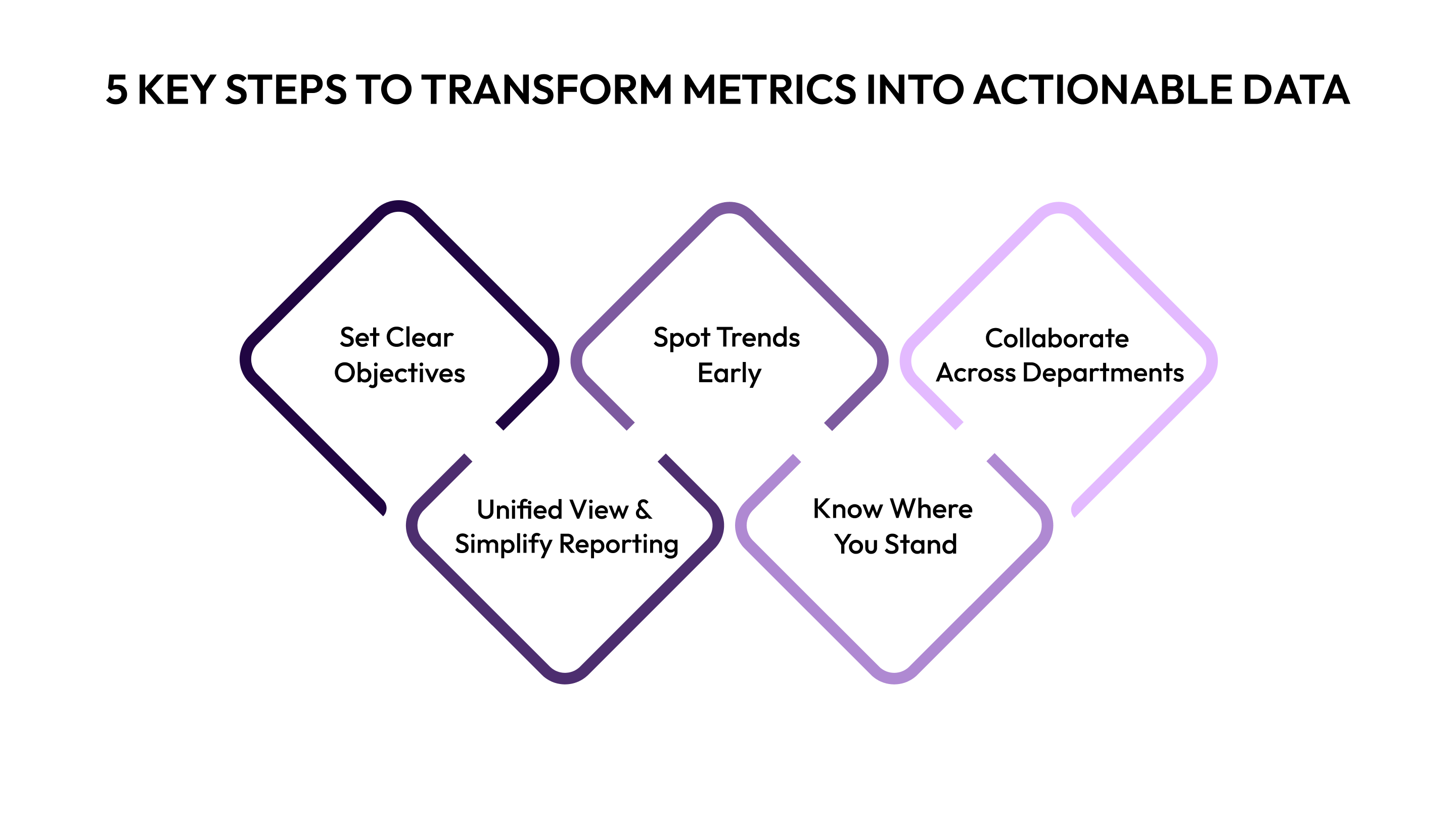
5 Key Steps to Transform Metrics into Actionable Data
Transforming HR metrics into actionable insights involves more than tracking numbers; it's about aligning data with strategic business goals and using it to drive improvements.
Here are the essential steps professionals can follow:
Step 1: Set Clear Objectives and Focus on What Matters
Start by aligning each HR metric with your organization’s strategic goals, whether it’s improving employee engagement, reducing turnover, or optimizing hiring processes. Make sure you’re tracking metrics that directly impact your business outcomes. For example, if scaling quickly is a priority, focus on metrics like time-to-hire and headcount forecasting accuracy.
Step 2: Consolidate Data for a Unified View and Simplify Reporting
Pull data from various HR systems (like your ATS or payroll system) into a single dashboard. This provides a clearer, holistic view of your workforce metrics. Tools like CandorIQ streamline data collection and analysis, allowing HR teams to easily track pay bands, headcount, and more from one place.
Step 3: Spot Trends Early and Plan Ahead
Predictive analytics help you spot trends before they become problems. For example, if your employee turnover rate is trending upward, predictive models can show you whether this is likely to continue.
Use forecasts to make informed decisions about future hiring or resource allocation. For instance, headcount forecasting accuracy helps you understand how many people you need to hire next quarter.
Step 4: Know Where You Stand
Compare your metrics against industry benchmarks to understand whether you’re ahead of the curve or need to improve. Regularly update your benchmarks and adjust your goals as needed to stay competitive in the market.
Step 5: Train Your Team and Collaborate Across Departments
Equip HR and leadership teams with the tools and knowledge to interpret data effectively and make decisions based on insights, not just intuition. Make sure your finance, HR, and leadership teams are all on the same page and using data to guide decisions. This ensures alignment and boosts organizational success.
Now, if you're thinking "this all sounds great, but how do I actually make it happen without drowning in spreadsheets?" you're not alone. Most growing companies hit this exact wall.

Also Read: Best HR KPI Dashboards and Examples
How CandorIQ Turns HR Metrics into a Strategic Advantage
CandorIQ solves this by consolidating all your HR metrics into a single platform. It helps you make smarter decisions faster and aligns your HR strategy with your business goals.
Here’s how CandorIQ helps:
- Real-Time Compensation Insights: Track pay equity and performance metrics with our Compensation & Payband Builder, ensuring you reward top performers fairly and retain talent.
- Accurate Headcount Planning: Use scenario modeling tools to forecast headcount needs, helping you make budget-friendly hiring decisions.
- Faster Performance Tracking: Automate approval workflows and integrate with your ATS to reduce time-to-hire and cost-per-hire, speeding up the recruitment process.
- Boost Employee Engagement: Show employees their complete compensation package, including future equity, through total rewards statements, increasing satisfaction and reducing turnover.
CandorIQ’s AI Agent lets you ask questions like “What’s causing turnover in engineering?” and get instant, data-driven answers. With real-time dashboards, HR, finance, and leadership teams stay aligned and on top of key metrics. No more waiting for quarterly reports; the data you need is always available.
Conclusion
Tracking the right HR metrics is no longer optional for growing organizations; it's essential for sustainable success. The nine metrics outlined above provide a comprehensive framework for optimizing your workforce strategy, from reducing time-to-hire to improving employee engagement and retention.
However, the real power lies not just in tracking these metrics but in transforming them into actionable insights that drive business growth. Organizations that consolidate their HR data into unified platforms of CandorIQ can move beyond reactive reporting to proactive strategic planning, ensuring their workforce decisions align with business objectives and budget constraints.
Ready to align your HR metrics with your business strategy? Book a demo to streamline your HR processes and support data-driven decision-making today. Learn more about CandorIQ's features and benefits here.
FAQs
1. How can HR metrics help with employee retention?
To boost retention, track employee engagement and turnover rates. High engagement often means lower turnover. Use feedback to address issues and ensure your compensation is competitive and performance-based.
2. How do HR metrics affect compensation strategy?
Metrics like pay bands, compensation-to-performance ratios, and market benchmarks help shape a fair and competitive compensation strategy, ensuring pay aligns with company goals and employee performance.
3. How often should HR metrics be reviewed?
Review HR metrics at least every quarter to keep them in line with company goals. Metrics like time-to-hire and cost per hire may need more frequent checks, especially during busy hiring times.
Ready to modernize your workforce and compensation strategy?
See how CandorIQ brings workforce planning and compensation together with AI.