Job architecture is the foundation everything in compensation sits on. Your pay bands, your leveling, your ability to explain why someone makes what they make. Get it wrong and every decision downstream breaks. And, as to be expected, such a big important piece of the business can’t be built (let alone maintained) overnight.
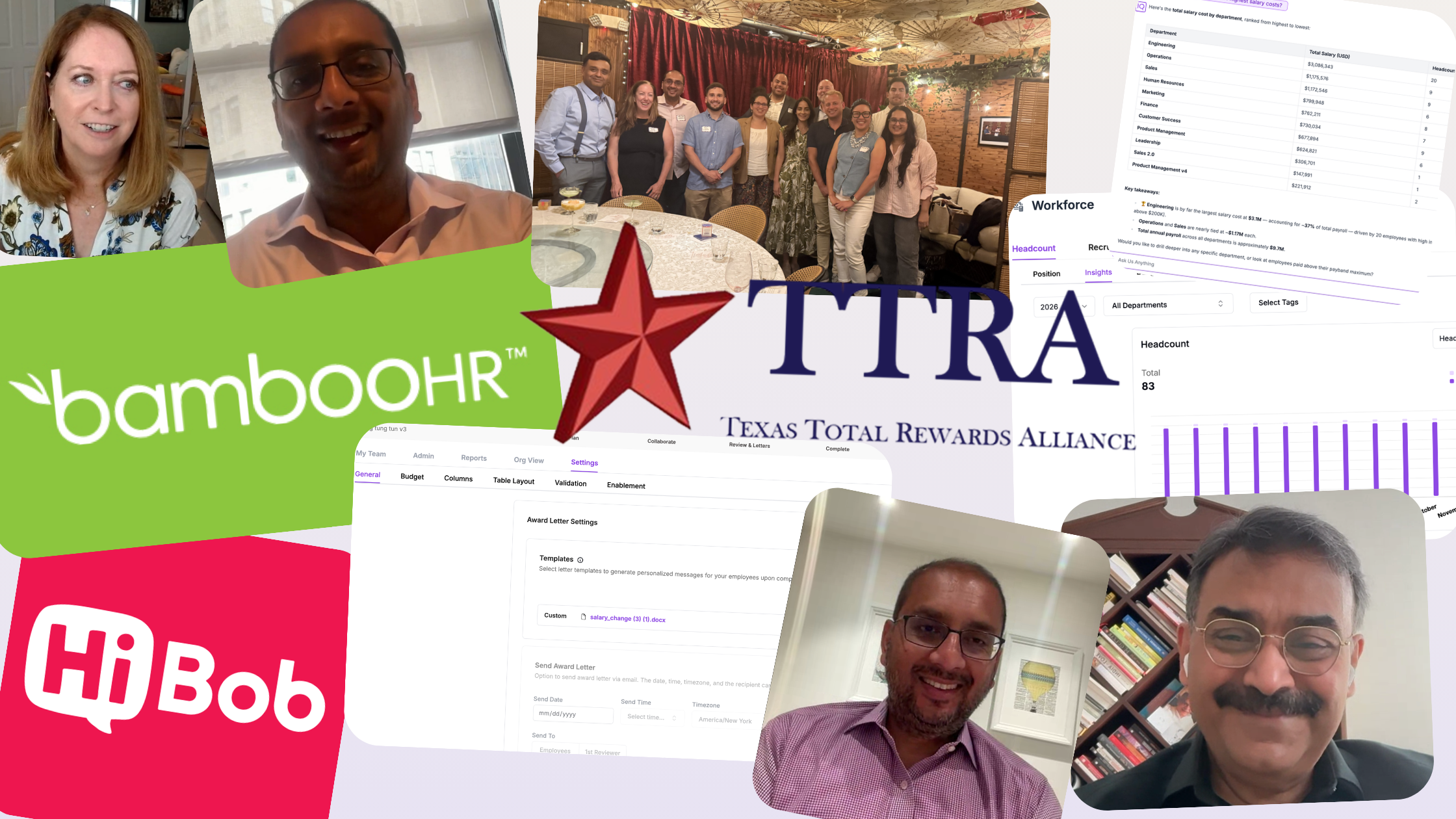
AI-Powered Compensation and Workforce Planning Meets Your HRIS
Ask most HR leaders whether their company has a job architecture and they'll say yes. Ask them to pull it up and you'll get a pause. Somewhere there's a spreadsheet. Or a deck from a consultant engagement three years ago. Or a framework that was built for one part of the org and never extended to the rest. It exists technically. But it isn't working. And almost every compensation problem traces back to this.
Learn proven strategies for forecast accuracy when compensation is tied to financial results. Boost forecast accuracy and prevent comp leakage in 2026.
Talent management defined, what it means for scaling US companies in 2026, and how to build a framework that ties people decisions to financial outcomes.
Discover how performance management calibration works in 2026, with unified data, structured decisions, and outcomes that hold up in practice.
Top-down budgeting vs. bottom-up forecasting: when to use each, key tradeoffs, and how to build accurate, board-ready compensation plans for scaling teams.
See how CandorIQ brings workforce planning and compensation together with AI.