

7 Proven Compensation Decision Support Strategies for Fair Pay in 2026
Discover 7 compensation decision support strategies to make fair pay decisions with better budgeting, pay bands, and approval workflows.


Are your compensation decisions truly fair, or just consistent on paper? In 2025, most U.S. companies planned average salary increases of around 3.5%, according to multiple compensation surveys. Yet, fairness concerns continue to rise across distributed teams.
The real issue isn’t the budget. It’s how decisions get made. Pay bands, performance data, and budgets often sit in separate systems. Managers make calls without full context. Finance lacks visibility until it’s too late.
That’s where fairness breaks. This blog explores how compensation decision support helps you make fair, consistent pay decisions, without losing control of budgets or speed.
At a Glance
- Compensation decision support ensures fair pay by guiding every decision with real-time inputs like pay bands, performance, and budget, not isolated judgment.
- Fairness breaks when decisions lack context and consistency, especially across hiring, promotions, and off-cycle adjustments in growing teams.
- Structured strategies like pay equity checks, scenario modeling, and transparent ranges help maintain balance between internal equity and market competitiveness.
- A clear, step-by-step decision framework ensures every compensation decision follows the same logic, reducing gaps and improving accountability.
- Platforms like CandorIQ bring everything into one system, helping teams connect pay bands, budgets, and approvals to make faster, fair, and consistent decisions at scale.
.png)
What Is Compensation Decision Support?
Compensation decision support is a structured way to guide pay decisions using real-time inputs like pay bands, performance, and budget. Instead of relying on isolated judgment, it ensures every decision follows a consistent and visible logic.
Here’s how it's different from compensation planning:
Many teams already run compensation planning cycles. But planning alone doesn’t solve day-to-day decisions.
Here’s the difference:
- Compensation planning = periodic (annual or biannual cycles)
- Compensation decision support = continuous, real-time decision-making
Compensation planning sets the rules, but decision support applies them consistently across situations. Next, let’s look at why achieving pay fairness has become more important than ever in 2026.
5 Importance of Pay Fairness In The Workplace
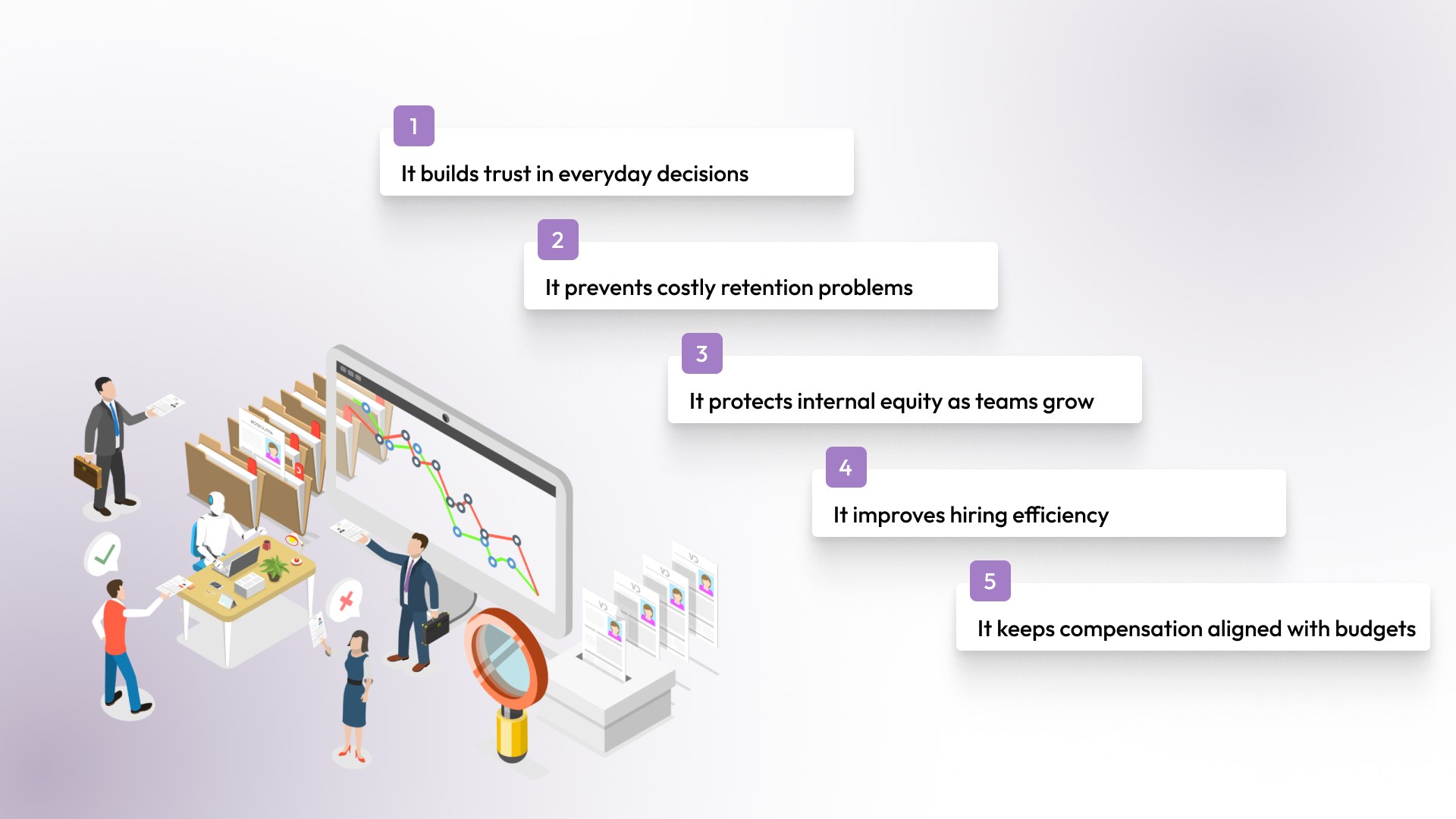
Fairness in compensation is often treated as a principle. In reality, it directly shapes how people respond to every pay decision made across the organization.
- It builds trust in everyday decisions: Employees judge fairness based on how consistently pay decisions are made. Clear and repeatable logic reduces second-guessing and confusion. Trust improves when decisions follow the same structure across teams.
- It prevents costly retention problems: Pay gaps between similar roles create silent dissatisfaction. Employees rarely complain first. They immediately start looking for other opportunities. Fixing pay later often requires higher adjustments than planned.
- It protects internal equity as teams grow: New hire offers can quickly drift away from existing pay levels. Without checks, small differences turn into long-term gaps. Consistency becomes harder as the number of decisions increases.
- It improves hiring efficiency: Candidates expect clear and justified salary ranges. Structured decisions reduce back-and-forth negotiations. Faster decisions help close roles without overspending.
- It keeps compensation aligned with budgets: Fairness is not just equal pay. It’s a controlled allocation. Every decision impacts total compensation spend. Unchecked decisions can quietly exceed planned limits.
Also Read: Understanding the Compa Ratio Performance Matrix for Fair Compensation
Fair pay works when decisions feel consistent, justified, and controlled, not random or reactive. The problem is, most teams do not struggle with intent. They struggle with execution, which is exactly where traditional compensation processes begin to break down.
Why Traditional Compensation Processes Fail to Ensure Fair Pay
Most teams already have compensation guidelines in place. The issue is not the rules. It’s how those rules get applied in real decisions.
- Decisions happen without full context: Compensation inputs like pay bands, performance, and budgets often live in different systems. When someone makes a decision, they rarely see the full picture. This leads to choices that seem reasonable in isolation but create gaps over time.
- Budget impact is not visible in the moment: Many decisions get approved without a clear view of the remaining budget. A single offer or raise may look fine, but multiple decisions can quietly push spending beyond plan. The problem only shows up later, when it is harder to fix.
- Static structures cannot support real-time decisions: Pay bands and frameworks are usually updated during cycles. But hiring, promotions, and retention decisions happen every week. This mismatch forces teams to make exceptions, which slowly weakens consistency.
- Manager decisions vary across teams: Different managers interpret compensation guidelines in different ways. Some stay within ranges, while others stretch them to close candidates or retain employees. Without clear guardrails, decisions become uneven.
- Approval processes create delays or shortcuts: Approvals often depend on back-and-forth coordination. Delays slow down hiring and retention decisions. In some cases, teams skip steps to move faster, which creates inconsistency.
- Lack of shared visibility across teams: Compensation decisions affect both people and budgets. When visibility is limited, decisions may solve one problem while creating another. This makes it harder to maintain fairness as the organization grows.
Traditional processes do not fail because they lack structure. They fail because they cannot support consistent decisions at scale. To fix this, the focus needs to shift from policies to how decisions are actually made. That’s where compensation decision support strategies come in next.
7 Proven Compensation Decision Support Strategies for Fair Pay in 2026
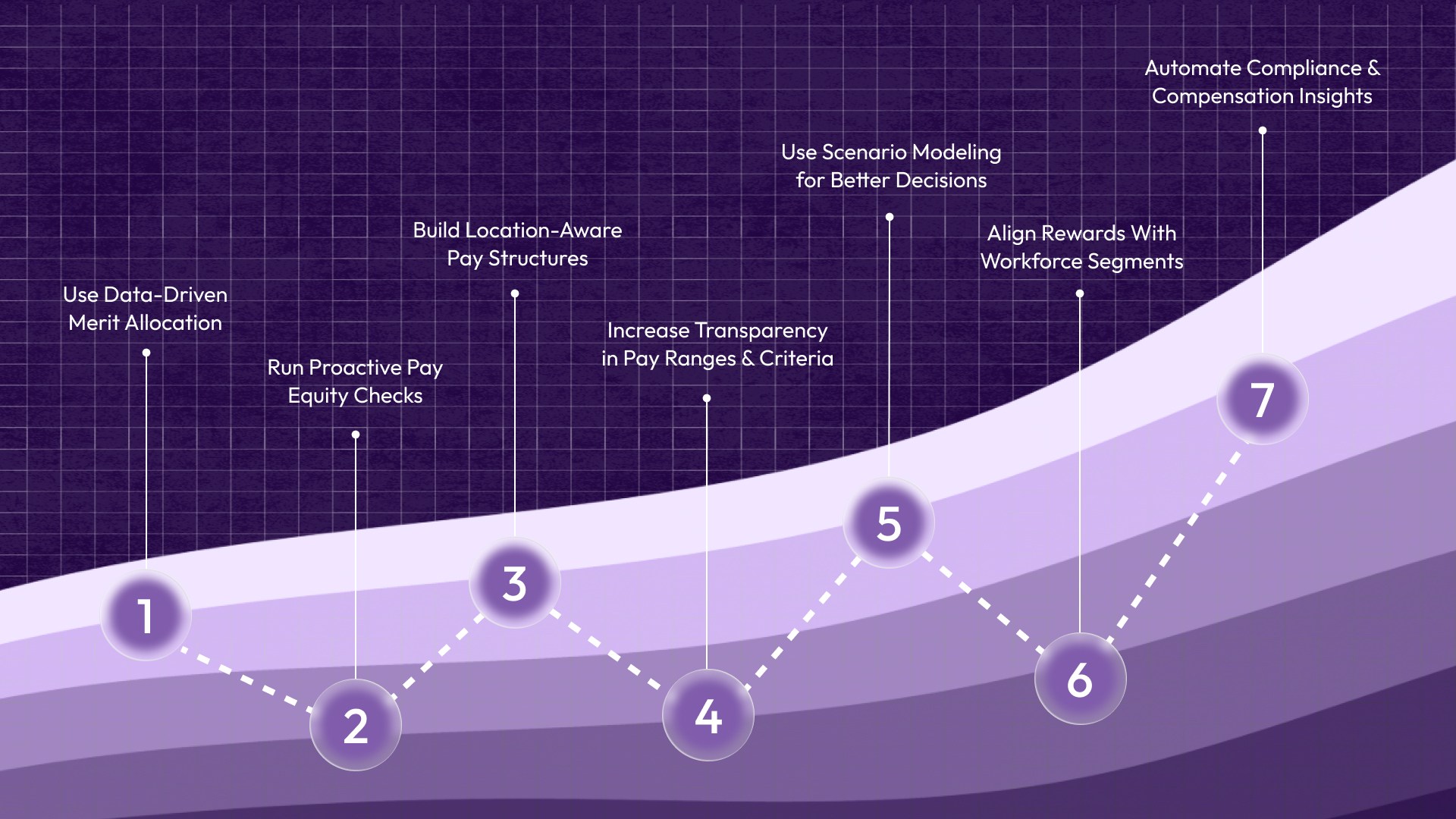
Pay fairness improves when decisions follow clear inputs, visible constraints, and consistent workflows.
Here are seven practical strategies that help teams make better compensation decisions in real time.
1. Use Data-Driven Merit Allocation
Most teams work with limited merit budgets. The challenge is deciding where that budget creates the most impact, and that's where data-driven pay decisions matter.
Top performers often receive higher increases, while average performers stay closer to baseline adjustments. Some portion of the budget is also held back for off-cycle decisions during the year.
This approach ensures that compensation reflects both performance and market demand, without exhausting the budget too early.
2. Run Proactive Pay Equity Checks
Fairness issues rarely appear suddenly. They build over time through small, repeated decisions.
Regular checks help identify gaps based on role, tenure, location, and performance. These checks should not be limited to annual cycles. They work best when applied continuously across hiring, promotions, and raises.
Early visibility makes corrections smaller and easier to manage.
3. Build Location-Aware Pay Structures
Distributed teams bring different market realities into one system. The same role may carry different pay expectations depending on location.
Location-aware structures help adjust pay based on market conditions while keeping internal consistency in mind. The goal is not just to match external benchmarks, but to maintain balance across teams.
Clear guidelines reduce confusion and improve consistency in decisions.
4. Increase Transparency in Pay Ranges and Criteria
Transparency reduces guesswork in compensation decisions. When pay ranges and criteria are clearly defined, decisions become easier to explain and defend.
Managers can communicate how pay is determined based on role, performance, and positioning within a range. This builds trust and reduces friction during discussions.
Clarity also helps maintain consistency across different teams and situations.
5. Use Scenario Modeling for Better Decisions
Every compensation decision has a ripple effect. A single offer or raise can impact budgets, internal equity, and future decisions.
Scenario modeling helps teams evaluate these trade-offs before finalizing decisions. It allows them to test different outcomes and choose the most balanced option.
In practice, this becomes much easier when compensation data, budgets, and headcount plans are all connected in one place, as CandorIQ does, rather than being reviewed separately.
6. Align Rewards With Workforce Segments
Not all roles respond to the same compensation structure. Different groups value different types of rewards.
Some roles may prioritize fixed pay, while others respond better to bonuses, incentives, or long-term rewards. Aligning compensation with these needs improves both fairness and effectiveness.
It also helps allocate budgets where they create the most value.
7. Automate Compliance and Compensation Insights
As teams grow, compliance requirements become more complex. Manual tracking makes it harder to stay consistent and accurate.
Automation helps monitor pay ranges, detect gaps, and flag decisions that fall outside defined guidelines. It also improves reporting and audit readiness.
Teams that bring these elements together into a single, structured system, such as CandorIQ, often find it easier to maintain both speed and control as decision volume increases.
These strategies work best when applied together. Each one strengthens a different part of the decision process, from inputs to execution.
So, the next step is to bring these ideas into a simple, repeatable framework that teams can follow every time they make a compensation decision.
How to Make Fair Compensation Decisions (Step-by-Step Framework)
Having the right strategies is important, but teams still need a simple way to apply them in real decisions. A clear framework helps ensure every decision follows the same logic, regardless of timing or situation.
Step 1: Define The Role And Level Clearly
Start by confirming the role, scope, and level. Compensation decisions often go wrong when roles are loosely defined or inconsistently leveled. A clear role definition sets the foundation for every decision that follows.
Step 2: Check The Pay Band Range
Once the role is defined, place it within the correct pay band. This ensures the decision stays aligned with internal structures and avoids unnecessary exceptions. It also creates a consistent starting point across teams.
Step 3: Compare Internal Equity
Before finalizing any number, compare it with similar roles across the organization. This helps identify gaps early and prevents imbalance between new and existing employees.
Step 4: Assess Budget Impact In Real Time
Every compensation decision affects overall spend. Reviewing the budget impact at this stage ensures the decision stays within limits and does not create issues later.
Step 5: Factor In Performance And Market Data
Adjust the final number based on performance, critical skills, and external benchmarks. This step ensures the decision is both competitive and justified.
Step 6: Route Through A Structured Approval Workflow
Finally, move the decision through a consistent approval process. This ensures alignment, accountability, and proper documentation.
In practice, teams that manage these steps in a connected system often make faster and more consistent decisions. When pay bands, budgets, and approvals are visible in one place, the process becomes easier to follow without back-and-forth.
This is where platforms like CandorIQ fit naturally into the workflow, helping teams apply these steps without relying on manual coordination.
Also Read: Proven Job Tier-Based Compensation Method for Fair Pay in 2026
Next, let’s look at the common mistakes that still cause unfair pay decisions, even when the right structure is in place.
5 Common Mistakes That Lead to Unfair Pay Decisions
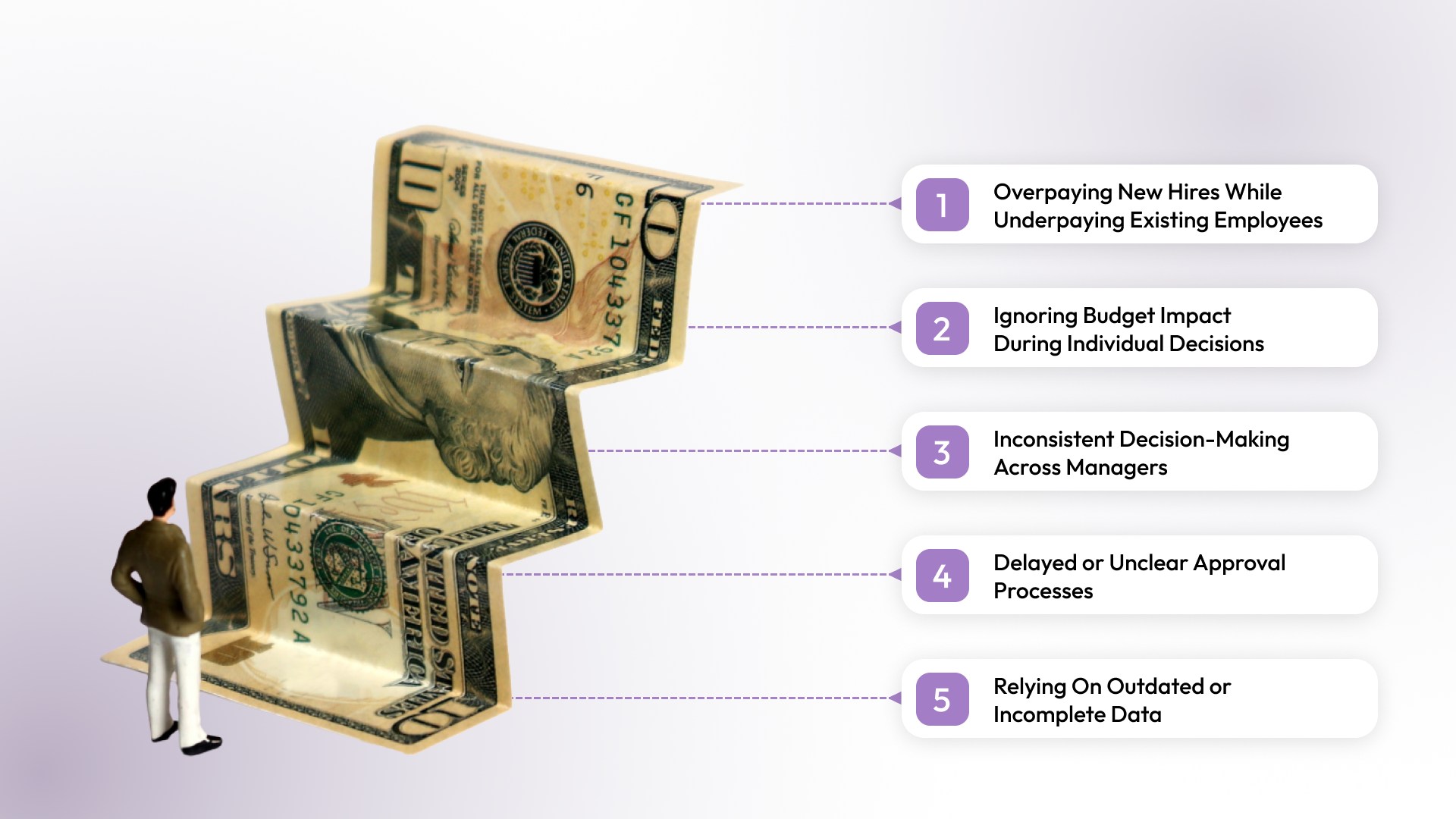
Even with clear strategies and frameworks, fairness can still break down during execution. Most issues do not come from intent. They come from small decisions that add up over time.
- Overpaying New Hires While Underpaying Existing Employees: Hiring decisions often move faster than internal adjustments. To close candidates, teams may stretch compensation beyond typical ranges. Over time, this creates visible gaps between new hires and existing employees in similar roles.
- Ignoring Budget Impact During Individual Decisions: A single raise or offer may seem reasonable in isolation. But when multiple decisions happen without budget visibility, total spend can drift beyond plan. This makes it harder to maintain fairness across the organization.
- Inconsistent Decision-Making Across Managers: Different managers may interpret compensation guidelines in different ways. Some stay within ranges, while others stretch them based on urgency. This leads to uneven outcomes across teams.
- Delayed or Unclear Approval Processes: When approvals take too long, teams feel pressure to move faster. In some cases, decisions are rushed or made without full review. This reduces consistency and increases the risk of errors.
- Relying On Outdated or Incomplete Data: Compensation decisions depend on accurate and current inputs. When data is outdated or scattered, decisions are made on assumptions instead of facts. This weakens both fairness and confidence.
Individually, these issues may seem manageable. But together, they create patterns that are hard to control as decision volume increases.
Also Read: Ultimate HR Guide to Fair & Transparent Financial Compensation
Fixing them requires more than awareness. It requires a system that brings consistency, visibility, and control into every compensation decision, which is exactly what we’ll look at next.
How CandorIQ Enables Compensation Decision Support For Your Team
By this point, the pattern is clear. Compensation decisions break down when data is scattered, budgets are unclear, and approvals depend on manual coordination. As decision volume increases, maintaining fairness and control becomes harder.
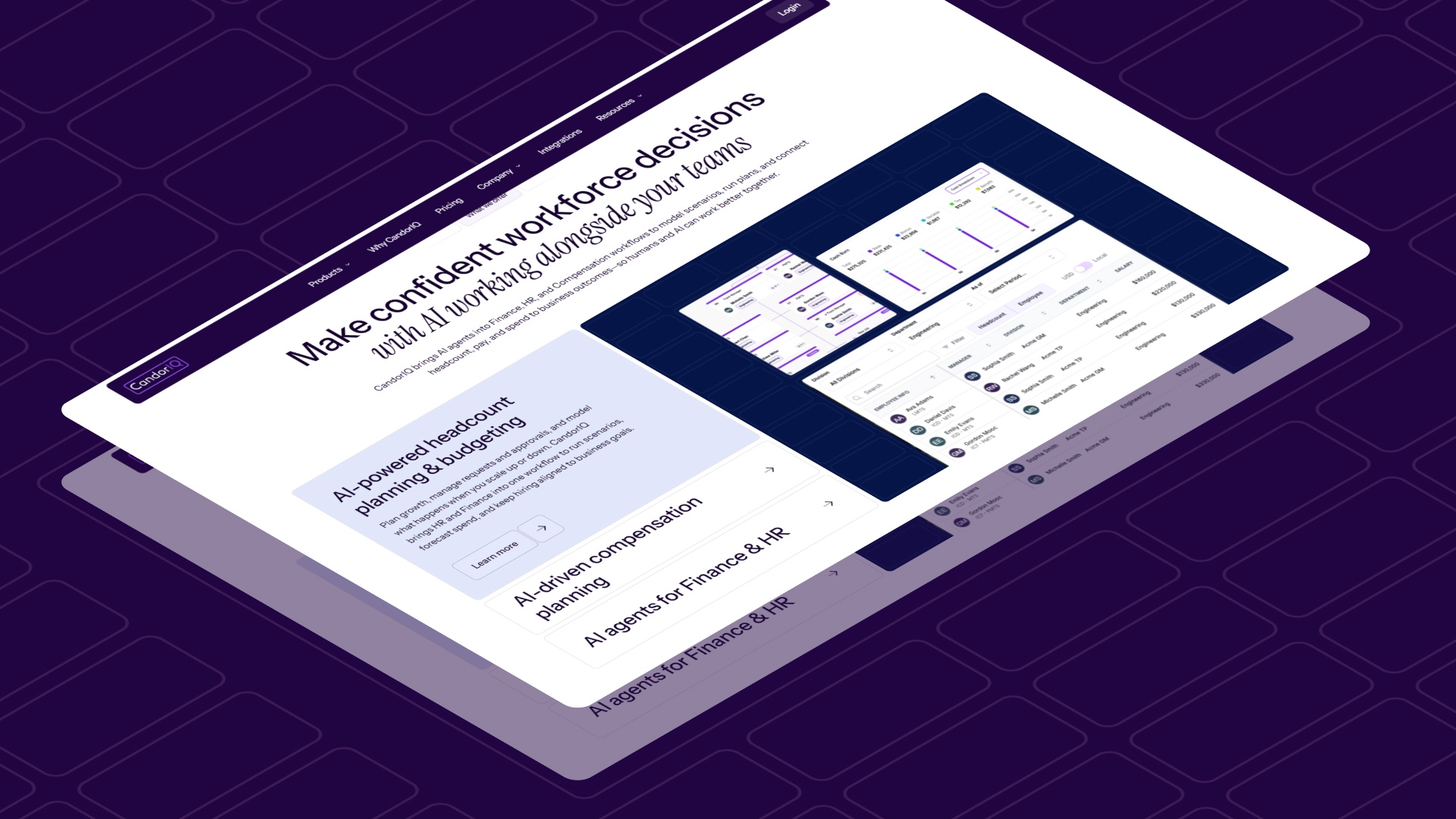
CandorIQ solves this by bringing compensation, headcount planning, and decision workflows into one connected system. Instead of managing pay bands, budgets, and approvals separately, everything works together in real time. This makes it easier to apply consistent logic across every compensation decision.
Here’s how we support fair and consistent pay decisions:
- Compensation & Payband Builder: Define structured pay bands by role, level, and location with real-time visibility into pay distribution and historical changes.
- Compensation Cycle Management: Run merit and bonus cycles with built-in workflows, budget tracking, and clear visibility into every decision as it happens.
- Candidate Offer Management: Create and manage offers with full compensation visibility, helping teams stay aligned with internal structures and budgets.
- Headcount Scenario Planning: Model hiring plans and understand their financial impact before making decisions, reducing the risk of overspending.
- Headcount Requests & Approvals: Standardize hiring requests with structured approvals that align compensation decisions with budget and role requirements.
- Workforce Management Dashboard: Track hiring, attrition, and compensation trends in one place to maintain alignment between actuals and plans.
- AI-Powered Decision Support: Get compensation insights, recommendations, and quick analysis based on real data, without manual effort.
CandorIQ brings structure, visibility, and consistency into every compensation decision, helping teams move faster without losing control.
Conclusion
Fair compensation is not about setting the right rules. It depends on how consistently those rules are applied in everyday decisions.
As teams grow, decision volume increases, and gaps start to appear. Without a structured system, fairness becomes harder to maintain across hiring, promotions, and raises.
This is where CandorIQ makes a difference. By connecting pay bands, budgets, headcount plans, and approvals in one place, we bring clarity and control to every decision.
If you want to make fair, consistent compensation decisions without slowing down your teams, it may be time to move to a system like CandorIQ built for scale. Book a demo now to know more.

FAQs
1. How do you balance internal equity with market competitiveness?
Balance comes from setting clear pay bands, then positioning employees based on performance, experience, and market demand without breaking internal consistency.
2. Should compensation be location-based or role-based?
It depends on the company's strategy. Many teams use a hybrid approach, adjusting pay for location while maintaining consistent role-based structures.
3. How can teams handle off-cycle compensation adjustments?
Off-cycle adjustments should follow the same decision framework as annual reviews, with clear checks for budget, internal equity, and approval consistency.
4. What makes a compensation decision defensible?
A decision is defensible when it follows defined pay bands, considers internal equity, aligns with the budget, and has documented approval and rationale.
5. How do you prevent pay gaps from growing over time?
Regular equity checks, consistent hiring practices, and structured decision processes help identify and correct gaps before they become larger issues.
6. What role does headcount planning play in compensation decisions?
Headcount planning ensures compensation decisions stay aligned with hiring goals and budget limits, preventing overspending or misaligned resource allocation.
Ready to modernize your workforce and compensation strategy?
See how CandorIQ brings workforce planning and compensation together with AI.