

Data-Driven Compensation Strategies for Fair Wages
Explore data-driven compensation solutions that support fair wages, clear pay practices, and equitable decisions while helping HR teams make confident choices.

Paying employees fairly is more than a compliance checklist; it shapes how your team feels, performs, and stays with your company. Slight differences in pay can have a significant impact: a top performer might leave because their total compensation isn’t competitive. At the same time, a new hire might hesitate to accept an offer that feels unclear or inconsistent.
Are your employees confident that they are being paid fairly compared to their peers? Are your compensation decisions backed by data or still relying on gut feelings and spreadsheets? These questions matter because how you set wages affects engagement, retention, and long-term growth.
Data-driven compensation solutions turn guesswork into clarity. By analyzing salary ranges, bonuses, equity, and benefits together, organizations can identify gaps, ensure fairness, and make decisions that align with both budgets and employee expectations. In this blog, we will explore practical strategies that help HR and finance teams design fair, transparent, and actionable compensation plans.
Key Features
- Unified compensation data that eliminates spreadsheet errors and provides a single source of truth.
- Automated workflows that streamline merit, bonus, and approval cycles with real-time budget tracking.
- Transparent payband builder that supports fair, consistent compensation across levels and locations.
- Scenario planning tools that project the financial impact of hiring and compensation adjustments instantly.
- AI-driven insights that highlight pay gaps and guide equitable, data-backed salary decisions.
Understanding Data-Driven Compensation
Organizations today face a growing challenge: ensuring that every employee is paid fairly while staying within budget. Without reliable data, decisions about salaries, bonuses, and equity often rely on intuition or outdated spreadsheets.
This can lead to inconsistencies, dissatisfaction, and even unexpected turnover. By using Data-Driven Compensation Solutions, you can create a transparent, evidence-based approach to setting wages across levels and locations.
To get a complete view of how data-driven compensation works, let’s break it down into three key aspects that explain its value and practical use.
What is data-driven compensation, and why does it matter?
- Definition: Data-driven compensation relies on real-time salary, bonus, and benefits data to guide pay decisions rather than intuition.
- Purpose: It ensures that pay is fair, consistent, and competitive, helping retain talent and reduce turnover.
- Example: HR teams can use employee data to see if roles at the same level are compensated equitably across departments or locations.
- Fact: Companies with structured, data-backed pay strategies are more likely to report higher employee satisfaction and lower attrition.
Benefits of using real-time data over traditional spreadsheets
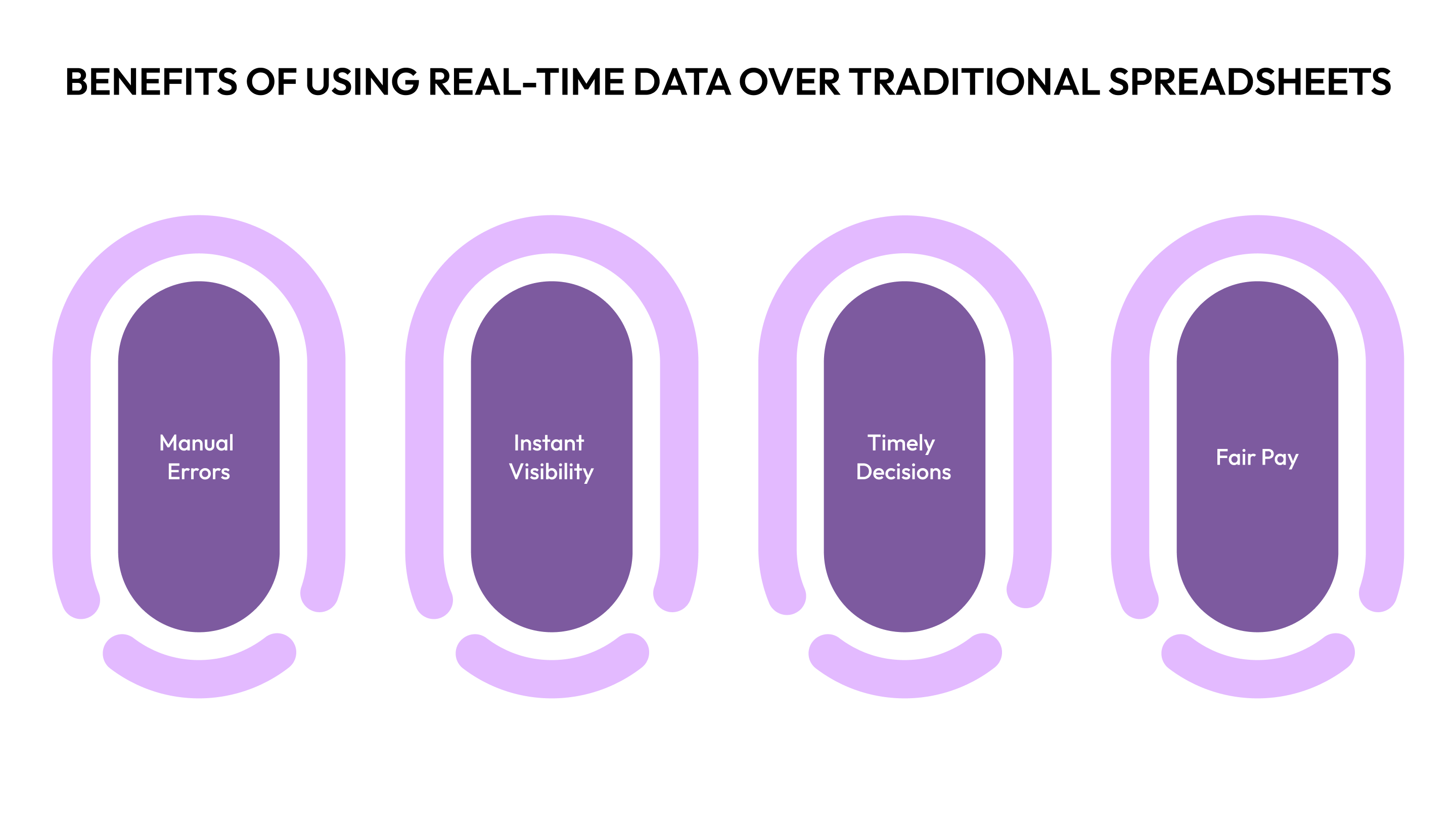
- Manual errors: Eliminates the mistakes and version confusion that often happen when multiple spreadsheets are used for tracking salaries and budgets.
- Instant visibility: Gives HR and finance teams immediate insight into pay ranges, budget allocations, and historical adjustments across departments.
- Timely decisions: Allows faster approvals for promotions, raises, and hiring by providing data-driven clarity instead of waiting for manual calculations.
- Fair pay: Ensures consistency and equity in compensation across locations, teams, and job levels, reducing the risk of dissatisfaction or turnover.
Example: How companies identify pay gaps using analytics
- Role comparison: Compares salaries for similar roles across teams or locations to detect inconsistencies and ensure fairness.
- Total compensation: Looks beyond base pay to include bonuses, equity, and benefits when assessing employee compensation.
- Historical tracking: Monitors past salary adjustments to identify patterns that may have unintentionally created gaps over time.
- Forecasting impact: Evaluates how future compensation decisions could affect budget, employee retention, and overall workforce planning.
Also Read: From EOY Wins to 2026 Momentum: Insights from Top People Leaders
Together, these insights set the stage for practical approaches that organizations can apply to build fair and consistent pay structures.

Top 8 Data-Driven Compensation Strategies for Fair Wages
Designing fair compensation is not just about meeting benchmarks; it’s about using data to make every pay decision transparent, consistent, and aligned with business goals. Companies that adopt Data-Driven Compensation Solutions can make strategic adjustments while keeping employees engaged and motivated. Across industries, organizations are using structured approaches to create equitable pay and clear career paths.
The following strategies highlight practical ways to implement data-driven compensation and improve fairness across your workforce.
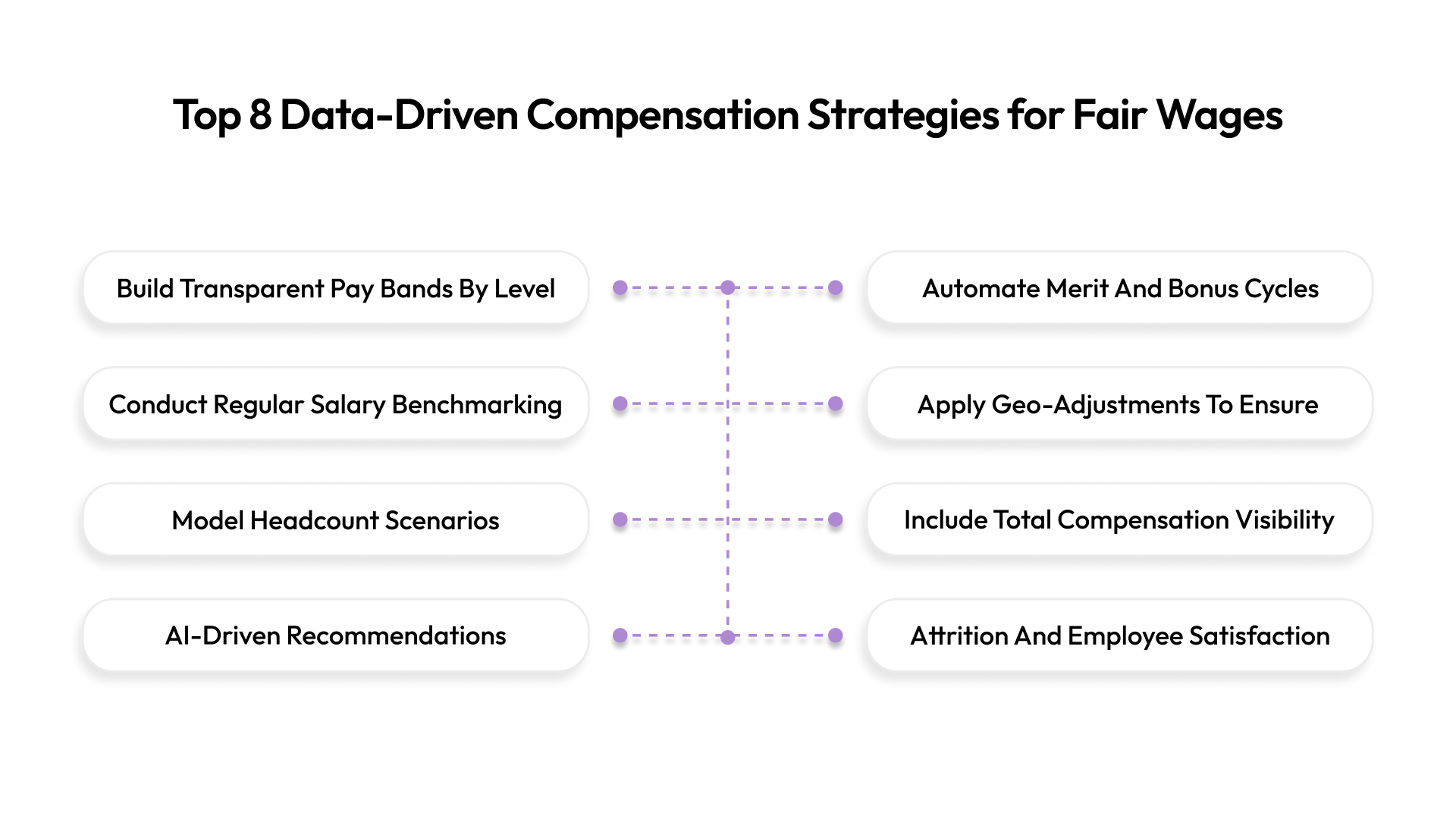
1. Build Transparent Pay Bands By Level, Department, And Location
Clear pay bands help employees understand how compensation works across roles and levels. Many teams use them to avoid confusion, especially when job titles or responsibilities vary across departments. When employees know what to expect, it reduces uncertainty and builds confidence in the company’s pay practices.
Here is what matters most when creating transparent pay bands:
- Clearer expectations: Gives employees a simple view of where they stand and what progression looks like in each role.
- Role consistency: Ensures similar positions receive fair compensation across departments and job families.
- Location accuracy: Adjusts salary ranges to match conditions in each region so employees feel fairly paid.
- Structured hiring: Helps recruiters offer salaries that stay aligned with internal ranges and market norms.
- Easy audits: Keeps a record of changes that support compliance checks and long-term pay reviews.
2. Automate Merit And Bonus Cycles For Consistency
Automated merit and bonus cycles help teams avoid the confusion that often happens with scattered files or last-minute updates. Companies use automation to keep reviews on schedule and ensure every employee is evaluated with the same level of accuracy. This creates a smoother process for managers and removes guesswork from reward decisions.
Here are the key points to focus on to automate merit and bonus cycles:
- Fewer manual errors: Reduces mistakes that happen when data is handled across multiple spreadsheets.
- Consistent evaluations: Supports fair review practices by applying the same rules and criteria to every team.
- Faster approvals: Moves requests through clear workflows so cycles don’t stall or get delayed.
- Better budget tracking: Shows how merit and bonus adjustments affect total budgets in real time.
- Improved employee trust: Keeps reward timelines predictable, which helps employees feel valued and informed.
3. Conduct Regular Salary Benchmarking Against Market Data
Regular salary benchmarking helps you stay aligned with what the market is paying for similar roles. Many organizations use benchmarking to prevent pay gaps, support retention, and stay competitive in fast-changing talent markets. It also gives managers reliable information when discussing promotions or salary adjustments.
Here are the key points focusing on regular salary benchmarking:
- Competitive salaries: Compares internal pay to market standards so you can attract and retain strong talent.
- Informed adjustments: Helps HR and finance make thoughtful salary updates instead of reacting to turnover or pressure.
- Clear promotion discussions: Gives managers objective information when explaining salary changes to employees.
- Fair internal alignment: Highlights differences between teams or roles so discrepancies can be addressed early.
- Stronger budgeting: Ensures yearly compensation plans are built with accurate and realistic pay data.
4. Apply Geo-Adjustments To Ensure Fairness Across Locations
Geo-adjustments help companies pay employees fairly based on the cost of living and talent demand in different areas. Teams use this approach when they manage distributed or remote workforces and want to avoid significant pay gaps between regions. With precise adjustments, employees understand why compensation varies and feel confident that pay decisions are fair.
Here are the key points focusing on geo-adjustments:
- Location-based fairness: Adjusts pay to match living costs and market rates in each region so employees feel respected and valued.
- Predictable salary ranges: Sets clear expectations for teams working across different cities or states.
- Better retention in high-cost areas: Supports employees in expensive regions by keeping compensation competitive.
- Reduced internal inequity: Prevents accidental overpayment or underpayment when roles are spread across locations.
- More substantial hiring alignment: Helps recruiters offer appropriate salaries regardless of where candidates live.
5. Model Headcount Scenarios To Align Budget And Workforce Plans
Headcount modeling helps teams see how hiring decisions impact budgets before any roles are approved. Many HR and finance teams rely on this approach to avoid surprises during rapid growth or restructuring. It allows leaders to compare different hiring paths and choose the one that fits both business needs and financial limits.
Here are the key points to focus on in model headcount scenarios:
- Clear budget visibility: Shows how each hiring scenario affects total spending so teams can plan with confidence.
- Smarter prioritization: Helps decide which roles should be filled first based on business goals and available funds.
- Risk reduction: Identifies potential overspending or understaffing early, preventing future issues.
- Aligned decision-making: Keeps HR, finance, and leadership working from the same data when approving roles.
- Faster workforce budgeting: Speeds up planning cycles by giving teams an organized view of possible outcomes.
6. Include Total Compensation Visibility (Salary, Bonus, Equity, Benefits)
Employees often focus on base salary because they don’t always see the full value of their compensation. Total compensation visibility changes by giving a clear breakdown of every component they receive. This builds trust, reduces confusion, and helps employees understand the true worth of their role.
Here are the essential points to highlight the compensation visibility:
- Complete clarity: Shows salary, bonus, equity, and benefits in one view so employees understand their full package.
- Transparency boost: Reduces misconceptions and builds confidence in compensation decisions.
- Improved retention: Helps employees appreciate long-term incentives like equity or benefits, not just base pay.
- Better conversations: Enables more productive discussions during performance reviews or negotiations.
- Higher engagement: Empowers employees with knowledge, leading to stronger loyalty and satisfaction.
7. AI-Driven Recommendations For Pay Equity Decisions
Identifying pay gaps can be difficult when teams rely on scattered data or subjective evaluations. AI-driven recommendations help simplify this by analyzing patterns, spotting inconsistencies, and guiding fair adjustments. This gives HR and finance teams a clearer path toward equitable pay decisions grounded in data.
Here are the key points to emphasize AI-driven recommendations:
- Insightful comparisons: Reviews compensation across similar roles to highlight potential inconsistencies.
- Bias reduction: Points out disparities that may be overlooked in manual reviews.
- Faster evaluations: Cuts hours of spreadsheet work by automating analysis of pay trends.
- Smart adjustments: Suggests data-backed salary corrections to support fair decisions.
- Consistent outcomes: Helps maintain equity across teams, levels, and locations through uniform evaluation criteria.
8. Track And Measure Retention, Attrition, And Employee Satisfaction
Understanding why employees stay or leave is a core part of building fair and effective compensation programs. When organizations track retention patterns, exit trends, and sentiment shifts, they can identify hidden issues that influence pay decisions. These insights turn Data-Driven Compensation Solutions into long-term workforce tools rather than short-term fixes.
Here are the key points to include in track and measure retention:
- Retention signals: Highlights departments or roles where stability is strong or declining.
- Attrition insights: Identifies reasons behind turnover patterns to support targeted improvements.
- Satisfaction metrics: Measures sentiment to understand whether pay and rewards feel fair to employees.
- Predictive trends: Spot early indicators of disengagement before they lead to exits.
- Better planning: Helps teams align compensation practices with long-term employee expectations and needs.
Also Read: From Fire Drills to Forecasts, Webinar with Talent Leader Katie Wagner and Haris Ikram
With these core strategies in place, the next step is to adopt additional practices that strengthen fairness across every pay decision.
Additional Tips for Ensuring Fair Wages
Ensuring fair wages goes beyond structured pay bands and data analysis. Even with Data-Driven Compensation Solutions, ongoing attention is needed to make sure employees understand their compensation, feel valued, and trust the fairness of pay decisions.
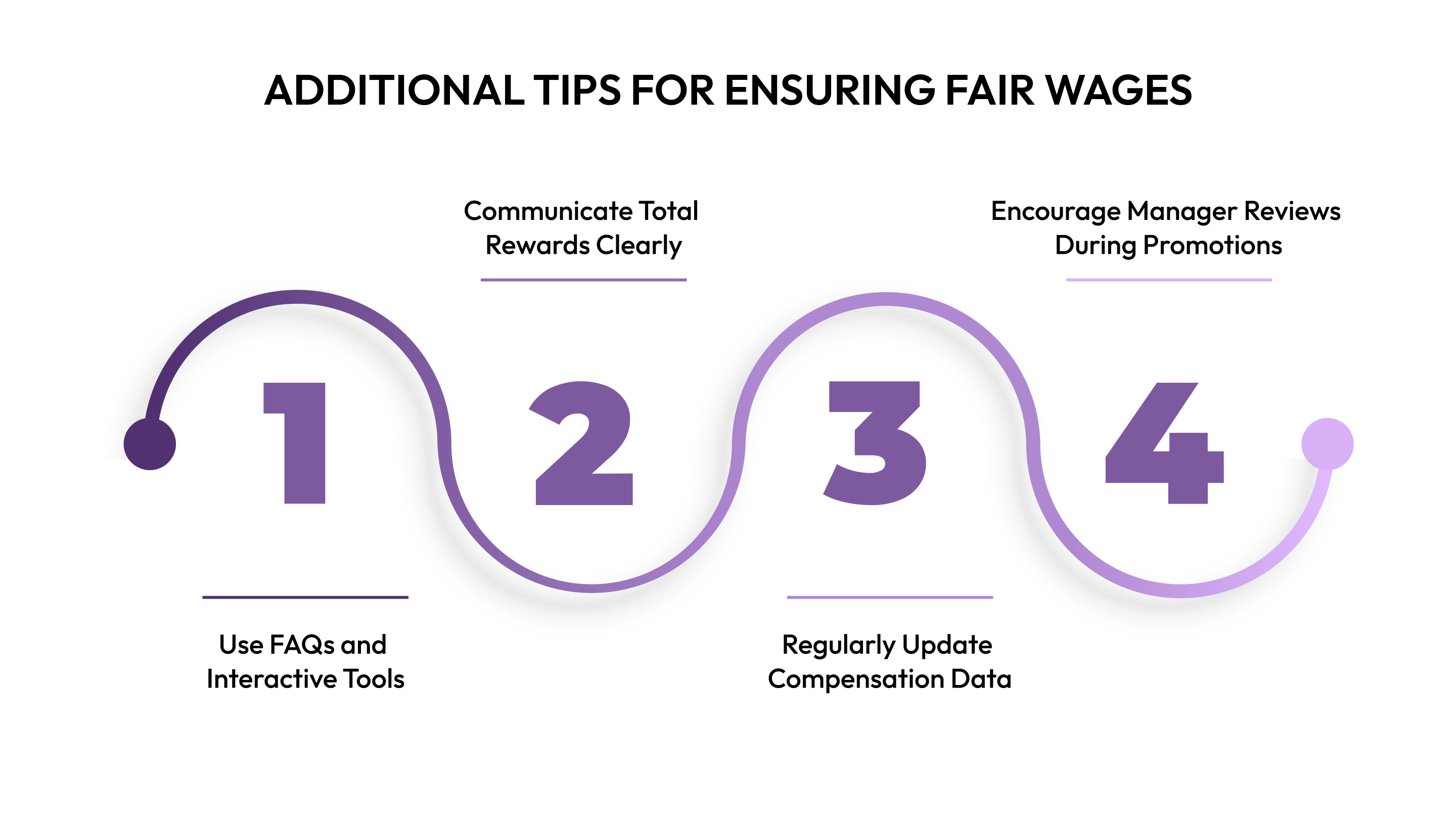
Here are some practical steps that can help improve transparency and equity in your compensation practices:
- Use FAQs and interactive tools: Providing clear FAQs or calculators helps employees understand how their pay is determined and reduces repetitive HR questions.
- Communicate total rewards clearly: Share salary, bonuses, equity, and benefits so employees see the full value of their compensation, which builds trust and engagement.
- Regularly update compensation data: Keep salaries aligned with market trends, cost of living changes, and internal equity to prevent discrepancies and retain top talent.
- Encourage manager reviews during promotions: Managers should check pay equity when giving raises or promotions to ensure fairness and consistency across teams and roles.
Once these tips are in motion, it becomes important to address the common challenges that can affect fair compensation and explore practical ways to solve them.
Challenges and Solutions in Implementing Fair Compensation
Even with the best intentions, HR and finance teams often face hurdles when trying to ensure fair pay. Inconsistent data, limited visibility, and misaligned processes can create inequities and frustrate employees. Data-driven compensation Solutions can help, but understanding common challenges is the first step toward improvement.
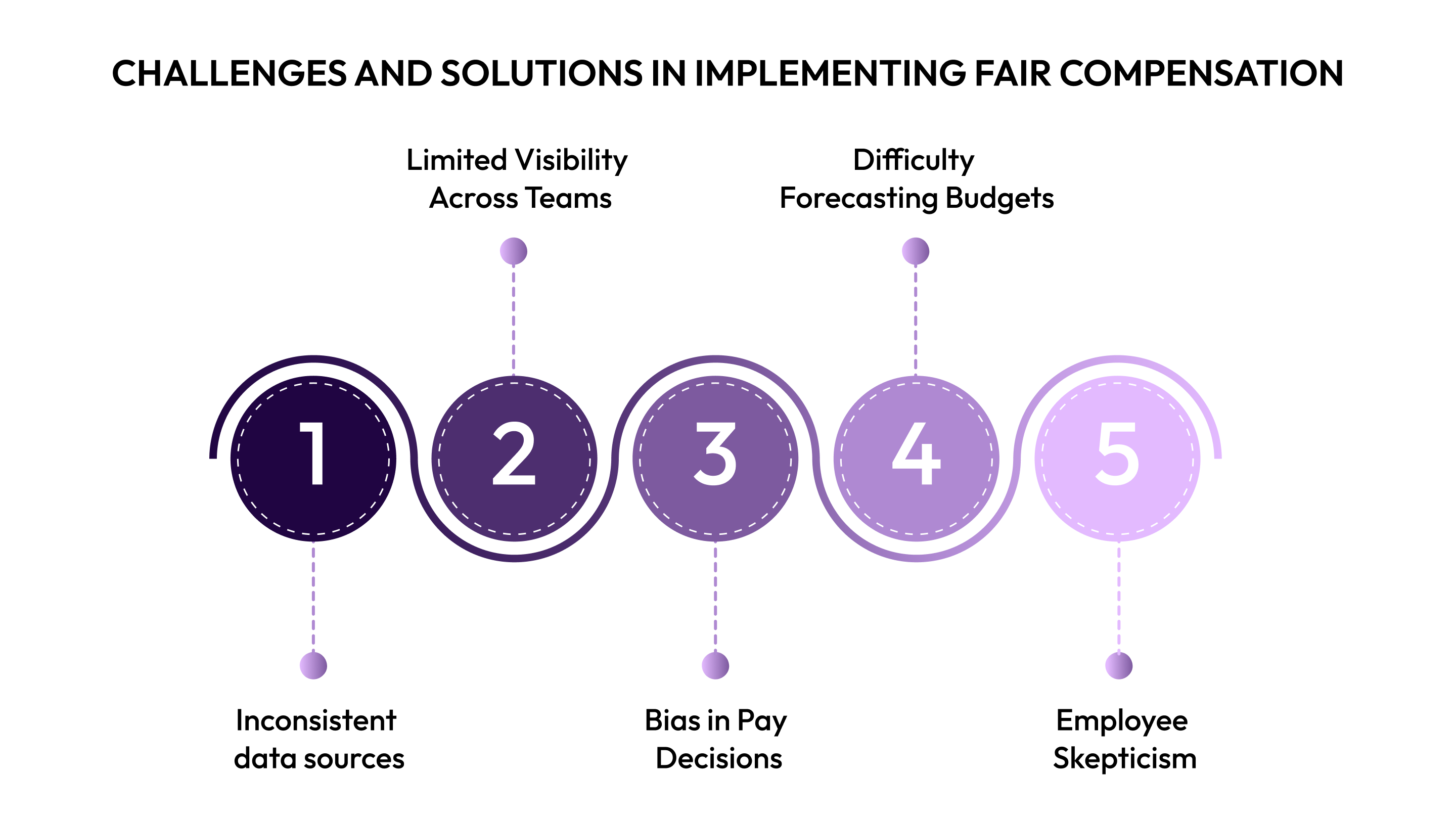
Here are key challenges and practical solutions to address them:
- Inconsistent data sources: Using spreadsheets or disconnected tools can create errors and confusion.
- Solution: Consolidate compensation data into a single, unified system for accurate analysis.
- Solution: Consolidate compensation data into a single, unified system for accurate analysis.
- Limited visibility across teams and locations: It’s difficult to identify pay gaps without a complete view.
- Solution: Use real-time dashboards to monitor pay, budgets, and equity across departments.
- Solution: Use real-time dashboards to monitor pay, budgets, and equity across departments.
- Bias in pay decisions: Subjective decision-making can unintentionally create inequities.
- Solution: Implement structured workflows and approval logic to ensure objective, fair outcomes.
- Solution: Implement structured workflows and approval logic to ensure objective, fair outcomes.
- Difficulty forecasting budgets: Without predictive insights, raises or new hires can exceed budgets.
- Solution: Model headcount scenarios to evaluate financial impact before making decisions.
- Solution: Model headcount scenarios to evaluate financial impact before making decisions.
- Employee skepticism: Lack of transparency can lead to distrust in pay fairness
- Solution: Communicate total rewards clearly and provide interactive tools to educate employees on how pay is determined.
Also Read: The AI-Powered Evolution of Total Rewards
After understanding these challenges and their solutions, the next step is to see how a structured platform can support data-driven compensation and strengthen fair wage practices.

How CandorIQ Can Help in Data-Driven Compensation
Implementing fair compensation can be challenging without the right tools. Data-Driven Compensation Solutions like CandorIQ provide HR and finance teams with the insights and workflows needed to make pay decisions more transparent, equitable, and efficient. With the right platform, you can reduce bias, track pay equity, and align compensation with business goals.
Here are key ways CandorIQ supports fair, data-driven compensation:
- Compensation & Payband Builder: Creates clear paybands by level, department, and location, ensuring consistency and fairness across the organization.
- Compensation Cycle Automation: Automates merit and bonus approvals, tracks budgets in real-time, and reduces manual errors for faster, accurate pay cycles.
- Candidate Offers & Total Compensation Transparency: Provides employees and candidates with visibility into salary, bonus, equity, and benefits, building trust and engagement.
- Headcount Scenario Planning: Allows teams to model hiring scenarios, understand budget impact, and make informed workforce decisions before committing resources.
- AI Agent for Strategic Decision Support: Offers data-backed recommendations to identify pay gaps, guide equity adjustments, and support objective decision-making.
With these capabilities in place, the final step is to bring everything together and highlight how fair wage practices shape long-term organizational success.
Conclusion
Fair and transparent compensation is essential for employee satisfaction, retention, and business growth. By using Data-Driven Compensation Solutions, organizations can identify pay gaps, automate merit and bonus cycles, apply geo-adjustments, and model workforce scenarios to ensure fairness across roles and locations. Regular updates, clear communication, and structured strategies help maintain consistency and trust.
CandorIQ provides the tools needed to make data-driven compensation simple and effective. From building transparent paybands to automating compensation cycles and offering total compensation visibility, CandorIQ helps HR and finance teams make fair pay decisions quickly and confidently. The platform also provides insights and recommendations to address equity gaps and improve workforce planning.
Ready to create fair and transparent compensation strategies for your organization? Explore how CandorIQ can streamline pay decisions, increase equity, and align your workforce with business goals. Book a demo today to see it in action.
FAQs
1. How often should companies review their pay structures?
Pay structures should be reviewed at least once a year to ensure competitiveness and fairness. Market trends, cost of living, and organizational growth can change compensation requirements. Regular reviews prevent unintentional pay gaps and support retention.
2. What factors should be considered when creating a compensation plan?
Consider market benchmarks, job level, experience, location, and internal equity. Include all components like base salary, bonuses, equity, and benefits. Clear documentation ensures consistency and transparency across the organization.
3. How can small HR teams manage fair compensation efficiently?
Small teams can use consolidated data systems and automated workflows to reduce manual errors. Structured processes for approvals and headcount planning save time. Using technology ensures decisions remain fair and data-driven despite limited resources.
4. Can transparent compensation affect employee motivation?
Yes, transparency builds trust and encourages engagement. Employees understand how pay is determined and what is needed for growth. This clarity can improve satisfaction, retention, and overall team performance.
5. What are the key metrics to track for compensation effectiveness?
Track pay equity, attrition rates, employee satisfaction, and total compensation distribution. Monitoring budget alignment and raise cycles ensures sustainable practices. These metrics help refine compensation strategies and maintain fairness.
Ready to modernize your workforce and compensation strategy?
See how CandorIQ brings workforce planning and compensation together with AI.