

Ultimate HR Guide to Fair & Transparent Financial Compensation
Get clear on financial compensation definition, types, and importance. Discover how effective strategies attract top talent. Enhance your compensation plan today!

Financial compensation covers everything from base salary and bonuses to benefits and equity. For many companies, it represents one of the largest expense items. In fact, recent data from the U.S. Bureau of Labor Statistics shows that in June 2025, private‑industry workers earned an average of $45.65 per hour. About 70% of this was wages, and the remaining 30% was benefits.
A fair and clear compensation system that matches company goals helps keep employees, manage budgets, and grow operations smoothly. It influences employee satisfaction, engagement, and overall organizational performance.
In this blog, we explore the key components of financial compensation, explain how they affect both employees and business outcomes, and provide actionable guidance for building effective pay structures.
Key Takeaways
- Structured compensation drives retention. Clear pay bands, transparent policies, and role-specific frameworks reduce turnover and enhance employee satisfaction.
- Alignment with organizational goals is critical. Compensation decisions must reflect budget limits, headcount forecasts, and strategic priorities to support sustainable growth.
- Global and distributed teams require tailored approaches. Geo-adjusted pay, multi-currency support, and regional equity considerations ensure fairness and compliance.
- Role-specific collaboration improves efficiency. CPOs, CFOs, HRBPs, and Recruiting Managers each play distinct roles, and structured workflows enhance coordination across the organization.
Financial Compensation Definition: What It Means for Your Team
Financial compensation refers to the total monetary rewards an employee receives for their work. It goes beyond the base salary to include bonuses, commissions, equity, and other cash-based benefits. For organizations, understanding financial compensation is essential because it directly influences employee satisfaction, retention, and overall business performance.
Key Elements of Financial Compensation
- Base Salary: The fixed portion of pay, usually paid monthly or biweekly, forms the foundation of compensation. Base salary reflects the employee’s role, skills, experience, and market rates. Companies use benchmarking data to ensure salaries remain competitive. With CandorIQ, HR and Finance teams can adjust salaries across roles and locations in minutes. The platform maintains consistent pay bands and tracks historical data automatically, which reduces manual errors and saves hours of administrative work each month.
For example, a mid-level software engineer in the U.S. may have a base salary ranging from $90,000 to $120,000, depending on location and company size.
- Variable Pay: Variable pay rewards performance or achievement of specific targets. This can include annual bonuses, sales commissions, or incentive payouts. Variable pay helps align employee efforts with company goals and encourages productivity.
- Equity and Long-Term Incentives: Stock options, restricted stock units (RSUs), and profit-sharing plans give employees a stake in the company’s success. Equity-based compensation is especially common in startups and fast-growing SaaS or fintech companies. It not only motivates employees but also helps retain talent in competitive markets.
- Direct Monetary Benefits: This includes retirement contributions, overtime pay, signing bonuses, and other financial perks that supplement salary. While sometimes overlooked, these benefits can significantly affect an employee’s total compensation package.
Why Financial Compensation Matters
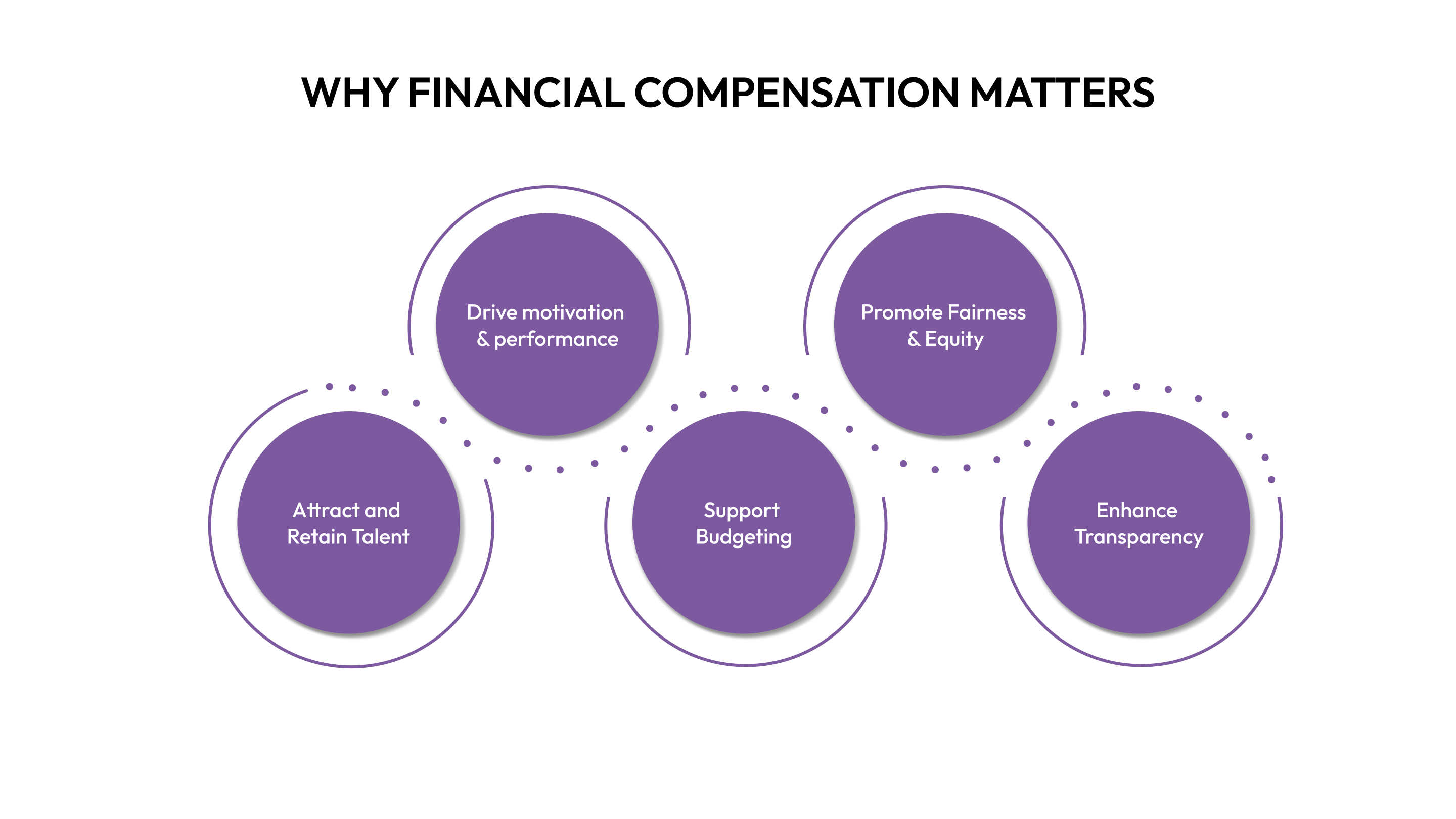
A thoughtfully designed compensation framework provides tangible benefits for both employees and the organization. It ensures that pay practices are fair, competitive, and aligned with business priorities, creating a positive impact on motivation, retention, and operational efficiency.
- Attract and retain talent: Competitive and transparent compensation reduces turnover, retains high-performing employees, and enhances the company’s reputation in the job market.
- Drive motivation and performance: Linking pay to measurable performance encourages employees to meet goals, rewards contributions fairly, and aligns individual efforts with organizational objectives.
- Support budgeting and workforce planning: Predictable compensation costs allow HR and Finance teams to forecast headcount needs, manage burn rates, and plan budgets with confidence.
- Promote fairness and equity: Standardized pay bands and regular equity audits prevent disparities across roles, departments, and locations, building trust and supporting compliance with regulatory standards.
- Enhance transparency and collaboration: Clear communication of compensation policies fosters understanding among employees, ensures accountability, and improves collaboration between HR, Finance, and leadership teams.
Financial Compensation vs Total Rewards
With a clear understanding of financial compensation, the next step is exploring how it directly impacts your organization’s strategy and key business outcomes.

Also Read: Total Compensation vs. Salary: A Complete Guide for Employees and Candidates
How Financial Compensation Connects to Organizational Strategy
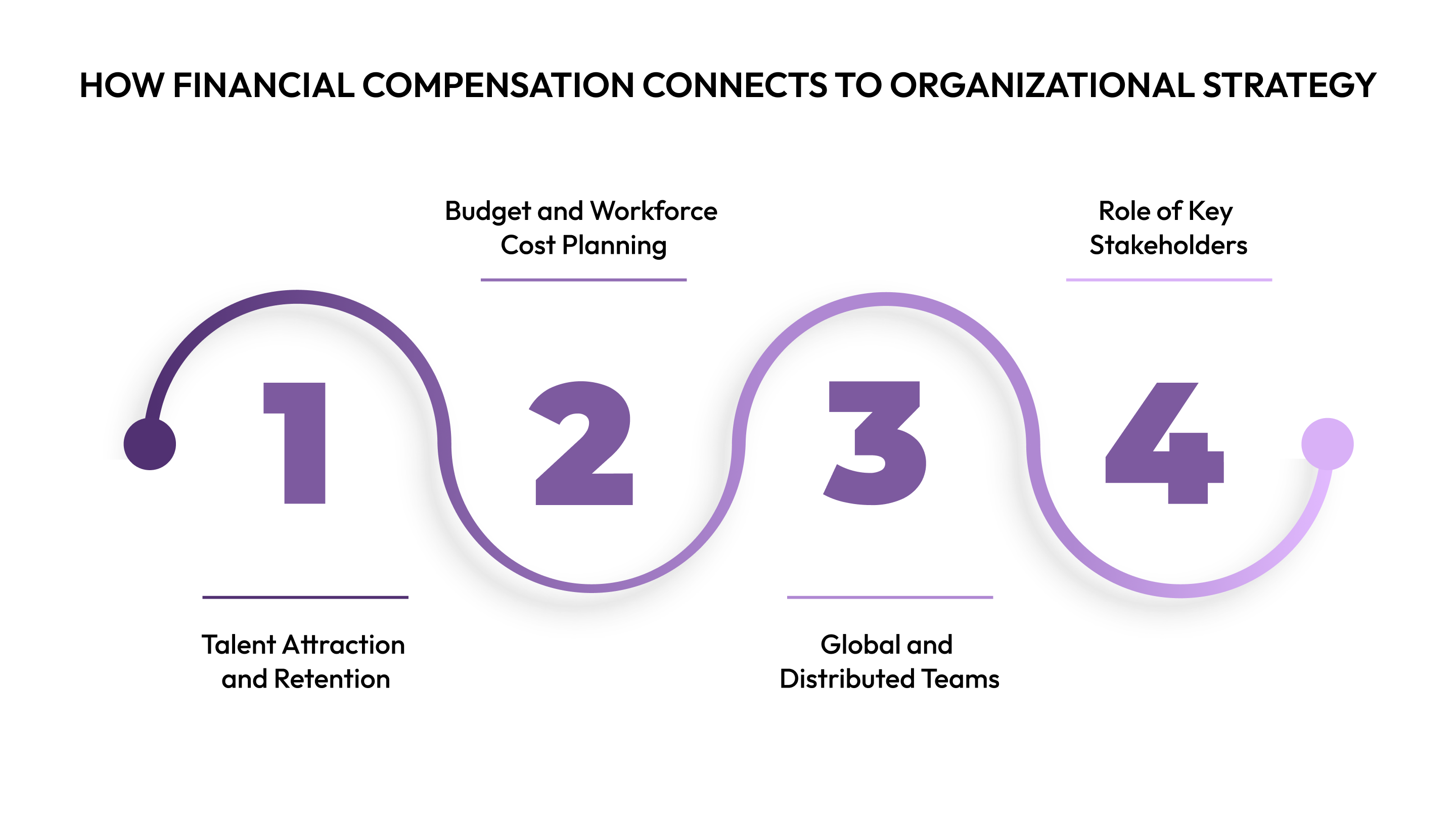
Financial compensation is not just a payroll exercise; it is a tool that influences business outcomes. Aligning compensation with organizational goals ensures that talent acquisition, retention, and budget management all support growth. For companies scaling rapidly, understanding this connection is critical to balancing costs while maintaining competitiveness. Here’s a look at the key areas where financial compensation influences organizational strategy:
1. Talent Attraction and Retention: Cost of Turnover and Market Competition
Attracting and retaining top talent depends heavily on how competitive your compensation packages are. High turnover can cost a company up to 33% of an employee’s annual salary in hiring, training, and lost productivity.
Additionally, market competition requires benchmarking salaries and benefits against similar organizations in your industry. For example, SaaS and fintech companies often need to offer a combination of base pay and equity to compete for software engineers and product managers.
2. Budget and Workforce Cost Planning: Headcount Modeling and Burn Rate
Compensation directly impacts your budget and workforce planning. Organizations must model headcount growth, payroll costs, and cash burn scenarios to avoid overspending.
- Headcount Modeling: Plan for hiring needs by role, department, and location.
- Burn Rate Scenarios: Evaluate how compensation affects overall budget, especially in fast-growth environments scaling 2–3× annually.
Structured financial compensation systems provide real-time visibility into cost implications, helping CFOs and HR teams make informed decisions before hiring or promoting employees.
3. Global and Distributed Teams: Geo‑Adjusted Compensation
For distributed or remote-first teams, compensation must reflect regional cost differences. Geo-adjusted salaries, multi-currency payroll, and regional equity allocations ensure fairness and competitiveness.
For example, a software engineer in San Francisco may have a different base salary than a counterpart in Austin, even if the role and responsibilities are identical. Clear guidelines reduce miscommunication and maintain equity across the organization.
4. Role of Key Stakeholders
Financial compensation planning involves multiple stakeholders, each with a distinct focus:
- CPO / Chief People Officer: Designs pay strategy, ensures equity, and aligns compensation with company culture. They define frameworks that balance internal fairness with market competitiveness.
- CFO / FP&A Leaders: Ensure workforce costs align with budgets and long-term financial plans. They evaluate how hiring or pay adjustments impact cash flow and profitability.
- HRBP / People Ops: Execute compensation cycles, track data, and provide transparency across teams. They act as the bridge between HR strategy and Finance execution.
- Recruiting Managers: Manage offers and candidate compensation discussions, ensuring consistency and competitiveness to close talent quickly.
Each stakeholder relies on real-time data and structured workflows to make decisions confidently, especially in high-growth organizations where headcount and budgets change rapidly.
Once you understand how compensation impacts business outcomes, the next step is to create a clear framework that ensures fairness and transparency.
Also Read: Effective Compensation Benchmarking for HR Teams in 2025
How to Build a Fair and Clear Compensation Structure?
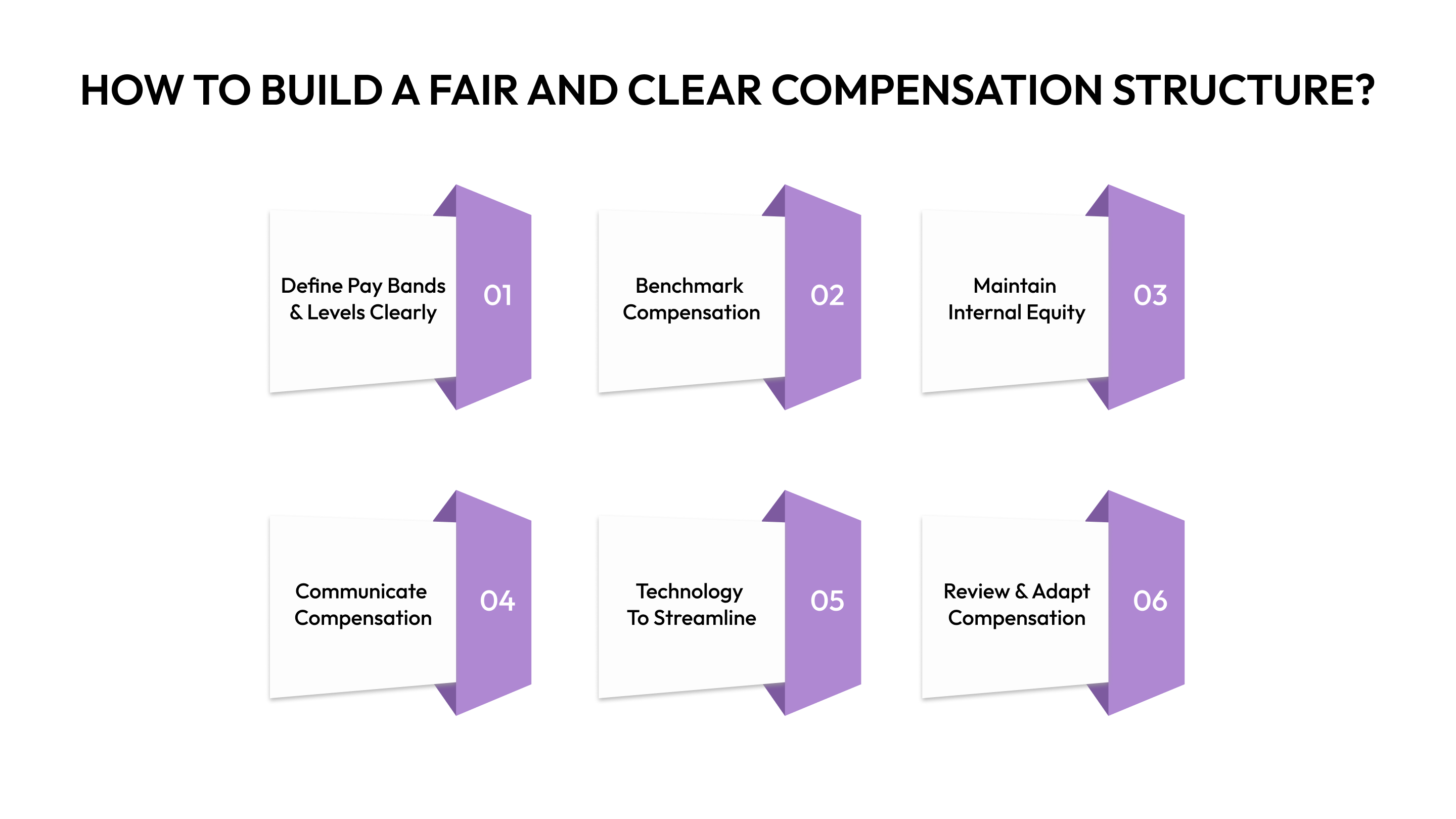
A structured compensation framework ensures employees are paid fairly, performance is rewarded consistently, and workforce costs remain predictable. For mid-sized and growth-stage organizations, transparency in compensation builds trust, reduces turnover, and aligns workforce decisions with organizational strategy.
1. Define Pay Bands and Levels Clearly
Create structured pay bands for every role, level, and department to standardize salary decisions and support career progression.
Here’s a list of actions to define pay bands:
- Set minimum and maximum salary ranges for each role.
- Factor in experience, role complexity, and location-based adjustments.
- Align pay bands with internal career levels and promotion paths.
- Communicate salary ranges to managers to guide offers and raises.
2. Benchmark Compensation Against Market Data
Ensure your pay remains competitive by regularly comparing it to industry standards and peer organizations.
Here’s a list of actions to benchmark effectively:
- Gather salary surveys and peer comparison data for relevant roles.
- Adjust base pay, bonuses, and equity to match market rates.
- Identify gaps where your compensation falls behind or exceeds market standards.
- Use benchmarking data to inform hiring, retention, and promotion decisions.
3. Maintain Internal Equity Across Roles
Regularly audit compensation to ensure employees performing similar roles with comparable experience are paid fairly.
Here’s a list of steps to maintain internal equity:
- Compare salaries across departments and roles.
- Identify and correct pay disparities proactively.
- Document decisions and rationale for transparency and compliance.
- Integrate internal equity reviews into your annual compensation planning cycle.
4. Communicate Compensation Policies Transparently
Make sure employees understand how pay, raises, and incentives are determined to build trust and engagement.
Here’s a list of actions for transparent communication:
- Share documentation on pay bands, bonus criteria, and promotion guidelines.
- Hold sessions to explain compensation policies and answer questions.
- Provide access to dashboards showing total compensation breakdowns.
- Clarify how performance, tenure, and role changes affect pay.
5. Use Technology to Streamline Compensation Workflows
Implement platforms that consolidate pay bands, approvals, and headcount planning into a single system.
Here’s a list of actions to utilize technology:
- Centralize compensation cycles, headcount requests, and approvals.
- Enable real-time collaboration between HR, Finance, and leadership.
- Track budget alignment and internal equity automatically.
- Reduce manual errors and delays with structured workflow management.
6. Review and Adapt Compensation Framework Regularly
Update your framework periodically to align with market trends, organizational growth, and workforce changes.
Here’s a list of actions for regular review:
- Conduct audits and benchmark exercises annually or semi-annually.
- Adjust pay bands and benefits to reflect market changes and inflation.
- Align updates with strategic workforce planning and headcount budgets.
- Gather feedback from managers and employees to ensure fairness and clarity.
After defining a clear and fair compensation structure, it’s important to follow practical steps tailored to each role to put it into action effectively.
Suggested read: How to Calculate Total Employee Compensation: A Step-by-Step Guide
Practical Steps and Role‑Specific Checklists
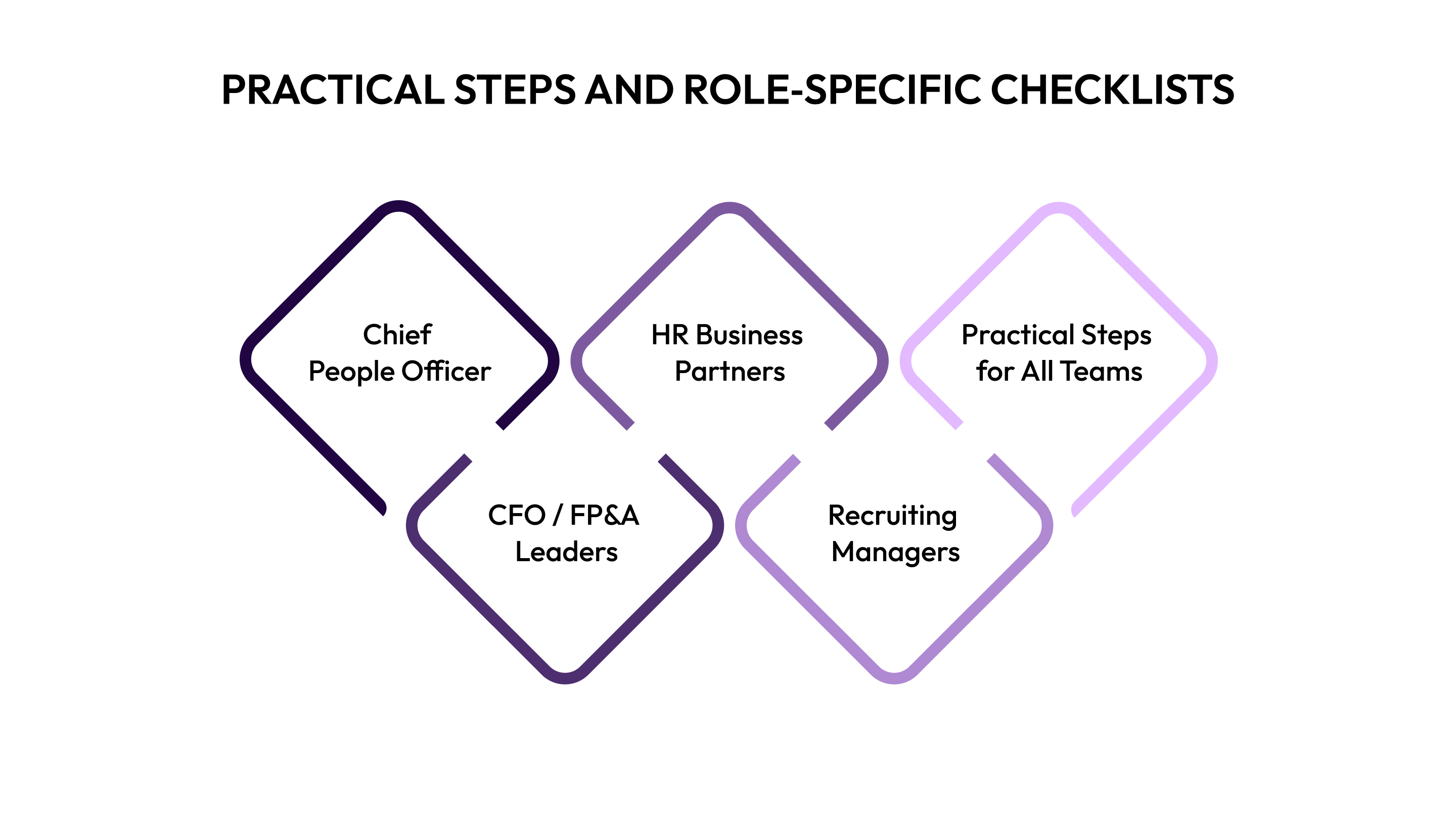
Managing financial compensation effectively requires a structured approach that considers both organizational objectives and the responsibilities of individual stakeholders. Implementing practical steps ensures fairness, transparency, and alignment with budgets while empowering each team member to contribute meaningfully.
1. Chief People Officer (CPO)
CPOs focus on overarching pay strategy, equity, and culture alignment. They are responsible for defining pay bands, ensuring internal fairness, and establishing policies that support retention and engagement. By reviewing total compensation structures and monitoring market benchmarks, CPOs ensure compensation aligns with the organization’s values and competitive positioning.
2. CFO / FP&A Leaders
CFOs and FP&A teams focus on financial planning, cost predictability, and workforce budgeting. Their role involves modeling headcount scenarios, analyzing burn rates, and ensuring that compensation plans fit within broader financial constraints. They collaborate closely with HR to forecast the impact of raises, bonuses, and new hires on organizational budgets.
3. HR Business Partners / People Ops
HRBPs and People Ops teams handle execution, data management, and process transparency. They coordinate compensation cycles, manage approvals, and ensure that pay decisions are accurately documented. By providing clear communication and analytics, they support leadership in making informed compensation decisions.
4. Recruiting Managers
Recruiting Managers focus on offer design and candidate compensation discussions. Their responsibilities include ensuring competitive offers, maintaining consistency across candidates for similar roles, and presenting total rewards clearly. They play a key role in reducing time-to-hire while keeping compensation aligned with organizational standards.
5. Practical Steps for All Teams
All stakeholders benefit from a structured, role-specific approach to compensation management. Implementing the following steps helps reduce errors, improve collaboration, and maintain transparency across the organization:
- Establish centralized compensation data accessible to all relevant teams
- Define clear pay policies and review schedules for consistency
- Conduct regular alignment meetings between HR, Finance, and leadership
- Create standardized approval workflows to accelerate decision-making
- Maintain thorough documentation for each compensation cycle and headcount change
- Monitor and adjust processes regularly to match organizational growth and evolving needs
Even with a structured approach, organizations often encounter hurdles that can affect fairness, efficiency, and strategic alignment. Recognizing these common challenges helps teams proactively address them and maintain a reliable compensation system.

Common Challenges & Pitfalls in Managing Financial Compensation
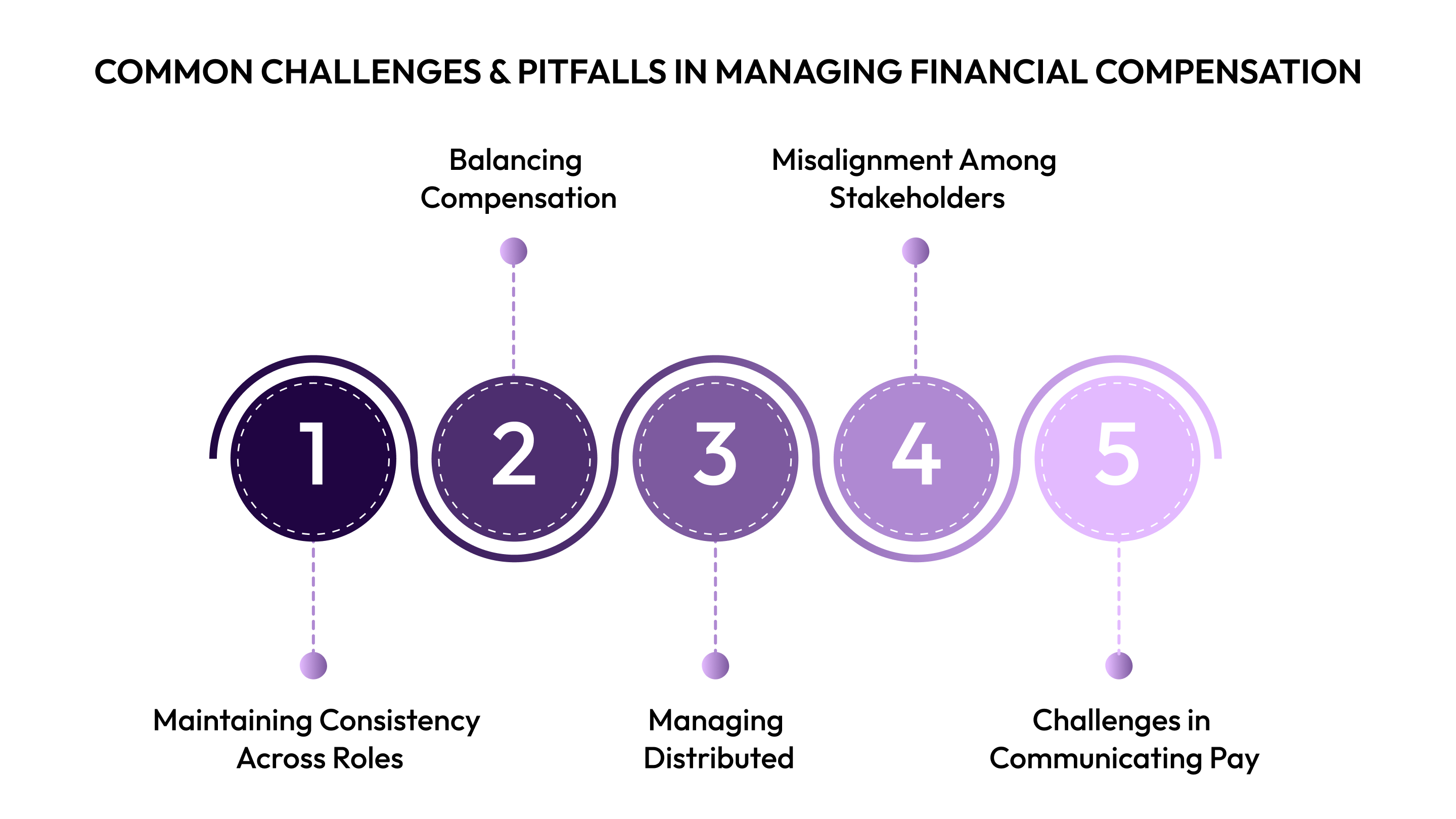
Even with a well-intentioned compensation plan, organizations often face hurdles that affect fairness, efficiency, and strategic alignment. Understanding these pitfalls helps HR and Finance teams implement solutions that maintain employee trust and support business objectives.
1. Difficulty Maintaining Consistency Across Roles
As companies scale or operate across multiple locations, keeping pay practices consistent becomes challenging. Differences in role definitions, performance expectations, or local market rates can lead to unintentional inequities, which may impact employee satisfaction and retention.
2. Balancing Compensation with Budget Limitations
Fast-growing organizations often struggle to offer competitive pay while staying within budget. Without clear headcount forecasts and cost planning, companies may overspend or underpay key talent, causing friction between HR and Finance.
3. Managing Distributed and Global Teams
Compensation decisions become more complex for organizations with remote or geographically diverse teams. Varying cost-of-living, currency changes, and regional compliance rules can make standardizing pay difficult. This can lead to employees feeling their pay is unfair.
4. Misalignment Among Stakeholders
When HR, Finance, and leadership operate in silos, compensation decisions can be slow, inconsistent, or poorly documented. Lack of collaboration reduces transparency, delays approvals, and complicates workforce planning, ultimately affecting strategic decision-making.
5. Challenges in Communicating Pay
Even with fair and structured compensation, employees may not fully understand how pay decisions are made. Without clear communication, transparency goals are undermined, and employees may feel undervalued, affecting engagement and productivity.
Conclusion
Financial compensation plays a central role in attracting talent, retaining high performers, and aligning workforce decisions with organizational goals. Companies that implement structured, transparent, and equitable pay practices reduce turnover, maintain budget predictability, and strengthen collaboration between HR, Finance, and leadership.
CandorIQ makes this process more efficient by consolidating pay bands, compensation cycles, headcount forecasting, and offer workflows into a single platform. HR and Finance teams can use real-time collaboration, location-based pay support, and role-specific dashboards to make faster decisions. This also helps them stay transparent and ensure fair pay across the company.
By using CandorIQ, organizations can tackle issues like inconsistent pay, budget misalignment, and managing distributed teams. It also helps keep compensation decisions data-driven and compliant. A strategic approach to financial compensation not only strengthens employee satisfaction but also supports sustainable growth and organizational success.
Book a demo today to see how CandorIQ can save hours of administrative work, reduce payroll errors, and ensure fair, data-driven compensation decisions across your organization.
FAQs
1. How often should organizations review their financial compensation structures?
Compensation structures should be reviewed at least annually, with additional reviews triggered by market shifts, organizational growth, or regulatory changes. Regular evaluation ensures competitiveness and fairness.
2. What role does data play in making compensation decisions?
Data helps HR and Finance teams benchmark salaries, analyze pay equity, forecast budget impacts, and make informed decisions. Using centralized platforms reduces errors and improves transparency.
3. Can financial compensation influence company culture?
Yes. Transparent and equitable compensation reinforces a culture of trust and accountability. Employees are more engaged when they understand how rewards align with performance and organizational values.
4. How can organizations balance cost control with competitive pay?
Organizations can model headcount scenarios, track burn rates, and use role-specific pay bands to align compensation with budgets while remaining competitive in the market.
5. What challenges arise when implementing performance-based incentives?
Performance-based incentives require clear criteria, consistent evaluation, and alignment with organizational goals. Misalignment or lack of transparency can cause dissatisfaction and reduce engagement.
Ready to modernize your workforce and compensation strategy?
See how CandorIQ brings workforce planning and compensation together with AI.