

High-Impact Equity Compensation Benchmarking for Stronger Strategy
See how equity compensation benchmarking guides fair offers, sharper planning, and stronger retention. Learn why growing teams rely on structured equity insight

Equity decisions get complicated quickly. One candidate compares your offer with numbers from online forums, Finance worries about dilution, and hiring managers try to stay competitive without clear guidance. Everyone uses a different reference point.
That mismatch hurts more than people realise. The report shows that 72% of companies say their equity plan directly affects how effectively they hire. When your ranges are inconsistent or outdated, it becomes harder to make confident decisions or explain why an offer makes sense.
Equity compensation benchmarking brings clarity to this process. It helps you understand where your grants stand in the market, how they compare across roles, and where adjustments are needed as your company grows.
This article breaks down how benchmarking strengthens your equity strategy from the ground up.
Key Takeaways
- Equity compensation benchmarking ensures your offers stay competitive and aligned with market standards, helping attract top talent.
- Equity compensation requires a unique benchmarking approach due to factors like company growth, dilution, and vesting schedules, which differ from salary benchmarking.
- Regular benchmarking ensures internal fairness, maintaining consistent equity offers across similar roles, which helps retain employees and prevents dissatisfaction.
- Equity compensation should be reviewed regularly, particularly after funding rounds or significant growth, to ensure your offers remain competitive and relevant.
What Is Equity Compensation Benchmarking?
Equity compensation is pay that comes in the form of company ownership. This usually includes stock options, RSUs, or ESOPs. Unlike salary, the value of equity is not fixed. It changes based on your company’s valuation, future funding rounds, and how long an employee stays.
This makes equity harder to judge than cash pay. Salary is predictable and simple to compare. Equity carries uncertainty, which is why employees often find it confusing.
Equity compensation benchmarking helps teams understand whether their equity grants match the market. It involves comparing your grant sizes and plan design to reliable data from similar roles, levels, company stages, and locations. Instead of guessing, you use structured information to guide your decisions.
Who Actually Uses These Benchmarks Inside a Company
Equity benchmarks support several teams:
- CPOs use them to shape the company’s approach to total compensation.
- CFOs and FP&A teams use them to track pool usage and long-term cost.
- People Ops and HRBPs refer to benchmarks during promotions, reviews, and refresh cycles.
- Recruiting managers use them to explain grant values and make consistent offers.
Shared benchmarks keep everyone aligned so equity decisions stay consistent across the business.
With a clear understanding of what equity compensation benchmarking is, we can now explore why equity requires a unique benchmarking process.
Why Equity Needs Its Own Benchmarking Approach
Equity compensation is different from cash pay and requires a unique benchmarking approach. Here’s why:
- Tied to Future Events: Equity’s value depends on future factors like company growth, funding rounds, and exits (e.g., IPOs or acquisitions). Unlike salary, which is fixed, equity fluctuates with company performance, making it harder to evaluate immediately.
- Company Stage Matters: Early-stage companies offer more equity to attract talent, while later-stage companies focus more on cash compensation. Benchmarking needs to reflect these differences to ensure equity offers are competitive at each stage of growth.
- Dilution Affects Value: As companies raise funds, new shares are issued, diluting existing equity holders. This dilution impacts the true value of equity compensation, which must be factored into any benchmarking process.
- Limited Transparency: Equity compensation is less transparent than salary data, with companies rarely sharing grant details. To benchmark equity, you need specialized data sources to compare equity offerings with similar companies.
- Complex Vesting and Exit Scenarios: Equity is often locked up with vesting schedules, and its value is realized only after a company exits. These complexities make it harder to assess immediate value compared to salary.
Equity compensation is influenced by multiple factors, making it more complex to benchmark than salary. To effectively address these complexities, it’s essential to understand the key building blocks that form the foundation of equity compensation benchmarking.
This is where CandorIQ can play a crucial role. By providing real-time data, transparent tracking, and insights into equity pool usage, CandorIQ helps companies manage the complexities of equity compensation. With its intelligent planning tools, the platform ensures that equity compensation remains competitive, fair, and aligned with your company’s financial goals.

Core Building Blocks of Equity Compensation Benchmarking
To effectively benchmark equity compensation, it’s crucial to understand the core components that shape the process. These building blocks ensure that your benchmarking efforts are comprehensive, relevant, and accurate. Here are the key components of equity compensation benchmarking:
1. Job Architecture and Levels
To benchmark equity accurately, your company needs clear job levels (e.g., IC, manager, director, VP). The amount of equity granted varies by role and seniority. Establishing a consistent job architecture is crucial to making fair comparisons.
2. Company Profile and Peer Group
Equity benchmarking must compare your company with similar businesses. Key factors include the company’s stage (Seed, Series A, etc.), size and industry. These elements help identify which companies should be considered your peers for comparison.
3. Equity Grant Structure and Design
Equity compensation can include stock options, RSUs or ESOPs, and each has different implications. The structure and design of your equity grants impact their value, vesting schedules and the employee’s perception of their worth. Aligning your equity structure with industry standards is essential.
4. Workforce Shape and Distribution
Your workforce structure, whether remote-first, globally distributed, or centralized, affects equity compensation. For example, employees in high-cost regions may expect higher equity grants to match their local market conditions.
5. Peer Data and Market Insights
Reliable market data is key to effective benchmarking. This includes industry surveys, data from equity platforms like Carta and internal company data. Benchmarking your equity against data from similar companies ensures you stay competitive and fair in your offers.
Now that we've covered the key components of equity compensation benchmarking, let's explore how applying these building blocks can directly strengthen your overall compensation strategy.
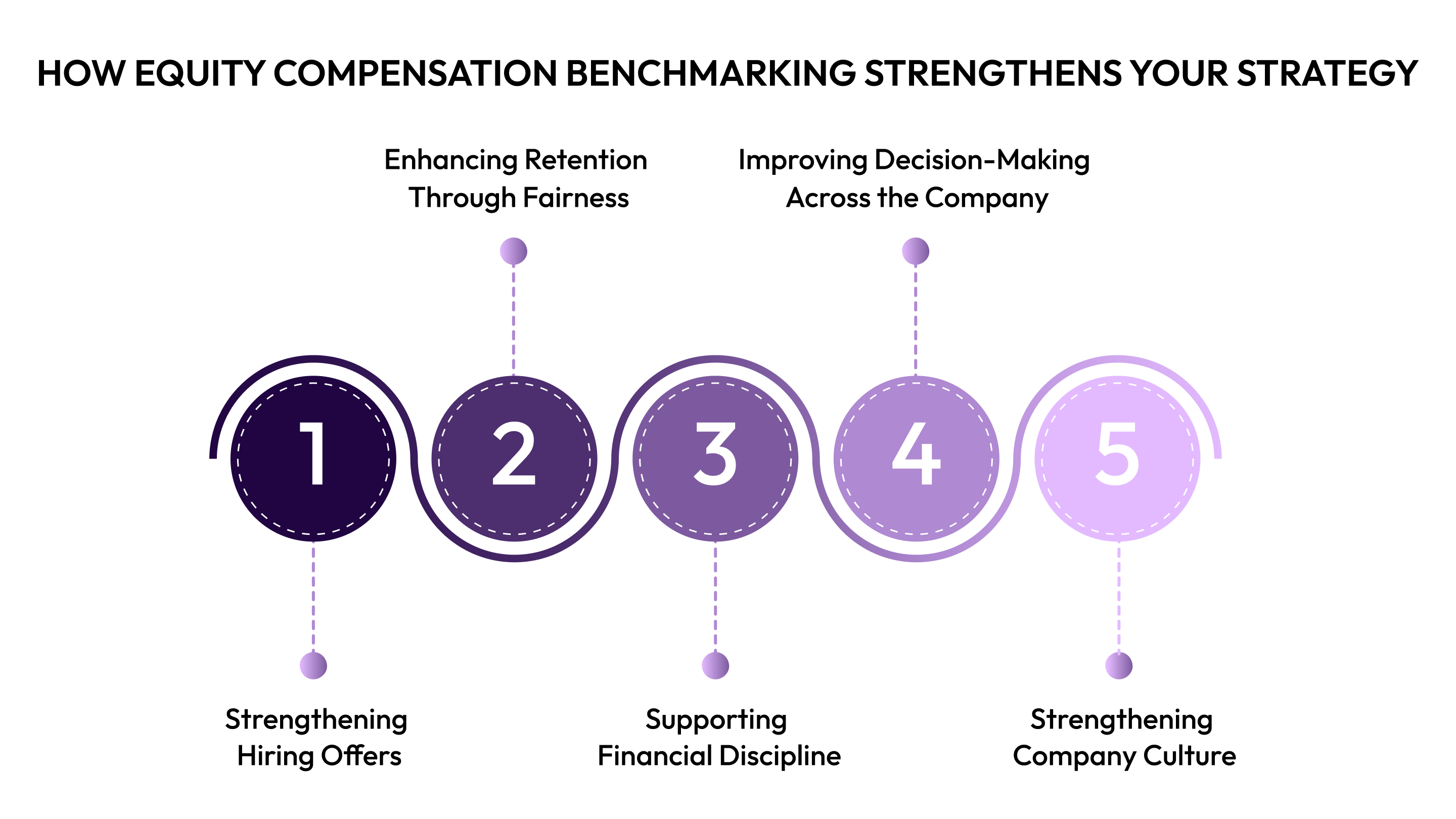
How Equity Compensation Benchmarking Strengthens Your Strategy
Equity compensation benchmarking isn't just about comparing numbers; it’s a strategic tool that drives long-term value for your company. Here are the key benefits that benchmarking brings to your equity compensation strategy:
1. Strengthening Hiring Offers and Attracting Talent
By using reliable market data to benchmark your equity offers, you ensure they are competitive and appealing to candidates. When candidates see that your equity grants align with industry standards, they are more likely to accept your offer. Equity compensation benchmarking helps you:
- Build offers that attract top-tier talent.
- Clearly communicate the value of equity grants to candidates.
- Maintain consistency in offers across similar roles and levels.
With CandorIQ’s Compensation & Payband Builder, you can define pay bands by location and department, ensuring that your equity offers are competitive across different markets. This not only aligns equity compensation with market standards but also streamlines the process, reducing time spent on spreadsheets and ensuring fairness for new hires, which ultimately strengthens your hiring offers.
2. Enhancing Retention Through Fairness and Transparency
Equity plays a critical role in employee retention, particularly for key talent. When employees feel their equity grants are fair and aligned with market standards, they are more likely to stay with your company long-term. Benchmarking helps you:
- Identify when an employee’s equity has fallen behind market expectations.
- Plan timely refresh grants to keep high performers engaged.
- Maintain internal equity, ensuring employees in similar roles are treated fairly.
3. Supporting Financial Discipline and Budget Management
Benchmarking equity compensation gives you the data to manage your equity pool effectively. By understanding how your equity grants compare to market standards, you can prevent overspending and ensure that your compensation packages align with your company’s financial strategy. Benchmarking helps you:
- Track the impact of equity grants on your cash burn.
- Avoid over-diluting ownership by staying within budgeted equity ranges.
- Align your equity compensation strategy with your long-term financial goals.
4. Improving Decision-Making Across the Company
When market insights back equity compensation data, it helps guide strategic decision-making across multiple teams. From HR to finance to leadership, benchmarking provides the data necessary to make informed decisions on:
- Grant sizes and structuring.
- Equity refresh cycles.
- Long-term equity strategies for growth and retention.
5. Strengthening Company Culture and Alignment
Benchmarking ensures that equity compensation aligns with your company culture. It fosters a sense of ownership, which helps:
- Align your equity compensation with your company culture and values.
- Ensure that your team feels invested in the company’s success.
- Build a positive employer brand that attracts like-minded candidates.
Now that we've explored how equity compensation benchmarking can enhance your strategy, let's dive into where the benchmark data comes from and how to evaluate its quality.
Where Benchmark Data Comes From (and How to Judge Quality)
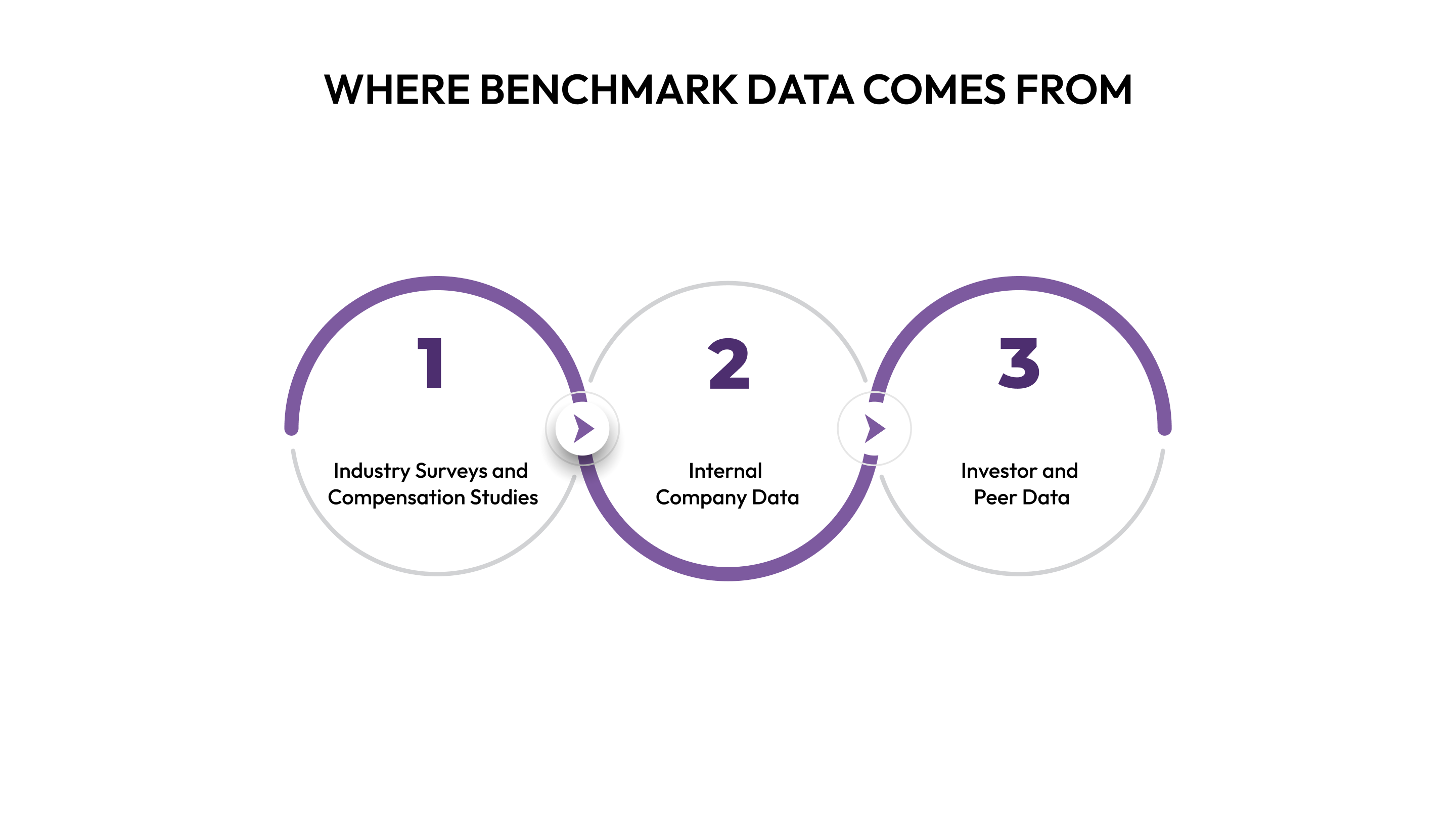
Reliable data is the backbone of equity compensation benchmarking. Without it, you're relying on guesswork. The key is knowing where to find data, how to collect it, and how to assess its quality. Here's a breakdown of the best sources for equity compensation data and how to judge whether it's worth using.
1. Industry Surveys and Compensation Studies
Traditional industry surveys are often the go-to for equity benchmarking. These surveys are usually conducted by well-established consulting firms and provide valuable insights into equity compensation trends. They often include data on:
- Stock options, RSUs, and ESOP grants by role and company size.
- Equity compensation trends by industry (SaaS, fintech, etc.).
- Vesting schedules, cliffs, and refresh cycles.
Pros:
- In-depth data across various roles and levels.
- Reliable for companies looking to compare themselves against industry standards.
Cons:
- These surveys can be expensive, especially for smaller companies.
- Data may be outdated or too broad for specific stages (e.g., Seed vs. Series A).
2. Internal Company Data
One of the best data sources is your own company’s historical data. Internal data can include:
- Past equity grants and their outcomes.
- Equity compensation trends within your company over time.
- Employee feedback on the perceived value of equity compensation.
Pros:
- Highly specific and tailored to your company's compensation strategy.
- Helps track trends within your own business, making it easier to adapt and adjust plans.
Cons:
- Data is limited to your organization.
- May lack a broader context for market comparison.
3. Investor and Peer Data
If you’re part of a venture-backed company or preparing for an IPO, investor data can be invaluable. Investors often share compensation data across their portfolio companies, and it can give you insights into:
- Equity expectations for similar roles across other companies in your investor’s network.
- Benchmarks for companies at similar stages of funding.
- Exit event data—how equity grants perform after an acquisition or IPO.
Pros:
- Useful for startups and fast-growing companies.
- Can provide a reliable data set for companies that are similar in terms of funding and growth potential.
Cons:
- Only relevant for companies with strong investor backing.
- May not cover private, bootstrapped companies.
How to Judge the Quality of Your Benchmarking Data
Not all data is created equal. Here’s how to assess whether your benchmarking data is reliable:
- Timeliness: Make sure the data is current. Older data may no longer reflect market conditions, especially for fast-growing companies.
- Sample Size: Larger sample sizes are generally more reliable. Ensure that the data set includes enough companies at a similar stage or size to provide relevant insights.
- Geography: Pay attention to location-specific data, especially if your team is remote or in high-cost areas. Geographic differences can have a significant impact on compensation expectations.
- Company Stage Relevance: Data from companies at a similar funding stage (Seed, Series A, Series B) is more relevant than data from established companies. Make sure you’re comparing apples to apples.
- Industry Alignment: If you're in a specialized industry like fintech or SaaS, make sure your data is from companies in similar sectors. Compensation expectations can differ greatly across industries.
With a clear understanding of where your benchmarking data comes from and how to assess its quality, it’s time to explore the step-by-step process for running an effective equity compensation benchmarking cycle.
Step-by-Step: How to Run an Equity Compensation Benchmarking Cycle
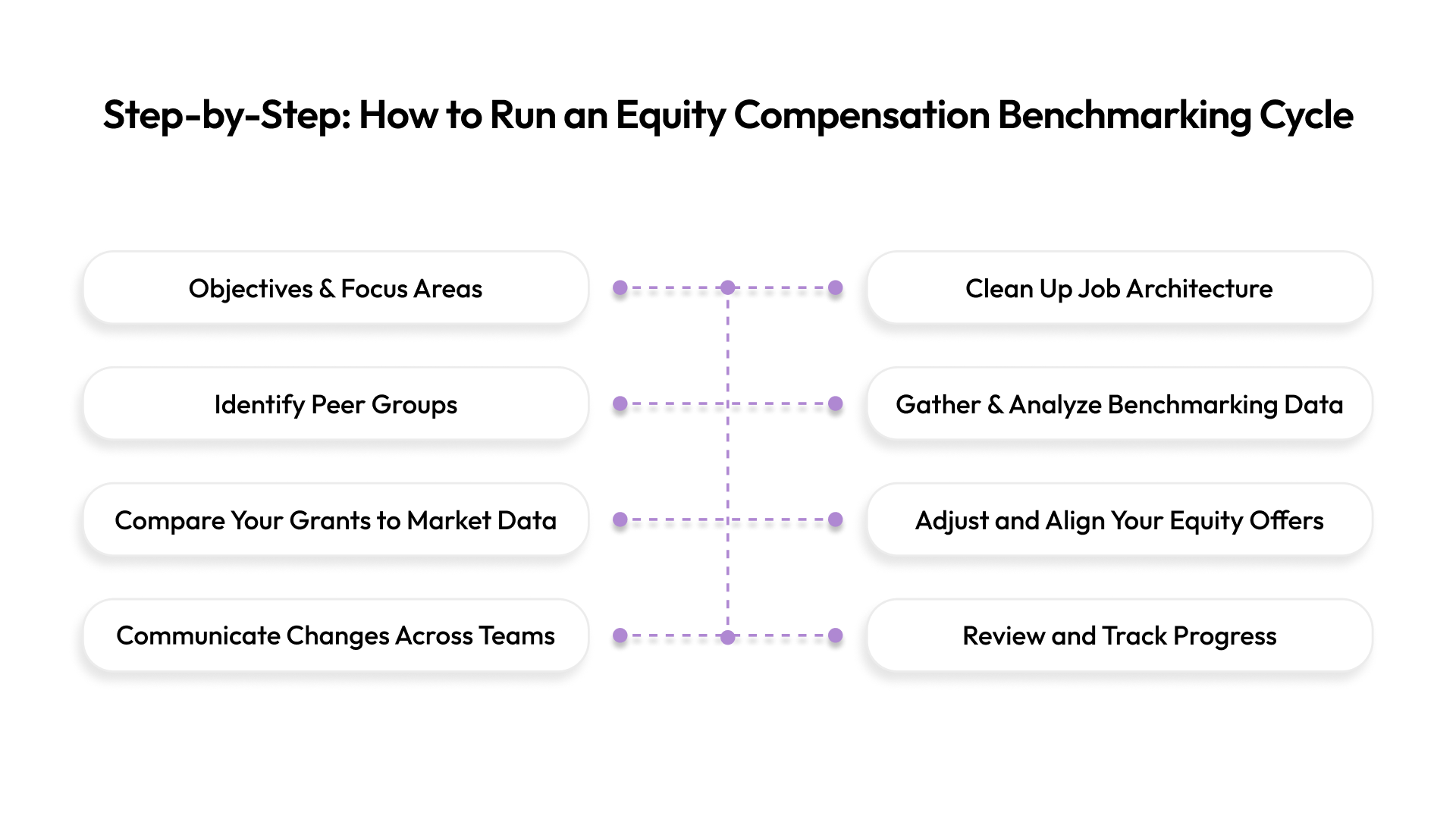
Running an equity compensation benchmarking cycle involves more than gathering data. It’s about using that data to make informed decisions that align with your company’s goals. Here’s a step-by-step guide to implementing an effective cycle:
Step 1: Define Your Objectives and Focus Areas
Before you start, clarify what you want to achieve with your benchmarking. This could include aligning equity compensation with market standards, ensuring internal fairness, or adjusting for retention or recruitment needs. Clearly identifying these objectives will keep the cycle focused.
Step 2: Clean Up Job Architecture and Define Roles
Make sure your job architecture is clearly defined with well-established roles and levels. The equity granted to each role will vary based on factors like seniority, responsibility, and experience. A consistent framework will help ensure you're comparing roles accurately.
Step 3: Identify Peer Groups and Market Segments
Identify the right peer group for comparison based on your company’s stage, size, and industry. Comparing your compensation to companies in similar stages of growth or in the same sector will provide the most accurate benchmarking data. This is crucial for getting relevant insights.
Step 4: Gather and Analyze Benchmarking Data
Now that you’ve defined your peer group, it’s time to collect the data. You can use industry surveys, and internal data from previous equity grants. Be sure to gather a comprehensive view of equity grants, including types, vesting schedules, and equity pool usage.
Step 5: Compare Your Grants to Market Data
Once you have the data, compare your grants to the market benchmarks. Check if your equity compensation is in line with industry standards. Look at factors like grant size, vesting schedules, and geographic differences to assess whether your offerings are competitive.
Step 6: Adjust and Align Your Equity Offers
If you find any gaps or discrepancies in your equity compensation, make the necessary adjustments. This could mean increasing equity for roles falling behind market standards or reducing it for roles that are over-compensated. Align these adjustments with your company’s hiring, retention, and financial goals.
Step 7: Communicate Changes Across Teams
Once you’ve made the adjustments, ensure all relevant teams are aligned. This includes HR, Finance, and Recruiting teams, so they can reflect the changes in compensation planning, budget management, and candidate offers.
Step 8: Review and Track Progress
Benchmarking should not be a one-time event. Set a regular review cadence, such as annually or after each funding round, to ensure your equity compensation remains competitive. Track your progress and adjust as needed to keep up with market changes.
By following these steps, you can implement a strong equity compensation benchmarking cycle that helps your company stay competitive and aligned with your long-term goals. Regular benchmarking ensures your equity offerings attract and retain top talent while maintaining financial discipline.
Now that you know how to run a benchmarking cycle, let’s explore the common mistakes that can derail the process and how to avoid them.
Common Mistakes in Equity Compensation Benchmarking (and How to Avoid Them)
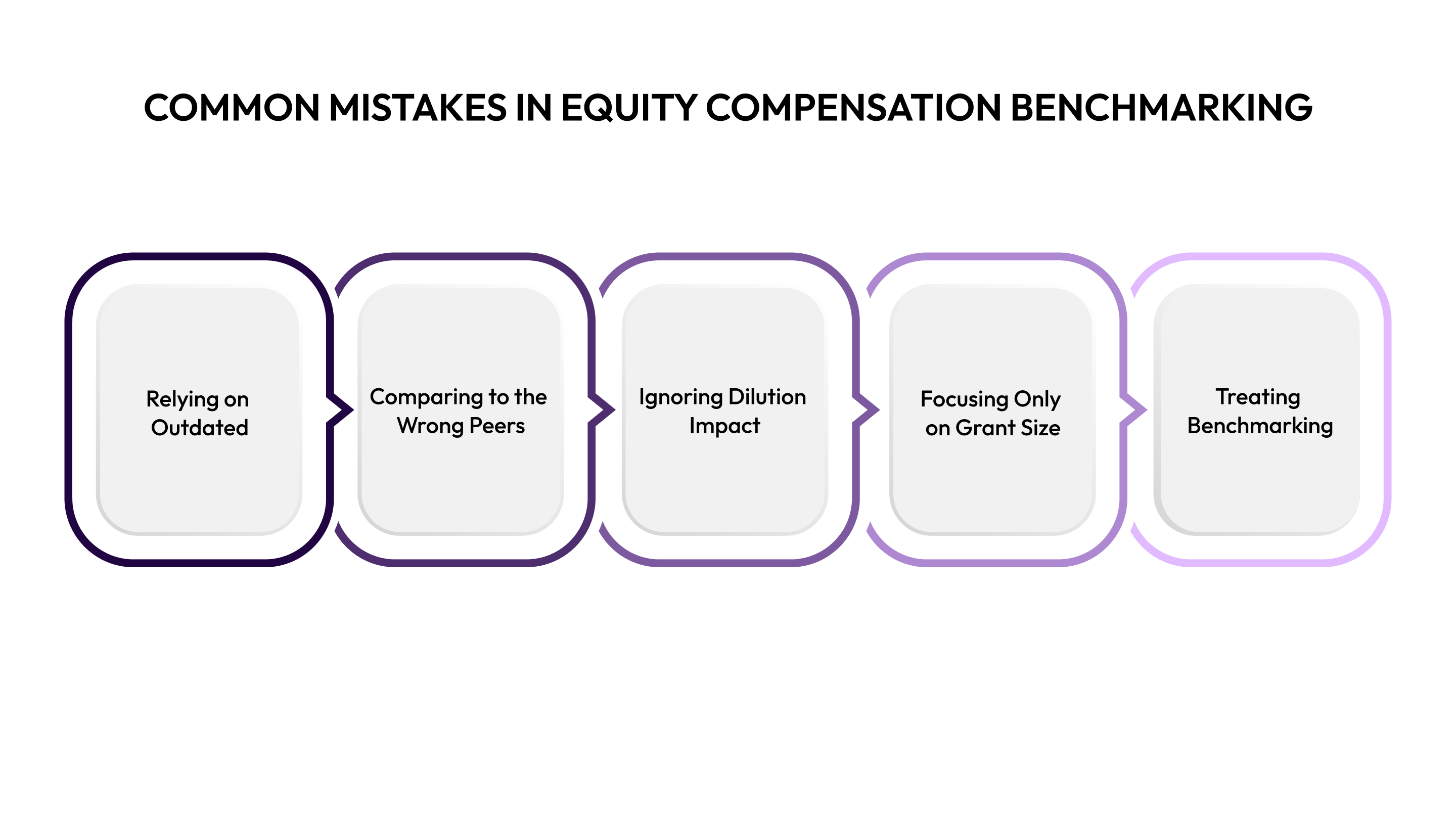
Equity compensation benchmarking is essential, but there are common pitfalls that can lead to inaccurate or ineffective results. Here’s a breakdown of the most frequent mistakes and how to avoid them:
1. Relying on Outdated or Incomplete Data
Using outdated or incomplete data can result in misleading benchmarks. The equity compensation landscape evolves rapidly, and relying on stale data may lead you to offer equity that’s out of step with current market standards.
How to Avoid It: Ensure your data sources are updated regularly. Always use the most recent reports or real-time data from trusted platforms to stay aligned with current market conditions.
2. Comparing to the Wrong Peers
Benchmarking against companies that don’t share similar characteristics, such as size, growth stage, or industry, can result in unrealistic comparisons. For example, comparing your startup to a well-established, publicly traded company may lead to inaccurate conclusions.
How to Avoid It: Be selective when choosing your peer group. Focus on companies at a similar stage, in the same industry, and with comparable workforce sizes and locations.
3. Ignoring Dilution Impact
Equity grants are impacted by dilution, which can decrease the value of an employee’s equity over time. If this factor is overlooked, you might end up offering more equity than your company can afford or more than the grant is worth in the future.
How to Avoid It: Always account for dilution in your equity benchmarking process. This will ensure that your equity offers remain competitive without compromising long-term company goals.
4. Focusing Only on Grant Size
Grant size is important, but it’s only one part of the picture. Other factors like vesting schedules, cliffs, and refresh cycles play a huge role in how employees perceive their equity. By focusing solely on grant size, you may miss the full picture of what makes an attractive equity package.
How to Avoid It: Benchmark your entire equity compensation plan, not just the grant size. Look at factors such as vesting schedules, cliffs, and refresh cycles to get a full picture of how competitive and attractive your offers are. CandorIQ allows you to benchmark all aspects of equity compensation, ensuring your grants are structured for long-term retention and alignment with industry standards.
5. Treating Benchmarking as a One-Time Activity
Equity compensation should not be static. Market conditions, company growth, and employee expectations shift over time. Treating benchmarking as a one-time task leads to outdated grants that may no longer be competitive.
How to Avoid It: Make equity benchmarking an ongoing process. Schedule regular reviews, particularly after funding rounds or during significant company growth, to ensure your offers stay aligned with market trends.
Avoiding these common mistakes is key to making equity compensation benchmarking a successful part of your overall strategy. By ensuring your data is up-to-date, your peer group is relevant, and your benchmarks are aligned with both internal and market standards, you can maintain fair, competitive, and financially sustainable equity compensation plans.
Conclusion
Equity compensation benchmarking is more than just a tool for staying competitive; it’s a strategic necessity. By understanding the complexities of equity grants, such as their ties to company growth, dilution, and vesting schedules, you can make informed, data-driven decisions that align with both market standards and your company’s goals.
By utilizing CandorIQ, you gain access to real-time data, comprehensive benchmarking, and the ability to track key factors like vesting schedules and dilution. This allows you to save time, reduce costs, and enhance decision-making across HR, finance, and leadership. With CandorIQ, you ensure that your equity compensation strategy is not only competitive but also sustainable, fair, and aligned with long-term business success.
Ready to transform your equity compensation strategy? Book a free demo with CandorIQ today and start making data-driven decisions that empower your business.
FAQs
1. Can equity compensation benchmarking work for both startups and established companies?
Yes, it’s crucial for both. Startups often offer more equity to attract talent, while established companies balance equity with competitive cash compensation. Benchmarking helps ensure your offers are competitive, no matter your company's size or stage.
2. How does CandorIQ support remote or distributed teams?
CandorIQ offers location-based pay adjustments, allowing you to benchmark equity compensation according to different regions. This ensures fairness for employees, regardless of where they are located.
3. How can I maintain internal fairness when benchmarking equity compensation?
CandorIQ helps track equity compensation across departments and roles, ensuring equity grants are consistent and fair. This transparency helps prevent discrepancies that could lead to dissatisfaction or turnover.
4. How does benchmarking align with company goals?
Benchmarking equity compensation ensures your offers attract top talent, retain key employees, and align with your financial strategy. It keeps your compensation competitive and supports long-term business success.
5. Can CandorIQ help forecast future equity needs?
Yes, CandorIQ offers headcount scenario planning tools to help you model future equity needs, manage dilution, and track how future hires or funding rounds will impact your equity pool.
Ready to modernize your workforce and compensation strategy?
See how CandorIQ brings workforce planning and compensation together with AI.