

Strategic Workforce Planning Explained: Framework & Best Practices
Strategic workforce planning helps HR and finance align hiring, skills, and budgets with business goals. Learn frameworks, metrics, and best practices.

Many growing companies struggle to align hiring decisions with business priorities and financial constraints. Teams often rely on disconnected spreadsheets, which leads to unclear headcount plans and budget surprises.
Without a structured approach, HR and finance teams operate with limited visibility into workforce costs, skill gaps, and future hiring needs. This lack of coordination creates delays, overspending, and inconsistent talent decisions.
In this guide, you will learn what workforce strategic planning means, why it matters for scaling organizations, and how to build a structured workforce strategy.
At a Glance
- Workforce strategic planning aligns hiring, skills, and compensation with long-term business objectives.
- Structured planning helps organizations forecast headcount needs and avoid budget surprises.
- Clear workforce metrics provide visibility into attrition, hiring velocity, and workforce costs.
- Collaboration between HR and finance strengthens decision-making across hiring and compensation planning.
- Scenario modeling allows companies to test hiring plans before committing resources.
- Technology platforms improve visibility, coordination, and workforce planning accuracy.
What Is Strategic Workforce Planning?
Strategic workforce planning is a structured process that aligns an organization’s workforce with future business goals. It helps HR and finance teams forecast talent needs, identify skill gaps, and plan hiring budgets.
Companies use this process to ensure the right people are in the right roles at the right time. Strategic workforce planning also connects compensation, headcount growth, and financial forecasting into a single workforce strategy.
Strong planning requires understanding why workforce alignment becomes critical during rapid growth.
Also read: Discover Top 5 Differences Between Pay Equity and Pay Equality
Why Strategic Workforce Planning Matters for Scaling Organizations
Scaling organizations must balance hiring speed with financial discipline. Workforce strategic planning provides visibility into workforce costs, talent needs, and operational priorities. It helps leaders make informed hiring decisions while maintaining budget control and organizational alignment.
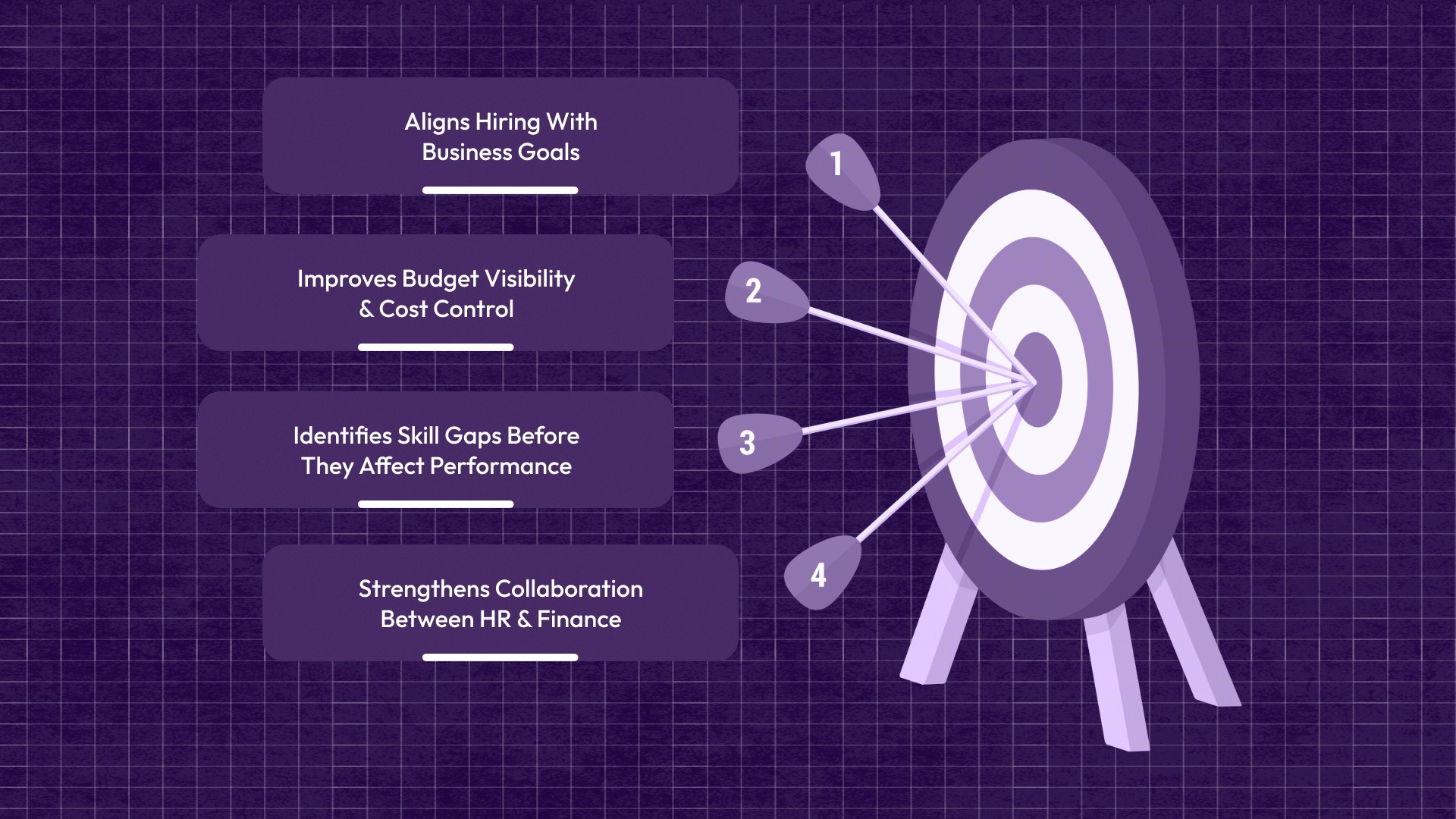
The importance of strategic workforce planning becomes clear through several operational benefits:
1. Aligns Hiring With Business Goals
Strategic workforce planning connects hiring plans with long-term company objectives. Leaders evaluate which roles support revenue growth, product development, or operational capacity. This alignment ensures hiring decisions support business priorities rather than reactive staffing needs.
2. Improves Budget Visibility and Cost Control
Workforce costs represent a significant portion of operating expenses for growing companies. Structured planning allows finance teams to forecast payroll, benefits, and hiring costs accurately. This visibility helps leadership manage spending while supporting growth initiatives.
3. Identifies Skill Gaps Before They Affect Performance
Organizations often discover skill shortages only after projects slow down or teams become overloaded. Strategic workforce planning helps leaders analyze current capabilities and predict future skill requirements. Early insight allows teams to plan hiring, training, or internal mobility initiatives.
4. Strengthens Collaboration Between HR and Finance
Workforce decisions affect both talent management and financial planning. Strategic workforce planning creates a shared framework where HR and finance collaborate on hiring timelines, compensation budgets, and headcount targets. This alignment reduces miscommunication and improves decision quality.
Understanding these benefits becomes easier when you examine the framework that supports effective workforce planning.
Key Components of an Effective Strategic Workforce Planning Framework
A strong workforce planning framework provides structure for analyzing workforce data, forecasting needs, and aligning hiring decisions with business strategy. Each component supports informed decision-making across HR, finance, and leadership teams.
An effective framework typically includes the following components:
1. Workforce Demand Forecasting
Demand forecasting identifies the number of employees required to support future business activities. Leaders analyze growth projections, project pipelines, and operational capacity needs. This analysis helps teams estimate hiring timelines and staffing requirements.
2. Workforce Supply Analysis
Supply analysis evaluates the current workforce to understand existing skills, experience levels, and role distribution. HR teams review employee capabilities, internal mobility potential, and retirement risks. This information helps organizations determine whether current talent can support future goals.
3. Skill Gap Identification
Skill gap analysis compares future workforce needs with existing capabilities. Organizations identify areas where specialized expertise or additional talent will be required. Addressing these gaps early supports workforce readiness and project continuity.
4. Headcount and Budget Alignment
Headcount planning must align with financial forecasts and compensation budgets. Finance teams evaluate payroll projections, hiring timelines, and cost implications. This alignment ensures hiring decisions remain financially sustainable.
5. Workforce Scenario Planning
Scenario planning allows leadership teams to test different hiring strategies. Organizations can model aggressive growth, moderate expansion, or cost-control scenarios. These comparisons help leadership choose hiring plans that balance opportunity and financial stability.
CandorIQ provides a unified platform that connects compensation planning, headcount forecasting, and workforce visibility in one system. HR and finance teams can manage workforce plans, evaluate compensation structures, and track hiring impact together. Book a demo to see how structured workforce planning becomes easier with a centralized platform.
Once these components are understood, organizations can begin building their workforce planning strategy step by step.
5 Simple Steps to Build a Strategic Workforce Planning Strategy
Building a workforce strategy requires structured analysis, cross-team collaboration, and clear data visibility. Organizations must evaluate current workforce conditions before forecasting future hiring needs and budget impact.
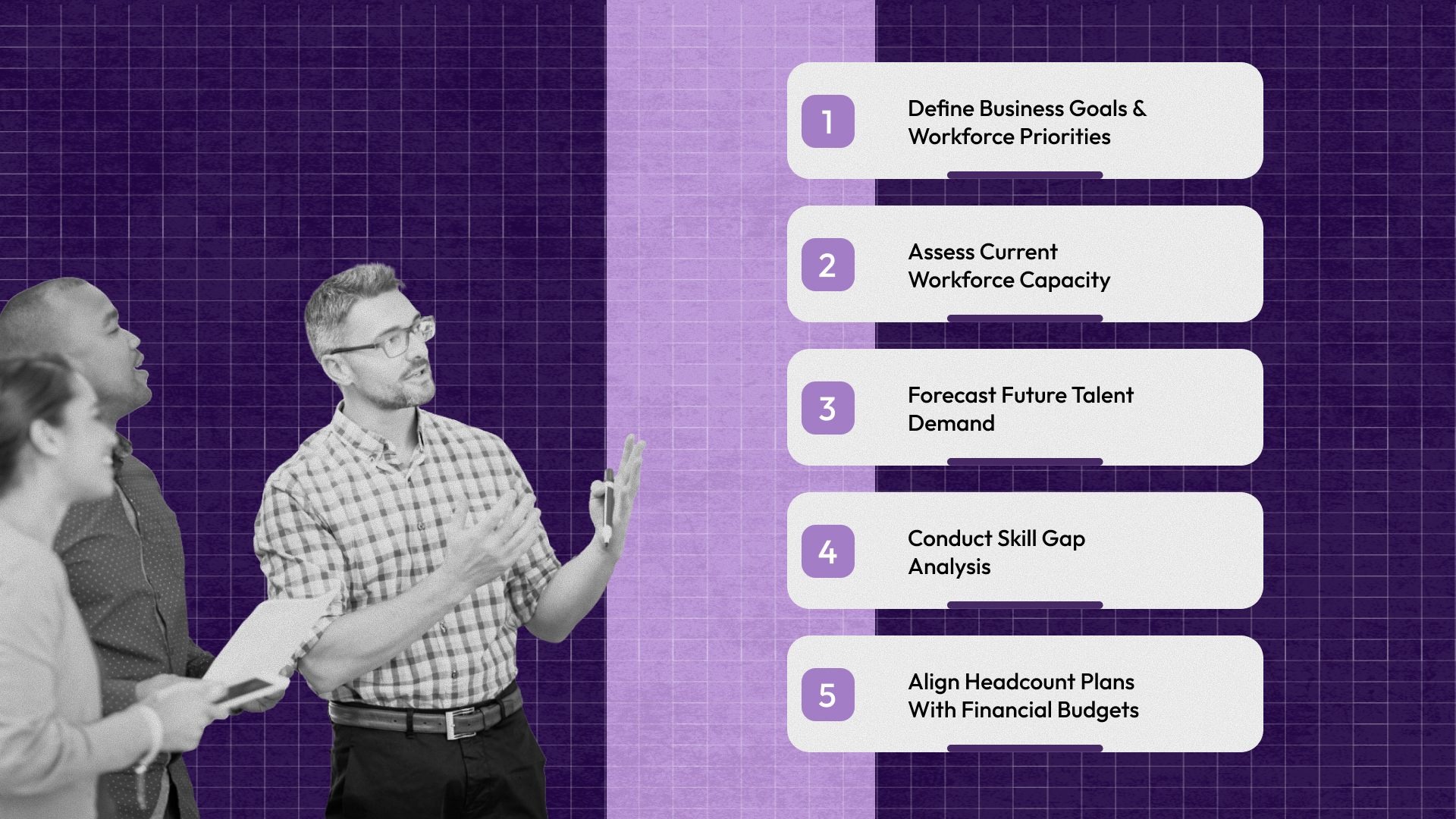
The following steps guide organizations through the strategic workforce planning process:
1. Define Business Goals and Workforce Priorities
Organizations begin workforce planning by clarifying business objectives and growth targets. These priorities determine the roles, capabilities, and hiring timelines required to support company's strategy.
Action steps
- Review revenue projections and operational goals.
- Identify departments driving growth initiatives.
- Determine which roles directly support strategic priorities.
- Align leadership on workforce priorities.
- Establish planning timelines.
2. Assess Current Workforce Capacity
Organizations must analyze their current workforce to understand strengths, limitations, and potential risks. This evaluation includes role distribution, employee performance, and workforce demographics.
Action steps
- Audit existing headcount by department.
- Evaluate workforce productivity metrics.
- Identify potential succession gaps.
- Assess internal mobility opportunities.
- Review attrition patterns.
3. Forecast Future Talent Demand
Demand forecasting estimates how many employees the organization will require over time. This step considers projected growth, operational expansion, and expected workforce turnover.
Action steps
- Estimate hiring needs based on revenue growth.
- Evaluate department-level staffing requirements.
- Model hiring timelines for critical roles.
- Account for attrition and replacement hiring.
- Review workforce growth scenarios.
4. Conduct Skill Gap Analysis
Skill gap analysis compares existing capabilities with future requirements. Organizations use this analysis to plan hiring, training, or internal promotions.
Action steps
- Map skills across departments.
- Identify capabilities required for future projects.
- Compare workforce skills with projected needs.
- Prioritize critical skill gaps.
- Create development or hiring plans.
5. Align Headcount Plans With Financial Budgets
Workforce strategies must remain financially sustainable. Finance teams evaluate payroll projections, benefits costs, and hiring timelines before finalizing workforce plans.
Action steps
- Calculate projected payroll costs.
- Review compensation structures across roles.
- Align hiring plans with budget forecasts.
- Adjust hiring timelines if necessary.
- Monitor workforce costs regularly.
Once a workforce strategy is implemented, organizations must track key metrics to evaluate effectiveness.
Also read: Understanding Compensation, Benefits, and Growth Opportunities in Total Rewards
Key Metrics to Track in Strategic Workforce Planning
Strategic workforce planning relies on measurable indicators that reveal workforce health, hiring performance, and cost trends. These metrics help leaders evaluate whether workforce strategies support business goals.
Several workforce metrics provide meaningful insight into planning effectiveness:
1. Headcount Growth Rate
Headcount growth rate measures how quickly the workforce expands over time. This metric helps organizations evaluate whether hiring plans match business growth expectations. Rapid growth without clear planning may create operational challenges.
2. Employee Attrition Rate
Attrition rate measures how frequently employees leave the organization. High attrition increases recruitment costs and disrupts workforce planning. Monitoring this metric helps teams anticipate replacement hiring needs.
3. Cost per Employee
Cost per employee represents the average workforce expense for each employee. This metric includes salary, benefits, and overhead costs. Finance teams use this information to evaluate workforce affordability.
4. Hiring Velocity
Hiring velocity measures the speed of recruitment processes. Slow hiring cycles can delay projects and create operational bottlenecks. Tracking this metric helps organizations identify recruitment inefficiencies.
5. Internal Mobility Rate
Internal mobility measures how often employees move between roles within the organization. Strong mobility rates indicate effective talent development and reduce external hiring costs.
Even with strong metrics, organizations still face practical challenges during workforce planning.
Common Strategic Workforce Planning Challenges and How to Solve Them
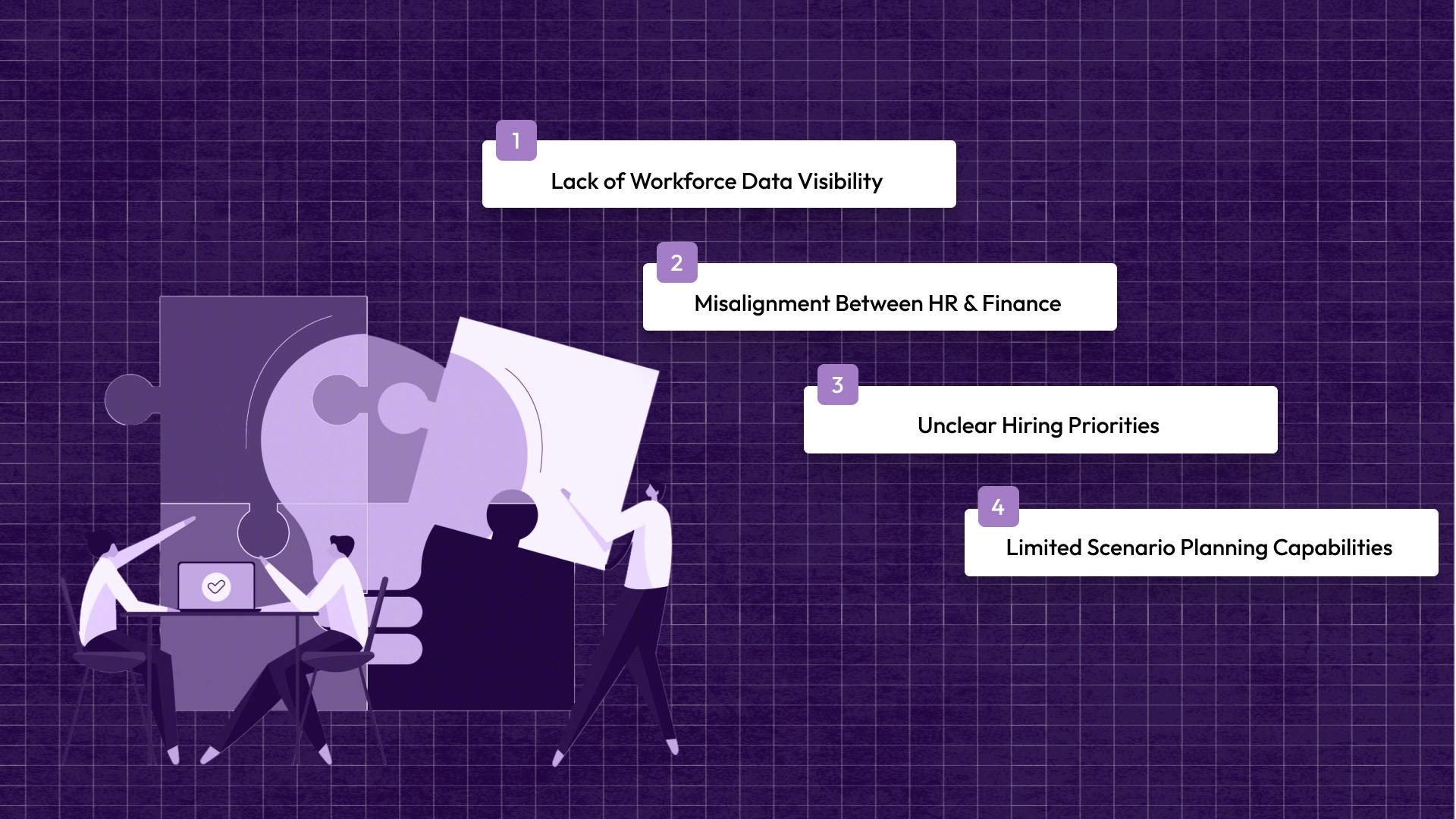
Many organizations attempt workforce planning but struggle with data visibility, cross-team alignment, and forecasting accuracy. Addressing these challenges requires structured processes and collaborative planning.
The following challenges commonly affect workforce planning initiatives:
1. Lack of Workforce Data Visibility
Organizations often store workforce data across multiple systems and spreadsheets. This fragmentation makes it difficult to analyze workforce trends and forecast hiring needs accurately.
Solution: Centralize workforce data in a unified system that connects headcount, compensation, and workforce metrics.
2. Misalignment Between HR and Finance
HR teams often focus on talent needs, while finance teams focus on cost control. Without shared planning tools, these priorities can conflict.
Solution: Establish joint workforce planning reviews where HR and finance evaluate hiring plans together.
3. Unclear Hiring Priorities
Some organizations approve hiring requests without evaluating strategic impact. This reactive approach creates inefficient staffing patterns.
Solution: Create structured approval workflows that require business justification and financial analysis.
4. Limited Scenario Planning Capabilities
Many companies cannot evaluate multiple hiring scenarios before committing to a plan. This limitation increases financial risk during periods of rapid growth.
Solution: Use workforce modeling tools that simulate different hiring strategies and budget outcomes.
CandorIQ helps organizations manage compensation planning, headcount forecasting, and workforce visibility within a single platform. HR and finance teams gain shared visibility into workforce plans, budgets, and hiring approvals. Book a demo to see how coordinated workforce planning improves strategic decisions.
Organizations that overcome these challenges often follow several proven workforce planning practices.
Best Practices for Successful Strategic Workforce Planning
Successful workforce planning requires ongoing collaboration, reliable data, and structured processes. Organizations that treat workforce planning as a continuous strategy achieve stronger hiring outcomes.
The following best practices support effective workforce planning:
1. Align Workforce Planning With Business Strategy
Workforce decisions should support company goals such as revenue growth, product expansion, or operational scale.
Tip: Conduct quarterly planning reviews that connect workforce plans with strategic priorities.
2. Maintain Accurate Workforce Data
Reliable workforce data supports accurate hiring forecasts and financial planning.
Tip: Maintain centralized workforce dashboards that track headcount, hiring progress, and workforce metrics.
3. Involve Leadership Across Departments
Workforce planning becomes more accurate when department leaders contribute operational insights.
Tip: Include department leaders in workforce planning discussions and hiring approvals.
4. Use Scenario Planning for Hiring Decisions
Scenario modeling helps organizations evaluate different hiring strategies before committing resources.
Tip: Model at least two hiring scenarios to compare cost impact and operational outcomes.
5. Monitor Workforce Metrics Continuously
Regular metric monitoring helps organizations adjust workforce strategies quickly.
Tip: Review workforce metrics monthly to identify early signs of staffing challenges.
Real examples illustrate how these practices work in practical situations.
Strategic Workforce Planning Examples
Organizations across industries apply workforce planning to balance hiring growth with operational needs. Real-world examples illustrate how planning improves workforce decisions.
These examples demonstrate how companies apply workforce strategic planning:
1. Scaling a SaaS Product Team
A SaaS company plans product expansion for the next year. Leadership evaluates development capacity and forecasts hiring needs for engineers, product managers, and designers. Workforce planning ensures hiring timelines support product launch schedules.
2. Managing Workforce Costs During Rapid Growth
A fintech startup experiences rapid customer growth and plans aggressive hiring. Workforce planning allows finance teams to evaluate payroll projections and adjust hiring timelines to maintain budget stability.
3. Addressing Skill Gaps in Emerging Technologies
An e-commerce company plans to adopt new automation technologies. Workforce planning identifies skill gaps in data engineering and analytics roles. HR teams prioritize targeted hiring and internal training programs.
Organizations that apply structured workforce planning often rely on integrated workforce management platforms.
Also read: Data-Driven Compensation Strategies for Fair Wages
How CandorIQ Improves Strategic Workforce Planning
Many organizations struggle with workforce planning because compensation data, hiring approvals, and headcount forecasts exist in disconnected systems. This fragmentation makes it difficult to align hiring decisions with budgets and workforce strategy.
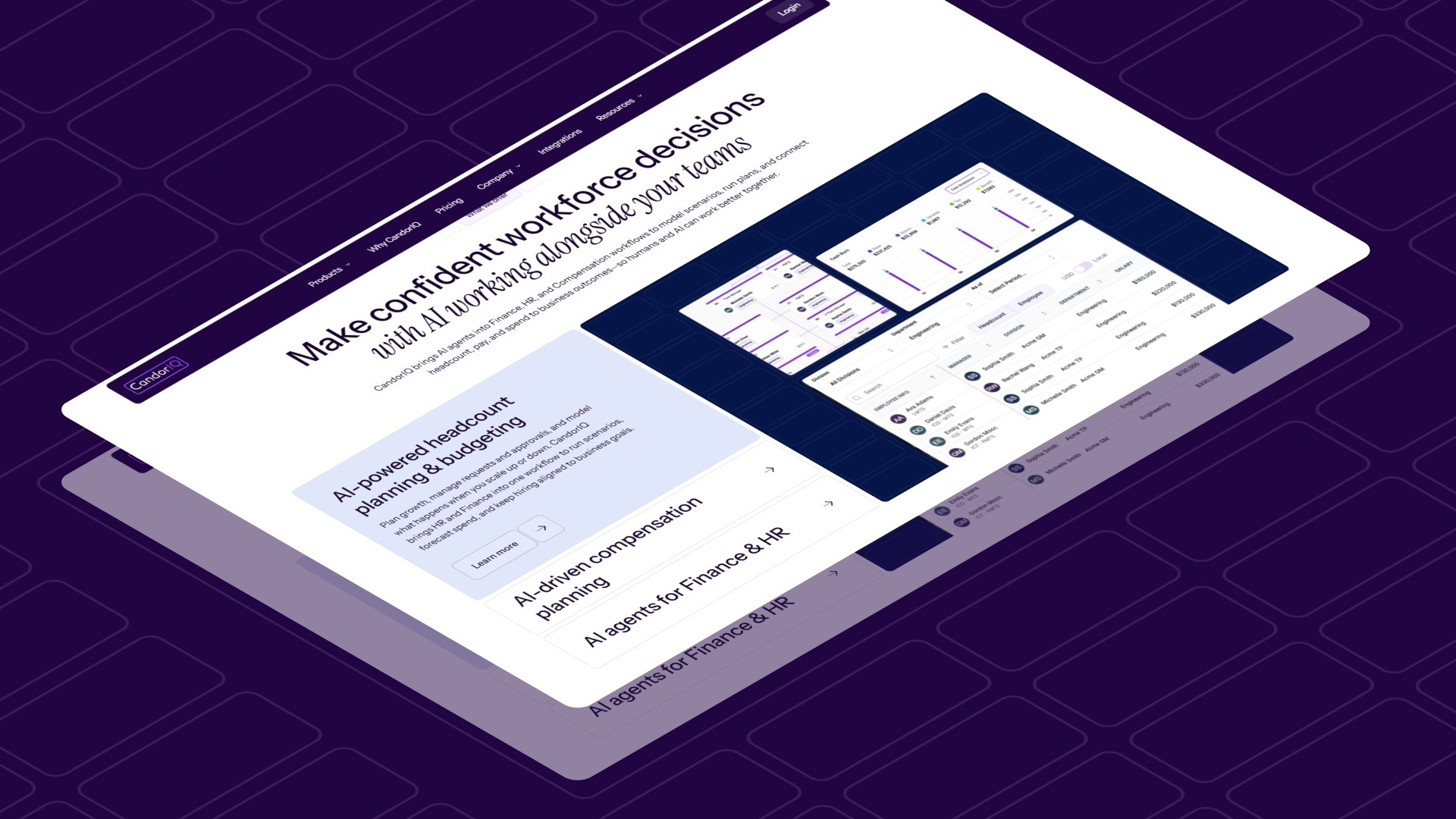
CandorIQ provides a unified platform that connects compensation planning, headcount forecasting, and workforce visibility. HR and finance teams can collaborate using shared workforce data and structured planning workflows.
Key capabilities include:
- Build and manage pay bands across departments, roles, and geographic locations.
- Model future headcount scenarios and evaluate financial impact before approving hires.
- Track workforce metrics, including headcount, attrition, and promotions in one dashboard.
- Manage compensation cycles with built-in approvals and budget visibility.
- Create structured headcount requests with clear hiring rationale and cost analysis.
- Use AI insights to evaluate compensation benchmarks and workforce planning gaps.
Organizations gain clearer workforce visibility and stronger coordination between HR and finance teams.
Final Thoughts
Strategic workforce planning helps organizations align hiring decisions with long-term business goals and financial constraints. Structured planning improves visibility into workforce costs, talent needs, and operational priorities.
CandorIQ supports workforce planning by connecting compensation management, headcount forecasting, and workforce analytics in one platform. This shared system helps HR and finance teams coordinate hiring strategies and maintain budget discipline.
Book a demo with CandorIQ to explore how integrated workforce planning tools support better hiring decisions and long-term organizational growth.

FAQs
Q. What is workforce strategic planning?
Workforce strategic planning aligns an organization’s workforce with long-term business goals. It helps leaders forecast hiring needs, identify skill gaps, and manage workforce costs. HR and finance teams collaborate to create structured hiring strategies.
Q. Why is workforce strategic planning important?
Strategic workforce planning helps organizations avoid reactive hiring decisions. It improves budget control and ensures the right skills are available when needed. Companies gain better visibility into workforce growth and operational capacity.
Q. What metrics are used in workforce strategic planning?
Common metrics include headcount growth rate, employee attrition rate, hiring velocity, and cost per employee. These indicators reveal workforce trends and hiring performance. Leaders use these metrics to evaluate workforce strategy effectiveness.
Q. Who is responsible for workforce strategic planning?
Workforce planning typically involves HR leaders, finance teams, and department managers. HR analyzes talent needs while finance evaluates workforce costs. Leadership teams align hiring plans with business strategy.
Q. How often should workforce planning be updated?
Organizations usually review workforce plans quarterly or semiannually. Rapidly growing companies may update plans more frequently. Regular reviews ensure hiring strategies remain aligned with business goals.
Q. What tools support workforce strategic planning?
Workforce planning tools provide visibility into headcount, compensation, and workforce metrics. These platforms help organizations forecast hiring needs and analyze workforce costs. Integrated systems improve coordination between HR and finance teams.
Ready to modernize your workforce and compensation strategy?
See how CandorIQ brings workforce planning and compensation together with AI.