

Compensation Levels Explained: Structure, Fair Pay, and Strategy
Learn how to define compensation levels that support fair pay, reduce bias, and align HR and Finance teams for better workforce and budget planning.

Fair and structured pay is one of the strongest signs of organizational health. Yet many HR and Finance leaders still rely on spreadsheets to manage salaries and pay ranges, a process that limits consistency, visibility, and equity.
Compensation levels bring structure to this challenge. They define how pay is organized within a company, helping teams balance fairness, market alignment, and budget control.
In this article, you will learn:
- What compensation levels mean and how they work
- Why are they essential for growth-stage organizations
- How to apply them to improve pay transparency and retention.
Key Takeaways
- Structure brings clarity. A defined compensation framework helps you ensure fairness, consistency, and transparency across every role and region.
- Data builds confidence. Using reliable benchmarks and equity checks strengthens trust in pay decisions and reduces internal disputes.
- Collaboration drives accuracy. When HR and Finance share one view of compensation data, you avoid silos and make faster, more informed decisions.
- Technology simplifies complexity. Unified tools like CandorIQ help you manage pay bands, cycles, and forecasts in one place, replacing manual spreadsheets with real-time insight.
What Are Compensation Levels (and Why They Matter)
A compensation level is a structured tier that defines how much a company pays for a specific role or level of responsibility. Each level usually includes:
- Job scope and title: the responsibilities tied to that level
- Salary range: minimum, midpoint, and maximum pay, based on market data and internal equity
- Progression criteria: the performance or skills required to move up
This framework helps organizations assign value to roles consistently and maintain pay equity.
Why Organizations Use Compensation Levels
Compensation levels serve a broader purpose than setting salaries. They help HR and Finance teams:
- Ensure pay fairness across departments and geographies
- Stay within budget while remaining competitive in the market
- Standardize decisions on promotions and offers
- Communicate clearly how pay is determined and where employees can grow
For instance, when companies scale quickly, structured levels make hiring more consistent and reduce the time spent negotiating individual salaries.

Impact on Employees and Business Outcomes
Defined pay levels strengthen both trust and engagement. Employees understand how their compensation is set and what is needed to progress. This clarity helps reduce turnover and makes pay reviews easier for managers.
Example:
A fast-growing SaaS company standardized its compensation levels by job family. Within one review cycle, salary variance across similar roles dropped by 15 percent, and satisfaction with pay discussions improved noticeably.
Modern platforms like CandorIQ’s Payband Builder can help teams set up these structures quickly. It centralizes pay data, applies geo-based adjustments, and visualizes distribution in real time, helping HR and Finance stay aligned.
You can see this shift in action in our case study,
Moving from Spreadsheets to Strategy: How One Company Streamlined Compensation and Job Architecture with CandorIQ.
How Compensation Levels Are Structured in Modern Organizations
Creating compensation levels starts with structure. A strong framework allows you to define how each role is valued and how pay evolves as responsibilities grow.
When built thoughtfully, it gives you a predictable system that scales with your organization.
The Building Blocks of Compensation Structure
When setting up levels, most companies include these core components:
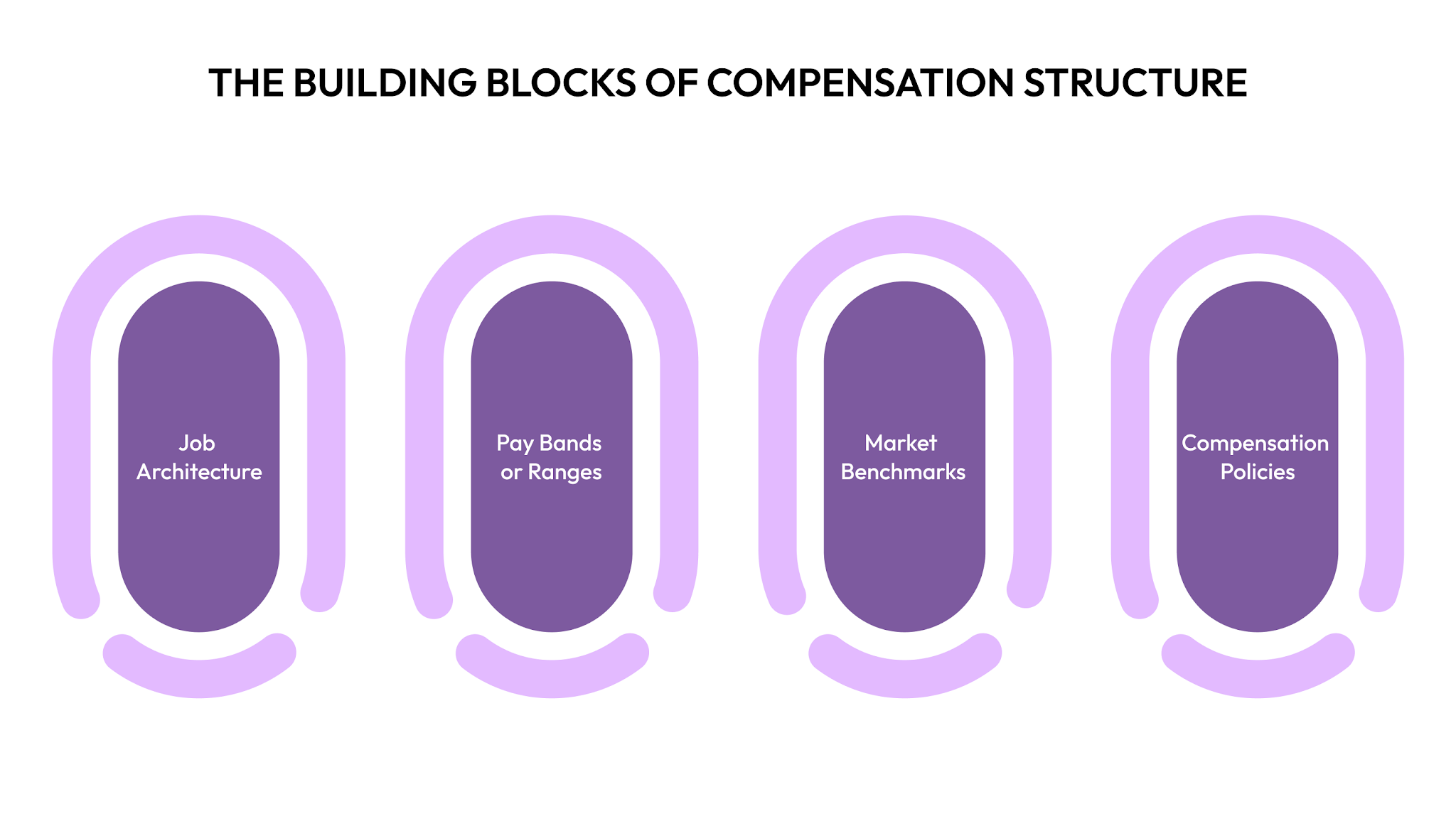
- Job architecture: A hierarchy of roles organized by function and seniority. It helps you see how one role connects to another across departments.
- Pay bands or ranges: Defined minimums and maximums for each level. Market data, company budget, and internal equity guide these.
- Market benchmarks: External salary data that helps ensure your offers remain competitive and fair.
- Compensation policies: Internal rules that guide decisions on raises, bonuses, and promotions.
Together, these components form the foundation of a transparent, scalable compensation system.
Types of Compensation That Shape Levels
Your pay levels are influenced by the kinds of compensation you offer. These usually fall into two groups:
- Direct compensation: Base pay, hourly wages, bonuses, and commissions.
- Indirect compensation: Benefits such as health insurance, stock options, or learning budgets.
Some organizations also use variable components (like performance-based bonuses) to reward results without permanently increasing base pay.
Why Structure Matters
Without a structured framework, you risk uneven pay, inconsistent promotions, and budget drift. A consistent system helps you:
- Maintain internal equity across similar roles
- Keep salary growth aligned with business performance
- Simplify audits and compliance reporting
Now that you understand how levels are built, the next step is learning how to set them correctly and keep them relevant as your organization grows.
Setting and Calibrating Compensation Levels: The Practical Framework
Establishing fair compensation levels requires a balance of data, structure, and human judgment. You need to ensure your pay decisions are defensible, competitive, and sustainable. The process usually follows four key steps.
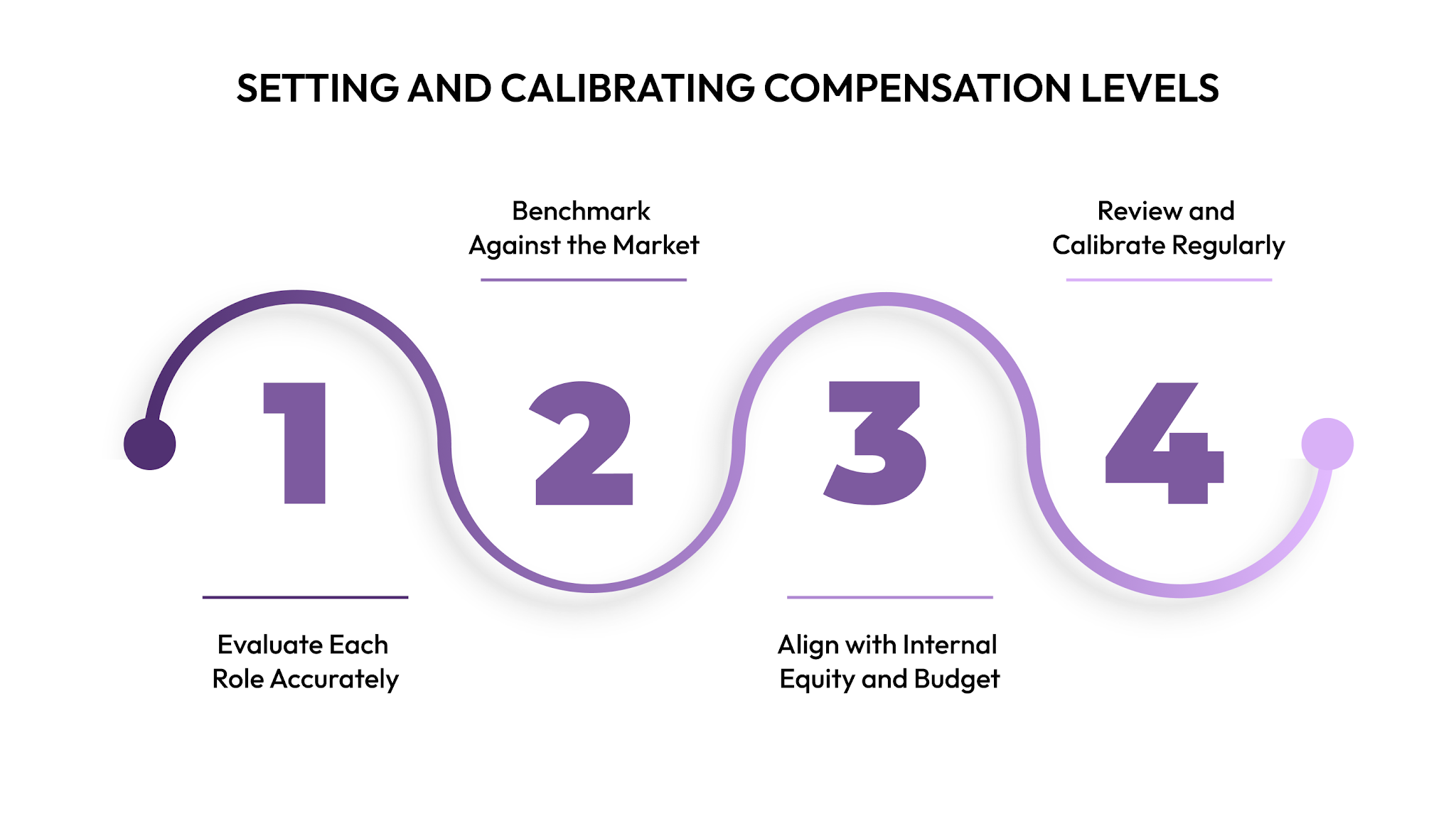
1. Evaluate Each Role Accurately
Start by reviewing the scope, responsibilities, and impact of every role. Define the measurable outcomes for each job. This helps you map roles consistently across departments and reduces pay inconsistencies.
Key questions to ask:
- What is the role’s core purpose?
- What level of responsibility does it carry?
- How does it impact business results?
2. Benchmark Against the Market
Use trusted market surveys or compensation databases to find the market rate for each role and level. You do not need to lead or lag the market every time; instead, set a compensation philosophy that fits your company’s stage and talent strategy.
For example:
- Early-stage firms may pay slightly below market but offer stronger equity.
- Mature companies may pay at or above market to attract senior talent.
For a deeper breakdown of this process, explore our Comprehensive Guide to Conducting Compensation Analysis.
3. Align with Internal Equity and Budget
Compare your benchmark data with current pay levels inside your company. Address gaps where employees in similar roles are paid differently without justification. This alignment helps you reduce bias and build trust.
4. Review and Calibrate Regularly
Markets shift. As your organization grows, revisit your pay levels at least annually. Recalibrate based on inflation, role changes, and market trends.
Modern tools such as CandorIQ’s AI-powered compensation insights can support this process by identifying gaps automatically and helping you forecast the financial impact of salary adjustments before making them.
When done right, this framework ensures that your pay levels remain competitive, fair, and strategically aligned with your organization’s goals.
To estimate how your adjustments impact budgets and equity distribution, try our interactive Compensation and Equity Calculator by CandorIQ.
Real-World Examples: Compensation Levels in Action
Understanding the concept is one thing. Seeing how compensation levels work in practice helps you apply the ideas to your own organization.
The following examples show how levels create structure, fairness, and consistency in different business contexts.
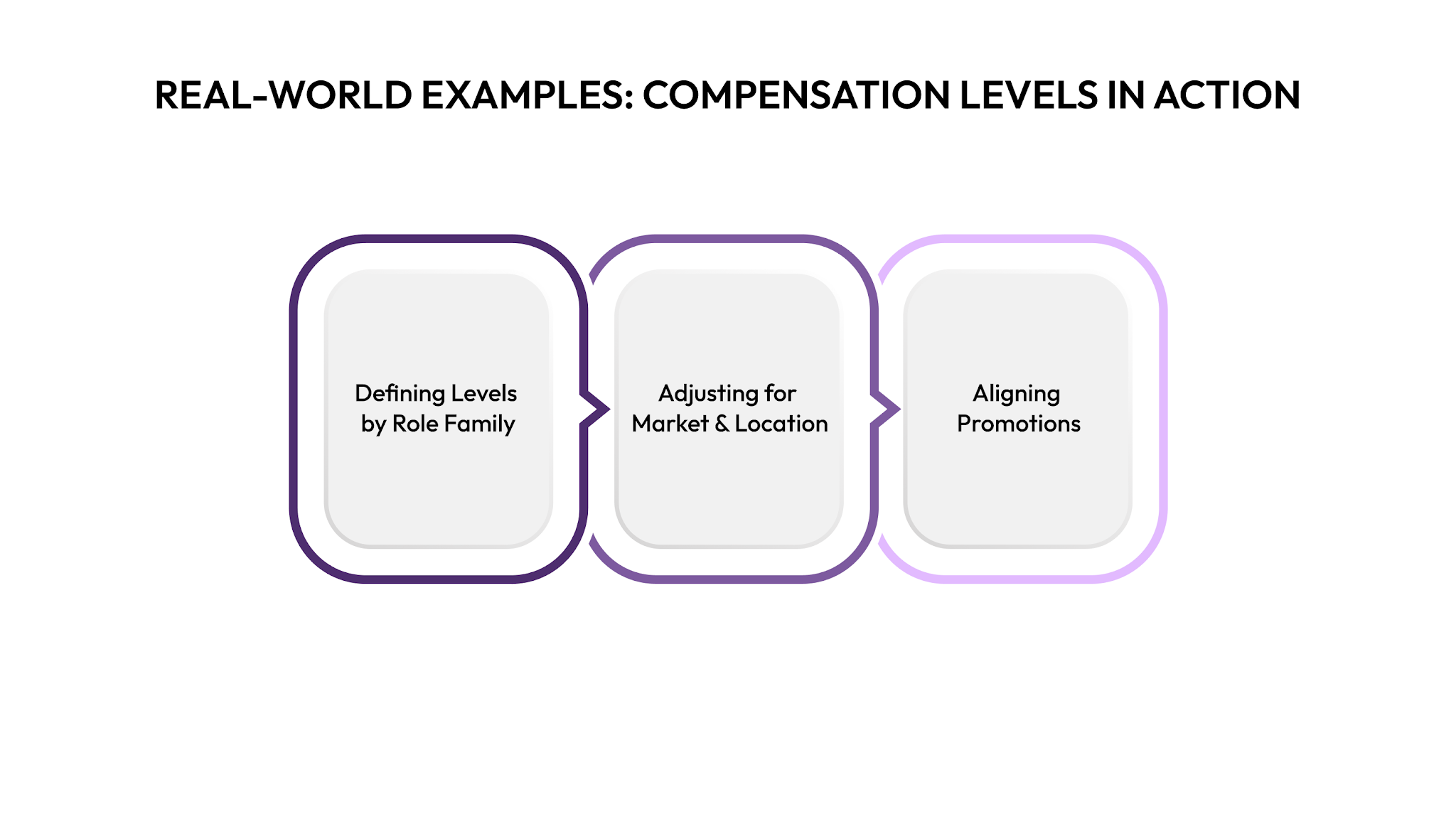
Example 1: Defining Levels by Role Family
You might group similar roles under one family — for example, Software Engineering, People Operations, or Marketing. Each family then has a set of levels with defined pay ranges.
This structure helps you compare pay consistently within and across job families.
Example 2: Adjusting for Market and Location
If you operate in multiple geographies, your pay levels must reflect location-based cost differences. For example:
- A Senior Product Manager in Austin may have a range of $130,000–$150,000.
- The same level in San Francisco may reach $170,000–$190,000 because of cost-of-living adjustments.
Platforms like CandorIQ’s Payband Builder make it easier to apply these geo-adjustments automatically, ensuring you stay competitive without manual recalculation.
Example 3: Aligning Promotions with Levels
A clear level structure allows you to promote employees based on performance and scope, not tenure or negotiation. You can link advancement to measurable criteria such as impact, ownership, and contribution to business goals.
When you communicate these levels transparently, employees understand what growth looks like, reducing confusion and improving retention.
Best Practices for Managing and Communicating Compensation Levels
Once you establish compensation levels, the real value comes from maintaining and communicating them effectively. Your goal is to keep them current, transparent, and trusted.
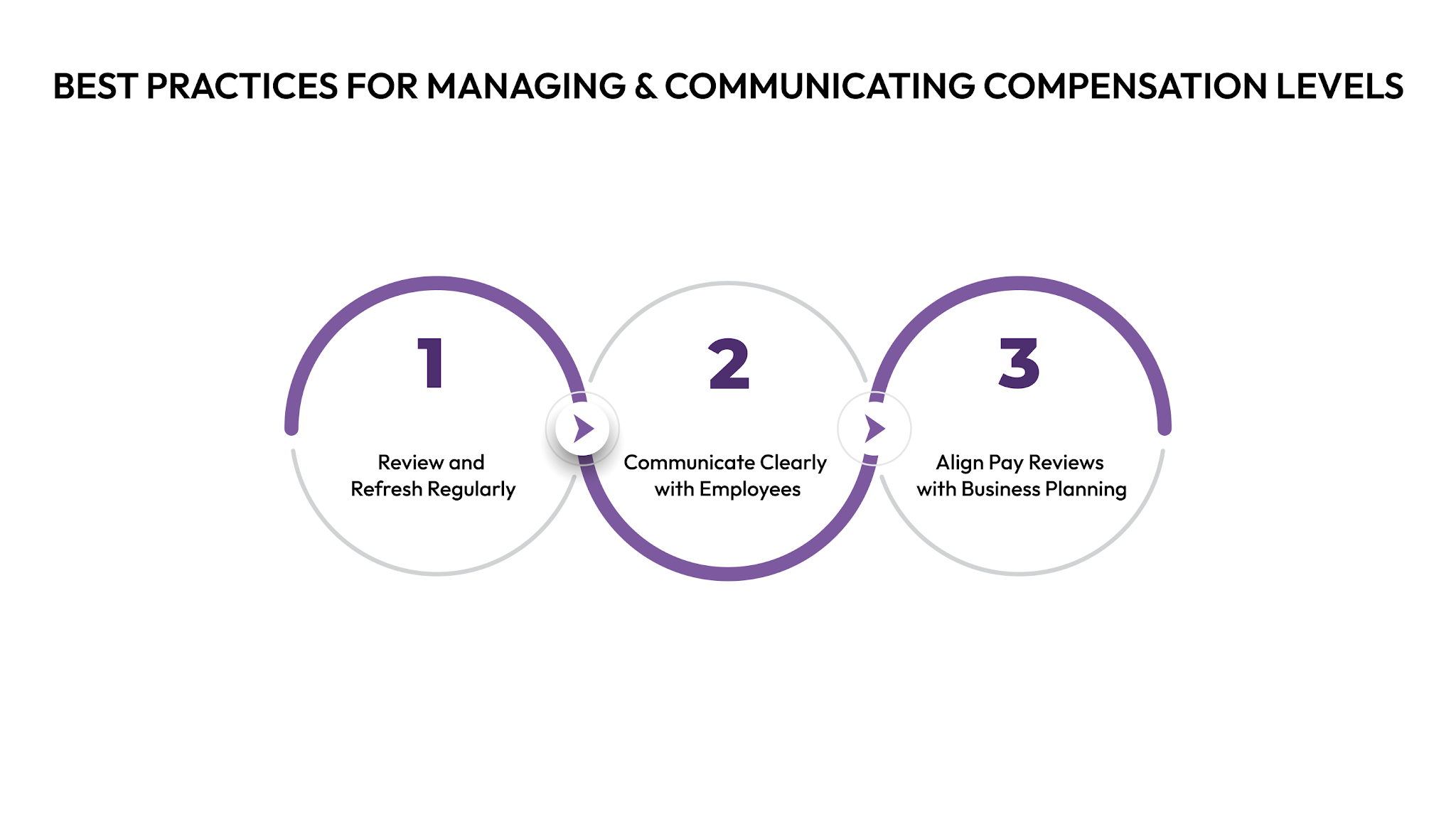
1. Review and Refresh Regularly
Pay data changes quickly. Review your levels at least once a year, or more often during periods of rapid hiring. Adjust ranges using updated market benchmarks and internal feedback.
Checklist for reviews:
- Compare current pay against the market median.
- Identify any pay compression (where new hires earn near or above existing staff).
- Confirm budget alignment with Finance.
Now that your data is current, you can communicate it confidently.
2. Communicate Clearly with Employees
Transparency is the foundation of trust. When employees understand how pay decisions are made, they are less likely to question fairness.
How to communicate effectively:
- Share total compensation details during reviews or new-hire onboarding.
- Explain how progression works between levels.
- Use plain language, avoid HR or finance jargon.
- Provide context about how market data shapes your pay ranges.
Clear communication transforms a sensitive topic into a trusted process. To learn more about proven methods to retain top talent through effective pay management, read our Top Compensation Management Strategies for Employee Retention.
3. Align Pay Reviews with Business Planning
Your compensation decisions should support your broader business strategy. Align annual or mid-year reviews with financial forecasting and headcount planning.
When HR and Finance work from a shared system, you can see the budget impact of raises and promotions in real time.
CandorIQ’s Compensation Cycle supports this by combining approval workflows, comments, and budget tracking in one view, helping you complete reviews faster and with fewer errors.
Once your compensation process is structured, it helps to track how well it meets your goals. Learn practical ways to evaluate your strategy in our guide on How to Measure Compensation Effectiveness for HR Management.
Modern Tools That Simplify Compensation Level Management
As your organization grows, managing pay levels through spreadsheets becomes slow and error-prone.
You spend hours consolidating data, tracking approvals, and recalculating geo adjustments. This manual process makes it hard to maintain consistency and auditability.
Modern compensation tools solve these problems by combining real-time data, automation, and collaboration. Instead of updating multiple sheets, you can manage your entire compensation structure in one system.
How Modern Platforms Help You
- Automate market benchmarking and pay adjustments
- Provide visibility into budgets and raise impacts before approval
- Allow HR and Finance teams to collaborate in real time
- Support pay transparency with clear, shareable views
CandorIQ’s Unified Compensation Platform
CandorIQ brings all compensation and headcount planning processes together. Within one system, you can:
- Build and manage Pay Bands by level, department, and location
- Run Compensation Cycles with built-in approval logic and tracking
- Model Headcount Scenarios and see their budget impact instantly
- Review Offers and Total Rewards with real-time projections
- Use the AI Agent to receive recommendations, analyze trends, and forecast salary impact.
By integrating these features, you gain structure, transparency, and control, without juggling spreadsheets or disconnected tools.
To see how HR and Finance leaders apply these tools in practice, watch our on-demand webinar,
Tactical Workforce Management: Tools to Manage Compensation & Headcount.
Conclusion
Strong compensation levels help you maintain fairness, manage costs, and build employee trust.
When your pay structures are transparent and data-driven, you create alignment between HR, Finance, and leadership, turning compensation from an administrative task into a strategic advantage.
Whether you are refining pay bands, running reviews, or planning future headcount, having one unified system saves time and reduces risk.
CandorIQ helps you do just that, bringing compensation, forecasting, and collaboration into one platform that supports better business decisions.
Book a demo today to see how CandorIQ can help you streamline compensation planning and scale with confidence.
.png)
FAQs
1. When should you update compensation levels?
At least once a year, or whenever you experience significant hiring growth or market changes.
2. How do pay bands differ from compensation levels?
A compensation level defines the value of a job or role. A pay band is the specific salary range within that level.
3. How does geography affect compensation levels?
Salaries vary by region due to cost-of-living and market competition. Adjust ranges to stay fair and competitive.
4. How can AI help with compensation management?
AI tools analyze pay trends, predict budget impact, and recommend adjustments, saving time and improving accuracy.
5. What is levelized compensation?
It is a system that standardizes pay across similar roles and experience levels to ensure consistency and fairness.
Ready to modernize your workforce and compensation strategy?
See how CandorIQ brings workforce planning and compensation together with AI.