

How to Measure Compensation Effectiveness for HR Management
Boost HR effectiveness by analyzing job offer rejections, turnover rates, and pay equity. Evaluate compensation strategies and enhance retention. Click to refine your HR measures!

For HR leaders, measuring the effectiveness of compensation is no longer just about ensuring pay aligns with market standards. It's about creating a strategy that fosters employee satisfaction and business success. A recent study found that employees who perceive their compensation as unfair are 45% more likely to look for a new job, even if their pay is at or above market rate.
To avoid costly turnover and disengagement, HR must evaluate compensation systems that go beyond just salaries. This means considering pay equity, alignment with company goals, and how compensation impacts overall performance and retention.
In this article, we’ll explore the key metrics and strategies HR professionals should use to assess whether their compensation system is truly effective and aligned with organizational objectives.
Key Takeaways
- Compensation is a strategic tool, not just an expense. Measuring its effectiveness aligns pay with business goals and boosts engagement and retention.
- Track key metrics like pay equity, turnover rates, and employee satisfaction to assess the success of your compensation strategy.
- Regular audits and reviews keep compensation competitive, fair, and aligned with market standards, preventing budget creep.
- Transparency in compensation builds trust, reduces turnover, and enhances employee satisfaction.
What is Compensation Effectiveness for HR Management?
Compensation effectiveness is not just about setting pay rates or matching market salaries. It goes beyond the numbers to assess how well a company’s compensation strategy aligns with business goals, employee expectations, and company culture.
In essence, compensation effectiveness measures the impact of pay decisions on employee engagement, retention, and organizational success. It’s about ensuring that compensation doesn’t just meet market standards, but that it supports the company’s long-term strategy and enhances overall business performance.
Why Measuring Compensation Effectiveness Matters
Understanding the true impact of compensation on your workforce is essential for driving business success. Measuring compensation effectiveness goes beyond ensuring market competitiveness; it’s about ensuring your pay structures are aligned with company goals, driving employee engagement, and improving retention. Here’s why measuring compensation effectiveness is crucial:
- Risk of Overpaying or Underpaying: Without active measurement, HR teams risk paying employees either too much or too little, which can lead to disengagement or turnover.
- Pay Bands Aren’t Enough: Simply setting pay bands or offering market-based salaries does not guarantee that compensation is aligned with business goals or employee needs.
- Outcome-Driven Strategy: Organizations need a system in place to evaluate whether their pay structures are actually driving the right outcomes, such as:
- Attracting top talent
- Increasing productivity
- Improving retention
- Beyond Market Comparison: Measuring compensation effectiveness is about more than comparing salaries to market rates; it’s about ensuring that compensation aligns with company strategy, supports business objectives, and enhances employee satisfaction and performance.
Now that we understand what compensation effectiveness means, let’s explore the key metrics HR should track to measure its success.

Also Read: Understanding Business Compensation Structures: A Guide
The Key Metrics HR Should Track for Effective Compensation
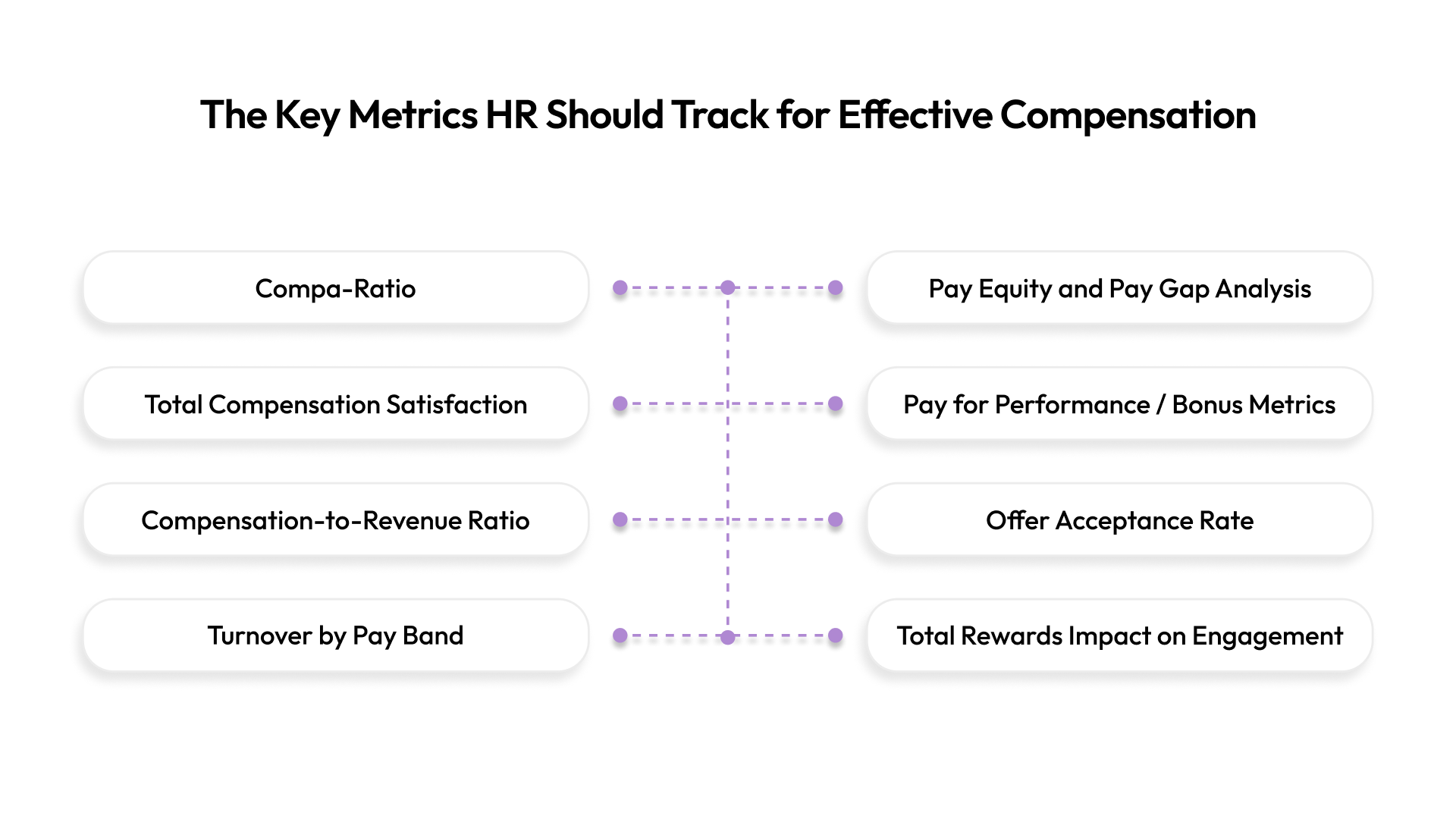
Measuring compensation effectiveness requires more than just tracking salary levels. HR teams need to focus on key metrics that directly correlate with business goals, employee satisfaction, and long-term success. Here are the core metrics HR should track to evaluate compensation effectiveness and ensure alignment with organizational objectives:
1. Compa-Ratio
Compa-ratio measures the relationship between an employee's current salary and the midpoint of the salary range for their position. A ratio of 1.0 means the employee’s pay is exactly at the midpoint of the market rate.
- Why It Matters: This metric helps HR understand how competitive their pay is in comparison to the market. A comparable ratio ensures that employees are being paid appropriately for their role and experience level.
- How to Measure:
- Compa-Ratio = Employee’s Current Salary ÷ Midpoint of Salary Range
- What to Look For: A ratio too far above 1.0 could indicate overpaying, while below 1.0 might signal the company is offering less than competitors.
2. Pay Equity and Pay Gap Analysis
Pay equity analysis ensures that employees are paid fairly for equal work. This analysis identifies any pay disparities based on factors such as gender, race, or department.
- Why It Matters: Pay equity is a critical element of a compensation strategy that fosters trust, engagement, and loyalty. Employees who feel they are treated fairly in terms of pay are more likely to stay and perform at a high level.
- How to Measure: Regularly assess compensation data across different demographics, such as gender, race, age, and geography, comparing it to industry benchmarks.
- What to Look For: If disparities exist, HR teams must assess whether there is a systematic bias and take corrective action to address it.
3. Total Compensation Satisfaction
This metric evaluates how employees perceive their overall compensation package, including salary, benefits, equity, and bonuses.
- Why It Matters: Employees who are satisfied with their total compensation are more likely to be engaged and stay with the company long-term. It’s also an important metric for employee retention.
- How to Measure: Use employee surveys or feedback tools to regularly gauge satisfaction with pay, benefits, and work-life balance.
- What to Look For: Pay close attention to feedback on benefits, bonuses, and equity. If employees are dissatisfied with these areas, HR can adjust the compensation strategy to address concerns.
4. Pay for Performance / Bonus Metrics
Pay for performance measures how well employees are compensated based on their contribution to company goals, often tied to performance reviews or KPIs.
- Why It Matters: Linking compensation directly to performance motivates employees to achieve key business goals. This metric ensures that the most valuable employees are rewarded appropriately for their efforts.
- How to Measure:
- Performance Bonus = Targeted Bonus × Employee Performance Rating
- What to Look For: Ensure that performance-based compensation is linked to clear, measurable outcomes (e.g., sales targets, customer satisfaction scores, project completions). Track whether top performers receive the highest bonuses to reinforce behavior aligned with company goals.
5. Compensation-to-Revenue Ratio
This ratio tracks the total compensation spend relative to company revenue, giving insights into how well the compensation structure aligns with business performance.
- Why It Matters: This metric ensures that compensation remains sustainable. If compensation is growing faster than revenue, it could indicate unsustainable pay growth that could hurt the business.
- How to Measure:
- Compensation-to-Revenue Ratio = Total Compensation ÷ Company Revenue
- What to Look For: A significant increase in the ratio without corresponding revenue growth could signal that the company is spending too much on compensation.
6. Offer Acceptance Rate
This metric measures the percentage of job offers that candidates accept, directly linked to how competitive the company's compensation packages are.
- Why It Matters: A low offer acceptance rate might indicate that compensation packages are not competitive enough to attract top talent.
- How to Measure:
- Offer Acceptance Rate = Number of Offers Accepted ÷ Number of Offers Made
- What to Look For: If the acceptance rate is lower than industry standards, HR needs to review the overall attractiveness of compensation packages and make adjustments to remain competitive.
7. Turnover by Pay Band
This metric tracks turnover across different pay bands to see if compensation levels are directly influencing employee retention.
- Why It Matters: If employees in certain pay bands are leaving at higher rates, it could indicate that pay in those bands is not competitive or fair.
- How to Measure: Analyze turnover data by compensation levels to identify trends or patterns that may need attention.
- What to Look For: If turnover is higher in a certain pay band, HR may need to adjust pay structures or offer incentives to retain employees in those bands.
8. Total Rewards Impact on Engagement
This metric measures the impact of a comprehensive compensation package (salary, benefits, bonuses, equity, etc.) on employee engagement and performance.
- Why It Matters: Employees who understand and value their total rewards package are more likely to stay engaged and feel aligned with company values.
- How to Measure: Combine employee engagement surveys with total rewards data to measure satisfaction and how it impacts employee behavior.
- What to Look For: Look for areas where compensation gaps (e.g., benefits, equity vs. salary) might be causing dissatisfaction or disengagement.
To measure compensation effectiveness, it’s crucial to track the right metrics. Once you’ve identified these key metrics, the next step is to build a structured compensation measurement framework that ensures alignment with your business goals and provides actionable insights.
Also Read: The Complete Guide to Understanding Compensation Summary
How to Build an Effective Compensation Measurement Framework
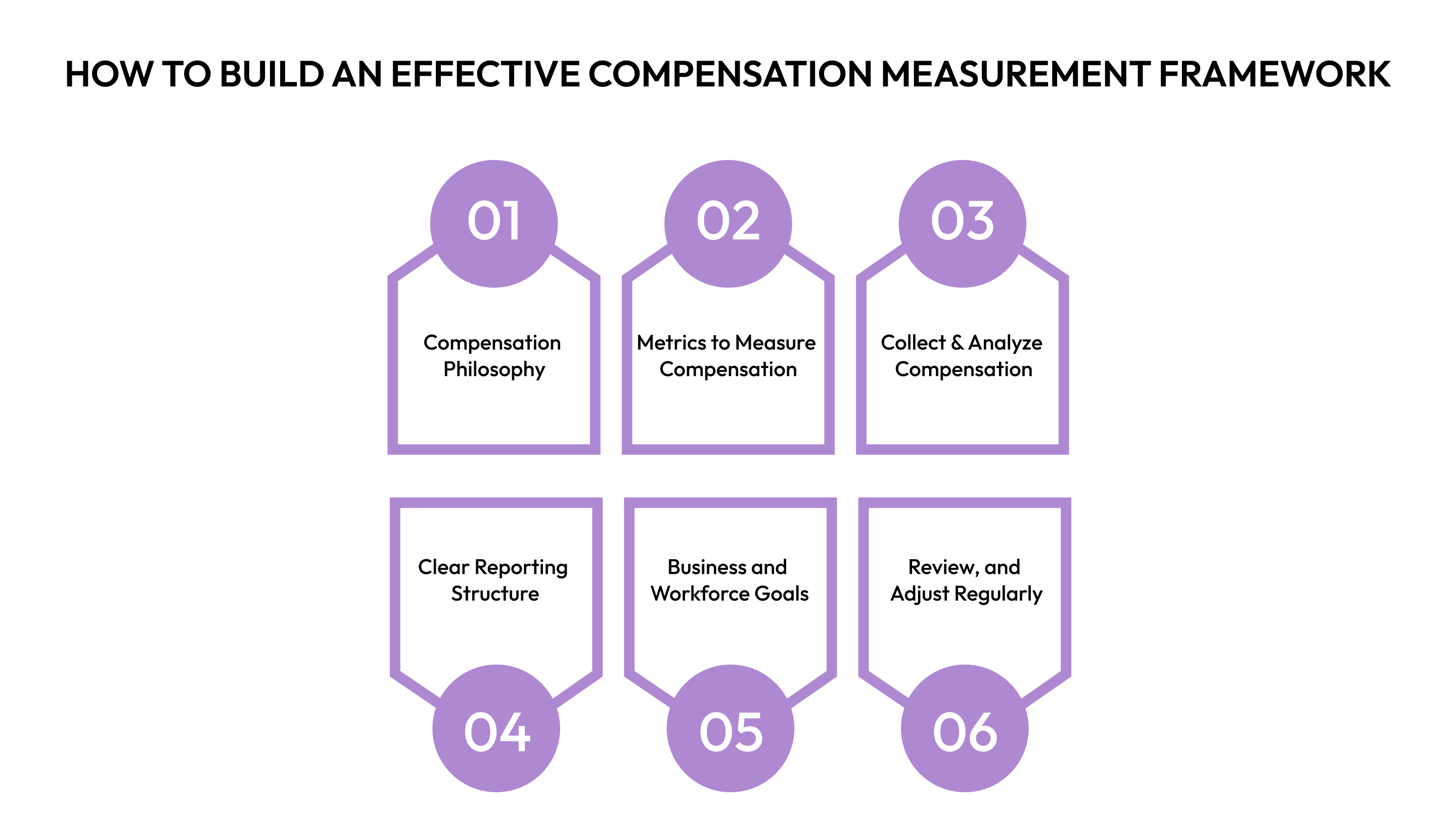
Building an effective compensation measurement framework is essential to ensure your pay structure aligns with both employee expectations and business goals. Without a clear framework, HR teams may struggle to assess whether compensation is driving the right results, such as retention, engagement, and business performance.
Follow these steps to create a comprehensive measurement framework that aligns compensation with organizational goals and drives measurable results.
1. Define Your Compensation Philosophy and Objectives
Start by defining your compensation philosophy. This step sets the foundation for everything that follows.
- Align with Business Goals: Understand how compensation supports company objectives. For example, if your organization is focused on growth, compensation should include incentives for meeting targets.
- Ensure Fairness and Equity: Your philosophy should reflect pay equity and ensure all employees are treated fairly across gender, race, and location.
- Attract and Retain Talent: Define how competitive your compensation should be to attract and retain top talent.
A clear compensation philosophy will guide your pay decisions and ensure alignment across teams.
2. Select Key Metrics to Measure Compensation Effectiveness
Once your compensation philosophy is defined, choose metrics that align with your business goals. Focus on metrics that reflect performance, retention, and organizational success.
Here are the core types of metrics HR should prioritize:
- Market Alignment: Ensure pay is competitive by comparing it to industry standards.
- Internal Pay Equity: Regularly check for fairness across demographics to avoid bias.
- Employee Satisfaction: Use surveys to gauge if employees feel fairly compensated.
- Retention and Turnover: Track turnover by pay band to see if compensation affects retention.
- Performance Metrics: Tie compensation to employee performance to reward top performers.
Prioritize metrics that directly impact your business goals, such as retention, market competitiveness, and pay equity. This keeps the framework actionable and focused.
3. Collect and Analyze Compensation Data
Now that you have your metrics, you need to collect and analyze the data to evaluate effectiveness.
- Data Collection Tools: Use HRIS systems, payroll software, or compensation management platforms to gather data on pay, benefits, bonuses, and equity.
- Benchmarking: Compare your data to industry standards to assess whether your pay is competitive.
- Regular Audits: Conduct regular audits to check for discrepancies or areas of inequity in pay.
Data analysis helps you uncover trends and identify areas for improvement.
4. Create a Clear Reporting Structure
Once you have the data, create a clear reporting structure to communicate your findings to key stakeholders.
- Dashboards: Develop a compensation dashboard that displays key metrics such as pay equity, turnover rates, and employee satisfaction.
- Regular Reports: Set up quarterly or annual reports to assess compensation effectiveness over time. Focus on actionable insights and trends.
- Executive Buy-In: Present findings to leadership in an easily digestible format, using visuals like graphs and charts to highlight key data points.
Clear reporting ensures that your compensation strategy remains transparent and aligned with company goals.
5. Align Compensation with Business and Workforce Goals
Compensation should support both employee satisfaction and business success. Here’s how to make sure your compensation strategy drives the right outcomes:
- Link Pay to Performance: Compensation should be tied to employee performance. Reward employees based on measurable business outcomes.
- Workforce Planning Integration: Align compensation with your workforce plan to ensure pay supports your strategic hiring goals and long-term business objectives.
- Incentives for Retention: Offer long-term incentives such as stock options or pension schemes to encourage employee retention.
Aligning compensation with both employee and business goals ensures that it drives productivity and supports company growth.
6. Monitor, Review, and Adjust Regularly
Compensation measurement is an ongoing process. To ensure continued success, regularly monitor and adjust your strategy.
- Track Metrics: Continuously track key metrics like Compa-Ratio, turnover by pay band, and employee satisfaction.
- Adjust Compensation Models: Adapt pay structures based on feedback, market trends, and company needs. For example, if your company expands globally, revisit your geo-adjusted pay bands.
- Iterate: Compensation should evolve with the business. Regularly review and update your compensation strategy to reflect changing market conditions and employee expectations.
Regular monitoring and adjustments ensure that your compensation strategy remains relevant and effective.
Now that you know how to build a solid framework for measuring compensation effectiveness, it’s important to understand common mistakes HR teams often make in the process and how to avoid them.
Also Read: Benefits of Compensation Workflow Automation in HR
Common Mistakes HR Makes & How to Avoid Them
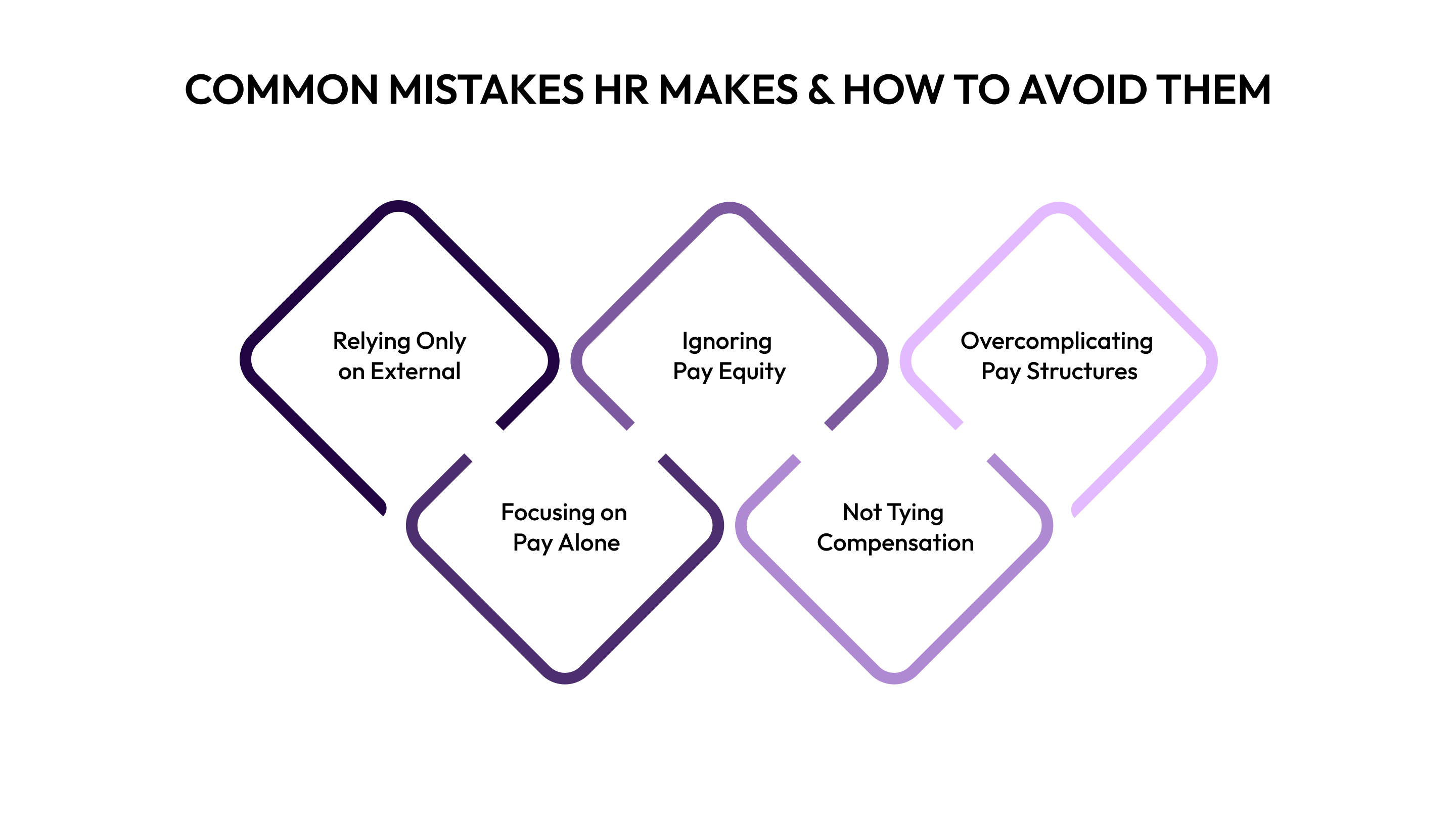
While measuring compensation effectiveness is crucial, HR teams often fall into common pitfalls. Here are some of the most frequent mistakes and how to avoid them:
1. Relying Only on External Benchmarking
- Mistake: Many HR teams focus solely on comparing salaries to industry standards, ignoring the importance of internal equity and employee satisfaction.
- How to Avoid It: Pair market comparisons with internal pay equity assessments. Regularly track employee feedback on compensation and consider their perception of fairness in addition to external benchmarks.
2. Focusing on Pay Alone
- Mistake: Compensation is often treated as just base salary. HR may overlook the total rewards package, including benefits, bonuses, stock options, and work-life balance.
- How to Avoid It: Evaluate total compensation, including salary, benefits, and perks, as a complete package. Ensure that each element is competitive and aligned with employee needs and company values.
3. Ignoring Pay Equity
- Mistake: Many organizations fail to track pay equity regularly, resulting in unintentional pay disparities between different demographics or departments.
- How to Avoid It: Perform regular pay equity audits to ensure there are no disparities in pay based on gender, race, location, or other factors. Ensure your compensation policies are designed to minimize bias.
4. Not Tying Compensation to Performance
- Mistake: HR often disconnects compensation from employee performance, which undermines the effectiveness of pay-for-performance programs.
- How to Avoid It: Link compensation to specific performance goals and business outcomes. Use performance reviews and KPIs to guide pay raises, bonuses, and promotions, ensuring high performers are rewarded.
5. Overcomplicating Pay Structures
- Mistake: Excessively complex compensation structures can confuse employees and make it difficult to track compensation effectiveness.
- How to Avoid It: Simplify compensation models to make them easy to understand and ensure transparency. Clearly communicate how pay decisions are made, so employees understand their compensation packages.
Avoiding the common mistakes HR teams make in compensation measurement is essential, and the right tools can make all the difference. That’s where CandorIQ can help streamline the process and improve compensation effectiveness.

How CandorIQ Can Help HR Teams Measure Compensation Effectiveness
CandorIQ provides HR teams with the tools to measure and optimize compensation effectiveness using real-time data, pay equity tools, and automated workflows. Here’s how CandorIQ can support your compensation strategy:
1. Real-Time Data & Analytics
CandorIQ offers real-time insights into compensation trends and employee pay, allowing HR teams to quickly identify pay equity issues and make informed decisions based on accurate data.
2. Pay Equity & Benchmarking
CandorIQ helps you track pay equity across different roles, locations, and demographics. It allows you to compare your pay structure with industry standards, ensuring that your compensation practices are fair and competitive.
3. Simplified Compensation Planning & Budgeting
With CandorIQ, you can model compensation scenarios, track pay raises and bonuses, and ensure that compensation stays within your budget. This helps prevent budget creep and aligns your pay structure with overall financial goals.
4. Streamlined Compensation Cycles
CandorIQ automates processes like merit reviews, bonus calculations, and approvals. This saves time and ensures that compensation decisions are made efficiently and aligned across HR, Finance, and leadership.
5. Transparent Communication
CandorIQ provides clear, easy-to-understand dashboards for employees, promoting transparency in compensation discussions. This helps reduce repetitive questions and builds trust in your compensation strategy.
CandorIQ enables data-driven compensation decisions that align with your company’s goals. With tools for pay equity analysis, budgeting, and real-time tracking, CandorIQ helps maintain a fair, transparent, and competitive compensation strategy.
Conclusion
Measuring compensation effectiveness is not just about ensuring market competitiveness; it’s about aligning compensation with your company’s strategic goals, employee satisfaction, and business success. By regularly assessing key metrics like pay equity, performance-based compensation, and employee feedback, HR teams can create compensation strategies that attract and retain top talent, drive engagement, and support long-term growth.
With tools like CandorIQ, HR teams can streamline their compensation processes, ensure pay equity, and make smarter decisions based on real-time insights.
Ready to optimize your compensation strategy? Book a demo today and take the first step towards a more effective, transparent, and performance-driven compensation system.
FAQs
1. How does compensation effectiveness impact employee retention?
Compensation effectiveness directly influences how valued employees feel in their roles. When compensation is perceived as fair and aligned with performance, employees are more likely to stay with the company, reducing turnover and recruitment costs.
2. Can compensation effectiveness be linked to overall company performance?
Yes, measuring compensation effectiveness helps identify how well compensation strategies are supporting business goals. Companies that align pay with performance, growth targets, and talent acquisition can achieve better overall business outcomes.
3. What is the role of transparency in compensation effectiveness?
Transparency in compensation builds trust and helps employees understand how pay decisions are made. It fosters a sense of fairness and ensures that employees feel valued for their contributions, which is crucial for driving motivation and engagement.
4. How do you ensure fairness in compensation across different job roles and departments?
Fairness can be ensured by regularly reviewing pay bands, analyzing internal equity, and benchmarking against industry standards. Consistent, data-driven assessments help HR identify any disparities and make adjustments to maintain pay equality.
5. How can HR teams use technology to measure compensation effectiveness?
HR teams can use technology like CandorIQ to track real-time compensation data, benchmark against market standards, run pay equity audits, and automate compensation processes. This streamlines decision-making, enhances accuracy, and ensures alignment with company goals.
Ready to modernize your workforce and compensation strategy?
See how CandorIQ brings workforce planning and compensation together with AI.