
OpenComp Alternatives: Best Compensation Management Platforms in 2026
Explore the best compensation management platforms in 2026. Check out top OpenComp alternatives to enhance pay strategies and improve employee retention.

Compensation strategy either supports people or undermines them. There's not much middle ground.
When pay feels arbitrary, or benefits lag behind market rates, talented employees start looking elsewhere. The numbers confirm what most HR leaders already suspect. Close to half of all turnover traces back to preventable causes, with compensation issues sitting at the top.
Fixing this requires more than good intentions. It demands systems that bring clarity to complex decisions.
OpenComp pioneered many of the features that define modern compensation software, from market benchmarking to approval workflows. But the category has expanded considerably over the past few years.
Several platforms now offer compelling capabilities that might align better with specific needs, budget constraints, or technical requirements. We've evaluated the leading alternatives to help you make an informed choice about which tool deserves investment.
Key Takeaways
- CandorIQ and Pave excel when you need comprehensive solutions. CandorIQ unifies comp planning with headcount management and goes live in weeks, while Pave brings robust benchmarking data from thousands of tech companies.
- Team Ohana and ChartHop take specialized approaches. Team Ohana focuses on equity management and cap tables for startups, whereas ChartHop visualizes your org structure with interactive charts that make headcount planning intuitive.
- Pequity and Figures serve distinct markets well. Pequity keeps things simple for teams wanting straightforward cycles without enterprise bloat, while Figures addresses European compensation with localized benchmarks and GDPR compliance.
- Welcome and Compa solve specific problems effectively. Welcome helps employees actually understand their total rewards through mobile-friendly portals, and Compa delivers core functionality at transparent pricing for budget-conscious teams.
- Gusto and ADP Workforce Now bundle compensation with broader HR needs. Gusto works for small businesses already running payroll through their platform, while ADP handles enterprise-scale complexity across countries and entities.
What is OpenComp?
OpenComp is a compensation management platform designed to help organizations plan, execute, and track pay decisions across their workforce. The software centralizes benchmarking data, compensation cycles, and equity management in one system.
Companies use it to bring structure to merit reviews, promotions, and offer approvals while maintaining budget visibility throughout the process.
.png)
Core Features of OpenComp
OpenComp addresses several pain points that traditionally make compensation planning cumbersome and error-prone. The platform combines data, workflow automation, and collaboration tools to support both HR and finance teams.
- Market Benchmarking: Access to compensation data across industries and roles to ensure competitive pay positioning. Helps recruiters and HR teams make informed offers based on current market rates.
- Compensation Cycle Management: Centralized workflows for merit increases, bonuses, and promotions with approval routing. Reduces the back-and-forth typically required to finalize compensation decisions across departments.
- Equity Administration: Tools to track grants, vesting schedules, and dilution impact for stock-based compensation. Provides visibility into equity distribution and helps maintain fairness across the organization.
- Budget Planning and Modeling: Real-time view of compensation impact on overall budget with scenario planning capabilities. Allows finance teams to model different approaches before committing to final numbers.
- Offer Letter Generation: Automated creation of offer documents with consistent formatting and accurate compensation details. Speeds up the hiring process and reduces errors in candidate communications.
Limitations of OpenComp
No platform serves every organization equally well. OpenComp has specific constraints that may not fit certain team structures or operational requirements.
- Pricing Structure: Higher cost relative to some competitors, which can strain budgets for smaller organizations. The investment may not justify the return for companies with simpler compensation needs.
- Learning Curve: Interface complexity requires significant onboarding time for teams unfamiliar with compensation software. New users often report frustration during the initial adoption phase.
- Integration Gaps: Limited native connections with certain HRIS and financial planning tools that teams rely on. May require manual data transfers or custom API work to maintain system alignment.
- Customization Constraints: Rigid workflows that don't accommodate non-standard compensation structures or unique approval chains. Organizations with specialized needs may find themselves working around the platform.
- Support Responsiveness: Reported delays in customer service resolution, particularly for technical issues requiring product team involvement. Can slow down time-sensitive compensation cycles when problems arise.
Quick Rundown: 10 OpenComp Alternatives for Compensation Management
Top 10 OpenComp Alternatives in 2026
The compensation software market has matured beyond OpenComp's early dominance. New platforms now address specific pain points with better pricing, deeper integrations, or more intuitive workflows that teams prefer.
CandorIQ
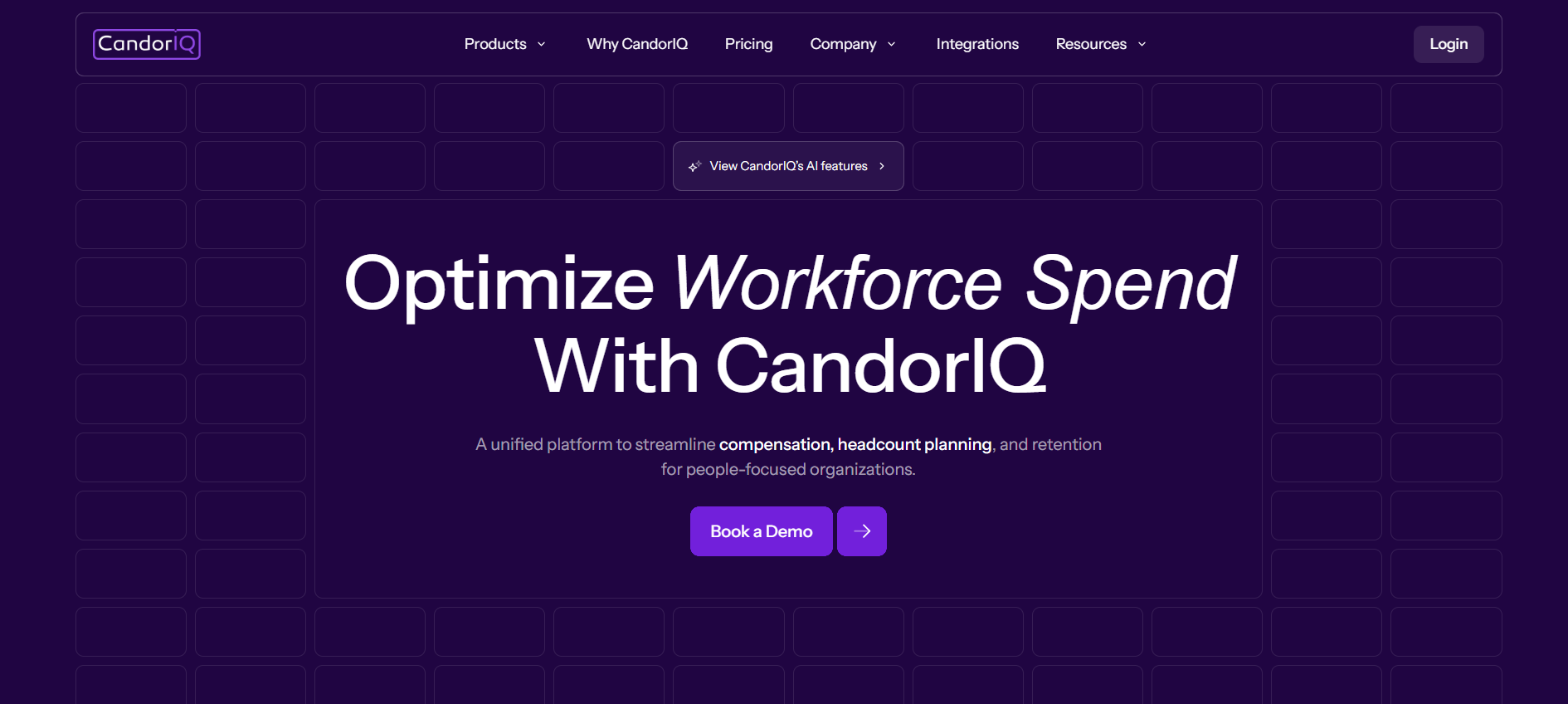
CandorIQ is a compensation and headcount planning platform built for teams that need speed without sacrificing depth. The software connects HR and finance workflows in one system, from offer approvals to merit cycles to real-time budget tracking.
Companies use CandorIQ to eliminate spreadsheet chaos while maintaining the flexibility to model scenarios and make data-backed decisions. The platform integrates with major HRIS and ATS tools, making implementation faster than most alternatives.
Why It's a Good Alternative
- Unified Compensation and Headcount Planning: Combines comp cycles, offer management, and FP&A modeling in one platform instead of forcing teams to stitch together separate tools. Finance and HR finally work from the same source of truth.
- Fast Implementation Timeline: Most organizations go live within two weeks, not months, with pre-built integrations across BambooHR, Greenhouse, Carta, and other systems. Teams start running cycles immediately without lengthy configuration delays.
- Automated Total Rewards Communication: Generates personalized compensation letters automatically with full context on salary, equity, and benefits in one view. Employees see the complete picture of their compensation without HR manually assembling documents.
- Real-Time Budget Visibility: Provides instant views of compensation impact on budgets with scenario modeling that updates as decisions change. CFOs and finance teams can track burn and forecast headcount costs without waiting for end-of-cycle reports.
- Manager Enablement Tools: Equips managers with clear guidance, talking points, and documentation for compensation conversations instead of leaving them unprepared. Reduces the anxiety and confusion that typically surrounds pay discussions.
Case study: Tailscale's lean HR team was drowning in manual processes before their merit cycle. Compensation letters took two weeks to build, required constant revisions, and lacked consistency across the organization.
They implemented CandorIQ in under two weeks, integrating BambooHR, Carta, and Greenhouse without disrupting operations. The platform automated compensation letters, cutting delivery time from two weeks to one day.
Employee response was immediate. Employees could finally see their equity value and understand their total compensation in real time, not weeks after decisions were made.
Need a quick headstart? Try our compensation and equity calculator.
Pave
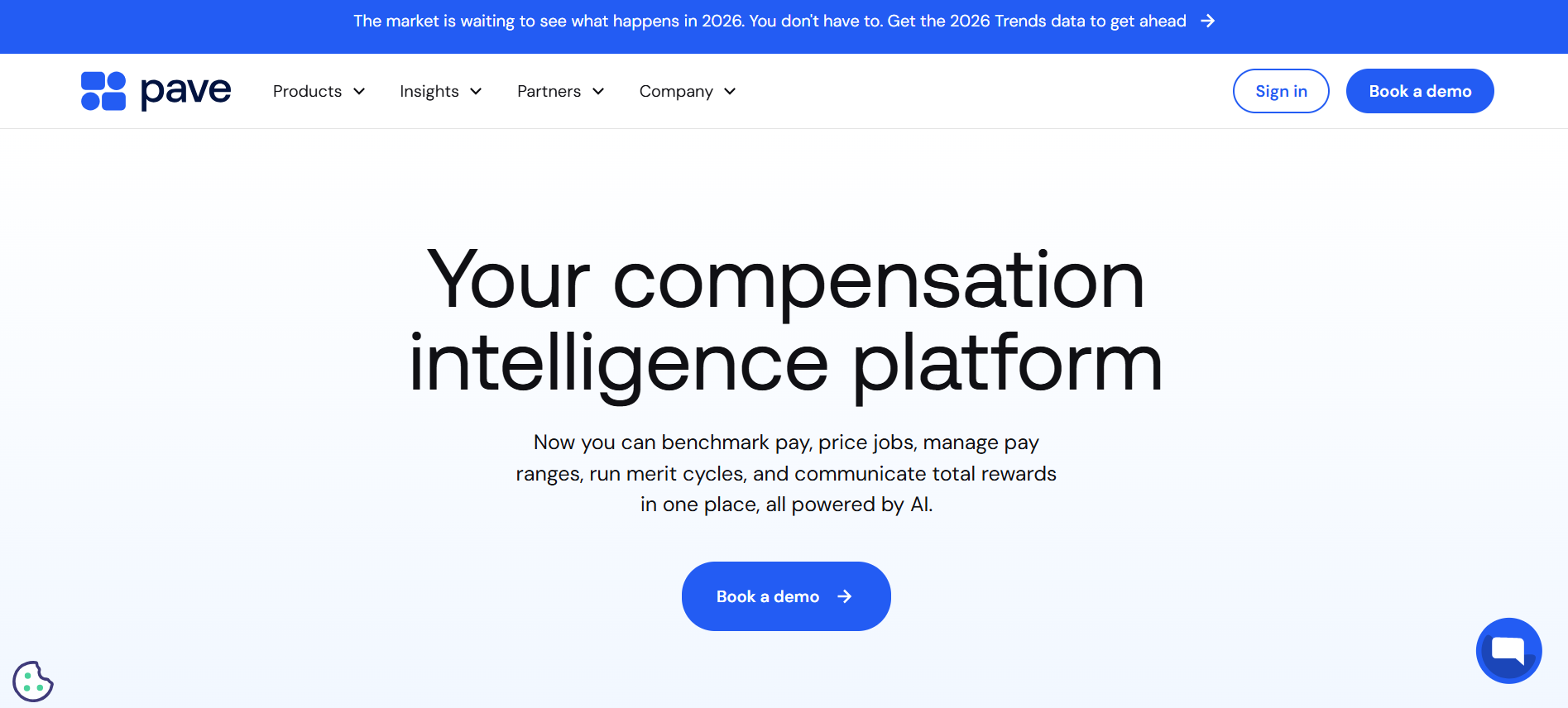
Pave is a compensation platform focused heavily on benchmarking data and market intelligence. The software pulls compensation information from participating companies to create peer comparison datasets.
Organizations use Pave primarily for competitive positioning, particularly during hiring and promotion cycles. The platform offers cycle management features but positions itself more as a data provider than an end-to-end workflow solution.
Why It's a Good Alternative
- Strong Benchmarking Database: Access to compensation data contributed by thousands of companies, particularly strong in tech sectors. Helpful for recruiters who need quick market comparisons during candidate negotiations.
- Real-Time Market Data: Regular updates to compensation benchmarks as new data flows in from participating organizations. Reduces reliance on outdated salary surveys that may not reflect current market conditions.
- Equity Benchmarking: Includes equity grant data alongside cash compensation, which helps startups position stock options competitively. Particularly valuable for companies competing with larger tech firms for talent.
- Survey Participation Model: Companies contribute their own compensation data to access the broader dataset, creating network effects. The more organizations participate, the more robust the benchmarking becomes.
- Integration with Common Tools: Connects with popular HRIS platforms to pull employee data and push compensation decisions back. Reduces some of the manual data entry required during planning cycles.
Team Ohana
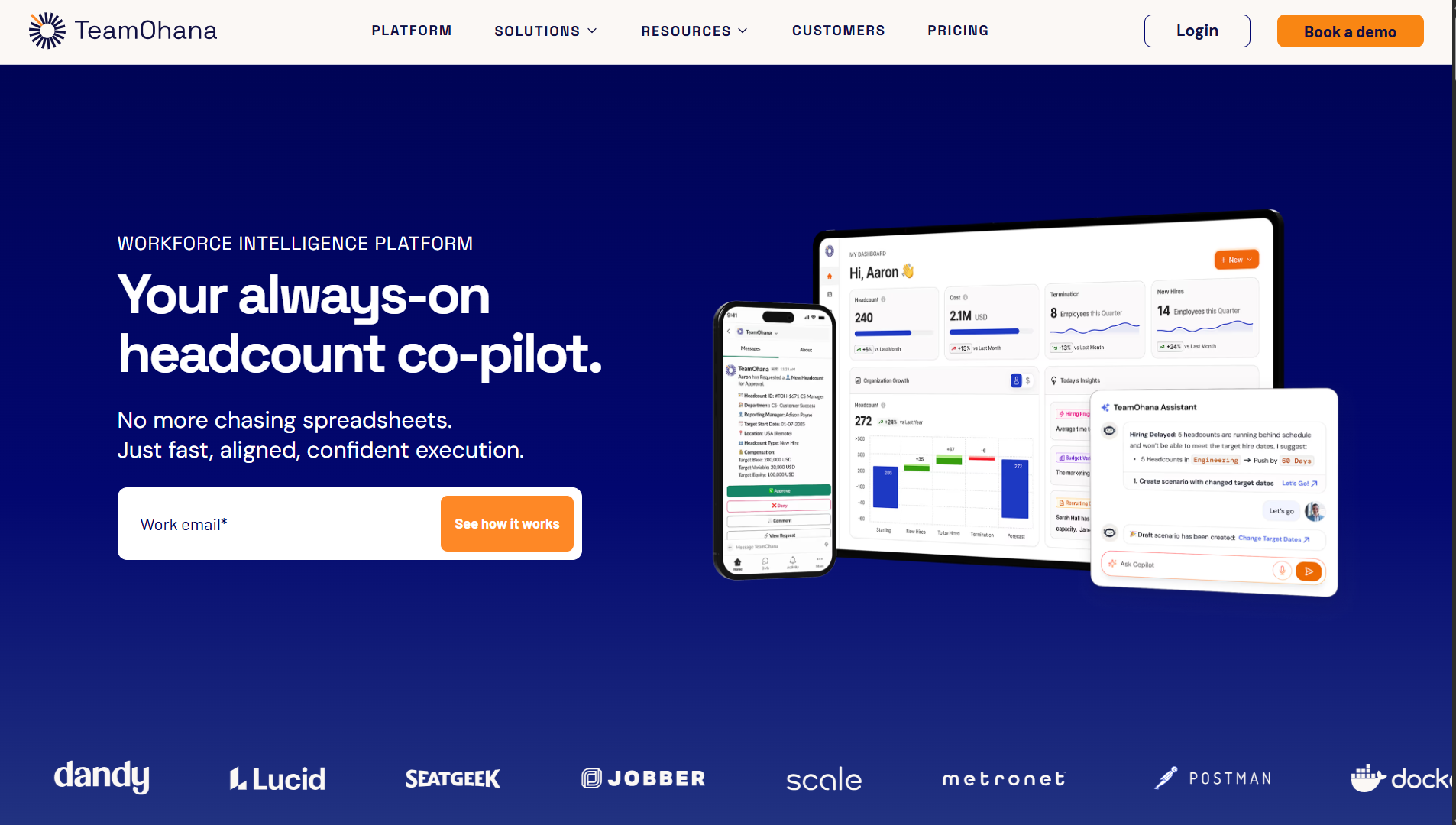
Team Ohana specializes in equity management and cap table administration for startups and high-growth companies. The platform helps organizations track grants, vesting schedules, and ownership dilution as they grow.
While it includes basic compensation features, its core strength lies in equity administration rather than comprehensive compensation planning. Companies typically use Team Ohana alongside other tools rather than as a complete solution.
Why It's a Good Alternative
- Equity-First Design: Built specifically for managing stock options, RSUs, and other equity instruments with detailed tracking. Startups that prioritize equity compensation over complex cash structures find this focus useful.
- Cap Table Management: Provides visibility into ownership structure and dilution scenarios as new funding rounds occur. Helpful for finance teams modeling the impact of equity grants on overall capitalization.
- Employee Equity Portal: Employees can log in to see their grants, vesting progress, and estimated value in real time. Improves transparency without requiring HR to field constant questions about equity status.
- Scenario Modeling: Allows teams to model different equity grant strategies and see potential dilution outcomes before committing. Useful during fundraising or when planning broad-based equity refresh programs.
ChartHop
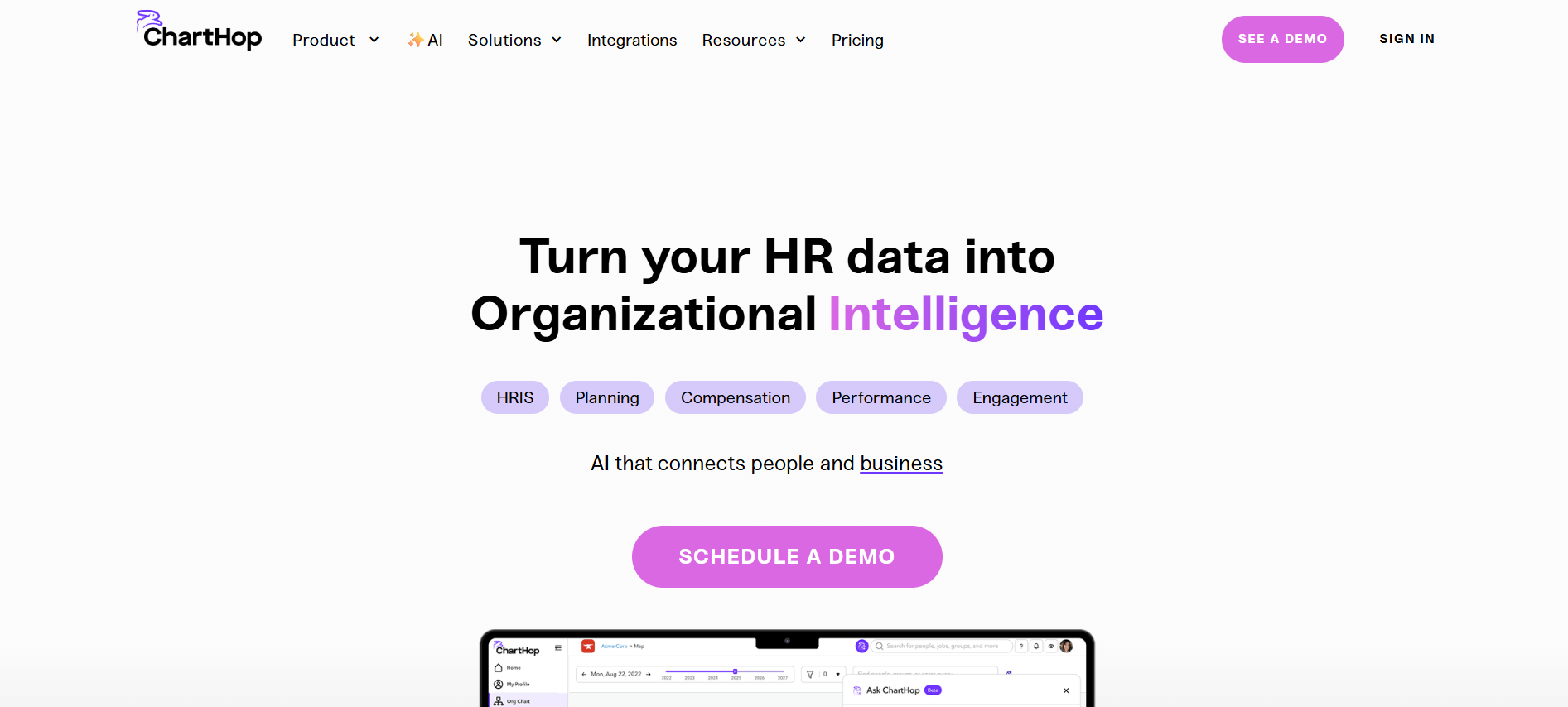
ChartHop began as an organizational planning tool and expanded into compensation management over time. The platform visualizes company structure through interactive org charts while layering in headcount planning and pay data.
Teams appreciate the visual approach to workforce planning, seeing how compensation flows across departments and levels in real time.
Some users find the compensation features less developed than dedicated comp platforms, but the org-centric design appeals to companies prioritizing structure and headcount strategy.
Why It's a Good Alternative
- Visual Org Planning: Interactive charts show reporting structures, open roles, and compensation distribution across the organization. Helps leadership spot pay inequities or structural issues at a glance.
- Headcount Forecasting: Models future team growth with budget impact calculations tied to specific roles and levels. Finance teams can visualize hiring plans instead of parsing spreadsheet formulas.
- Diversity Analytics: Tracks demographic data alongside compensation to surface potential pay gaps across groups. Supports DEI initiatives with clear reporting on representation and equity outcomes.
- Customizable Workflows: Allows teams to build approval chains and processes that match existing organizational structures. Works for companies with unique governance requirements around compensation decisions.
Pequity
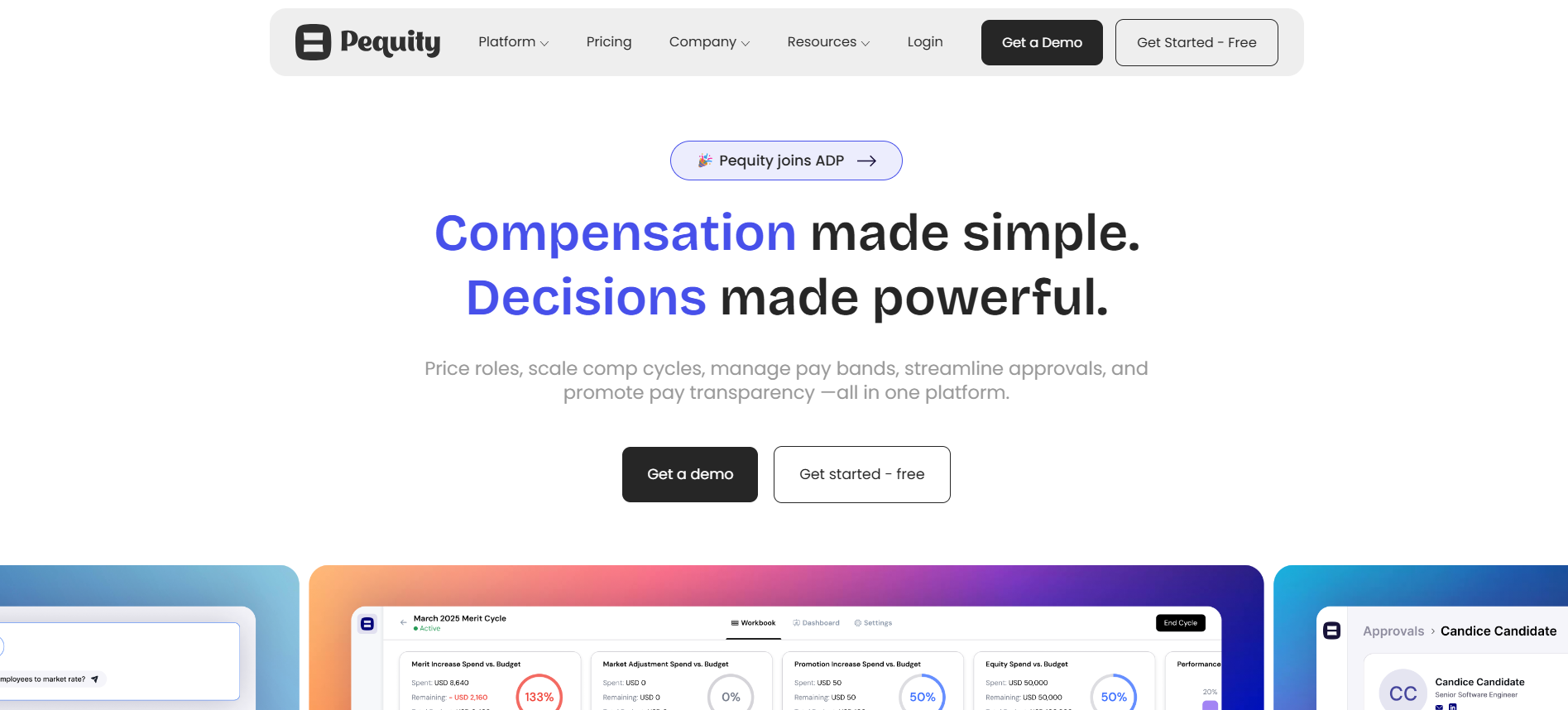
Pequity takes a lightweight approach to compensation management without the bloat of enterprise platforms.
Smaller teams that don't need extensive customization or complex approval hierarchies often choose this platform for straightforward merit cycles and offer approvals.
The software focuses on getting core workflows right rather than trying to solve every edge case, which means faster implementation and easier adoption for teams new to compensation software.
Why It's a Good Alternative
- Simplified Interface: Clean design that doesn't overwhelm users with features they won't use regularly. New team members get up to speed quickly without extensive training sessions.
- Flexible Compensation Frameworks: Supports both traditional job leveling and more fluid career progression models. Helpful for companies transitioning away from rigid hierarchies.
- Built-In Market Data: Includes compensation benchmarks without requiring separate data subscriptions or survey participation. Reduces the total cost of running a complete compensation program.
- Performance Integration: Links compensation decisions to performance review data for merit-based increases. Managers see context from recent evaluations when making pay recommendations.
Figures
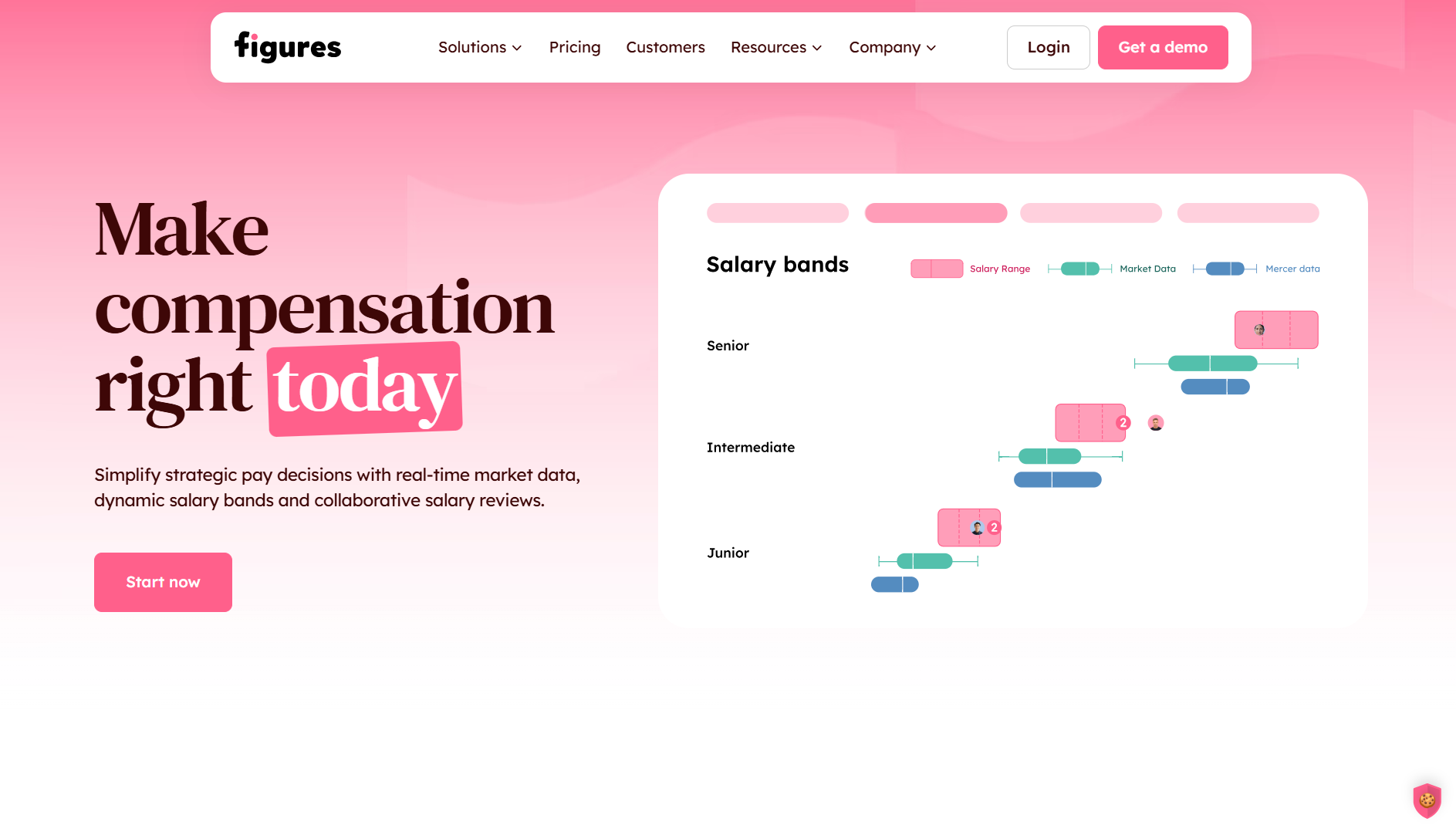
Figures targets European companies specifically, addressing regional compliance and market data needs that US-focused platforms often overlook.
The platform combines compensation planning with localized benchmarking across European markets and currencies, recognizing that compensation structures in Paris differ significantly from those in San Francisco.
Companies expanding across Europe or headquartered outside the US benefit from market data that reflects local norms rather than trying to adapt American benchmarks.
Why It's a Good Alternative
- European Market Focus: Benchmarking data reflects European compensation structures, which differ significantly from US markets. Companies expanding across Europe get relevant comparables for each country.
- Multi-Currency Support: Handles compensation planning across different currencies with real-time conversion and budget tracking. Simplifies operations for teams managing employees in multiple European countries.
- GDPR Compliance: Built with European privacy regulations in mind from the ground up. Reduces compliance concerns when handling sensitive employee compensation data.
- Regional Expertise: Customer support team understands European employment law nuances and market conditions. Helpful when navigating country-specific compensation practices and regulations.
Welcome
Welcome focuses specifically on total rewards communication rather than planning workflows, filling a gap most platforms ignore. Companies use it to help employees understand their full compensation package, including benefits that often get overlooked in traditional pay statements.
The platform operates under the principle that employees who understand their total rewards are more satisfied and less likely to leave over compensation misunderstandings.
Organizations already have other tools for planning, but lack ways to communicate value effectively to their workforce.
Why It's a Good Alternative
- Employee-Facing Portal: Provides personalized dashboards showing salary, equity, benefits value, and perks in one place. Employees finally see what the company invests beyond their base paycheck.
- Benefits Valuation: Calculates and displays the dollar value of health insurance, retirement matching, and other benefits. Makes invisible compensation visible in retention conversations.
- Mobile-Optimized Experience: Works seamlessly on phones where employees actually check personal information. Better adoption than desktop-only platforms requiring VPN access.
- Communication Templates: Pre-built messaging helps HR explain compensation philosophy and total rewards strategy. Reduces the effort required to educate employees about their full package.
Compa
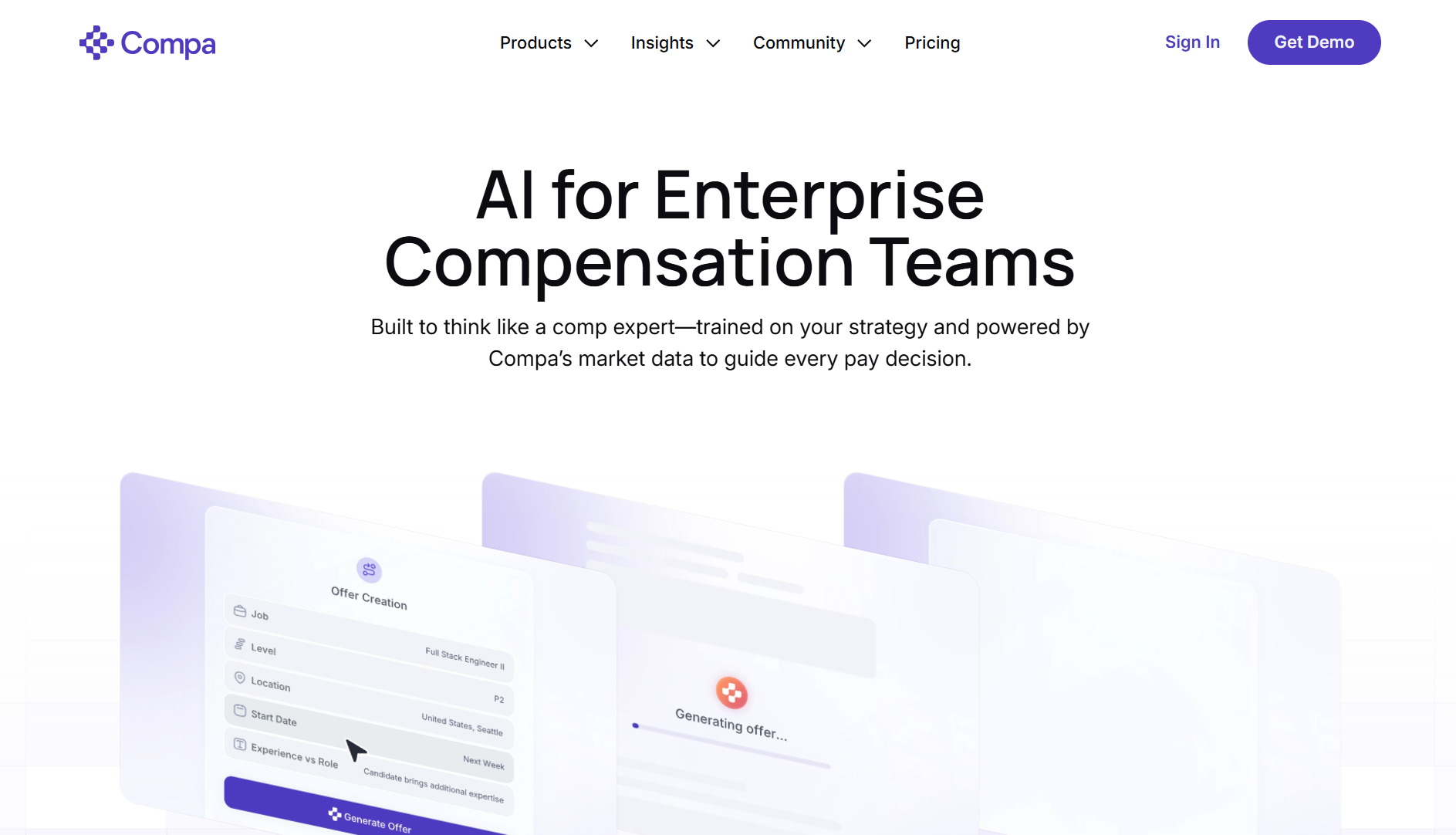
Compa positions itself as the affordable alternative for mid-market companies tired of enterprise pricing that doesn't match their actual needs. The platform covers essential compensation workflows without the premium cost of solutions built for Fortune 500 organizations.
Teams get merit cycle management, offer approvals, and budget tracking without paying for unused features or implementation timelines that stretch across quarters.
The value proposition centers on delivering what most companies need at a price point that makes sense for their budget.
Why It's a Good Alternative
- Transparent Pricing: Clear cost structure without hidden fees or mandatory add-ons that inflate budgets. Companies know exactly what they'll pay before committing to implementation.
- Quick Setup Process: Most teams complete implementation in days rather than weeks or months. Minimal IT involvement required to get the platform operational.
- Core Features Focus: Concentrates on compensation cycles and approvals without unnecessary complexity. Teams that need basic functionality appreciate not paying for unused enterprise features.
- Responsive Support: Customer service team known for quick response times and practical solutions. A smaller customer base means less waiting in support queues during busy periods.
Gusto
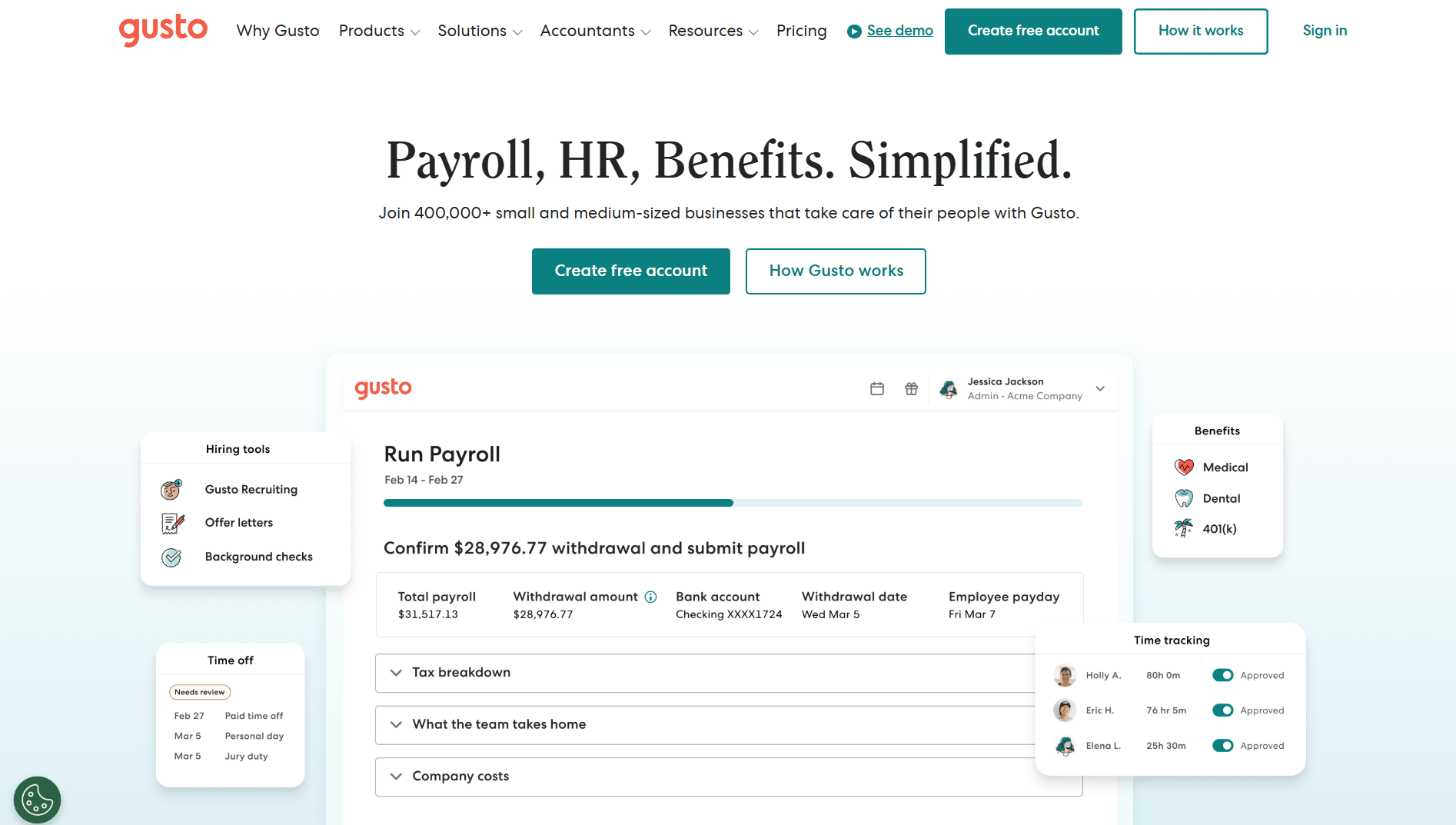
Gusto started as a payroll provider and added compensation tools to its existing platform over time. Companies already using Gusto for payroll benefit from having everything in one system, eliminating the need to sync data between disconnected tools.
The compensation features remain more basic than specialized platforms, but the integration advantage matters for small businesses managing everything with lean teams.
Organizations prioritizing simplicity over sophistication find the trade-off worthwhile, especially when budget constraints limit investment in multiple point solutions.
Why It's a Good Alternative
- All-in-One Platform: Combines payroll, benefits, time tracking, and compensation management without juggling multiple vendors. Simplifies operations for small businesses, managing everything with limited resources.
- Payroll Integration: Compensation changes flow directly into payroll processing without manual data transfers. Eliminates errors from rekeying information between disconnected systems.
- Lower Total Cost: Bundles compensation functionality with payroll at no additional charge for many plans. Budget-conscious teams save money compared to buying separate point solutions.
- Small Business Orientation: Designed for companies with under 100 employees with straightforward compensation structures. Works well when you don't need complex approval hierarchies or equity management.
ADP Workforce Now
ADP Workforce Now is an enterprise HR suite that includes compensation modules alongside payroll, benefits, and talent management capabilities.
Large organizations often choose ADP for the breadth of features and established vendor relationships, accepting trade-offs in user experience and modern functionality that newer platforms deliver.
The system handles complex requirements like multi-country payroll, compliance reporting, and audit trails that matter more to enterprise buyers than interface elegance. Companies already invested in ADP's ecosystem find adding compensation management easier than introducing another vendor into their tech stack.
Why It's a Good Alternative
- Enterprise Scale: Handles thousands of employees across multiple entities, countries, and complex organizational structures. Necessary infrastructure for Fortune 500 companies with global operations.
- Compliance Infrastructure: Built-in compliance tools for wage laws, reporting requirements, and audit trails across jurisdictions. Legal and compliance teams value the documentation and controls.
- Vendor Consolidation: A single contract covers HR, payroll, benefits, and compensation instead of managing multiple relationships. Procurement teams appreciate simplified vendor management.
- Established Reputation: Decades of market presence provide confidence for risk-averse organizations and boards. IT and security teams trust the stability, even if innovation lags competitors.
Conclusion
The best compensation platform depends on your specific workflows, budget realities, and integration requirements. Some teams need deep benchmarking data, others prioritize visual org planning, and many simply want faster cycle execution without the manual chaos.
Each platform on this list solves real problems for different organizations. The key is matching your current pain points to the strengths each solution offers rather than chasing features you won't use.
CandorIQ unifies compensation planning, headcount management, and total rewards communication in one platform. We eliminate the spreadsheet chaos and disconnected tools that slow teams down.
Who We Serve:
- HR and People Ops teams running merit cycles, promotions, and offer approvals
- Finance and FP&A leaders modeling headcount costs and tracking budget impact
- Recruiting managers who need fast offer approvals with competitive market data
- Leadership teams seeking transparency into compensation decisions and workforce planning
Problems We Solve:
- Manual compensation processes that take weeks instead of days
- Budget visibility gaps between HR and Finance during planning cycles
- Employees who don't understand their total compensation value
- Disconnected systems requiring constant data transfers and reconciliation
- Slow implementations that delay cycle launches and create operational friction
Book a free demo to explore how CandorIQ can transform your compensation workflows. Our team will show you exactly how the platform addresses your specific challenges and gets you live faster than you expect.
FAQs
1. What is compensation management software?
Compensation management software helps businesses design, implement, and manage employee pay structures, including salaries, bonuses, and benefits.
2. Why is compensation management important?
It ensures fair and competitive pay, boosts employee retention, and aligns compensation with business goals, driving employee satisfaction and performance.
3. How does compensation software improve efficiency?
It automates processes like compensation cycles, benchmarking, and offer management, reducing manual tasks and errors while speeding up decision-making.
4. Can compensation management tools integrate with other HR systems?
Yes, most platforms integrate with existing HRIS, ATS, and payroll systems for streamlined data sharing and accurate decision-making.
5. Is compensation management software suitable for small businesses?
Yes, many platforms offer scalable solutions that are ideal for small to mid-sized businesses, helping them stay competitive while managing growth.
Ready to modernize your workforce and compensation strategy?
See how CandorIQ brings workforce planning and compensation together with AI.