

Why Workforce Demand Planning Is Essential for HR Success in 2026? Strategy and Tips
Workforce demand planning connects your talent needs to business goals. Learn proven steps, strategies, and tools to plan smarter in 2026.

Did you know? While 73% of organizations run workforce planning exercises, only 12% of U.S. companies build plans beyond a one-year horizon. As a result, teams base talent decisions on outdated data while the business moves faster.
The misalignment runs deeper. Most HR professionals see workforce challenges as high or critical in business impact, yet only a few operate with a defined plan. This reflects a breakdown in alignment.
In 2026, workforce demand planning requires cross-functional ownership. It connects talent decisions directly to growth targets, budget constraints, and hiring timelines. When done effectively, it defines hiring needs, timing, and cost in advance, before reactive decisions take over.
This article breaks down workforce demand planning, how it differs from traditional workforce planning, the steps to build a strong process, strategies for scaling teams, and the challenges to expect.
At a Glance
- Workforce demand planning is the process of forecasting the talent your business will need, by role, timing, and cost, to meet strategic goals. Unlike general workforce planning, it starts with future business outcomes and works backward.
- The biggest reason workforce demand planning fails is that your HR and Finance plans come from different tools with different numbers, creating misalignment that leads to overspending or hiring freezes.
- Effective demand planning requires connecting compensation data to headcount decisions from the start. You can't know the real cost of a hire without factoring in pay bands, location adjustments, and total comp.
- Scenario modeling, building multiple versions of your hiring plan, is the single most underused strategy in fast-growing SaaS and fintech companies scaling headcount 2–3x annually.
- CandorIQ unifies headcount planning, compensation management, scenario modeling, and approval workflows in one platform, so your HR and Finance can finally plan from the same numbers, in real time.

What Is Workforce Demand Planning? How It Can Benefit You
Workforce demand planning is the process of identifying the talent your organization will need, specific roles, skills, and headcount, to execute your business strategy over a defined time horizon. It goes beyond tracking who you have today. It answers who you need tomorrow, when you need them, and what it will cost.
Basically, demand planning translates the business goal into a concrete hiring roadmap with timelines and budgets attached.
Without it, your teams tend to hire reactively. When you are getting it right, you will have:
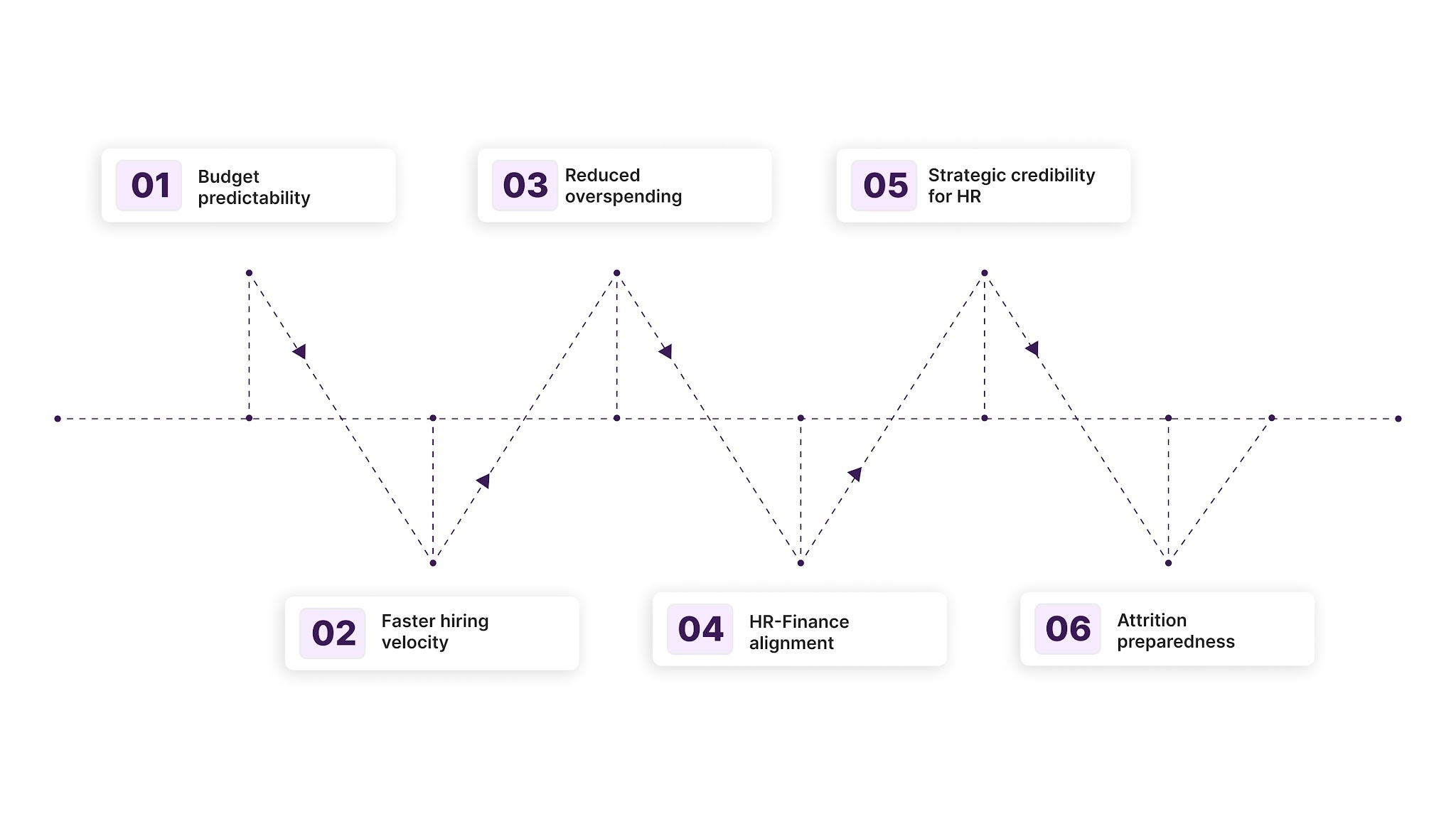
- Budget predictability: You know the cost of every planned hire in advance, salary, benefits, equity, before it hits the P&L. CFOs can model burn impact and course-correct early.
- Faster hiring velocity: Pre-approved headcount with structured workflows means job reqs don't stall in Slack threads or email chains. Hiring managers move faster when the path is clear.
- Reduced overspending: You catch misaligned hiring, roles that don't map to revenue goals, before they drain the budget, not after.
- HR-Finance alignment: Both teams operate from the same real-time data. No more back and forth between Finance and HR.
- Strategic credibility for HR: When HR brings a demand plan backed by scenario models and comp data, it earns a seat at the leadership table, not just at performance review time.
- Attrition preparedness: Demand planning accounts for expected turnover, so you're hiring to replace, not scrambling to backfill critical roles mid-quarter.
Now that you know what workforce demand planning can do, it's worth understanding how it differs from the broader term it often gets confused with: workforce planning.
The Difference Between Demand Planning and Workforce Planning
Workforce planning covers the broader discipline. It evaluates whether the organization has the right people, skills, and structure to operate today and in the future, spanning areas like succession planning, L&D, and org design.
Workforce demand planning takes a narrower, more execution-focused approach. It defines what talent the business needs, when it needs it, and at what cost. It starts with business goals, revenue targets, product launches, and market expansion, and translates them into specific hiring requirements.
Here’s a side-by-side comparison:
The distinction matters because workforce planning tends to stay broad, while demand planning ties directly to outcomes. The key insight here is that demand planning doesn't replace workforce planning. It sharpens it.
Also Read: A Practical Guide to Headcount Forecasting for High-Growth Teams
With the distinction clear, here are the strategies that could make the biggest difference in your workforce demand planning in 2026.
5 Strategies for Smarter Workforce Demand Planning in 2026
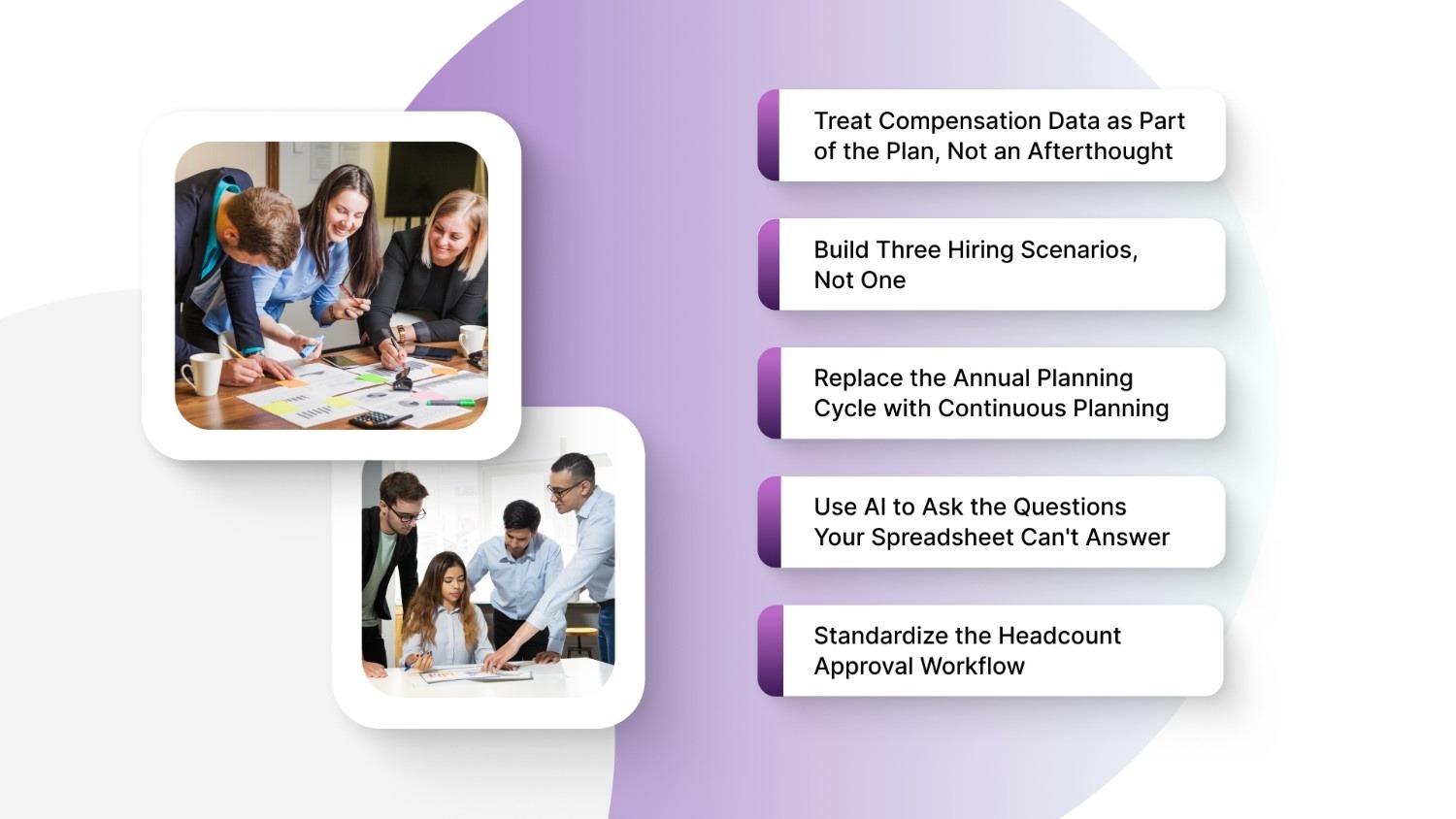
Smarter workforce demand planning connects talent requirements directly to strategic priorities, to make workforce planning a continuous, data-driven process that evolves with the business. Here’s how you can achieve it:
Strategy 1: Treat Compensation Data as Part of the Plan, Not an Afterthought
Teams often create a headcount plan first and calculate costs later. HR proposes new roles, Finance reviews the numbers separately, and both sides spend time revising the plan. This delays hiring and weakens alignment.
A better approach is to include compensation data from the start. Assign a pay band to each role before sharing the plan with Finance, factoring in location, seniority, and market benchmarks. When the plan already reflects the total cost, your finance team can evaluate it without rework.
CandorIQ supports this by linking pay bands directly to headcount planning. HR defines compensation ranges by role, level, and location, and those ranges automatically feed into hiring plans. Finance can see the cost of each role as the plan takes shape, without relying on separate files or follow-ups.
Strategy 2: Build Three Hiring Scenarios, Not One
If you rely on a single headcount list, your demand plan won’t hold up. Business conditions change, funding timelines shift, customers churn, competitors act, and a one-scenario plan becomes outdated quickly.
A stronger approach is to build multiple scenarios. Create a conservative plan at 70%–80% of your growth target, a base plan based on current performance, and an aggressive plan for stretch goals.
Define the cost for each scenario and set clear triggers for when to move between them. Tie those triggers to specific business signals so decisions don’t rely on guesswork.
This turns demand planning into an active decision tool instead of a static document. For fast-growing SaaS and fintech teams, this level of planning is essential to stay aligned with changing conditions.
Strategy 3: Replace the Annual Planning Cycle with Continuous Planning
Most companies set headcount once a year and then spend the rest of the year reacting. Annual plans assume stable conditions, but the business changes too often for that to hold.
Switch to continuous planning. Keep your demand plan updated quarterly, or even monthly, against real business signals. That means tracking actuals against plan on an ongoing basis: how many roles are open, how many are filled, what's the current attrition rate, and how is compensation spend trending against forecast.
In 2026, 7 in 10 business leaders say their primary competitive strategy is to be fast and nimble, to quickly adapt to changing business, customer, or market needs. Regular updates keep the plan aligned with real conditions.
Also, use real-time unified dashboards that show headcount vs. plan, open roles by team, and budget usage. This gives HR and Finance a clear view of what’s changing and allows them to adjust before issues build up.
Strategy 4: Use AI to Ask the Questions Your Spreadsheet Can't Answer
HR teams spend too much time pulling reports, reconciling numbers, and formatting data just to answer basic questions like, “What’s the cost impact if we hire 8 engineers in Q3?” Work that should take seconds often takes hours.
AI changes this. The most effective use of AI in workforce demand planning isn't just automated forecasting. It's also conversational decision support. You can ask a question in plain language and get an immediate answer based on current data.
CandorIQ’s AI Agent supports this approach. People Ops teams can ask questions like “Which departments are likely to exceed comp budget this quarter?” or “What’s the total cost of approved headcount against our runway?” and get clear answers without manual analysis.
This reduces time spent gathering data and allows HR to focus on decisions. For lean teams, it shifts the role from reporting numbers to guiding the business.
Strategy 5: Standardize the Headcount Approval Workflow
Slow approvals add hidden cost to workforce planning. When requests move across Slack, email, forms, and spreadsheets, teams lose time and delay hiring.
Unstructured processes also create confusion. Without a clear record, teams can’t confirm who approved what, and decisions stall.
A standardized workflow fixes this. Each request includes role details, business rationale, budget, start date, and a defined approval path. Everyone can see the status, and decisions move faster.
For fast-growing companies with small HR teams, this level of structure keeps hiring on track and prevents breakdowns as the organization scales.
Also Read: AI-Driven Workforce Optimization: Enhancing Management and Productivity
Now that you know the strategies, it's equally important to know what can slow you down.
5 Challenges You Can Face While Workforce Demand Planning
Even with a defined demand planning process, a few common issues can derail execution. These challenges come from how data, workflows, and decisions are structured.
Here are the five challenges that derail demand planning in even well-run organizations.
- HR and Finance Working from Different Numbers: HR tracks roles in one system while Finance tracks budgets in another, and the data doesn’t stay in sync. This creates conflicting views and leads to either unplanned hiring or unnecessary freezes. This is the most common demand planning failure, and it's entirely structural.
- No Real-Time Visibility into Attrition: Most teams react to attrition instead of planning for it. When plans don’t factor in expected turnover, hiring falls behind, and backfills start too late.
- Compensation Benchmarks That Go Stale: Markets shift quickly, but pay bands often don’t. If your demand plan is built on outdated comp data, you'll either underpay and lose candidates or overpay and blow the budget. Both outcomes hurt.
- Planning That Only Happens Once a Year: Annual planning treats the business like a static object. In reality, priorities shift, products pivot, and markets move. As business needs shift, the plan loses accuracy and requires constant correction.
- Approval Bottlenecks That Kill Hiring Velocity: When the headcount approval process has no defined workflow, no accountability, no visibility, and no standard routing, roles sit in limbo for weeks. Delays frustrate hiring managers, slow down recruiting, and affect growth targets.
Each of these issues is common. However, each can be addressed with the right system and process in place.
CandorIQ is Built for Smarter Workforce Demand Planning
Fast-growing companies run into a structural issue with workforce demand planning. Their tools don’t connect. By the time teams piece everything together, the plan is already outdated. This leads to the same outcomes: budget overruns, slower hiring, and HR teams stuck reacting instead of planning ahead.
CandorIQ addresses this by integrating compensation and headcount planning into a single system. HR and Finance can work from the same data, make decisions faster, and keep plans aligned as conditions change.
With CandorIQ, your team gets:
- Compensation & Payband Builder: Define pay bands by role, level, and location, with geo-adjusted benchmarks, so every headcount decision comes with accurate, real-time cost data attached.
- Headcount Scenario Planning: Model multiple hiring futures simultaneously, conservative, base, and aggressive, and compare each scenario against your budget thresholds before committing.
- Headcount Requests & Approvals: Replace Slack threads and email chains with structured approval workflows. Every request includes a rationale, budget, and routing logic. Every approver knows exactly what they're signing off on.
- Workforce Management Dashboard: See open roles, filled seats, attrition, and comp actuals vs. plan in a single view, built for CPOs, CFOs, and HRBPs who need the full picture without pulling reports.
- AI Agent: Ask natural language questions about your workforce data, comp gaps, burn impact, forecast needs, and get instant, data-backed answers without a pivot table in sight.
CandorIQ eliminates the spreadsheet chaos and gives HR and Finance a shared, real-time source of truth for every workforce decision.
If you want a planning process that keeps up with your business, book a demo now.
FAQs
Q. What is the difference between workforce demand planning and headcount planning?
Headcount planning focuses on the number of people you need. Workforce demand planning is broader — it includes when you need them, what it will cost, what skills are required, and how multiple hiring scenarios affect your budget. Demand planning gives you the strategic context that headcount planning alone doesn't provide.
Q. How often should we update our workforce demand plan?
At a minimum, quarterly. For fast-scaling companies, those growing headcount 50% or more annually, monthly reviews against actuals are more appropriate. Annual planning alone is too slow for a business that's moving in real time.
Q. Who should own workforce demand planning?
It's a shared discipline. HR or People Ops typically leads the process, but Finance needs to be an active collaborator, not a reviewer at the end. For the plan to be credible and actionable, both teams need to co-own it from the start.
Q. What data do you need to start workforce demand planning?
You need four inputs: your current headcount and skill map, your business goals and growth targets, your compensation benchmarks by role and location, and your historical attrition rate. With those four data points, you can build a meaningful first plan, even if it's not perfect.
Q. How does AI help with workforce demand planning?
AI helps most in two areas: answering "what if" questions quickly (e.g., "what's the burn impact of hiring 5 engineers in Q2?") and surfacing patterns in workforce data that humans miss, comp outliers, attrition signals, and departments trending over budget. The key is having a platform where AI can access live, integrated data rather than running on stale spreadsheet exports.
Ready to modernize your workforce and compensation strategy?
See how CandorIQ brings workforce planning and compensation together with AI.