

Building a Total Rewards Team Structure Strategy
Learn how to design a scalable total rewards team structure that aligns pay, benefits, and growth with business goals to improve retention and fairness.

Organizations today face a rapidly changing workforce landscape. Employees expect more than just a paycheck; they value transparency, fairness, career growth, and meaningful recognition. In fact, 89% of HR professionals say improving total rewards is a top priority to engage and retain talent. For HR leaders, this shift requires a total rewards strategy that goes beyond traditional compensation and benefits.
A well-structured total rewards team ensures that every aspect of pay, perks, and performance management aligns with both employee expectations and organizational goals. By designing a team that is equipped to manage compensation cycles, benefits programs, equity, and workforce planning, companies can drive retention, engagement, and performance.
This blog walks you through how to build a total rewards team structure that is both scalable and effective.
Key Takeaways:
- A clear total rewards strategy provides structure to compensation, benefits, incentives, growth, and recognition while aligning people's decisions with business priorities.
- Core elements like pay bands, benefits, incentives, career development, recognition, and workforce analytics work together to support fairness, transparency, and engagement.
- Building an effective total rewards team requires defined roles, alignment between HR and Finance, the right technology, and ongoing review as workforce needs change.
- Avoiding common pitfalls such as overcomplexity, poor data usage, and lack of scalability helps teams maintain a total rewards team structure as the organization grows.

What is a Total Rewards Strategy and Why It Matters for Your Organization?
A total rewards strategy defines how an organization attracts, motivates, and retains employees by looking beyond base pay. It brings together compensation, benefits, incentives, growth opportunities, and recognition into a single, intentional framework.
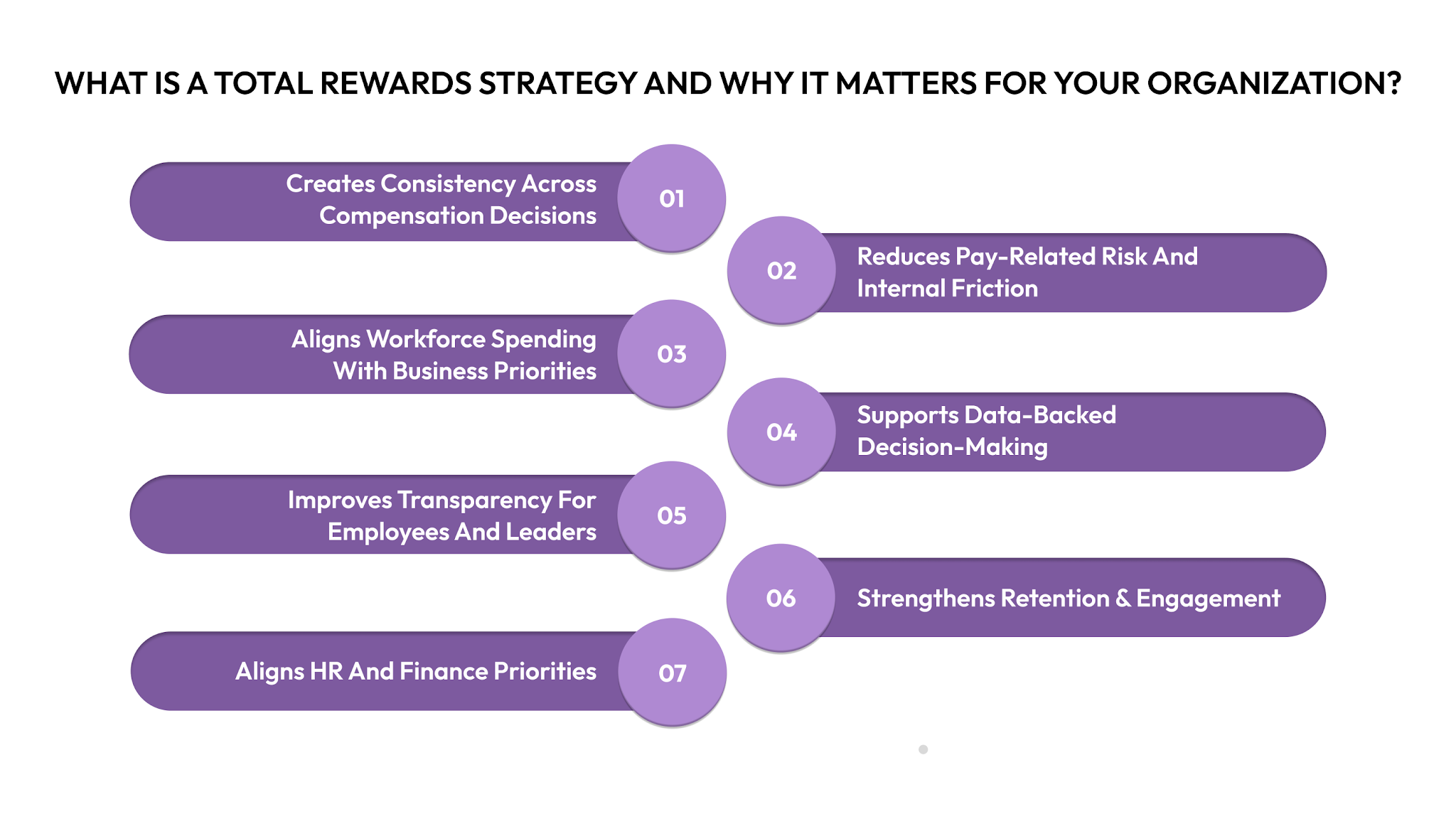
Below are the core reasons a total rewards strategy matters at an organizational level.
- Creates consistency across compensation decisions: Establishes clear rules for pay, incentives, and rewards so employees in similar roles are treated fairly across teams and locations.
- Reduces pay-related risk and internal friction: Minimizes disputes, attrition, and compliance issues caused by unclear or inconsistent compensation practices.
- Aligns workforce spending with business priorities: Connects compensation and rewards directly to company goals, growth plans, and budget constraints.
- Supports data-backed decision-making: Replaces ad-hoc judgment with structured inputs such as benchmarks, internal equity data, and performance signals.
- Improves transparency for employees and leaders: Helps employees understand how pay and growth decisions are made, while giving leadership visibility into cost impact.
- Strengthens retention and engagement: Employees are more likely to stay when rewards feel fair, predictable, and tied to performance and progression.
- Aligns HR and Finance priorities: Creates a shared framework that aligns people strategy with financial planning instead of operating in silos.
A strong total rewards strategy acts as a decision framework, not just a compensation document. It guides hiring, promotions, budgeting, and long-term workforce planning with clarity and control.
Also Read: Measuring Key Total Rewards Metrics for HR Success
Next, let’s break down the key elements that make a total rewards strategy effective and sustainable as organizations grow.
Key Elements of a Total Rewards Strategy
To create a rewards strategy that resonates with your workforce, it’s important to understand the building blocks that make it effective. These elements work together to shape how employees experience value from their work and rewards.
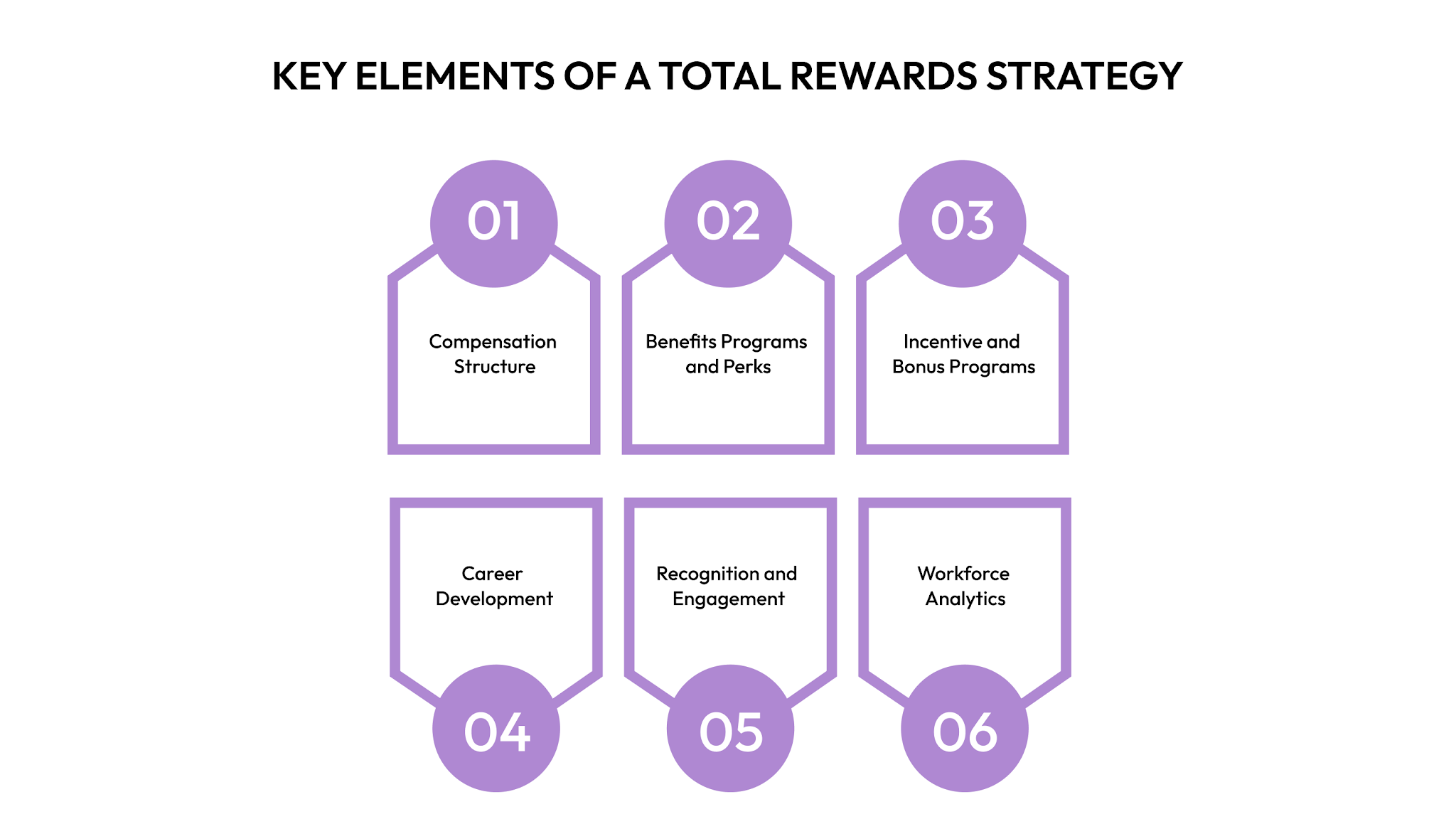
Below are the core components every total rewards strategy should consider:
1. Compensation Structure and Pay Bands
A clear compensation structure provides transparency and equity across job levels, departments, and locations. Pay bands help define salary ranges for roles, ensuring consistency in hiring, promotions, and salary adjustments.
Properly designed pay bands account for factors such as market benchmarks, geographic differences, and role responsibilities. This structure also supports compliance with equal pay regulations and helps employees understand growth opportunities within the organization.
2. Benefits Programs and Perks
Benefits are a critical part of total rewards. They include health insurance, retirement plans, wellness initiatives, and other perks that support higher employee satisfaction and retention.
Organizations that tailor benefits to the workforce demographic, such as remote employees, younger talent, or families, create more relevant value propositions. This approach builds stronger engagement and loyalty, as employees feel their individual needs are recognized and supported.
3. Incentive and Bonus Programs
Variable pay programs like performance bonuses, spot awards, and equity grants motivate employees to achieve individual and organizational goals. Well-structured incentive programs tie rewards directly to performance metrics, business outcomes, or strategic initiatives.
These programs require clarity and fairness. Employees should understand how rewards are calculated and what behaviors or results are being recognized. This transparency helps reduce misunderstandings and contributes to a culture of trust.
4. Career Development and Growth Opportunities
Total rewards extend to non-monetary components such as professional development, mentorship programs, and succession planning. Opportunities for skill development and career progression support retention and employee satisfaction.
By aligning development initiatives with organizational needs, companies maintain strong talent pipelines, and employees see a future within the company.
5. Recognition and Engagement
Recognition programs reward employees for contributions beyond measurable performance metrics. This can include peer-to-peer recognition, awards for collaboration, or acknowledgment of innovation.
A culture that consistently recognizes employee efforts drives engagement, reinforces desired behaviors, and strengthens workplace morale.
6. Workforce Analytics and Data-Driven Insights
Modern total rewards strategies rely on data. Workforce analytics provide visibility into pay equity, budget impact, attrition trends, and engagement levels.
Analytics allow HR leaders to make informed decisions, anticipate workforce needs, and justify investments in compensation or benefits programs. Access to real-time data supports workforce planning and helps avoid costly errors or inequities.
With these elements defined, the next question is how to design a total rewards team that can implement and sustain such a strategy effectively. Let’s explore how to do that next.
Also Read: Creating a Total Rewards Template: A Step-by-Step Guide
How to Create a Total Rewards Strategy?
Creating a total rewards strategy involves a structured approach that brings together workforce planning, financial management, and employee experience.
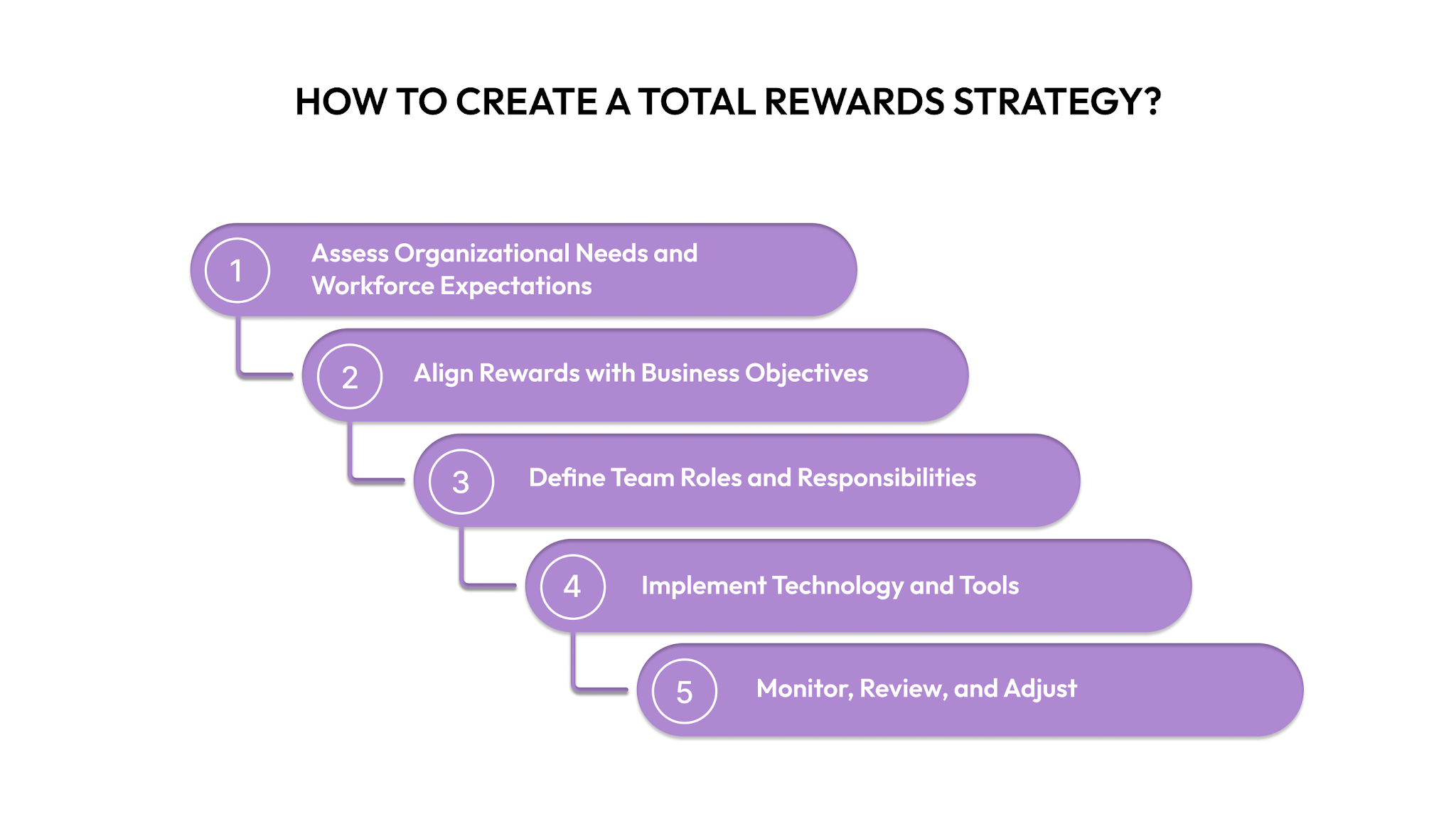
Here’s a step-by-step process:
Step 1: Assess Organizational Needs and Workforce Expectations
Begin by evaluating the current workforce composition, employee expectations, and existing rewards programs. Identify gaps, inefficiencies, or inconsistencies in pay, benefits, and incentives. Surveys, focus groups, and HR data can provide actionable insights.
Step 2: Align Rewards with Business Objectives
Next, ensure the total rewards strategy aligns with company goals, budget constraints, and growth projections. Compensation planning, incentive programs, and recognition initiatives should reinforce performance metrics and business priorities.
Step 3: Define Team Roles and Responsibilities
A successful total rewards team requires clear role definitions. Key positions may include:
- Compensation Analysts: Handle pay bands, benchmarks, and salary adjustments.
- Benefits Specialists: Manage health, wellness, and retirement programs.
- HR Business Partners: Ensure alignment between strategy and operational execution.
- People Analytics Professionals: Provide insights through data visualization and modeling.
Step 4: Implement Technology and Tools
Modern tools simplify complex workflows and support data-driven decision-making. Platforms like CandorIQ bring compensation, headcount planning, and analytics into one place, helping teams minimize errors and repetitive tasks. AI-enabled forecasting and scenario planning strengthen long-term planning.
Step 5: Monitor, Review, and Adjust
Total rewards strategies require ongoing review. Teams should track key metrics such as pay equity, program usage, employee satisfaction, and turnover. Regular reviews make it easier to adjust direction and keep the strategy relevant as workforce needs change.
A well‑designed strategy reflects both what your organization can sustain and what your employees value most.
Now, let’s look at some of the common roadblocks HR teams face when building a total rewards team.
Common Mistakes to Avoid When Building a Total Rewards Team Structure Strategy
Even experienced HR teams can encounter difficulties when designing total rewards structures. Awareness of common mistakes helps mitigate risks.
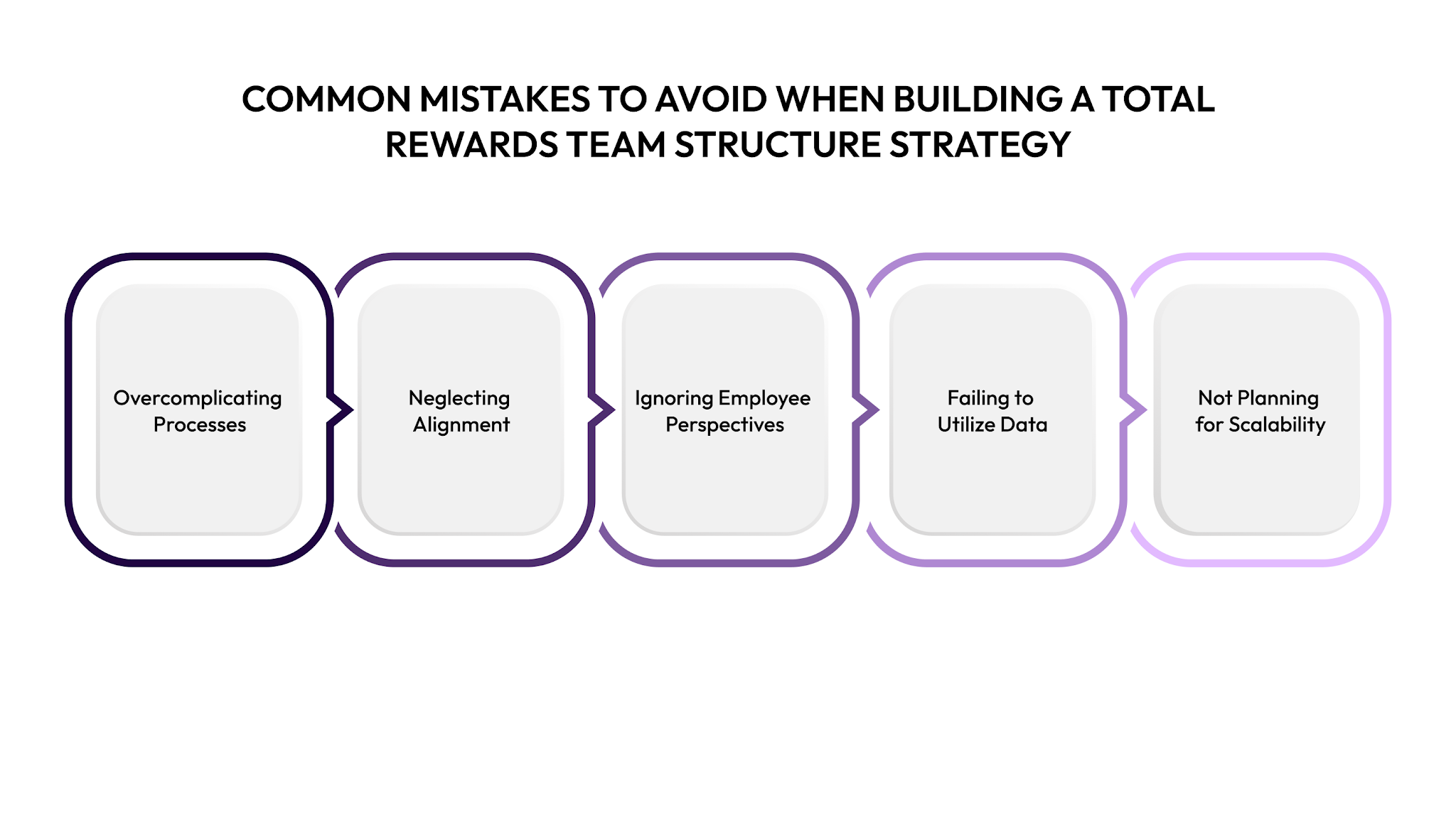
- Overcomplicating Processes: Complex workflows and excessive approval layers slow down decision-making. Total rewards teams should aim for clarity, standardized processes, and automation where possible.
- Neglecting Alignment Between HR and Finance: Poor coordination between HR and Finance can lead to budget overruns, inequitable pay, or misaligned incentives. Strong collaboration keeps compensation and headcount planning on track.
- Ignoring Employee Perspectives: A strategy that doesn’t consider employee needs risks disengagement and attrition. Incorporate feedback on benefits, recognition, and career development when designing programs.
- Failing to Utilize Data: Decisions driven only by tradition or instinct can result in inequities and operational gaps. Data-based insights support fair pay, performance-linked incentives, and informed workforce planning.
- Not Planning for Scalability: As organizations grow, total rewards programs must adapt. Without scalable systems, teams may struggle with increased headcount, distributed workforces, or multi-location pay adjustments.
Avoiding these pitfalls allows HR teams to focus on building a total rewards team that supports organizational goals effectively.
How CandorIQ Can Support a Scalable Total Rewards Team Strategy?
Modern HR and finance teams benefit from technology that centralizes total rewards management, provides real-time insights, and reduces administrative burden. CandorIQ offers a unified platform for building and managing scalable total rewards strategies.
Here’s how we can help you:
- Compensation & Payband Builder: Let's you define clear pay ranges by job level, location, and department in one place, eliminating disconnected spreadsheets and ensuring consistent compensation decisions.
- Compensation Cycle: Automates merit, bonus, and salary review processes with built-in approval flows, real-time budget tracking, and collaborative workflows, reducing administrative delays.
- Employee Total Rewards: Provides employees with transparent access to their full compensation package, including salary, equity, benefits, and growth paths, helping build trust and retention.
- Candidate Offers: Speeds up hiring by generating competitive, customizable offers that clearly show total compensation, equity, and benefits; integrates with ATS tools to reduce manual tasks.
- Headcount Scenario Planning: Enables HR and Finance leaders to model different staffing scenarios, compare budget impacts, and make strategic headcount decisions with confidence.
- Headcount Requests & Approvals: Standardizes new hiring and backfill requests in one platform, with automated approval workflows, budget visibility, and integration with HR systems.
- Workforce Management: Tracks open roles, promotions, attrition, and pay versus plan so teams always have up-to-date visibility into workforce health and can adjust strategy as needed.
- AI Agent: Uses intelligent recommendations and natural language queries to uncover pay gaps, forecast needs, and support strategic decisions without manual data crunching.
By providing centralized, configurable, and intelligent support, CandorIQ enables total rewards teams to scale efficiently while maintaining fairness, transparency, and alignment with business goals.
Conclusion
A well-designed total rewards team structure is a critical driver of long-term business success. It allows organizations to align pay, recognition, and development with strategic objectives while fostering engagement and retention. By combining compensation, benefits, incentives, and career growth into a coherent strategy, HR leaders can make more informed, equitable, and forward-looking decisions.
Organizations that invest in a structured total rewards team and adopt intelligent platforms like CandorIQ gain a competitive edge, reducing administrative overhead while improving transparency, equity, and workforce alignment.
Request a demo with CandorIQ today to see how your team can build a scalable, data-driven total rewards strategy that aligns with your business goals.
.png)
FAQs
1. What key roles should be included in a total rewards team structure?
A strong total rewards team structure typically includes compensation specialists, benefits managers, payroll experts, HR analytics professionals, and a total rewards leader. Larger organisations may also add equity compensation, wellness, or compliance specialists to manage complexity and regulatory requirements.
2. How do you determine the right size and composition of a total rewards team based on company scale?
Team size depends on workforce size, geographic spread, and rewards complexity. Smaller companies often use generalists or outsourced support, while mid-to-large organisations need dedicated specialists for compensation, benefits, analytics, and compliance to ensure consistency, scalability, and governance.
3. What skills and expertise are essential for total rewards team members?
Key skills include compensation and benefits design, data analysis, financial modelling, regulatory knowledge, and stakeholder communication. Team members should also understand workforce strategy, market trends, and change management to align rewards programmes with business goals and employee expectations.
4. How can market benchmarking inform total rewards team structure decisions?
Market benchmarking highlights pay competitiveness, benefit gaps, and cost alignment. These insights help determine whether specialised roles are needed for compensation analysis, equity planning, or global benefits management, ensuring the total rewards team structure supports informed, market-aligned decisions.
5. What tools and technologies support a high-performing total rewards team?
High-performing teams rely on HRIS platforms, compensation benchmarking tools, benefits administration software, payroll systems, and people analytics dashboards. These technologies improve data accuracy, automate processes, support compliance, and enable strategic insights for more effective total rewards management.
Ready to modernize your workforce and compensation strategy?
See how CandorIQ brings workforce planning and compensation together with AI.