

Predictive Workforce Analytics for Smarter Workforce Planning in 2026
What if you could see attrition and hiring gaps months ahead? This guide shows how predictive workforce analytics helps HR leaders plan smarter.

Workforce decisions happen every week at your company. Who gets a merit increase? Which headcount requests move forward? Which teams may quietly lose their best people?
Too often, those decisions rely on outdated spreadsheets and assumptions from the last planning cycle. The result is HR reacting to problems after they occur rather than anticipating them.
This gap between what HR knows and what the business needs to know has real consequences. According to McKinsey’s 2025 HR Monitor, only 12% of U.S. HR leaders say they conduct workforce planning with a three-year horizon. Most organizations still operate on a quarter-to-quarter basis, discovering attrition risks or headcount overruns only when they become visible.
Predictive workforce analytics changes that. Instead of explaining what happened last quarter, it helps forecast what is likely to happen next, from attrition risk to hiring demand and workforce costs.
This guide explains how predictive workforce analytics works and how organizations can use it to plan their workforce more strategically.
Key Takeaways
- Predictive workforce analytics forecasts attrition, hiring demand, workforce costs, and emerging skill gaps using workforce data.
- Unlike traditional HR reporting that explains past metrics, predictive analytics helps leaders anticipate workforce changes and act earlier.
- Accurate forecasting depends on integrated workforce data across HR, payroll, recruiting, and performance systems.
- Key metrics such as compa-ratio, tenure patterns, promotion timelines, headcount variance, and performance trends drive reliable predictions.
- Most organizations begin with high-impact use cases such as attrition forecasting, hiring planning, and workforce cost modeling.
What Is Predictive Workforce Analytics?
Predictive workforce analytics is the practice of using historical employee data, statistical models, and machine learning to forecast future workforce outcomes. Instead of reporting what already happened, it surfaces what is likely to happen next.
This includes predicting:
- Which employees are at risk of leaving in the next 90 days
- Where hiring demand will spike based on business growth signals
- How compensation changes will affect payroll costs over the next two quarters
- What skill gaps will emerge as the business scales
How It Differs From Traditional HR Reporting
Traditional HR reporting is descriptive. It tells you your turnover rate was 18% last year. Predictive workforce analytics tells you which specific team has an 80% probability of losing two members by next quarter, and what it will cost if you do not act.
The difference is not just technical. It changes how HR functions within the business. Instead of presenting data after the fact, HR leaders can walk into leadership meetings with forecasts, scenarios, and recommendations.
Why Predictive Workforce Analytics Has Become Business-Critical?
Workforce costs are typically the largest operating expense for a growth-stage company. Yet most compensation, headcount, and attrition decisions still rely on spreadsheets, annual surveys, and instinct.
Several forces have made this approach unsustainable.
- Anticipating employee attrition before it happens: Predictive models analyze signals such as tenure, promotion history, compensation trends, and engagement data to identify employees at risk of leaving.
- Improving workforce planning and headcount forecasting: Organizations can estimate future hiring needs by analyzing growth patterns, productivity trends, and historical hiring data.
- Controlling workforce costs more effectively: Predictive insights help finance and HR teams forecast payroll growth, compensation adjustments, and workforce budget requirements.
- Identifying emerging skill gaps earlier: Workforce data can reveal where future capability shortages may appear, allowing organizations to invest in training or hiring before those gaps affect performance.
- Supporting faster, data-driven talent decisions: Leaders gain access to forward-looking insights that improve decisions around promotions, hiring strategies, and team structure.
- Aligning HR strategy with business goals: Predictive workforce analytics connects talent decisions with broader business objectives, helping organizations scale their workforce more strategically.
As workforce complexity grows, predictive insights allow organizations to plan ahead rather than respond after challenges emerge.
How Predictive Workforce Analytics Works?
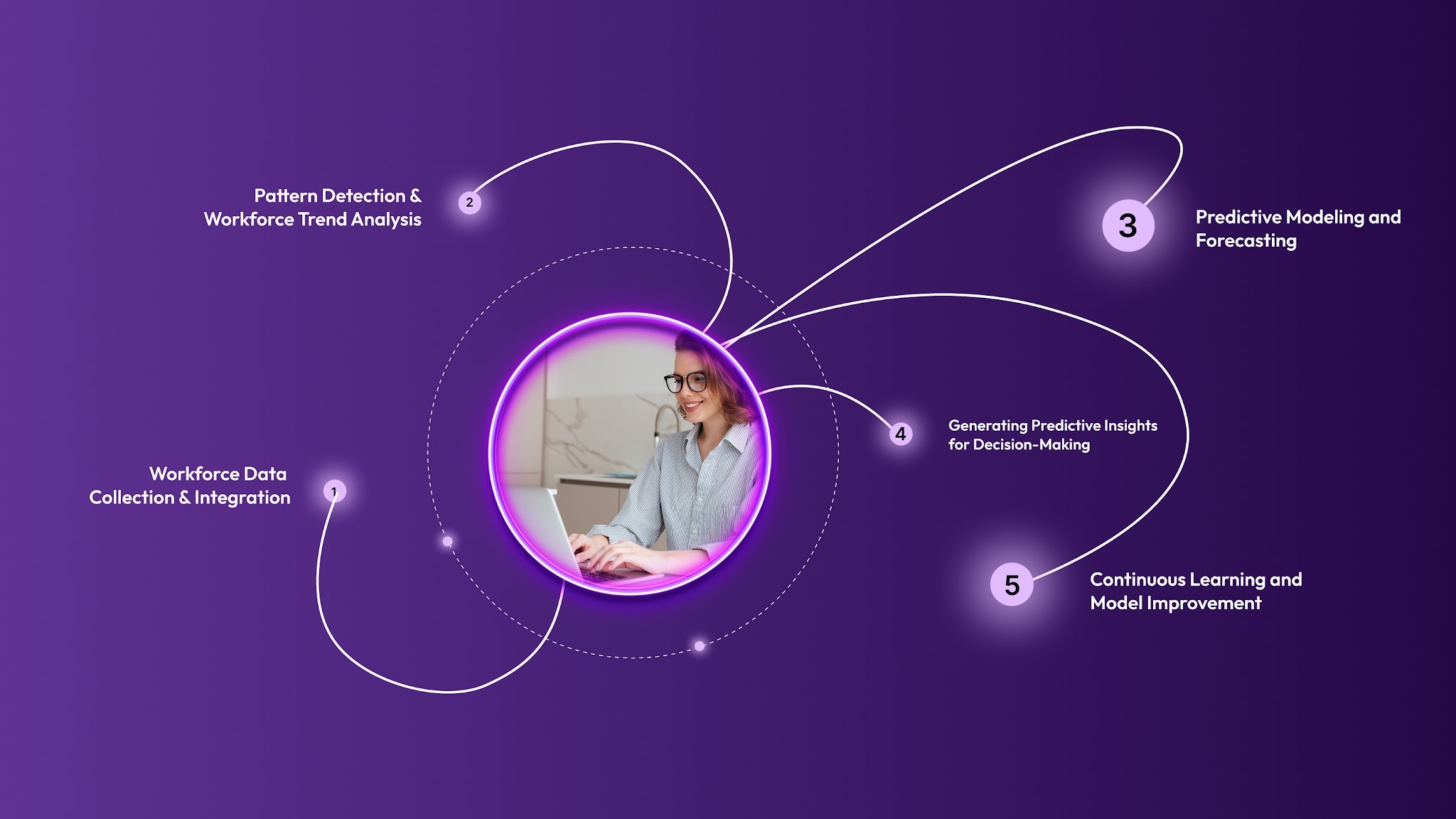
At its core, predictive workforce analytics follows a structured process. Understanding this process helps HR and Finance leaders evaluate what tools and capabilities they actually need.
Below are the key stages that enable effective predictive workforce analytics.
Workforce Data Collection and Integration
Predictive analytics begins with collecting workforce data from multiple internal systems. This data forms the foundation for identifying patterns and forecasting workforce trends.
Organizations typically combine data from:
- HRIS platforms that contain employee records and job history.
- Payroll and compensation systems.
- Recruitment and applicant tracking systems (ATS)
- Performance management platforms.
- Employee engagement surveys and feedback tools.
These datasets provide insights into workforce behavior, such as performance trends, tenure, promotion history, and turnover patterns. By consolidating this information, organizations create a comprehensive dataset that can be analyzed for predictive insights.
Without integrated workforce data, predictive analytics cannot produce reliable forecasts.
Pattern Detection and Workforce Trend Analysis
Once workforce data is aggregated, analytical models examine it to identify patterns, correlations, and signals that influence workforce outcomes.
For example, predictive analytics might identify relationships such as:
- Employees with limited career progression are at higher risk of attrition.
- Departments with rapid hiring are experiencing productivity drops.
- Compensation gaps correlate with higher resignation rates.
Traditional workforce reporting only answers questions like “What happened?” Predictive analytics goes further by identifying why patterns occur and what they suggest about future outcomes.
This stage converts workforce data into structured insights for forecasting.
Predictive Modeling and Forecasting
After patterns are identified, predictive models are built using statistical techniques and machine learning algorithms.
These models analyze historical workforce trends to estimate future probabilities, such as:
- Likelihood of employee turnover.
- Expected hiring needs in specific departments.
- Workforce productivity trends.
- Probability of skill shortages.
Common modeling techniques used in predictive workforce analytics include:
- Regression analysis.
- Decision trees and random forest models.
- Machine learning algorithms.
- Survival analysis for attrition prediction.
These techniques allow organizations to forecast workforce outcomes with measurable probabilities rather than assumptions.
Generating Predictive Insights for Decision-Making
The final stage of predictive workforce analytics is translating model outputs into actionable insights for business leaders.
Predictive dashboards and analytics platforms present forecasts in ways that support workforce decisions, such as:
- Identifying employees at high risk of leaving.
- Forecasting future hiring demand by department.
- Projecting workforce costs based on planned headcount growth.
- Highlighting emerging skills gaps across teams.
These insights enable HR and finance teams to shift from reactive workforce management to proactive strategy. Instead of responding to workforce problems after they occur, leaders can intervene earlier and plan more effectively.
Continuous Learning and Model Improvement
Predictive workforce analytics is not a one-time analysis. Models improve over time as more workforce data becomes available.
Organizations continuously refine predictive models by:
- Updating datasets with new workforce activity.
- Retraining algorithms on recent trends.
- Validating predictions against actual outcomes.
This continuous learning process ensures predictions become more accurate as workforce conditions evolve.
Key Metrics Used in Workforce Predictive Analytics
Effective predictive models depend on tracking the right metrics. Below are the core data points that drive accurate workforce forecasting.
1. Compensation and Pay Alignment Metrics
Compensation data often provides strong signals about employee engagement, retention risk, and internal pay equity. Predictive analytics uses these indicators to understand how compensation structures influence workforce stability.
Key compensation-related metrics include:
- Compa-ratio by level and band: Measures how an employee’s salary compares to the midpoint of their pay band, helping identify compensation gaps that may lead to attrition.
- Merit increase history: Tracks how salary adjustments evolve over time, revealing patterns in pay progression and compensation fairness.
2. Workforce Stability and Career Progression Metrics
Career growth and tenure patterns often reveal whether employees are progressing or becoming disengaged. Predictive models analyze these signals to estimate retention risk and identify potential stagnation in careers.
Important indicators include:
- Tenure by team and manager: Examines how long employees stay within specific teams or under certain managers, helping identify areas with higher turnover risk.
- Time since last promotion: Highlights employees who may have limited advancement opportunities, which can increase disengagement or attrition risk.
- Internal mobility rate: Measures how frequently employees move between roles or departments, indicating the strength of internal career pathways.
3. Workforce Planning and Headcount Metrics
Predictive workforce analytics also supports workforce planning by comparing hiring plans with actual workforce growth. These insights help leaders anticipate staffing gaps and adjust hiring strategies.
Key workforce planning metrics include:
- Headcount vs. plan variance: Compares actual headcount against planned workforce targets to identify hiring delays or unexpected staffing gaps.
- Hiring demand signals: Historical hiring patterns and workforce growth trends help forecast future talent needs.
4. Performance and Leadership Signals
Employee performance trends and leadership stability also play an important role in predictive workforce analysis. Changes in these indicators can reveal emerging risks within teams or departments.
Common signals include:
- Performance rating trends: Tracks changes in employee performance over time, helping identify declining productivity or emerging high performers.
- Manager tenure in role: Examines how long managers remain in leadership positions, since frequent leadership changes can affect team stability and engagement.
When analyzed together, these metrics provide a comprehensive view of workforce health. Tracking these metrics individually is useful. Analyzing them together is where predictive capability emerges.
Core Applications of Predictive Workforce Analytics
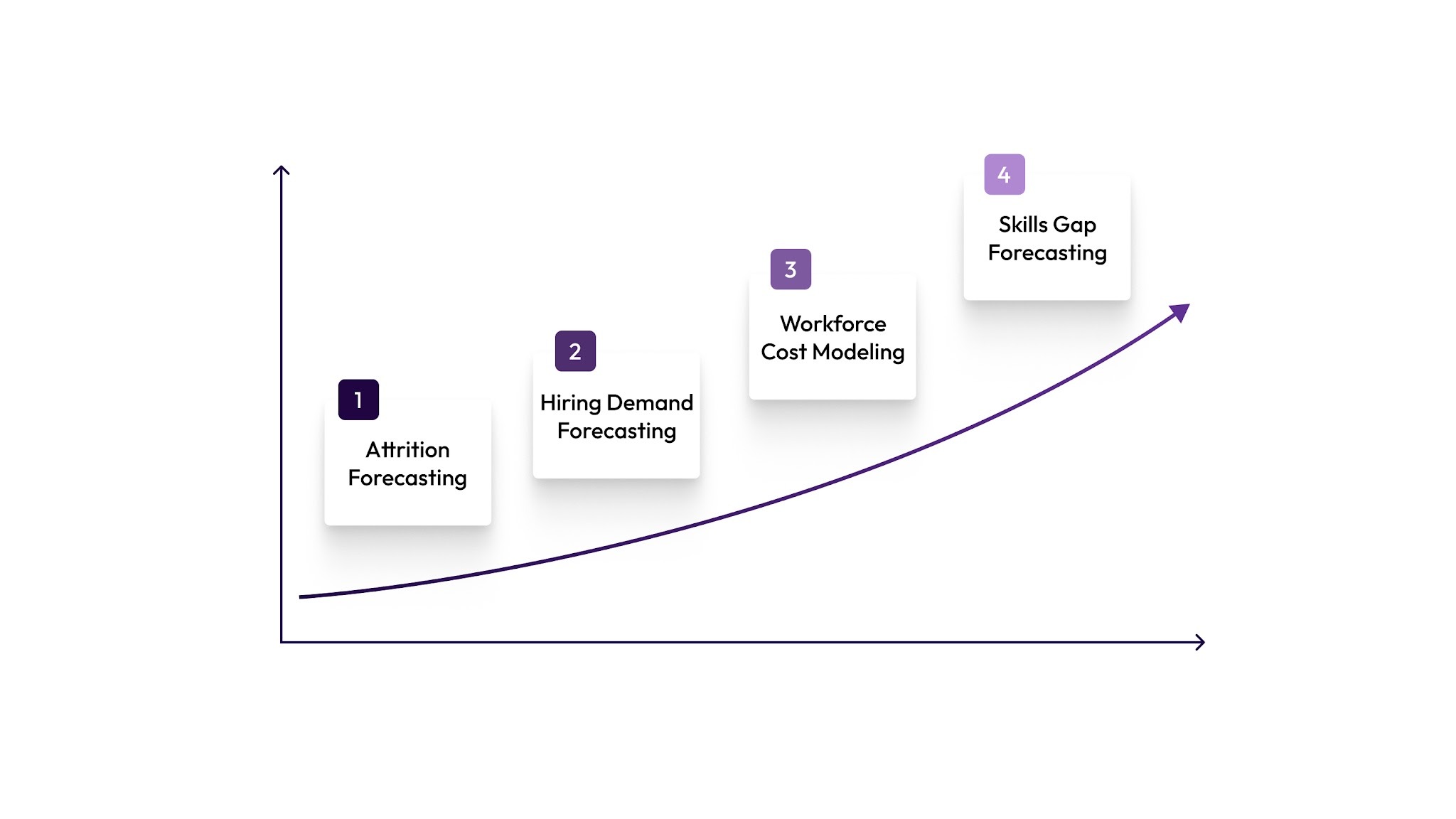
Predictive workforce analytics is not a single-use capability. It applies across the full workforce planning lifecycle.
Attrition Forecasting
This is where most organizations start. By analyzing behavioral and compensation data, HR teams can identify employees with a high likelihood of leaving before they submit their notice. This allows for targeted retention action, whether that is a compensation adjustment, a growth conversation, or a role change.
Hiring Demand Forecasting
Sales headcount needs often correlate with revenue targets. Engineering capacity needs correlate with product roadmap commitments. Predictive models can link business growth signals to specific hiring needs months in advance, giving recruiting teams time to build pipelines rather than scrambling.
Workforce Cost Modeling
Before a headcount plan is approved, Finance needs to understand the full cost impact. That includes base salary, benefits, equity, and the ramp time before a new hire reaches full productivity. Predictive cost modeling enables HR and Finance to align on the budget before commitments are made.
Skills Gap Forecasting
As product strategy evolves, the skills a company needs evolve with it. Predictive analytics can surface where skill shortages are likely to emerge based on planned business initiatives, allowing L&D and recruiting to get ahead of the gap.
Suggested Read: Best All-in-One Workforce Management Software 2025
How to Get Started With Predictive Workforce Analytics?
Starting with predictive workforce analytics does not require overhauling your entire HR tech stack on day one. A phased approach is more sustainable and more likely to deliver results.
Start With One High-Stakes Problem
Pick a single workforce challenge that has a clear financial impact. Attrition in engineering or quota-carrying sales is often the best starting point, because the cost of each departure is measurable and significant.
Audit Your Data Quality
Predictive models are only as good as the data they run on. Before selecting a platform, audit whether your HRIS, compensation data, and performance data are complete, consistent, and up to date. Data gaps will undermine model accuracy.
Define the Metrics That Matter to Leadership
Work with your CFO and CPO to identify the workforce metrics they care most about. Headcount vs. plan, payroll as a percentage of revenue, and attrition rate by department are common starting points. Predictive analytics is most valuable when it speaks the language of business outcomes.
Select a Platform Built for Integration
The most effective predictive analytics platforms pull data from across your existing systems rather than requiring you to re-enter it. Look for solutions that integrate with your HRIS, ATS, and compensation tools out of the box.
If your team is navigating the shift from spreadsheet-based planning to a more structured approach, see how modern compensation and headcount platforms are changing the way Finance and HR work together.
Build a Cross-Functional Habit
Predictive workforce analytics is most effective when HR, Finance, and business leaders look at the same data together. Build a regular cadence, monthly or quarterly, where workforce forecasts are reviewed alongside financial projections.
Suggested Read: Workforce Optimization Strategies to Maximize Productivity
Challenges of Implementing Workforce Predictive Analytics and How to Overcome Them
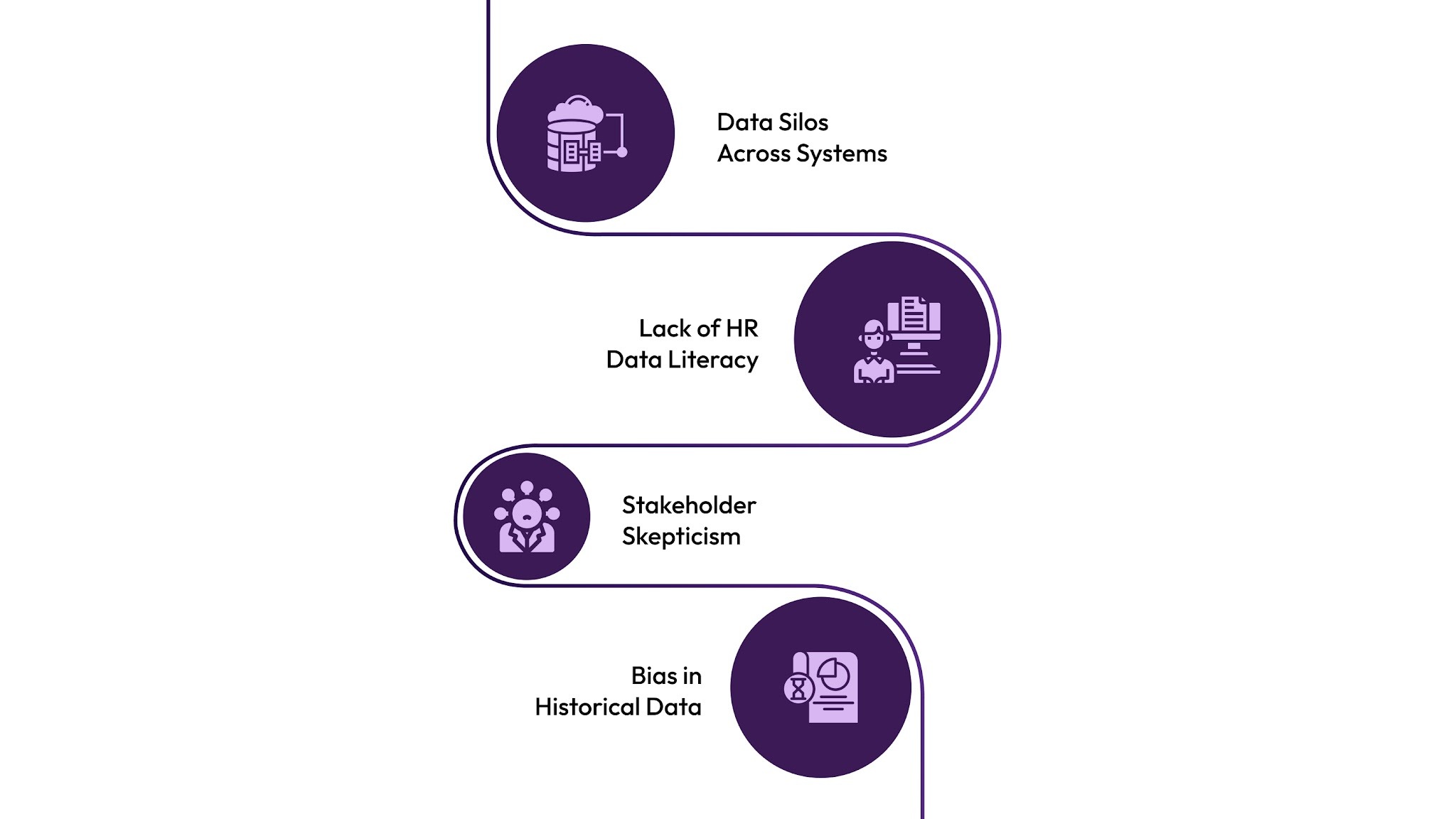
Most organizations run into predictable obstacles when building a predictive workforce analytics capability. Knowing them in advance reduces friction.
1. Data Silos Across Systems
The challenge: Compensation data lives in one system, performance data in another, and headcount in a spreadsheet. Models cannot run accurately on fragmented data.
The fix: Prioritize platforms that centralize data across HRIS, ATS, and compensation systems. Even partial integration creates a significant improvement over manual analysis.
2. Lack of HR Data Literacy
The challenge: Many HR teams were trained in intuition and relationship skills rather than in statistical modeling. Asking them to interpret predictive outputs without support is a setup for low adoption.
The fix: Choose platforms that translate model outputs into plain-language insights and recommended actions. The goal is not to turn HR into data scientists. It is to give them tools that make data actionable.
3. Stakeholder Skepticism
The challenge: Finance and business leaders may not trust a model's predictions, especially early on.
The fix: Start with a use case that lets you quickly demonstrate accuracy. When a model correctly flags three flight risks, and two leave within 90 days, credibility builds fast.
4. Bias in Historical Data
The challenge: If historical compensation or promotion decisions contained bias, the model will learn and replicate those patterns.
The fix: Include pay equity analysis as part of the setup process. Predictive models should surface bias so it can be corrected, not automate it.
Suggested Read: AI-Driven Workforce Optimization: Enhancing Management and Productivity
Real-World Examples of Predictive Workforce Analytics
Predictive workforce analytics becomes much clearer when you look at how organizations apply it in real situations. The following examples show how predictive analytics has helped organizations improve retention, hiring decisions, and workforce planning.
1. Experian: Reducing Global Attrition with Predictive Modeling
Experian faced an ongoing challenge with employee attrition that exceeded industry benchmarks. Traditional HR reporting showed turnover numbers but did not explain why employees were leaving or who might leave next.
To address this, Experian’s HR team developed an internal predictive model that analyzed roughly 200 employee attributes.
Key signals analyzed included:
- Team size and reporting structure.
- Supervisor performance ratings.
- Employee tenure and promotion history.
- Commute distance and changes in commuting patterns.
- Organizational growth patterns.
The model generated a risk score for each employee, allowing HR teams and managers to identify potential attrition risks early.
This allowed leadership to:
- Hold targeted retention conversations with at-risk employees.
- Adjust team structures that were contributing to turnover.
- Address issues such as workload or commuting challenges.
Outcome
- Global attrition dropped by 4% over two years.
- Experian saved approximately $14 million in retention and recruiting costs.
2. Credit Suisse: Predicting Employee “Flight Risk.”
Credit Suisse wanted to understand why high-performing employees were leaving unexpectedly. Standard HR dashboards showed turnover numbers but could not predict which employees might resign.
The company’s people analytics team analyzed more than 40 workforce variables and compared employees who left with those who stayed.
The analysis identified 10–11 key predictors of employee departure, including:
- Team size and team stability.
- Recent promotions or lack of advancement.
- Manager performance ratings.
- Compensation progression.
- Demographic and career-stage factors.
Using these variables, Credit Suisse built a predictive model that calculated the probability of employee departure within the next 12 months.
Managers received anonymized risk insights for their teams and were trained to take proactive retention steps.
Outcome
- The program helped reduce unexpected turnover.
- Estimated savings reached $75- $100 million a year.
Both examples point to the same shift. Instead of waiting for attrition to show up in reports, companies are using data to understand who might leave and why. That insight gives leaders time to act early before problems surface.
Supercharge Predictive Workforce Analytics With CandorIQ
Having a predictive analytics strategy is one thing. Having the platform infrastructure to execute it consistently is another. That is where CandorIQ fits.
CandorIQ is a unified compensation and headcount planning platform built for HR and Finance teams at growth-stage companies. It consolidates the data, workflows, and analysis that predictive workforce decisions depend on into a single system of record.
If your team is still stitching together insights from multiple tools before a planning cycle, CandorIQ is worth a closer look.
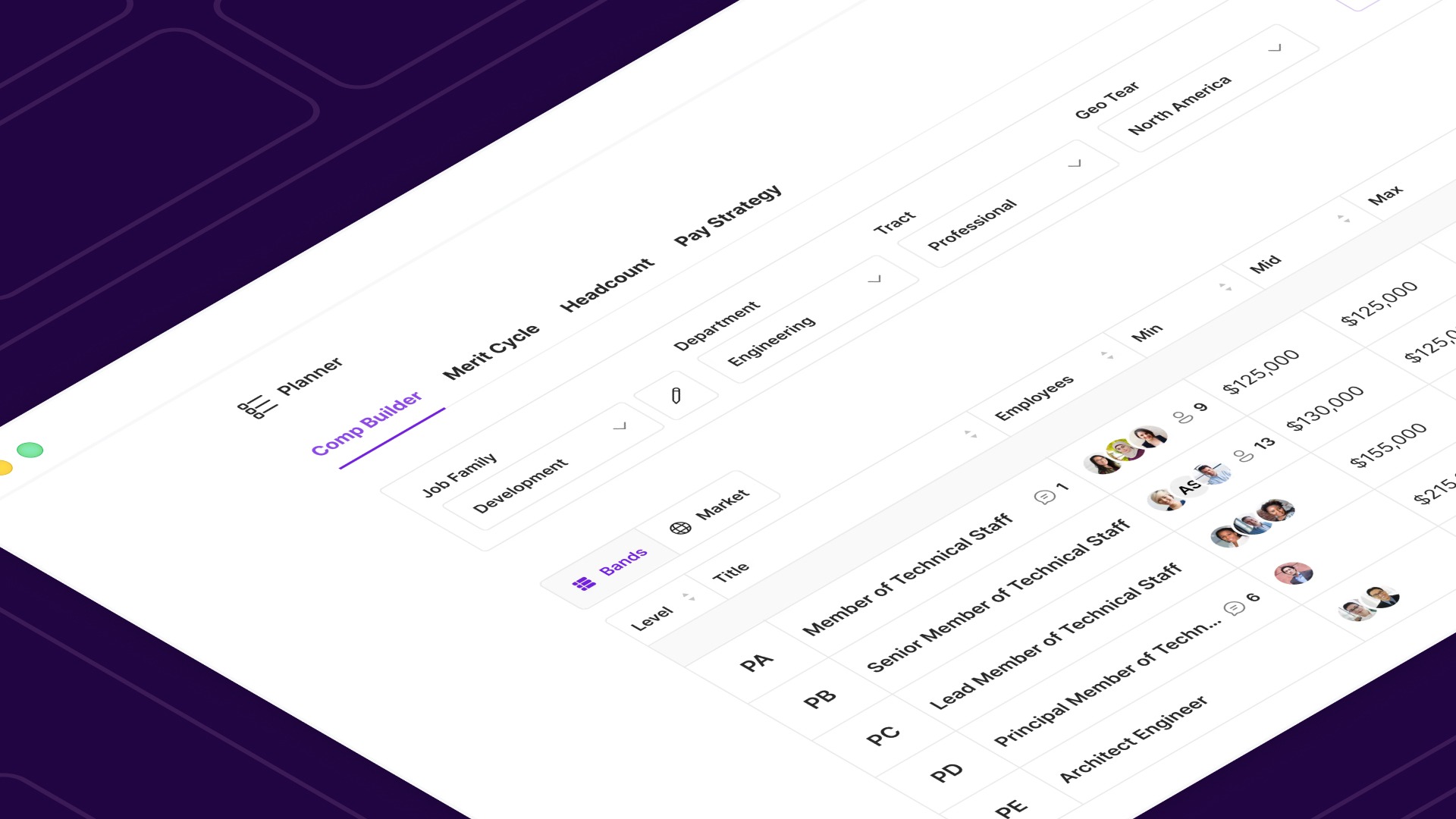
Model multiple hiring scenarios simultaneously and see their real-time financial implications before committing to the budget. Toggle between plans, compare burn impact, and align Finance and People Ops on the same numbers before the conversation moves to leadership.
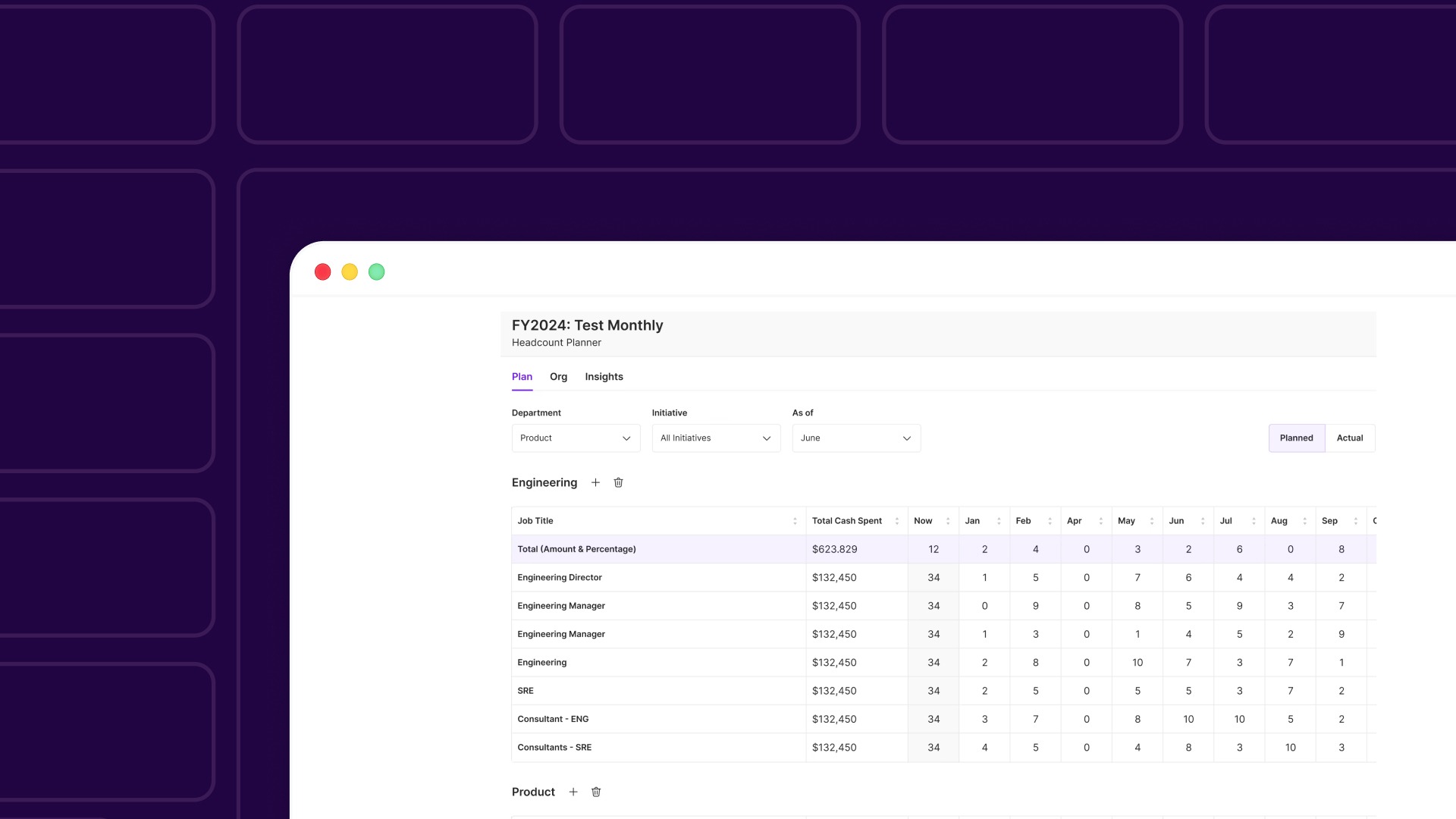
Define and maintain pay bands by level, location, and department with version control for historical tracking. Surface compression risks, market gaps, and equity issues before they become attrition problems. This is the data foundation on which predictive attrition models depend.
- AI Agent for Workforce Insights
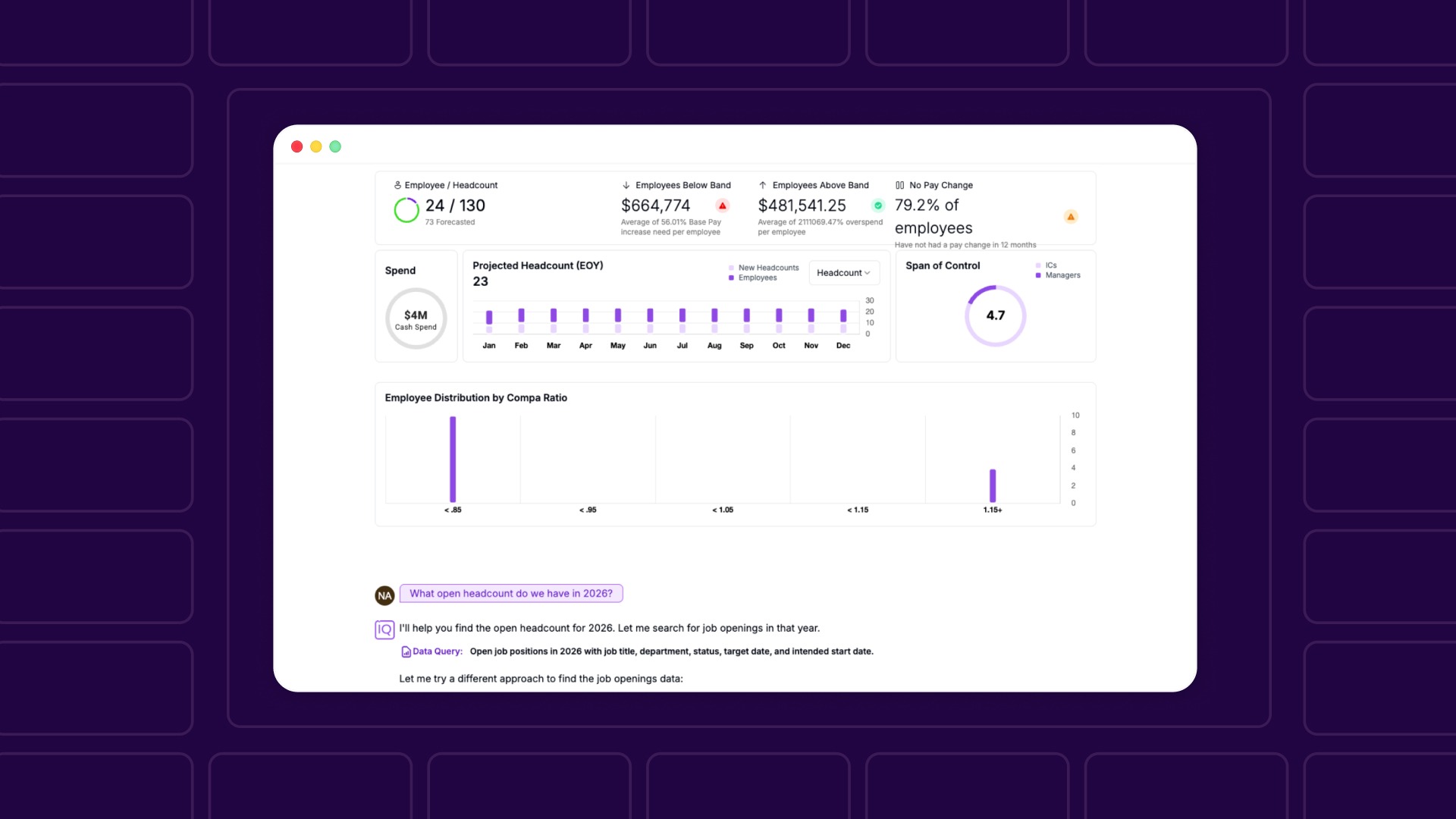
CandorIQ's built-in AI agent lets HR leaders ask natural language questions to analyze compensation gaps, model scenario impacts, and surface workforce risks. Instead of spending hours pulling and cleaning data, your team gets strategic answers on demand.
- Workforce Management Dashboard
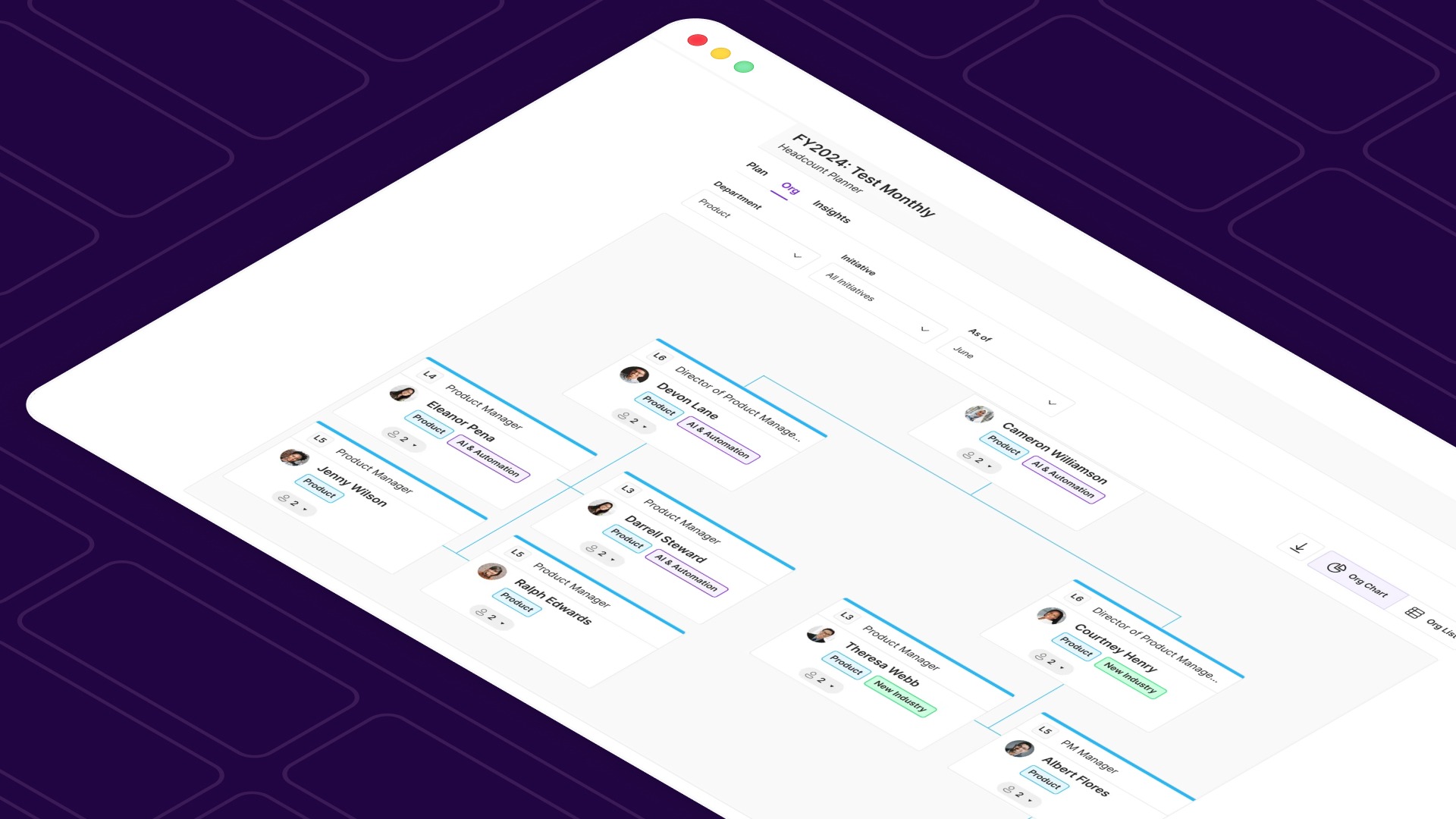
Track open roles, filled seats, attrition trends, and promotion rates in a single view. Align actuals with plans for headcount and compensation in real time so leadership always has an accurate picture of workforce health.
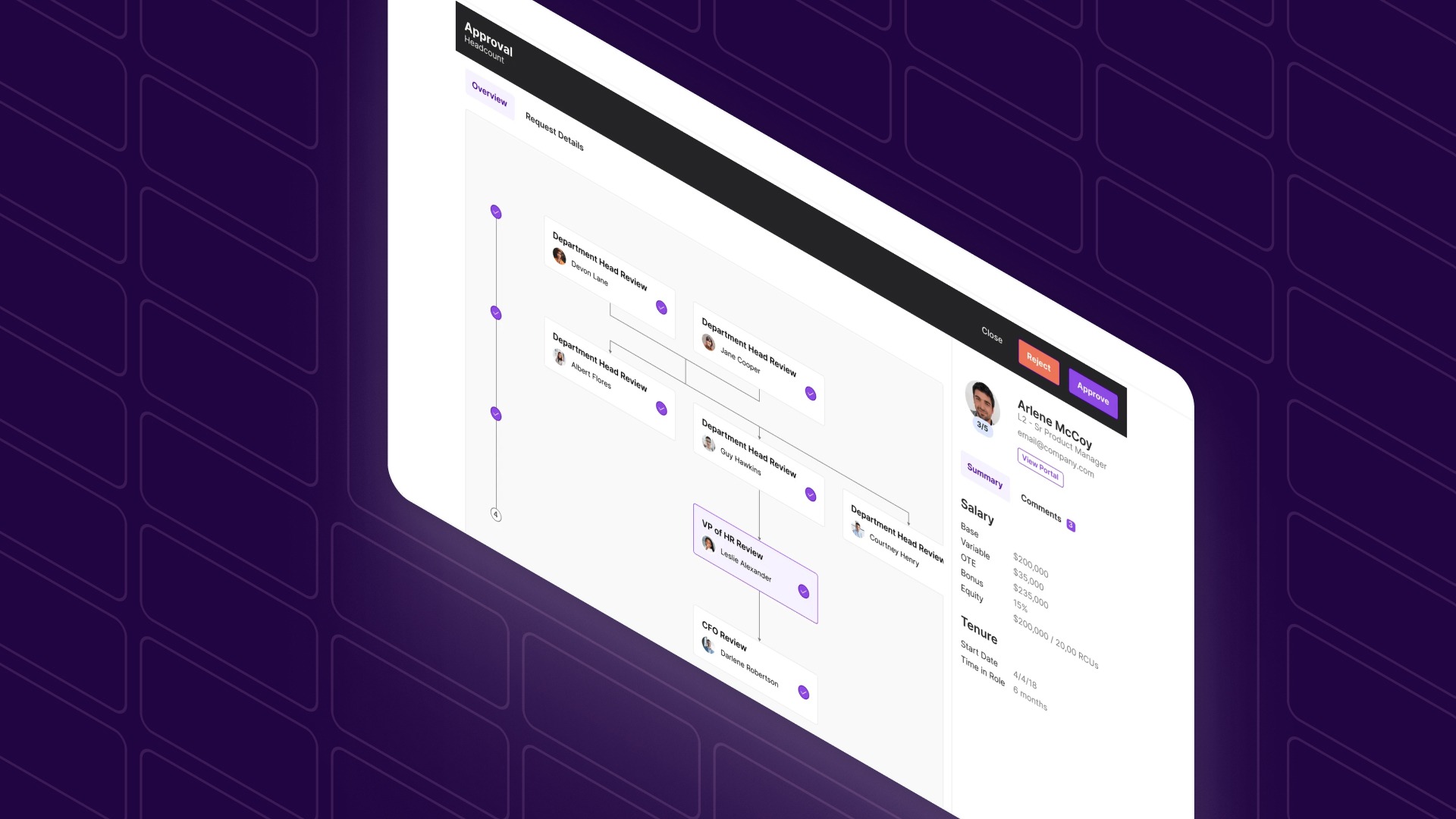
Standardize and accelerate headcount approvals with dynamic routing based on team, location, and compensation parameters. Connect approvals directly to your ATS and finance systems so no headcount decision falls through the cracks.
Final Thoughts
Predictive workforce analytics matter only if they actually change how decisions are made. Forecasts are useful, but they need to live within the same systems that manage compensation plans, hiring approvals, and headcount budgets.
That is where CandorIQ comes in. The platform brings compensation planning, headcount forecasting, and workforce insights into one place so HR and Finance teams can work from the same numbers during planning cycles.
If your team is still managing workforce decisions across multiple spreadsheets and tools, it may be time for a better system.
Book a demo with CandorIQ to plan headcount, manage compensation, and make smarter decisions with workforce data.

FAQs
1. What are the three types of predictive analytics?
The three common types are classification models, regression models, and time series forecasting. These methods analyze historical data to estimate probabilities, predict outcomes, and forecast future trends.
2. What is an example of predictive analytics in HR?
A common example is attrition prediction, where HR teams analyze employee data such as tenure, compensation, promotions, and engagement signals to identify employees who are likely to leave.
3. In which industry is predictive analytics most commonly applied?
Predictive analytics is widely used in industries such as finance, healthcare, retail, marketing, and human resources, where organizations analyze large datasets to forecast demand, risks, and behavior.
4. What is the future of predictive analytics?
The future of predictive analytics will involve deeper integration with AI, real-time data processing, and automated decision support, enabling organizations to forecast trends more quickly and make proactive decisions.
5. Which type of data is used for predictive analytics?
Predictive analytics uses historical and real-time data from multiple sources, such as transactions, employee records, customer behavior, operational metrics, and external market or economic indicators.
Ready to modernize your workforce and compensation strategy?
See how CandorIQ brings workforce planning and compensation together with AI.