

Emerging Headcount and Workforce Trends HR Leaders Need in 2026
Explore key 2026 HR headcount trends and how AI-driven forecasting improves workforce planning. Learn to align HR and Finance for smarter decision-making.


In 2026, HR leaders are faced with a critical challenge: how to keep up with the growing turnover rates that are draining both time and budgets. The U.S. Bureau of Labor Statistics reports that 3.3% of workers are leaving their jobs each month, meaning nearly one in three employees will switch companies this year alone. Replacing each of these employees costs is expensive, which most organizations can't afford to ignore.
But it’s not just the high turnover that's the problem. Traditional headcount planning methods relying on spreadsheets and annual reviews are too slow and reactive to address the speed and scale of workforce changes. The solution? HR leaders need to move beyond outdated processes and adopt AI-driven forecasting and data-driven strategies that can predict needs, adjust quickly, and align with business goals. In this article, we’ll explore the top HR headcount trends for 2026 and how you can act now to stay ahead of the curve.
Quick look
- Data-driven headcount planning is essential in 2026, enabling HR leaders to forecast future workforce needs with accuracy.
- AI and automation enhance workforce forecasting, allowing HR teams to reduce manual tasks and increase planning efficiency.
- Managing a global workforce requires geo-adjusted compensation and compliance with local labor laws across different regions.
- HR and Finance alignment ensures that headcount decisions are tightly integrated with budget management and strategic goals.
- CandorIQ offers AI-powered forecasting and real-time data insights, helping HR leaders make smarter, quicker headcount decisions.
Why is Headcount Planning Evolving in 2026?
Traditional headcount planning, often reliant on spreadsheets and annual reviews, is too slow for today’s environment. HR teams need real-time insights and the flexibility to adjust hiring strategies quickly.

Why is the change necessary?
- Business Agility: As organizations face constant change, HR teams must predict workforce needs faster.
- Data-Driven Decisions: Moving from manual processes to data-driven forecasting allows HR leaders to make more informed decisions based on real-time analytics.
In 2026, the challenge is no longer identifying what HR needs to do, it’s about implementing strategies that keep up with the speed of change. HR leaders must embrace tools that predict rather than just react.
AI and automation are key to achieving this agility. Let’s explore how these technologies are changing headcount forecasting.
How AI and Automation are Shaping the Future of Headcount Forecasting
AI and automation aren’t just buzzwords, they’re essential tools for HR leaders looking to optimize headcount planning. By utilizing AI-powered solutions, HR teams can move away from guesswork and tap into predictive analytics for smarter decision-making.
How AI helps:
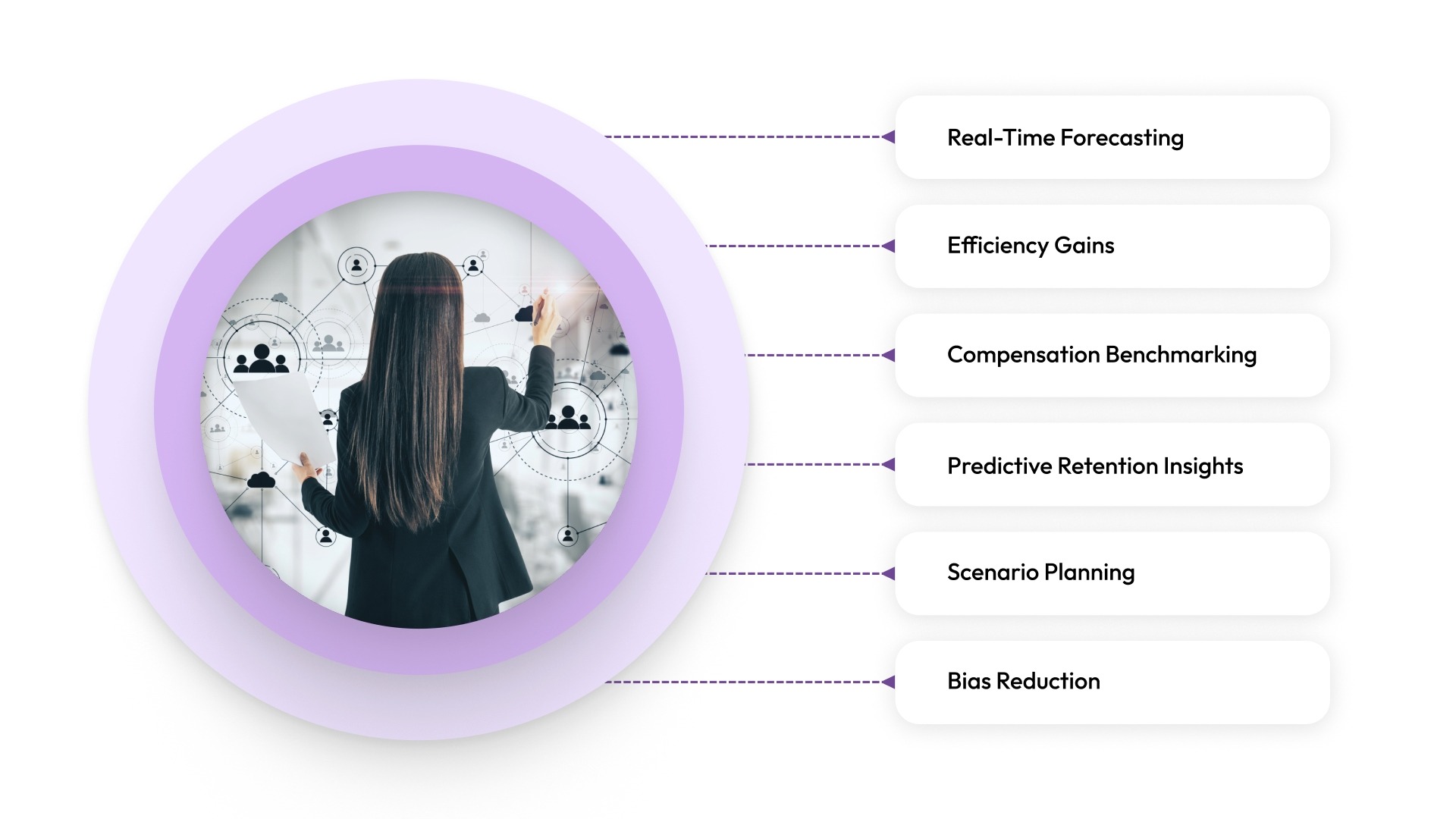
- Real-Time Forecasting: AI analyzes historical data to predict future headcount needs, allowing HR to plan more effectively.
- Efficiency Gains: AI automates manual tasks like data entry, freeing up HR professionals to focus on strategic decision-making.
- Compensation Benchmarking: AI can automate compensation benchmarking, providing HR teams with accurate, real-time pay data that helps align headcount decisions with market trends.
- Predictive Retention Insights: AI can help HR teams identify employee turnover risks and make data-backed decisions on retention strategies.
- Scenario Planning: AI-driven tools allow HR to model different workforce scenarios, ensuring they are prepared for various growth or cost-saving scenarios.
- Bias Reduction: AI can help eliminate unconscious biases in recruiting and compensation decisions, making HR processes more equitable.
As AI integrates deeper into HR functions, it will enable smarter, faster, and more agile workforce planning.
The shift towards automation also requires adapting to a more global workforce. Let’s look at how remote work and global teams are influencing headcount strategies.
Also Read: What is Workforce Capacity Planning in 2026
Managing a Global Workforce: The Impact of Remote Teams on Headcount Planning
The rise of remote work has dramatically shifted how HR leaders approach headcount planning. Managing a global workforce requires a new strategy, one that accounts for geographic diversity, compensation adjustments, and legal compliance.
Key challenges:
- Geo-Adjusted Compensation: As employees work across different countries, compensation models must adapt to local living standards, tax laws, and market conditions.
- Global Talent Pools: HR leaders must consider international hiring trends and the distribution of talent when planning headcount.
- Local Compliance: HR must navigate local labor laws, including minimum wage regulations, benefit requirements, and contract laws.
- Cross-Border Collaboration: Remote teams often span multiple time zones, requiring HR leaders to ensure smooth communication and effective collaboration.
- Employee Engagement Across Borders: Maintaining employee engagement and company culture is challenging with a distributed team. HR leaders must implement strategies that encourage connection and inclusivity.
- International Payroll and Benefits Management: Managing payroll and benefits in different regions can be complex. HR leaders need to ensure all employees are compensated and supported according to local laws.
In 2026, HR leaders will need headcount forecasting systems that support global workforce management. These tools should enable real-time tracking of international talent needs, simplify cross-border hiring, and ensure compliance with global regulations.
CandorIQ offers a comprehensive solution to help HR leaders manage these complexities. With its AI-powered forecasting and global compliance tracking, CandorIQ simplifies international headcount planning, ensuring your team stays agile, compliant, and aligned with business goals.
Beyond managing logistics, headcount decisions have a direct impact on employee retention. Let’s explore how headcount trends will affect engagement and retention strategies.
Why Headcount Decisions are Critical for Retention and Employee Engagement
It’s no longer enough to just hire the right people, you need to retain them. Headcount decisions play a crucial role in shaping employee engagement and reducing turnover.
Key insights:
- Retention Through Planning: By aligning headcount strategy with employee development and career progression, HR leaders can improve employee retention.
- Engagement is Key: According to Gallup’s 2026 State of the Global Workplace, engagement is directly linked to how well HR leaders manage workforce needs and employee expectations.
Headcount planning in 2026 will focus on strategic hires that align with the company’s culture and goals. HR leaders will need to forecast not just for positions but also for long-term engagement, ensuring that teams are built to succeed .
To make these headcount decisions work, HR teams must collaborate closely with Finance. Let’s explore how that alignment drives better workforce management.
Also Read: How to Automate Headcount Scenario Planning in 2026
HR and Finance Collaboration: The Key to Effective Headcount Decisions
When HR and Finance teams align on headcount strategies, the organization can achieve better cost control and workforce planning. However, many HR departments still operate in silos, causing misalignment between budgeting and headcount forecasting.
Collaboration is critical:
- Budget and Timeline: When HR teams are aligned with Finance, they’re 73% more likely to have both budget and timeline in place for headcount decisions.
- Shared Insights: HR and Finance can work together to build more accurate workforce budgets, ensuring headcount plans are realistic and aligned with the company’s financial goals.
In 2026, effective HR-Finance collaboration will be the foundation of strong headcount forecasting. Both teams must leverage shared data to make informed decisions that drive business success.
As HR and Finance teams adapt, AI will continue to play a critical role in shaping the future of headcount planning.
Integrating AI with Human Capital for Smarter Headcount Planning
In 2026, the most effective headcount planning strategies will combine AI insights with human expertise. AI can predict trends, automate data processing, and help HR teams make faster decisions, but it’s human judgment that ensures decisions are made with empathy and strategic foresight.
How to integrate AI:
- Workforce Forecasting: Use AI to model various headcount scenarios based on projected business growth, allowing HR teams to make informed, future-ready decisions.
- Compensation and Benefits: Utilize AI to track market trends and adjust compensation strategies, ensuring they align with headcount forecasts and competitive benchmarks.
- Talent Acquisition: Use AI-driven tools to streamline the recruitment process, identifying skill gaps and predicting the talent needs of the organization in the near future.
- Employee Retention Insights: AI can help HR teams assess turnover risks, analyzing historical trends and employee data to predict when and why staff may leave.
- Scenario Planning: AI enables HR to simulate various scenarios whether scaling up or downsizing, ensuring that the organization remains flexible and prepared for any workforce changes.
AI can’t replace the human aspect of HR, but it can significantly augment HR decision-making, enabling HR teams to be more agile, data-driven, and strategic in managing headcount decisions.
CandorIQ’s AI Agent helps streamline this process by providing real-time, actionable insights for headcount forecasting and compensation planning, ensuring HR leaders make data-backed decisions with greater efficiency.
As AI and automation shape headcount planning, HR and Finance collaboration becomes even more important.
How CandorIQ Supports Data-Driven Headcount Planning?
In 2026, effective headcount planning requires HR leaders to rely on data-driven insights to stay ahead of workforce demands. CandorIQ offers the tools necessary for real-time forecasting, budget alignment, and predictive workforce analytics, ensuring HR leaders can make informed, strategic decisions.
CandorIQ is a comprehensive platform that helps HR teams optimize headcount planning by integrating AI-driven insights with real-time data. It simplifies workforce forecasting, aligns budgeting with headcount needs, and ensures that HR leaders can make quick, accurate decisions.
What CandorIQ offers:
- Compensation Cycle: Manage merit reviews and approvals within a structured workflow, eliminating reliance on spreadsheets and fragmented coordination.
- Payband Builder: Define and maintain salary structures, ensuring pay increases align with role, level, and market positioning.
- Headcount Scenario Planning: Evaluate how headcount decisions impact overall workforce cost before finalizing allocations, ensuring smarter budget planning.
- Workforce Management: Track planned versus actual compensation outcomes across teams in real time, improving transparency and strategic alignment.
- AI Agent: Analyze allocation gaps, model workforce scenarios, and support decisions with data-backed insights, providing HR leaders with predictive intelligence.
FAQs
1. What is the difference between headcount planning and workforce planning?
Headcount planning focuses specifically on the number of people needed in the organization to meet business goals. Workforce planning is broader, encompassing roles, skills, succession, learning needs, and long‑term talent strategy. Headcount planning is one component within the overall workforce planning process.
2. What should be included in a headcount forecast?
A headcount forecast should include current employee numbers, expected new hires, projected turnover, and planned role changes. It also needs key metrics like cost per hire and time‑to‑fill to align workforce needs with financial planning.
3. Why is headcount planning important for budget management?
Headcount planning translates workforce needs into financial terms, helping HR and Finance align hiring with budget constraints. It ensures labor costs fit within projections and prevents overspending due to reactive hiring or misaligned staffing.
4. How often should headcount forecasts be reviewed?
Headcount forecasts should be reviewed regularly, quarterly at minimum to reflect changing business conditions, hiring progress, and market shifts. Frequent review enables HR leaders to adjust plans proactively rather than reactively.
5. Can headcount planning help improve employee retention?
Yes, by forecasting workforce needs, HR can better plan for career growth, training, and internal mobility, which supports retention. Anticipating turnover and filling gaps proactively helps maintain engagement and reduces reactive hiring costs.
Ready to modernize your workforce and compensation strategy?
See how CandorIQ brings workforce planning and compensation together with AI.