

12 Proven Employee Engagement Rewards That Cut Attrition in 2026
Explore 12 proven employee engagement rewards that reduce turnover and align with your comp strategy. Built for scaling US teams in 2026.


Companies spend thousands on hiring. Then they watch people leave within a year. Employee engagement rewards have moved from nice-to-have to a line item that affects retention math directly. When employees feel seen and fairly treated, they stay longer. When they don't, they leave, often quietly, long before they hand in their notice.
In 2025, only 20% of global employees are engaged at work, the lowest level since 2020. Disengaged employees cost global employers an estimated $10 trillion in lost productivity annually.
Voluntary turnover continues to strain HR teams at scaling companies, especially those managing distributed or hybrid workforces. What causes it is that most rewards programs are reactive, inconsistent, and disconnected from what actually drives people to stay.
This blog breaks down 12 proven employee engagement rewards that reduce attrition and the mistakes that quietly kill these programs.
Key Takeaways
- The most effective rewards go beyond cash: recognition, growth opportunities, flexibility, and pay transparency consistently outperform one-size-fits-all bonuses.
- Building a scalable rewards system requires clear criteria, manager accountability, and compensation infrastructure, not just goodwill.
- Common mistakes like inconsistent recognition, no budget visibility, and rewards that miss individual preferences quietly drain the impact of even well-intentioned programs.
- CandorIQ gives HR and Finance teams the compensation and headcount planning tools to design, fund, and sustain engagement rewards that actually connect to business outcomes.

What are Rewards in the Context of Employee Engagement
Employee engagement rewards are structured incentives designed to reinforce behaviors, recognize contributions, and make employees feel genuinely valued. They're not the same as base compensation. They sit alongside salary to signal that performance, effort, and loyalty are noticed.
There are three broad categories:
- Monetary rewards: Bonuses, raises, equity, spot awards, gift cards.
- Non-monetary rewards: Recognition, flexible schedules, extra PTO, remote work options, and learning stipends.
- Experiential rewards: Team trips, milestone celebrations, executive access, professional development events.
However, rewards only drive engagement when they're consistent, fair, and tied to something meaningful. Random acts of recognition feel hollow. A structured, transparent system is what builds trust and increases retention.
5 Reasons Why Employee Engagement Rewards Are Now a Retention Tool for Scaling Teams
Rewards were once treated as just the monetary aspect. However, as the concept of rewards evolves today, it has become one of the most effective retention strategies for scaling teams. Here’s how:
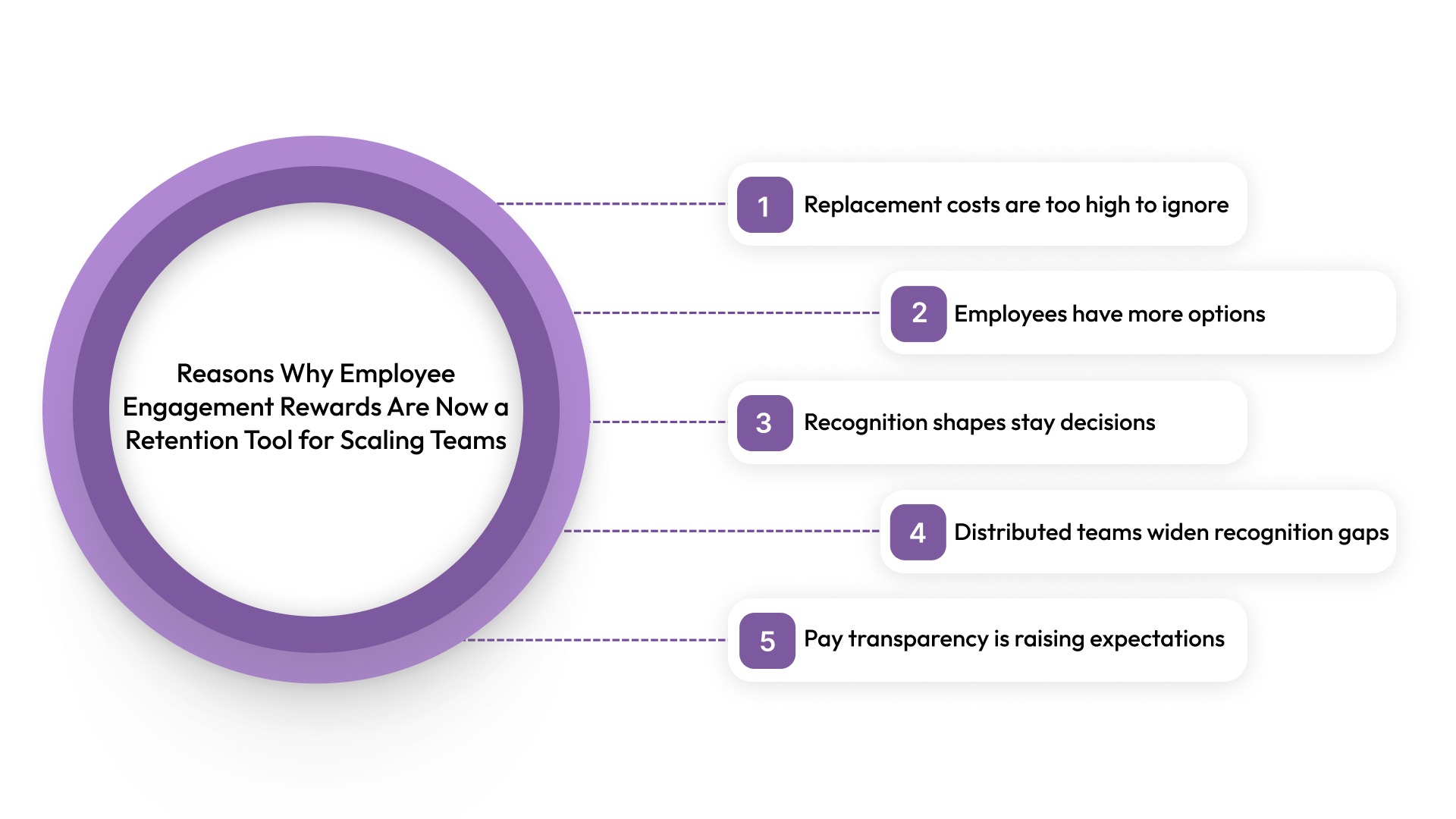
- Replacement costs are too high to ignore: Replacing a mid-level employee can cost 50%–200% of their annual salary when you factor in recruiting, onboarding, and lost productivity. Investing in retention is almost always cheaper.
- Employees have more options: Remote work expanded the talent pool in both directions. Your employees can now apply to roles across the country, and they do. A strong rewards program is one reason they might not.
- Recognition directly influences stay decisions: Employee engagement reports consistently show that employees who don't feel recognized are twice as likely to say they'll leave within the next year.
- Distributed teams create recognition gaps: When teams are spread across locations, visibility is uneven. Managers recognize who they see. Structured reward systems ensure remote and hybrid employees aren't systematically overlooked.
- Pay transparency is raising expectations: As more states pass pay transparency laws and employees compare notes openly, companies that don't offer clear, fair, and communicated compensation structures face trust deficits that no team lunch will fix.
Also Read: A Guide to Use Total Rewards Benchmarking Data in 2026
Now let's look at what those rewards actually look like in practice, and which ones are moving the needle in 2026.
12 Best Employee Engagement Rewards that Drive Real Retention ROI for Scaling Teams in 2026
Not all rewards are created equal. These 12 have consistently shown impact on retention, morale, and engagement, particularly for teams that are growing quickly or working across locations.
1. Performance-Based Bonuses with Clear Criteria
Bonuses work when employees know what they need to do to earn them. Vague language like "based on company performance" breeds resentment. Tie bonuses to specific, measurable outcomes, individual, team, or company-level, and communicate the criteria in advance. This turns a bonus from an afterthought into a motivator.
2. Equity and Long-Term Incentive Plans
Equity isn't just for executives anymore. Offering stock options or RSUs to a broader employee population creates a genuine sense of ownership. For scaling startups and growth-stage companies, it's also a competitive necessity. Employees who hold equity are statistically less likely to leave before it vests.
3. Public Recognition Programs
A Slack shoutout is free. It also works. Peer-to-peer recognition, manager callouts in team meetings, and company-wide spotlights reinforce the behaviors you want to see more of. The key is consistency. Recognition that happens randomly or only for certain teams erodes morale rather than building it.
4. Flexible Work Arrangements
Flexibility isn't a perk anymore. It's table stakes. For many employees, the ability to control when and where they work is worth more than a modest salary increase. Companies that offer genuine flexibility (not just a stated policy) see measurable improvements in engagement and retention.
5. Learning and Development Stipends
Employees want to grow. When companies fund that growth, through learning budgets, course reimbursements, or dedicated development time, it signals investment in the individual, not just the role. L&D stipends are particularly effective for high-performers who might otherwise leave to find growth opportunities elsewhere.
6. Spot Awards and Micro-Bonuses
Not every contribution fits a quarterly review cycle. Spot awards let managers recognize exceptional work in real time, a $100 gift card, a company credit, or a personalized reward for going above and beyond. The immediacy of the recognition is often more important than the dollar amount.
7. Additional Paid Time Off
Extra PTO, whether as a reward for tenure, performance, or simply a well-being benefit, is consistently ranked among the most valued non-monetary rewards. It's low-cost for the company and high-impact for the employee.
8. Career Pathing and Promotion Transparency
One of the most common reasons employees leave: they don't see a future. Clear promotion criteria, documented career ladders, and regular conversations about growth make people feel like their trajectory matters. This isn't just a rewards program, it's a retention infrastructure.
9. Wellness and Mental Health Benefits
Burnout is expensive. Companies that invest in employee wellness, whether through mental health days, therapy reimbursements, wellness apps, or gym stipends, see lower absenteeism and higher reported engagement. For distributed teams in particular, proactively addressing isolation and stress matters.
10. Peer-to-Peer Recognition Platforms
Tools like Bonusly, Kudos, or built-in features in platforms like Slack allow employees to recognize each other directly. This democratizes recognition. It doesn't all flow through managers and surfaces contributions that leadership might not otherwise see.
11. Anniversary and Milestone Rewards
Tenure milestones are underrated. Marking one, three, and five-year anniversaries with meaningful rewards (not just a certificate) shows employees that longevity is valued. It also creates a natural moment to reaffirm commitment on both sides.
12. Transparent Compensation and Total Rewards Statements
Employees often underestimate their total compensation because they don't see the full picture. Providing clear total rewards statements, salary, equity, benefits, PTO, and wellness contributions makes the full value of their package visible. This is one of the most underused retention tools in HR.
Also Read: Creating a Total Rewards Strategy for a Multigenerational Workforce
However, knowing which rewards to offer is half the battle. The other half is building a system that actually delivers them consistently. Here's how to set that up.
6 Tips to Build an Employee Engagement Rewards System That Scales with You
A rewards program only works if it's sustainable. Here's how to build one that holds up as your team grows.
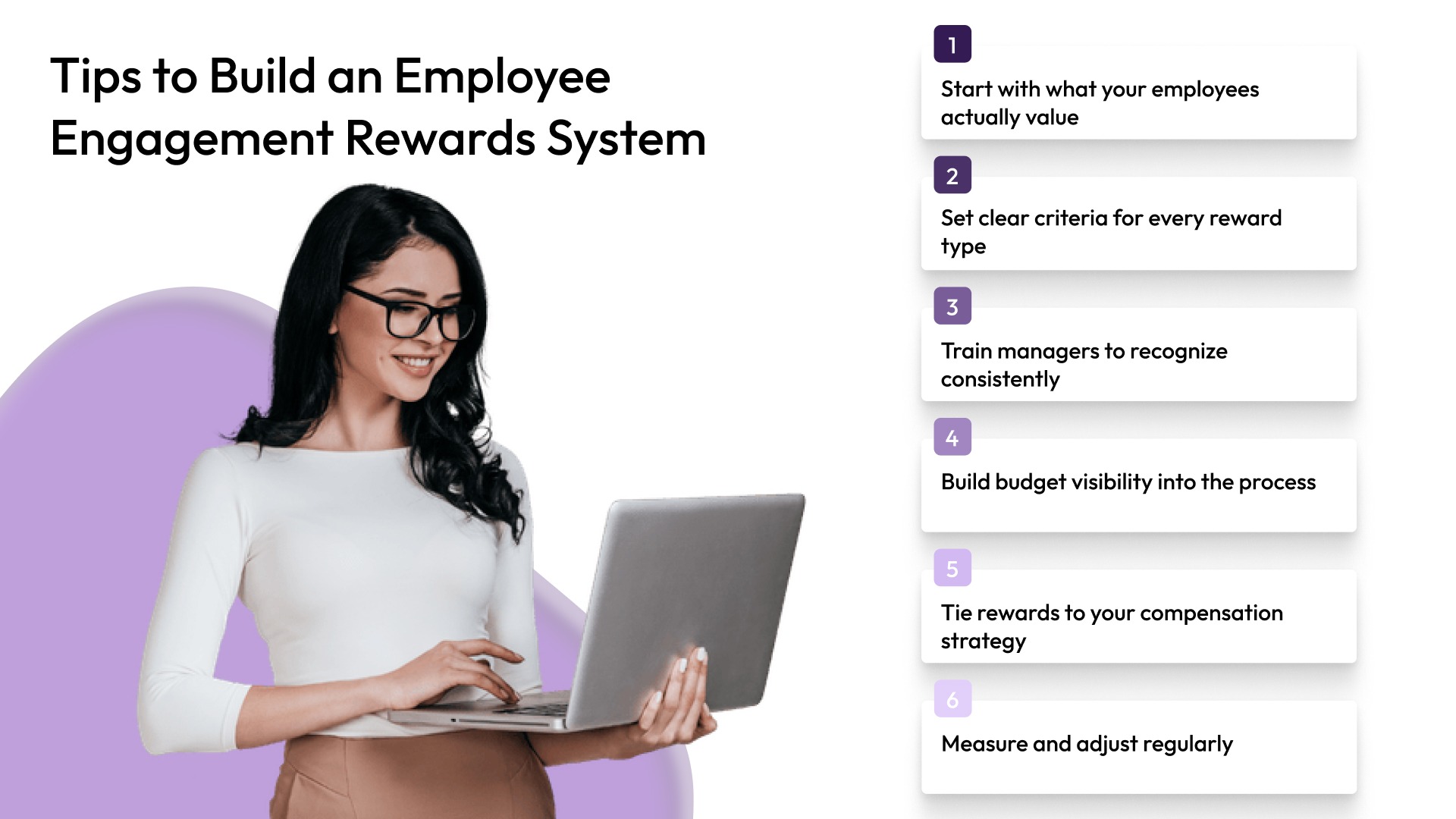
- Start with what your employees actually value: Survey your team before building. What motivates a 25-year-old engineer in Austin is different from what matters to a 40-year-old operations lead in Chicago. Skip the assumptions, ask directly.
- Set clear criteria for every reward type: Ambiguity kills trust. Whether it's a spot bonus or a promotion, employees should know exactly what behavior or outcome triggers it. Document it. Share it.
- Train managers to recognize consistently: Recognition programs live or die with frontline managers. If your managers aren't equipped or motivated to use the system, it won't work. Build recognition habits into manager training and performance reviews.
- Build budget visibility into the process: Rewards without budget planning turn into promises that can't be kept. Make sure HR and Finance are aligned on what's allocated, who can approve what, and how the spend is tracked.
- Tie rewards to your compensation strategy: Rewards shouldn't exist in isolation. They should reinforce your pay philosophy and complement your base compensation structure. If they conflict, say, ad hoc bonuses that bypass your pay bands, you'll create equity issues that surface in attrition data.
- Measure and adjust regularly: Track which rewards are used, which are ignored, and what the correlation is with retention rates. If a particular program isn't moving the needle, stop funding it and reallocate. Data should drive the decisions.
Also Read: 6 Effective Communication Strategies for Total Rewards
Building the system right matters. But knowing what to avoid matters just as much. These five mistakes quietly erode the impact of even well-funded programs.
5 Common Mistakes That Kill Employee Engagement Rewards
Even well-intentioned programs fail when these patterns show up.
- Rewarding inconsistently across teams: When some managers recognize it frequently, and others never do, the disparity breeds resentment. Employees talk. Inconsistency signals that rewards are based on who you report to, not what you contribute.
- Using one-size-fits-all rewards: Not everyone wants a gift card. Some employees value time. Others want public recognition. Some want career opportunities. Ignoring individual preferences is a fast way to make rewards feel generic and impersonal.
- Separating rewards from performance conversations: When rewards are disconnected from performance feedback, they lose their meaning. Recognition should tie back to specific behaviors and outcomes, not just "you did a great job this quarter."
- Ignoring remote and hybrid employees: Proximity bias is real. If your rewards program only recognizes people who are visible in the office, your distributed team members will notice and eventually disengage.
- Launching a program without the infrastructure to sustain it: A rewards program that launches with fanfare and then quietly fades is worse than not having one at all. If you can't fund it, track it, and manage it consistently, wait until you can do it right.
Getting the strategy right matters. But execution depends on having the right tools. That's where CandorIQ comes in.
How You Can Build a Comprehensive Rewards System with CandorIQ in 2026
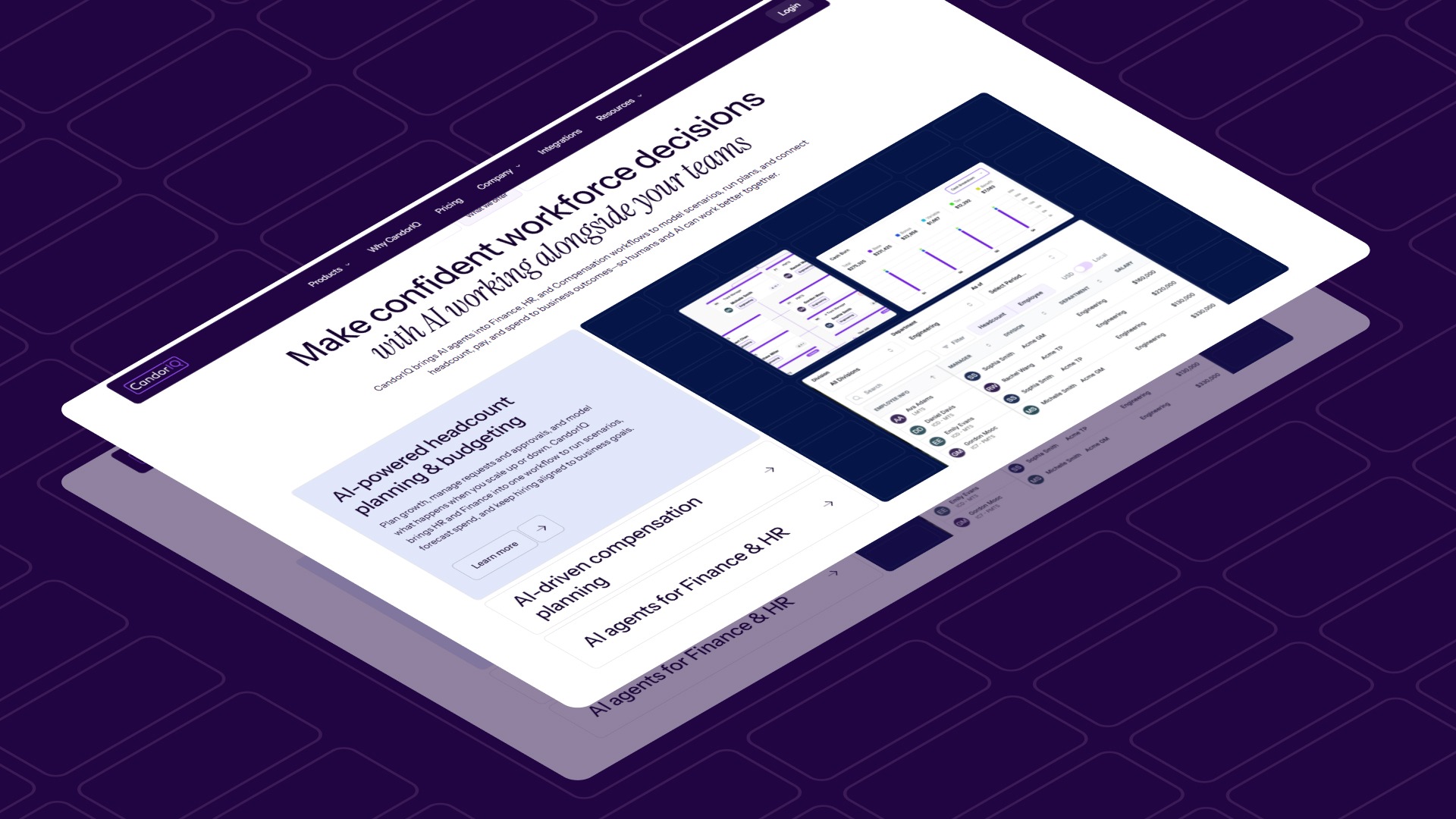
CandorIQ is a comprehensive compensation and headcount planning platform built for exactly this challenge. It consolidates pay band management, compensation cycles, headcount forecasting, and offer workflows into a single system. It gives HR and Finance teams the visibility and structure they need to build rewards programs that are fair, transparent, and financially sustainable.
Here's how it supports your engagement rewards strategy:
- Compensation & Payband Builder: Define pay bands by level, location, and department, with location-based adjustments and real-time pay distribution visualization. Keeps your rewards aligned with market benchmarks and internal equity.
- Compensation Cycle Automation: Run merit and bonus reviews with built-in approval logic and budget tracking by department. Shortens cycles from weeks to days and reduces coordination errors.
- Total Compensation Visibility for Employees: Give employees a clear view of salary, equity, bonus, and benefits in one place, with future-value equity modeling. Transparent rewards build trust.
- Headcount Scenario Planning: Model org changes and their financial implications before committing. Helps leadership see the full budget impact of any rewards or headcount decision.
- Workforce Management Dashboard: Track attrition, promotions, open roles, and headcount actuals against plan in real time. Know where your retention risks are before they become exits.
- AI Agent for Compensation Insights: Ask natural language questions to analyze pay gaps, model impact, and get recommendations based on historical benchmarks. Faster decisions, better data.
If you're building a rewards system that actually sticks, one that your team trusts and your Finance team can fund, CandorIQ gives you the infrastructure to make it happen.
Ready to align your rewards strategy with your compensation architecture? Book a demo with CandorIQ today.
.png)
FAQs
1. What are the core components of employee engagement?
The 5 C's of employee engagement are: Connection (meaningful relationships with colleagues and the company), Contribution (clear sense of how their work drives results), Communication (honest and regular dialogue with leadership), Career (visible growth paths and development), and Celebration (recognition of achievements, both big and small). Strong engagement programs address all five, not just one or two.
2. What factors most influence how engaged an employee feels?
Research points to 8 key factors: the quality of relationships with direct managers, clarity of role expectations, access to tools and resources, recognition for contributions, opportunities to grow, a sense of belonging, alignment with company mission, and trust in leadership. When several of these break down simultaneously, disengagement follows quickly.
3. What motivates people to perform at their best?
The 4 R's of motivation are: Recognition (being seen and appreciated), Reward (fair and meaningful compensation), Respect (being treated with dignity and trust), and Responsibility (having autonomy and ownership over meaningful work). The most effective engagement strategies address all four. They're complementary, not interchangeable.
4. What are some quick wins to boost engagement?
High-impact actions that don't require a long runway: start a peer recognition program, add a standing agenda item in team meetings for shoutouts, give managers a small discretionary budget for spot awards, create a structured way for employees to share feedback, and make compensation more transparent with total rewards statements. These moves are fast to implement and signal that the company is paying attention.
5. What are the foundational pillars of employee engagement?
The 6 pillars are: Leadership (visible, honest, and values-driven), Communication (two-way and timely), Recognition (consistent and meaningful), Development (investment in the individual's growth), Wellbeing (physical and mental health are supported), and Belonging (employees feel included and valued regardless of location or background). A gap in any one pillar tends to weaken the others over time.
6. How can companies meaningfully boost engagement at work?
Start with listening, regular pulse surveys, 1:1s, and exit interview data, which tell you where the gaps are. Then build systems, not events. Structured recognition programs, clear career paths, manager training, and transparent compensation all compound over time. Avoid the trap of one-off initiatives. Sustainable engagement comes from consistent practices embedded in how the company operates day to day, not from a quarterly all-hands or an annual survey.
Ready to modernize your workforce and compensation strategy?
See how CandorIQ brings workforce planning and compensation together with AI.