

Top 10 Budgeting Tools for Finance Teams 2026
Explore the best HR budgeting tools for finance teams in 2026. Compare top platforms, features, and use cases to plan budgets, headcount, and growth smarter.


Budgeting has grown increasingly complex for finance teams over the past few years. With companies expanding rapidly, managing distributed teams, and handling multiple cost centers, relying on spreadsheets alone is no longer sufficient. Finance teams are now expected to track costs and provide strategic insights that influence hiring, compensation, and long-term growth.
Modern budgeting tools help finance teams stay in control while helping teams make better forward-looking decisions. These tools allow finance teams to work in real time, model multiple scenarios, and align budget decisions with operational and strategic objectives.
With the global budgeting software market expected to hit USD 2.16 billion by 2029, more finance teams are adopting solutions that improve visibility, reduce errors, and support cross‑department workflows between Finance, HR, and Operations. This blog explores the top budgeting tools in 2026 and how finance teams can select a solution that meets their needs.
Key Takeaways:
- Modern budgeting tools provide real-time collaboration, centralized data, and scenario modeling, moving finance teams beyond spreadsheets.
- Clear visibility, faster planning cycles, and cross-department workflows enable smarter financial decision-making and budget control.
- Top budgeting platforms in 2026 offer solutions for small, mid-sized, and enterprise teams with varying complexity and integration needs.
- Choosing the right tool depends on team size, usability, system integrations, scenario planning, and scalability for long-term growth.
What are Budgeting Tools?
Budgeting tools are software solutions designed to help finance teams plan, monitor, and manage organizational budgets efficiently. They provide a centralized system to track expenses, forecast revenues, and analyze financial performance in real time.
Unlike traditional spreadsheets, these platforms offer automation, integration with other business systems (like ERPs, CRMs, and HR systems), and help finance teams move from reactive number crunching to proactive financial planning.
In the following section, let’s explore why choosing the right budgeting tool matters so much for modern finance teams.
Also Read: Understanding Top-Down Budgeting Vs. Bottom Up Approaches

Why are Budgeting Tools Important for Finance Teams?
Finance teams are expected to do more than track numbers. They’re responsible for guiding business decisions, managing risk, and keeping growth aligned with budgets. Budgeting tools support this shift by providing structure, visibility, and shared accountability across teams.

Here’s why it matters:
- Clear visibility across the organization: Budgeting tools give finance teams a consolidated view of spend, revenue, and forecasts across departments, reducing blind spots and surprises.
- Faster and more accurate planning: Automated calculations and centralized data reduce manual errors and speed up budgeting and forecasting cycles.
- Better scenario planning: Teams can model different growth, hiring, or cost scenarios to understand financial impact before decisions are finalized.
- Stronger collaboration with stakeholders: Shared workflows and approvals help finance work closely with HR, operations, and leadership without back-and-forth emails.
- Improved budget control: Real-time tracking helps teams monitor actuals against plans and take corrective action early.
Using the right budgeting platform lets finance teams focus on strategic growth planning instead of spending time on repetitive calculations.
Next, we’ll explore the top 10 budgeting tools that finance teams should consider.
Top 10 Budgeting Tools for Finance Teams in 2026
In 2026, finance teams will have a variety of powerful budgeting platforms to choose from. Below, we’ll explore the top 10 tools, highlighting their features and use cases.
1. CandorIQ

CandorIQ is a unified platform for compensation and headcount planning, specifically designed to connect HR and finance teams. It consolidates pay bands, budget tracking, and workforce planning into a single system, reducing reliance on spreadsheets and fragmented processes.
Key Features:
- Compensation & Payband Builder: Create pay bands by level, location, and department with real-time visualization.
- Compensation Cycle Automation: Simplify merit, bonus, and raise processes with built-in approval logic.
- Candidate Offer Management: Provide transparency on salary, equity, and benefits to candidates.
- Headcount Scenario Planning: Model hiring scenarios and align workforce plans with budgets.
- Headcount Requests & Approval Workflows: Centralize new hire requests with built-in budgets, role details, and dynamic approval routing across HR and Finance.
- Employee Total Rewards Portal: Provide transparent views of total compensation, including salary, equity, and benefits, improving clarity for employees and candidates.
- Workforce Management Dashboards: Track planned vs actual headcount, open roles, attrition, and promotions from a single, shared view.
- AI Agent: Receive compensation recommendations and forecast headcount impact with precision.
Best For: Mid-sized and fast-growing companies with distributed teams looking to unify HR and finance workflows while maintaining pay equity and budget control.
2. Abacum

Abacum is a modern financial planning tool designed with flexibility and ease of use in mind. It helps finance teams move away from error‑prone spreadsheets by centralizing data workflows, scenario modeling, and collaboration across departments.
Key Features:
- Automated Data Integration: Connects directly to key business systems to pull in financial and operational data without manual entry.
- Driver‑Based Modeling: Builds budgets around key business drivers and assumptions.
- Collaboration Workflows: Allows non‑finance stakeholders to contribute without compromising data integrity.
Best For: Mid‑market companies seeking fast implementation and collaborative budgeting without heavy reliance on technical resources.
3. Anaplan

Anaplan is an enterprise‑grade planning platform used by large organizations with complex budgeting needs. It excels at connected planning, linking financial outcomes with operational drivers across departments.
Key Features:
- Multi‑Dimensional Planning: Supports highly detailed models that span finance, operations, and sales planning.
- Advanced Scenario Analysis: Enables deep “what‑if” planning for multiple business conditions.
- Cross‑Functional Collaboration: Connects teams across functions on a shared planning platform.
Best For: Large enterprises that require sophisticated, connected planning across multiple business units.
4. Planful

Planful (formerly Host Analytics) is a comprehensive financial planning and performance platform that brings budgeting, forecasting, and reporting together. It supports continuous planning cycles with intuitive workflows and broad integration options.
Key Features:
- Dynamic Forecasting: Update plans as data changes using real‑time inputs.
- Integrated Reporting: Generate customized reports and dashboards for stakeholders.
- Workflow Automation: Manage approvals and planning processes across teams.
Best For: Mid‑market to large teams looking for an all‑in‑one planning platform with solid automation and reporting.
5. Prophix
Prophix is an FP&A solution that emphasizes automation, reporting, and financial consolidation. Its platform lets teams handle both budgeting and reporting in a unified environment.
Key Features:
- Flexible Budgeting Models: Build budgets across departments and scenarios.
- Detailed Planning Manager: Enables budgeting at various levels of granularity.
- Customization Options: Tailor dashboards and reports to executive or team needs.
Best For: Large enterprises that need extensive modeling capabilities and centralized performance management.
6. Workday Adaptive Planning
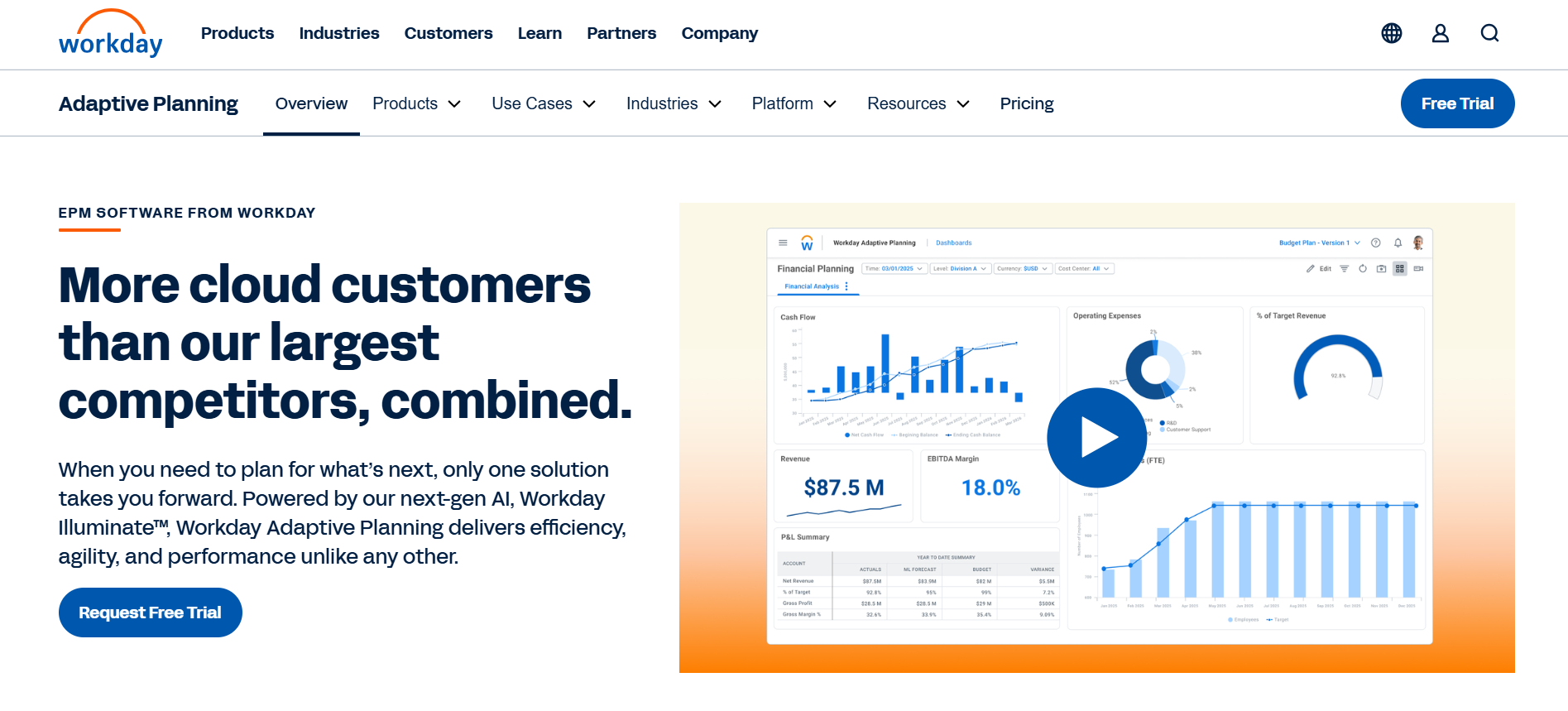
Workday Adaptive Planning provides comprehensive planning, modeling, and budgeting tools within the Workday ecosystem. It meets enterprise needs with flexible scenarios and strong analytics.
Key Features:
- Driver‑Based Budgeting: Flexible models adapt to changing business drivers.
- Workforce and Financial Planning: Combine budgeting with HR and operational planning.
- Visual Dashboards: Provide real‑time insights for finance teams and leadership.
Best For: Organizations already invested in Workday that want a planning platform tightly integrated with HR and financial systems.
7. Mosaic
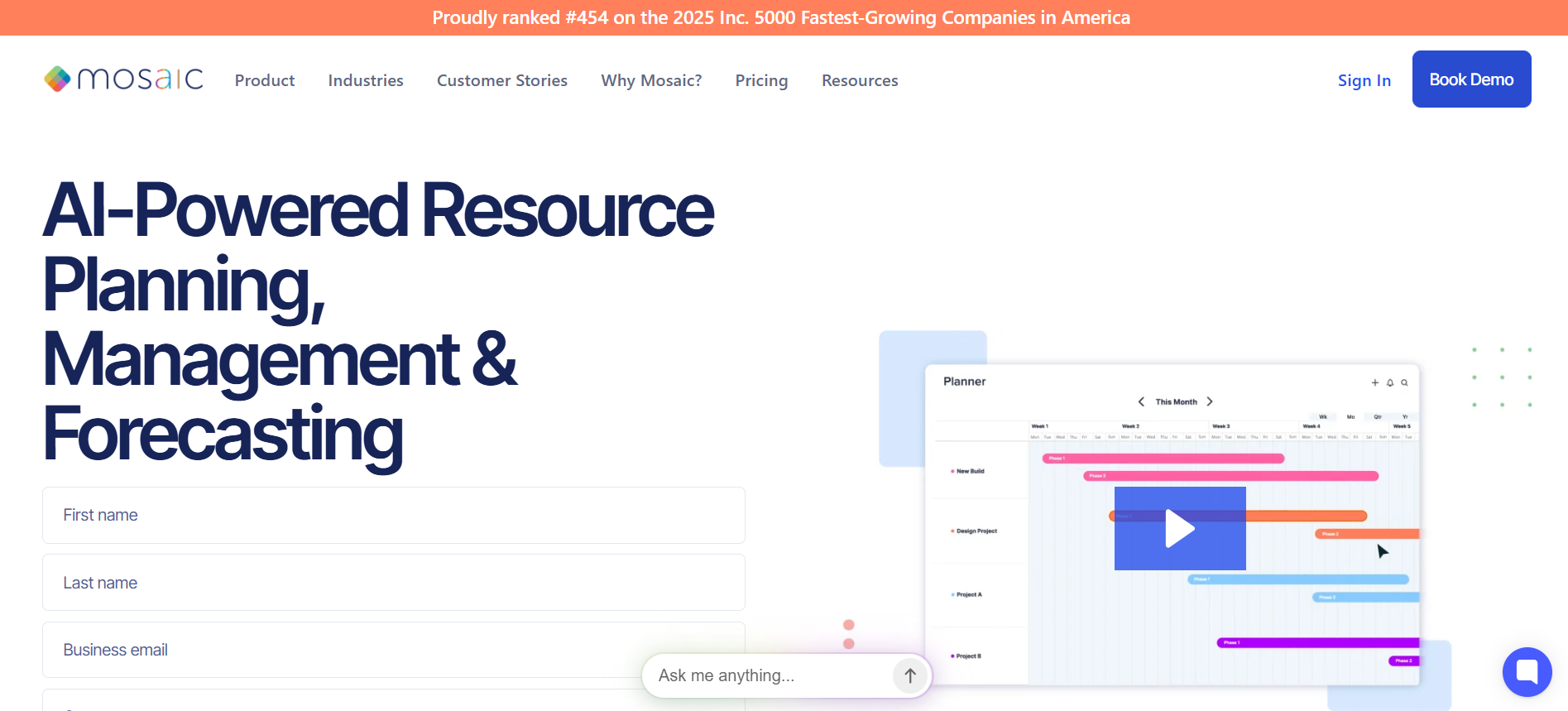
Mosaic is a planning and analytics platform tailored for finance teams who value simplicity without sacrificing functionality. It provides actionable insights and scenario planning in a user-friendly interface.
Key Features:
- Aggregated Financial Data: Full view of revenues, expenses, and forecasts.
- Scenario Planning: Test assumptions and adjust budgets accordingly.
- Real‑Time Dashboards: Visualize trends and performance.
Best For: Small to mid‑sized companies moving beyond spreadsheets but not ready for enterprise‑scale suites.
8. Cube

Cube is a financial planning platform that retains the familiar spreadsheet experience while adding centralized planning and data consolidation. It supports budgeting, forecasting, and reporting with integrations across key systems.
Key Features:
- Spreadsheet‑Compatible Models: Works with Excel and Google Sheets.
- Real‑Time Collaboration: Centralized data model for teams.
- AI‑Assisted Forecasting: Helps automate routine tasks and provide insights.
Best For: SMBs and mid‑market finance teams that want modern planning without abandoning spreadsheets.
9. Vena Solutions

Vena bridges the gap between spreadsheet familiarity and centralized financial planning by layering database and workflow features over Excel. This gives finance teams the best of both worlds: deep modeling power with a familiar interface.
Key Features:
- Excel‑Native Interface: Uses familiar spreadsheets with backend controls.
- Centralized Data Management: Eliminates version control issues.
- Scenario Modeling: Allows flexible budget and forecast comparisons.
Best For: Organizations with deep Excel usage that want structured data and collaboration without losing comfort with spreadsheets.
10. NetSuite Planning and Budgeting

NetSuite Planning and Budgeting is part of the Oracle NetSuite ecosystem, offering comprehensive cloud-based budgeting and forecasting tools for organizations already using NetSuite ERP.
Key Features:
- Integrated with ERP: Directly use financial data from NetSuite.
- Scenario Planning: Quickly model changes in revenue, expenses, and headcount.
- Reporting: Customizable dashboards for executives and finance teams.
Best For: Organizations using NetSuite ERP seeking integrated budgeting and forecasting.
With so many capable options available, the next step is understanding how to narrow down the right fit.
Also Read: How to Develop an Effective Human Resources Budget Plan
How to Choose the Right Budgeting Tool for Your Finance Team?
Selecting the right budgeting tool isn’t just a software decision. It directly affects how well your finance team can plan, collaborate, and respond to business changes. The right platform should meet today’s needs while staying flexible as your organization grows.

Below are the key factors finance teams should consider before making a decision.
- Team size and structure: Smaller teams benefit from tools that are easy to adopt with minimal setup, while larger teams need role-based access, approvals, and audit trails.
- Collaboration across departments: Look for tools that allow finance, HR, and business leaders to work in the same system, reducing back-and-forth and version confusion.
- Real-time data visibility: A strong budgeting tool should update forecasts and budgets instantly as assumptions change, helping teams act before issues escalate.
- Scenario planning capabilities: The ability to model multiple hiring, revenue, or cost scenarios helps finance teams prepare for uncertainty and growth.
- Integration with existing systems: Tools that connect with HRIS, payroll, ERP, and accounting systems reduce manual work and improve data accuracy.
- Ease of use and adoption: A powerful tool only delivers value if teams actually use it. An intuitive interface and familiar workflows help speed up adoption and reduce training time.
- Scalability and flexibility: As headcount and complexity increase, the platform should support new departments, locations, and planning needs without rework.
Choosing a solution with strategic planning capabilities, rather than just basic budgeting functions, helps your team deliver clear insights and guide growth.
Conclusion
The Budgeting tool is more than just software; it is a strategic investment that shapes how finance teams operate. Modern platforms provide real-time data, collaborative workflows, and scenario modeling, allowing organizations to anticipate financial impact and make informed decisions.
A well-chosen platform can align financial planning with business goals, improve communication across teams, and create a foundation for growth. For organizations seeking a solution that integrates budgeting with compensation and headcount planning, CandorIQ provides an all-in-one platform designed to meet these needs.
Book a demo with CandorIQ today to see how your finance team can simplify budgeting while making more strategic decisions.

FAQs
1. Which features enable advanced forecasting and scenario planning?
Advanced forecasting relies on features like predictive analytics, rolling forecasts, driver-based modeling, and “what-if” scenario simulations. These tools allow finance teams to test multiple assumptions, anticipate trends, and make data-driven decisions under varying business conditions.
2. What are the typical pricing models for enterprise budgeting software?
Enterprise budgeting software usually follows subscription-based pricing, either per user, per module, or company-wide. Some vendors offer tiered plans based on features, data volume, or number of integrations, while others provide custom enterprise licensing with annual or multi-year agreements.
3. What mobile accessibility options do top budgeting tools offer?
Leading budgeting tools provide mobile apps for iOS and Android, responsive web dashboards, and push notifications. Users can view reports, approve budgets, and collaborate in real time, ensuring financial management remains accessible outside the office.
4. What compliance standards do these tools meet for finance regulations?
Top budgeting tools comply with standards like SOX, GDPR, IFRS, and SOC 2, ensuring secure handling of financial data. They provide audit trails, role-based access, and encryption, helping organizations maintain regulatory compliance across different regions and industries.
5. What AI-driven insights do modern budgeting tools provide?
AI-powered budgeting tools deliver predictive forecasts, anomaly detection, trend analysis, and automated recommendations. These insights help finance teams optimize spending, identify risks early, and make faster, smarter decisions based on real-time data patterns.
Ready to modernize your workforce and compensation strategy?
See how CandorIQ brings workforce planning and compensation together with AI.