

9 Critical Headcount Planning Mistakes Costing You And How to Fix Them
Discover 9 critical headcount planning mistakes that drain budgets and derail growth. Learn practical fixes to align hiring with strategy.


Are you burning cash on headcount while your competition scales efficiently?
Most companies treat hiring as a reactive process. A team complains they're stretched thin. Finance approves a headcount. HR posts the role, and the hiring is done.
But the problem is that headcount typically consumes 50%-80% of your operating budget. Without a strategic plan, you're gambling with your runway.
The difference between companies that scale smoothly and those that stumble often comes down to headcount planning. Poor planning leads to bloated teams, budget overruns, and misaligned priorities. Smart planning turns your workforce into a growth engine.
This blog breaks down the nine most expensive headcount planning mistakes and shows you exactly how to fix them. You'll walk away with practical strategies to eliminate waste and drive growth.

Key Takeaways
- Headcount isn’t an HR-only task. When HR plans alone, teams work in silos. Finance, HR, and recruiting must plan together to tie hiring to business goals.
- Annual plans break under change. Static headcount plans fail when markets shift. Milestone-based hiring tied to revenue keeps plans flexible.
- Base salary is not the real cost. Benefits, taxes, bonuses, and equity add to employee costs. Forecasting must reflect total compensation.
- Manual workflows slow approvals. Weak justification and spreadsheet errors delay hiring. Data-backed requests tied to capacity and revenue move faster.
- CandorIQ replaces spreadsheet chaos. It unifies compensation planning, headcount forecasting, and approvals, giving HR and Finance real-time visibility and control.
What is Headcount Planning and How It Helps a Scaling Organization
Headcount planning is the process of forecasting your future workforce needs and aligning them with business goals and budget constraints. Done right, headcount planning transforms hiring from a reactive scramble into a strategic advantage.
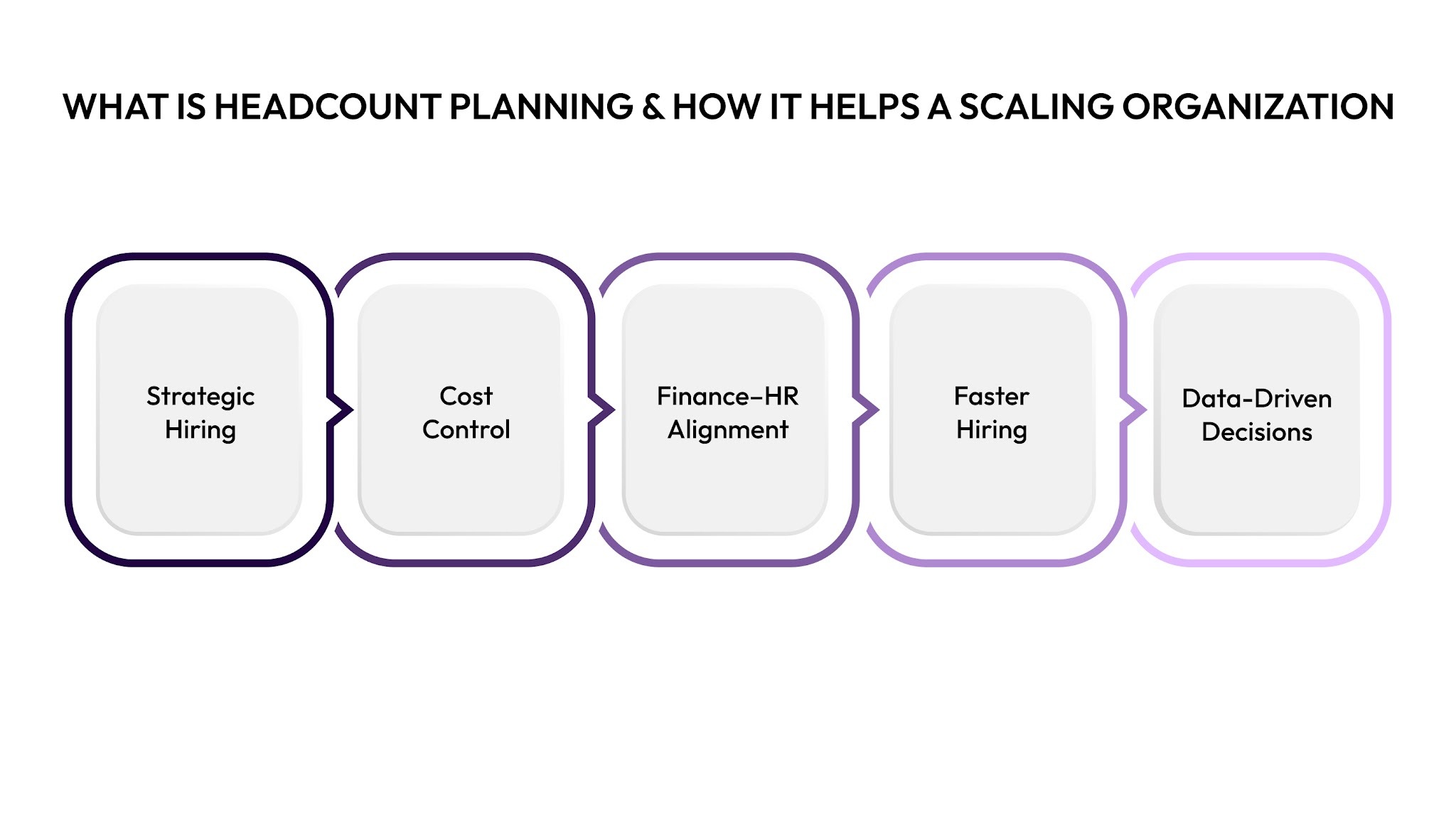
Here's how it helps scaling organizations:
- Aligns hiring with business strategy: You don't just fill seats. You build teams that execute your roadmap and hit growth targets.
- Controls costs and protects runway: By forecasting total compensation and modeling scenarios, you avoid overspending and extend your financial runway.
- Improves collaboration between Finance and HR: Shared visibility into workforce plans eliminates surprises. Finance understands hiring needs. HR understands budget realities.
- Reduces time-to-hire: Pre-approved headcount plans eliminate back-and-forth justifications. Recruiting can move fast when roles are already budgeted.
- Supports smarter decisions through data: Tracking metrics like attrition, productivity, and cost-per-hire lets you refine your approach and spot problems early.
Headcount planning isn't just a spreadsheet exercise. It's the foundation of sustainable growth. But even the best intentions fall apart when teams make avoidable mistakes.
9 Strategic Headcount Planning Mistakes that Derail Your Growth
Most headcount planning failures aren't caused by bad intentions. They're caused by outdated processes, siloed teams, and missing data.
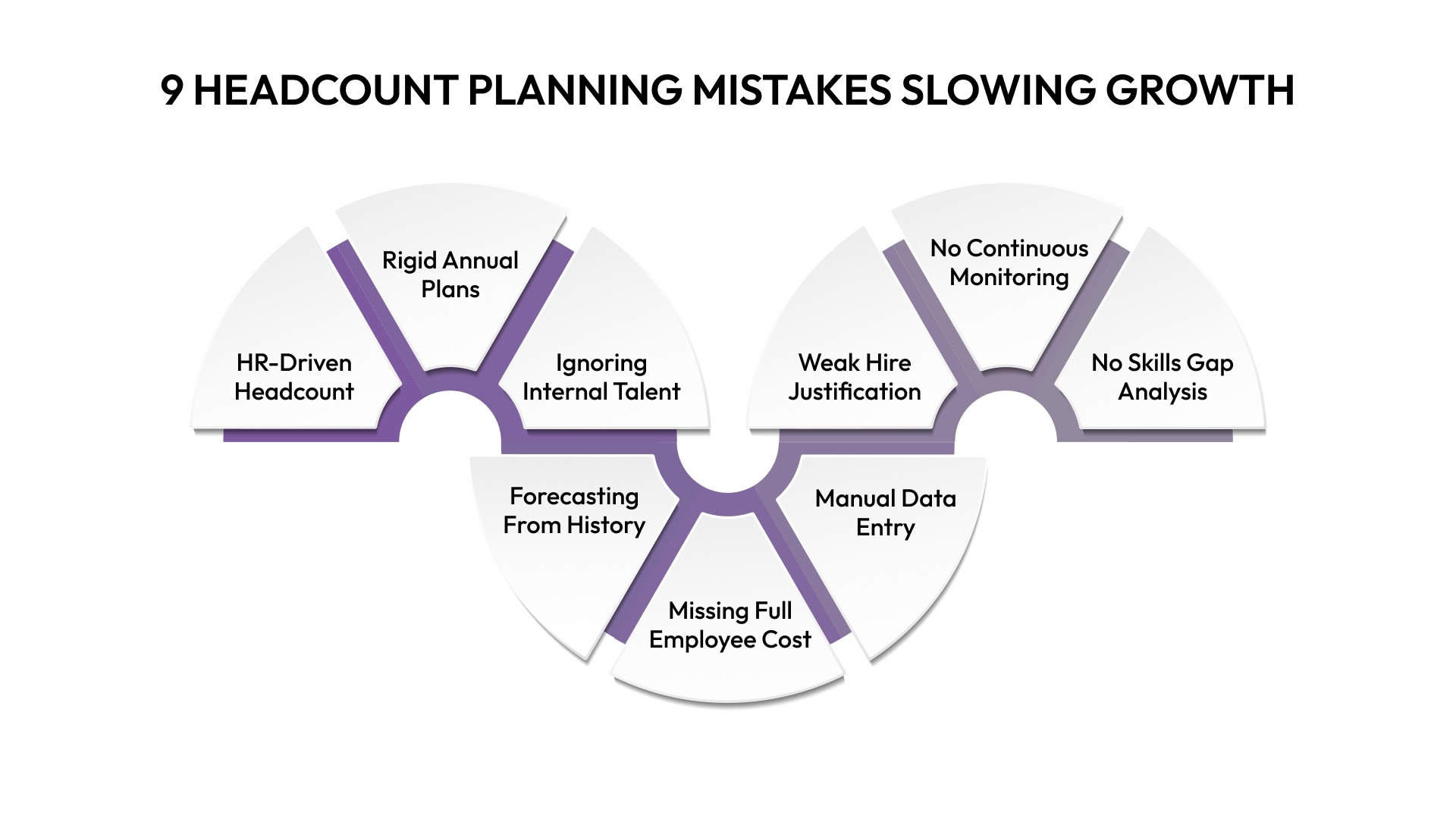
The mistakes below represent the most common and most expensive pitfalls that derail workforce planning. Each one includes a clear explanation of why it matters and a practical fix you can implement immediately.
1. Treating Headcount as an HR Problem Instead of a Business Strategy
When HR plans headcount in isolation, financial risk grows. Finance reviews requests without a full cost context. Leaders approve roles without seeing long-term budget impact. Recruiting works without clear priorities.
Misalignment slows hiring and weakens cost control. Each role turns into a negotiation, and budget overruns surface late. Over time, headcount planning creates uncertainty instead of supporting growth.
Fix: Make Headcount a Core Financial Planning Input
Plan headcount alongside revenue, cash flow, and margin.
- Use a shared model across HR, Finance, and business leaders. Review it monthly against actuals, forecasted burn, and key milestones.
- Define clear ownership and track approved roles, open headcount, and budget impact in one view.
When everyone works from the same plan, approvals move faster, and alignment holds.
2. Locking in Rigid Annual Plans Without Flexibility
Annual headcount plans assume stability, but real growth rarely follows a predictable path. Revenue shifts, attrition rises, and market conditions change faster than static plans can adapt. When hiring remains locked for a full year, teams either overhire and burn budget or freeze roles just as momentum builds.
Over time, forecasts lose accuracy, hiring slows, and confidence across HR, Finance, and leadership weakens.
Fix: Use Milestone-Based Hiring Gates
Plan hiring in stages rather than all at once.
- Tie approvals to real business signals such as revenue milestones, pipeline health, or productivity targets, and review them monthly to stay aligned with actual performance.
- Model multiple scenarios so teams can adjust hiring speed without rebuilding the entire plan.
Flexible headcount planning protects budgets while keeping the business ready to scale.
3. Ignoring Internal Talent for External Hires
External hiring is costly. Fees, bonuses, and onboarding expenses add up quickly. New hires also need months to reach full productivity.
Internal moves cost less and deliver value faster. Existing employees already know the business, the systems, and the customers. They ramp faster, stay longer, and reinforce that growth is possible inside the company.
When teams default to external hiring, they overlook the capability that already exists.
Fix: Build a Skills Matrix and Enable Internal Mobility
- Map current skills against future needs using a simple skills matrix. Identify gaps that training or stretch assignments can realistically close.
- Make internal candidates part of the hiring workflow, not an afterthought. Encourage employees to apply for open roles and review them first.
- Invest in development programs that prepare high performers for higher-impact roles.
This approach lowers hiring costs, improves retention, and builds a stronger, more resilient workforce.
4. Using Unrealistic or Historical-Only Forecasts
Historical data shows what happened. It does not define what you need next. Hiring the same number of people year over year ignores change. Products improve. Markets expand. Sales cycles shorten. Demand rarely stays flat.
When forecasts rely on outdated assumptions or optimism, teams overhire. Costs rise faster than output, and cash burns without results.
Fix: Use Demand-Based Forecasting with Productivity Metrics
- Start with business goals, not last year’s headcount. Define the revenue target, then work backward to the capacity required.
- Use productivity metrics to ground the plan. Track output per role, time to full productivity, and expected attrition.
- Test assumptions with scenarios. Model best-case, worst-case, and likely outcomes, then adjust as results come in.
Strong forecasting replaces guesswork with data rooted in reality.
5. Missing the Full Cost of an Employee
Base salary is only part of the cost. Benefits, payroll taxes, bonuses, equity, and location-based adjustments add up quickly.
When teams plan using salary alone, budgets look safe on paper but break in reality. Finance gets surprised. Hiring slows. Leaders question forecasts after offers are already out.
This gap creates avoidable budget risk.
Fix: Total compensation calculator template
- Build a total compensation model that includes every cost: base salary, bonus, equity, benefits, payroll taxes, equipment, and software licenses.
- Use multipliers based on location and role. For example, benefits typically add 20-30% on top of salary. Payroll taxes add another 7-10%.
- Share this model with department leaders so they understand the true cost of headcount. Use it to evaluate hiring decisions and compare scenarios.
Accurate budgeting prevents surprises and builds trust with Finance.
6. Manual Data Entry Without Validation
Spreadsheets fail under scale. One wrong entry breaks formulas. Data drifts between HR and Finance.
Small errors compound quickly. Teams approve roles that exceed budget. Employees get double-counted. Attrition goes unnoticed, leading to overhiring.
As headcount grows, manual processes increase risk instead of control.
Fix: Add Automated Validation and Error Detection
- Reduce manual entry wherever possible. Use systems that sync headcount and compensation data across HR, payroll, and Finance.
- Apply validation rules to catch issues early. Flag missing data, duplicate roles, and budget overruns in real time.
- Use dashboards that highlight gaps between plan and actuals as they happen.
Automation protects accuracy and keeps headcount planning reliable at scale.
7. Poor Justification for New Headcount Requests
Vague requests stall approvals. Managers say, “We’re overwhelmed,” and Finance hears, “We want more budget.” HR defends the ask without data. Decisions drag, and credibility suffers. Without clear impact metrics, Finance can’t evaluate the hire’s value.
Fix: Use a Data-Driven Request Framework
- Require managers to justify new roles with concrete data, team capacity, workload, revenue impact, and expected outcomes.
- Link each hire to business outcomes. Show how the role drives revenue, reduces costs, or supports strategic goals.
Structured requests speed approvals and improve decision quality.
8. Lack of Continuous Monitoring & Variance Tracking
A plan built in January can be off by June. Hiring may outpace revenue, attrition spikes go unnoticed, and budgets slip, sometimes without anyone realizing until the quarterly review. Small variances grow into big problems. By the time you notice, it’s often too late to correct.
Fix: Track and Review Monthly
- Monitor actuals against plan each month, headcount, open roles, budget burn, and attrition.
- Use dashboards that show variance in real time. HR and Finance should review the same data and address trends early.
- Schedule monthly cross-functional reviews and adjust plans based on real performance.
Continuous monitoring keeps surprises manageable.
9. Failing to Conduct Regular Skills Gap Analysis
Hiring from org chart gaps rather than skills gaps wastes budget. You might hire a software engineer when you need machine learning expertise, or a marketer when training your current team would suffice.
Without knowing what skills your team has versus what’s needed, you miss development opportunities and hire inefficiently.
Fix: Conduct Quarterly Skills Audits
- Run skills audits each quarter. Map current capabilities against future needs and identify gaps, deciding which require hiring versus training.
- Create development plans for high performers and invest in upskilling. Use this data to guide job descriptions and hiring strategy.
Skills-based planning lowers costs and strengthens the existing workforce.
Tools like CandorIQ bring HR and Finance together with real-time headcount forecasting, automated approval workflows, and scenario planning. Stop reacting to hiring chaos and start building a workforce plan that drives growth.
Headcount planning mistakes aren't inevitable. With the right processes, tools, and cross-functional collaboration, you can eliminate waste and turn workforce planning into a competitive advantage.
Also Read: The 7 Best Headcount Planning Strategies to Scale Smarter
Checklist: 10 Must-Haves for Effective Headcount Planning
Even with the best intentions, headcount planning fails without the right structure. This checklist gives you a clear framework to evaluate your current process and identify gaps.
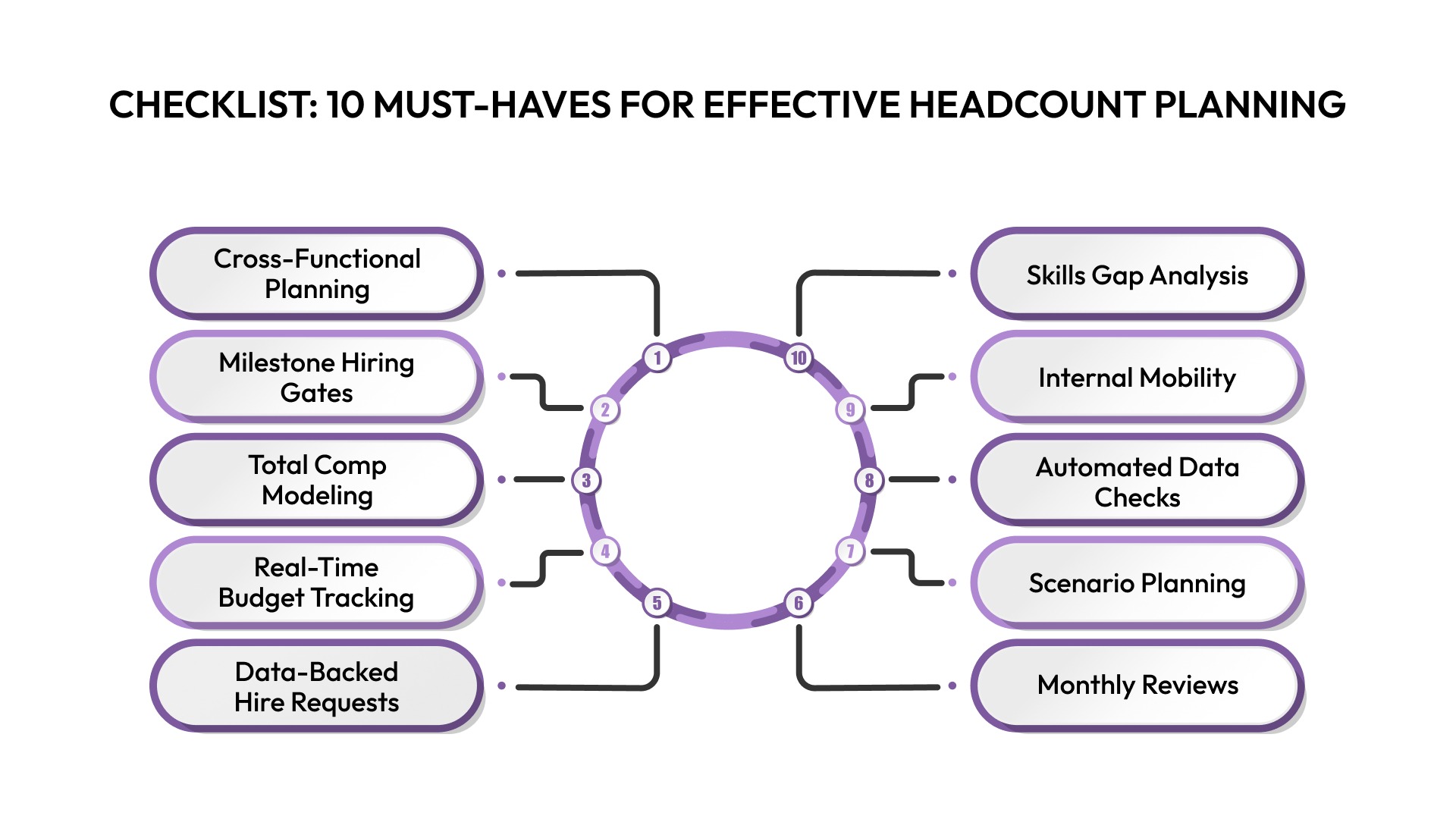
Use it as a roadmap to build a planning system that aligns hiring with business goals, controls costs, and scales with your growth.
- Cross-functional planning team: HR, Finance, and department leaders must collaborate on workforce strategy. Assign clear ownership for process, budget, and priorities.
- Milestone-based hiring gates: Replace rigid annual targets with flexible gates tied to revenue, customer growth, or other performance metrics.
- Total compensation model: Include salary, benefits, taxes, bonuses, equity, and equipment costs. Forecast the true cost of every employee.
- Real-time budget tracking: Monitor actuals versus plan monthly. Use dashboards that surface variances before they become problems.
- Data-driven headcount request framework: Require managers to justify new hires with capacity metrics, revenue impact, and expected outcomes.
- Skills gap analysis process: Audit current capabilities quarterly. Identify which gaps require hiring versus upskilling.
- Internal mobility program: Prioritize internal candidates for open roles. Invest in development programs that prepare employees for advancement.
- Automated validation and error detection: Eliminate manual data entry. Use integrated systems that sync employee data and flag discrepancies automatically.
- Scenario planning capabilities: Model best-case, worst-case, and likely-case outcomes. Test hiring plans against different revenue and growth assumptions.
- Monthly review cadence: Schedule regular planning reviews with cross-functional teams. Adjust your plan based on performance and market conditions.
Also Read: The Ultimate Guide to Headcount Analysis and Workforce Planning
If you're still managing headcount planning in spreadsheets, you're working twice as hard for half the accuracy. CandorIQ consolidates forecasting, approvals, and compensation planning in one platform, giving you the visibility and control you need to make confident decisions.
Stop Guessing, Start Planning with CandorIQ
Headcount planning doesn’t have to be complicated. Yet Data scattered across systems, stalled approvals, and broken spreadsheets make it hard to stay on budget.
CandorIQ eliminates the chaos. Our platform unifies compensation planning, headcount forecasting, and approval workflows so HR and Finance teams work from the same data in real time.
Here's what you get:
- Headcount scenario planning that models future org charts and shows financial impact before you hire.
- Automated approval workflows that route requests based on team, location, and budget, eliminating bottlenecks.
- Real-time collaboration between Finance and People Ops with shared dashboards and variance tracking.
- Total compensation visibility, including salary, equity, bonuses, and benefits, so you never miss hidden costs.
- Skills gap tracking to identify when to hire versus when to upskill existing talent.
- AI-powered recommendations that analyze benchmarks, forecast needs, and answer planning questions in natural language
CandorIQ helps fast-growing companies align workforce plans with business goals, control costs, and make smarter hiring decisions.
Conclusion
Headcount planning mistakes cost more than money. They slow growth, frustrate teams, and create misalignment between HR and Finance.
The nine mistakes in this blog, from treating headcount as an HR-only problem to ignoring skills gaps, represent the biggest threats to effective workforce planning.
But they're all fixable. With cross-functional collaboration, real-time data, and the right tools, you can eliminate waste and turn headcount planning into a strategic advantage.
CandorIQ replaces spreadsheets and disconnected workflows with a unified platform built for modern HR and Finance teams. Get real-time visibility, automate approvals, and align hiring with your budget.
Ready to stop guessing and start planning? See how CandorIQ can transform your headcount process.
.png)
FAQs
1. What's the difference between headcount and FTE?
Headcount counts individual employees regardless of hours worked. FTE (full-time equivalent) adjusts for part-time employees. For example, two half-time employees equal one FTE but count as two headcounts. Use FTE for budget planning and headcount for org structure.
2. How do you justify a new headcount request to Finance?
Use data. Show current team capacity, workload metrics, and the expected business impact of the hire. Link the request to revenue growth, cost savings, or strategic goals. Quantify outcomes so Finance can evaluate ROI.
3. What metrics matter most in headcount planning?
Track these: headcount actuals versus plan, cost-per-hire, time-to-productivity, attrition rate, budget burn rate, and revenue per employee. These metrics help you identify inefficiencies and refine your forecasting over time.
4. Should we prioritize internal promotions or external hires?
Prioritize internal candidates when skills gaps can be closed through training or stretch assignments. External hires make sense when you need specialized expertise or fresh perspectives. Balance both to control costs and strengthen culture.
5. How do we avoid over-hiring during rapid growth?
Use milestone-based hiring gates tied to revenue or customer metrics. Model scenarios that test hiring plans against different growth outcomes. Build in flexibility so you can slow hiring if performance lags.
Ready to modernize your workforce and compensation strategy?
See how CandorIQ brings workforce planning and compensation together with AI.