

Ultimate Guide to Top Talent Acquisition Compensation Strategies
Learn the best and most effective talent acquisition compensation strategies to attract, engage, and retain top talent, driving business growth in 2025.

Compensation strategy is a critical factor in attracting and retaining top talent, but it’s also one of the most complex aspects of talent acquisition. In fact, the U.S. Department of Labor estimates that a bad hire can cost up to 30% of the employee’s first-year salary.
For an employee with an $80,000 salary, that’s a potential loss of nearly $24,000. With the stakes so high, managing compensation the right way isn’t just about offering competitive salaries. It’s about aligning pay strategies with your company’s growth trajectory, workforce goals, and budget limitations.
As your company scales, compensation becomes more complex. You need to balance equitable pay for your existing teams while remaining competitive enough to attract new talent. This is especially true when managing remote teams or global hires, where location-based pay adjustments and compliance factors add even more layers of complexity.
Key Takeaways
- Modern compensation strategies, like skills-based pay and flexible benefits, help businesses stay competitive in attracting talent.
- Pay transparency builds trust and improves retention by aligning expectations and making employees feel valued.
- Performance-based compensation motivates employees by linking pay to specific outcomes, driving higher productivity.
- Data-driven insights and AI recommendations enable HR teams to make fair, informed compensation decisions that stay market-competitive.
Why Traditional Compensation Models No Longer Work
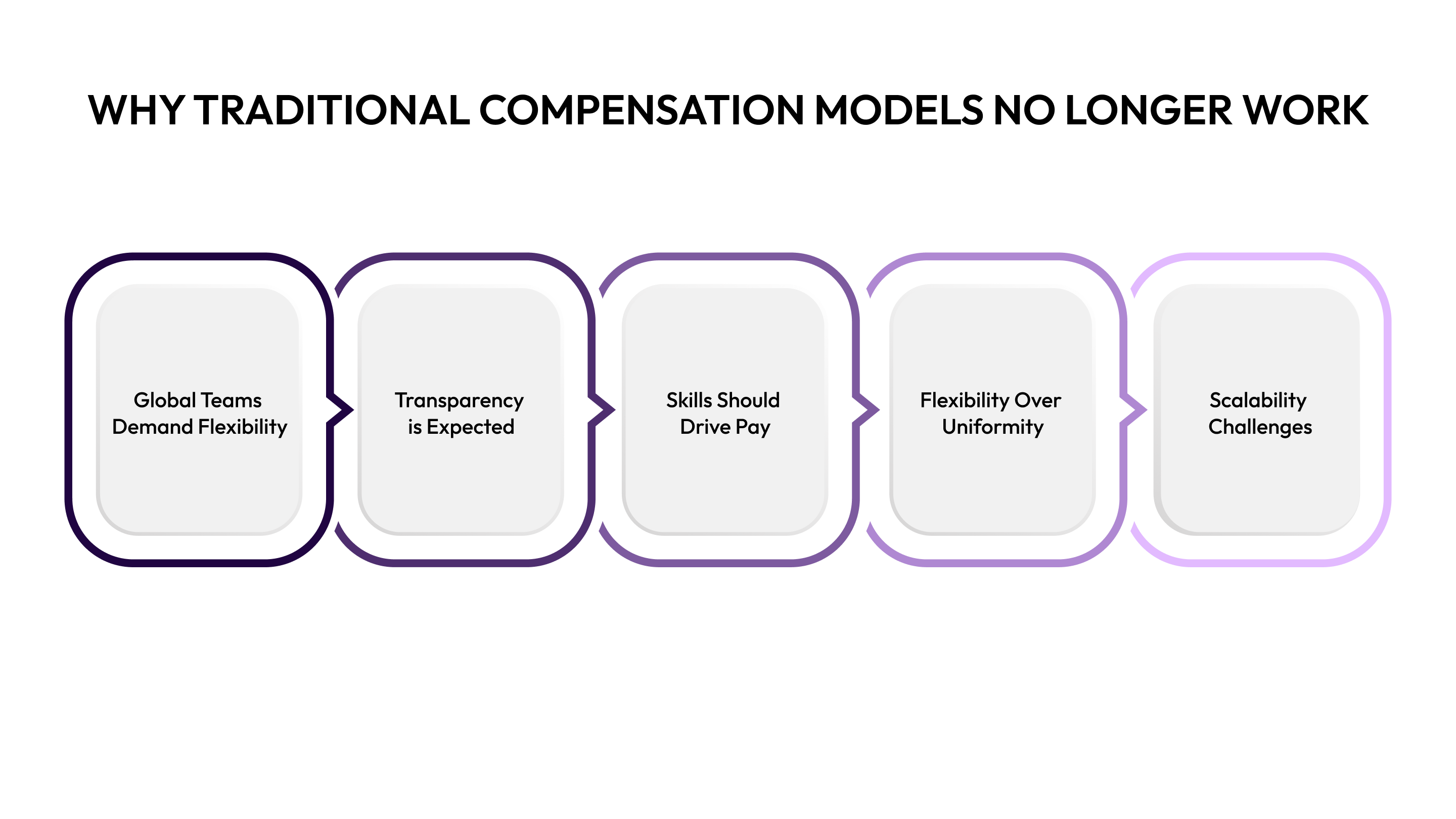
Traditional compensation models, designed for a different era, are increasingly incompatible with the needs of today’s workforce. Here's why they don't fit anymore:
- Remote and Global Teams Demand Flexibility: Pay models that don't account for geographical differences leave room for inequity. Today’s remote-first and global teams need location-based adjustments to keep pay competitive.
- Transparency is Expected: Employees now demand pay transparency. Keeping compensation details hidden leads to distrust. Clear pay bands and open discussions are essential for maintaining engagement and morale.
- Skills Should Drive Pay: Compensation used to be tied to job titles and tenure. Now, skills-based pay is key. Companies must recognize the value of specialized skills rather than relying on outdated job descriptions.
- Flexibility Over Uniformity: A one-size-fits-all approach doesn’t work anymore. Employees seek personalized benefits and customized pay options that reflect their unique needs and work preferences.
- Scalability Challenges: Traditional models can’t handle rapid growth. As companies scale, manual pay processes become cumbersome. Automated systems that adjust to growth are necessary for efficient and fair compensation.
Traditional compensation strategies are no longer sufficient. Modern models need to be adaptive, transparent, and skills-driven to attract and retain the best talent.
As we explore why traditional compensation models are becoming obsolete, it's crucial to understand the real cost of inconsistent compensation strategies in the recruitment process.
.png)
The Real Cost of Inconsistent Compensation Strategies in Recruitment
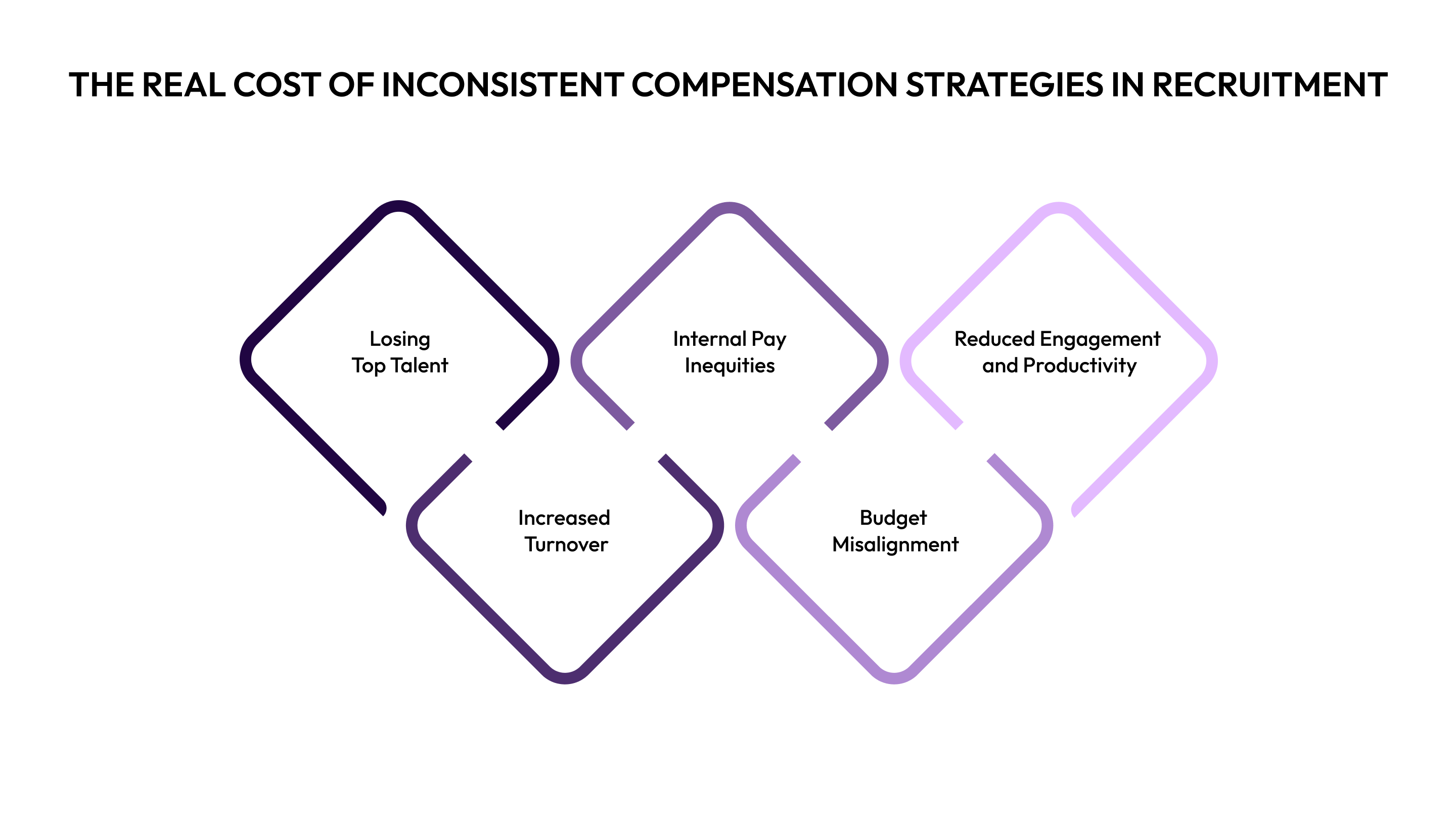
Inconsistent compensation strategies can quickly lead to costly consequences for growing organizations. Here’s how:
1. Losing Top Talent
When compensation isn’t aligned with market expectations, top candidates walk away. If salary offers don’t meet market standards, it damages your ability to attract the best talent, especially in competitive sectors.
2. Increased Turnover
Inadequate or inconsistent compensation isn’t just a hiring issue; it’s a retention problem. Employees who feel underpaid or see pay discrepancies among peers are more likely to leave. This results in higher turnover costs, including the need for recruitment and training new hires.
3. Internal Pay Inequities
Pay gaps within your workforce, whether intentional or unintentional, lead to frustration and disengagement. These disparities also expose your company to legal risks as pay equity laws tighten globally. It’s crucial to ensure fair and transparent pay practices.
4. Budget Misalignment
Without a clear, consistent compensation plan, it’s easy to overspend. When hiring decisions aren’t aligned with the budget, it leads to cost overruns and financial strain. CFOs and HR leaders must ensure compensation strategies stay in line with financial goals.
5. Reduced Engagement and Productivity
When employees feel underpaid or undervalued, productivity dips. Engaged employees are motivated to perform well, but inconsistent compensation leads to a lack of morale and, ultimately, lower output.
After understanding the real costs of inconsistent compensation strategies, it’s essential to explore the key elements that form an effective compensation strategy to avoid these pitfalls and drive long-term success.
Looking to minimize turnover and keep top talent engaged? Explore the best compensation management strategies for employee retention to enhance your approach.
Key Elements of an Effective Compensation Strategy
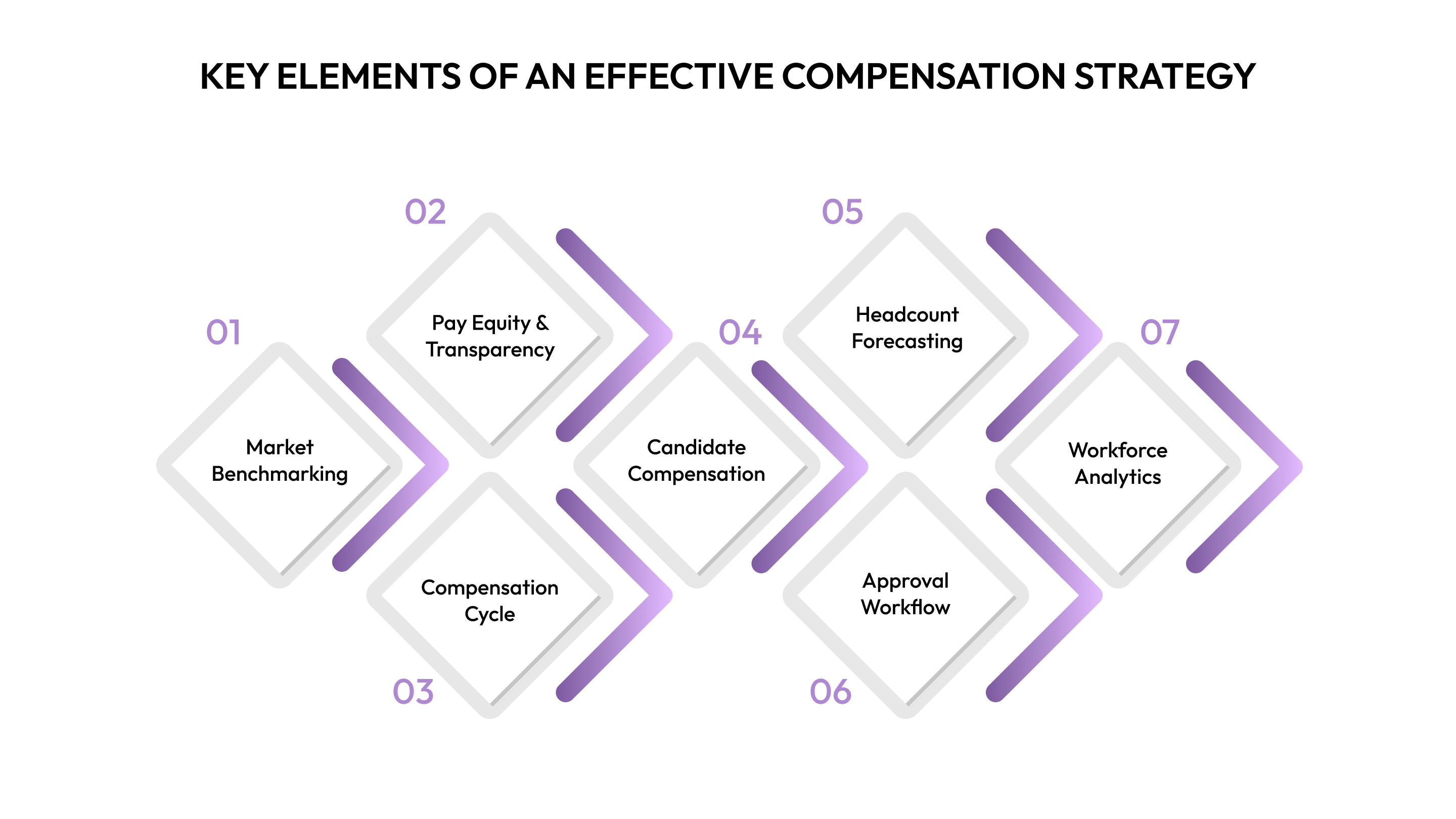
An effective compensation strategy is built on several key elements that ensure fairness, competitiveness, and alignment with company goals. Here’s what makes up the foundation of a strong compensation plan:
1. Market Benchmarking & Pay Bands
Regularly benchmark compensation against industry data and adjust for role, location, and market trends. Pay bands should be created by job level and department, with version control to track historical changes and ensure transparency.
2. Pay Equity & Transparency
Pay equity is crucial for building employee trust and retention. Regular audits and adjustments are necessary to avoid disparities. Offering transparent access to compensation information, like through total rewards portals, ensures employees understand their pay and benefits.
3. Compensation Cycle Management
Automate merit increases, bonuses, and promotions with approval workflows to reduce errors and save time. Tracking budget utilization and headcount impact in real time ensures that compensation decisions align with company goals.
4. Offer Strategy & Candidate Compensation
Offer a comprehensive view of compensation, including salary, equity, bonuses, and benefits, to attract top talent. Providing future equity projections can also help candidates see the long-term value of joining your organization.
5. Headcount Forecasting & Scenario Planning
Forecast headcount needs and model organizational structures to understand the cost implications of hiring decisions. Use scenario planning to assess the impact of hiring now versus delaying hires to stay within budget.
6. Approval Workflow & Hiring Governance
Streamline approval processes with standardized headcount request templates that include job rationale and budget details. Dynamic approval routing ensures efficient decision-making based on factors like team, location, and compensation band.
7. Workforce Analytics & Management
Monitor open roles, attrition, promotions, and filled positions to stay aligned with workforce needs. Custom dashboards for HR, Finance, and leadership allow for real-time tracking of compensation and headcount alignment.
With the essential components of a solid compensation strategy in place, let's explore innovative approaches to stay ahead in talent acquisition.
Want to simplify pay structures and budgeting? Check out our step-by-step guide on how to calculate total employee compensation and avoid costly mistakes.
Innovative Compensation Strategies to Attract and Retain Top Talent
In a market where top talent is constantly in demand, traditional compensation models aren’t enough to stand out. To remain competitive, businesses must embrace innovative strategies that go beyond salary and perks. Let’s explore new compensation approaches designed to attract and retain the best candidates:
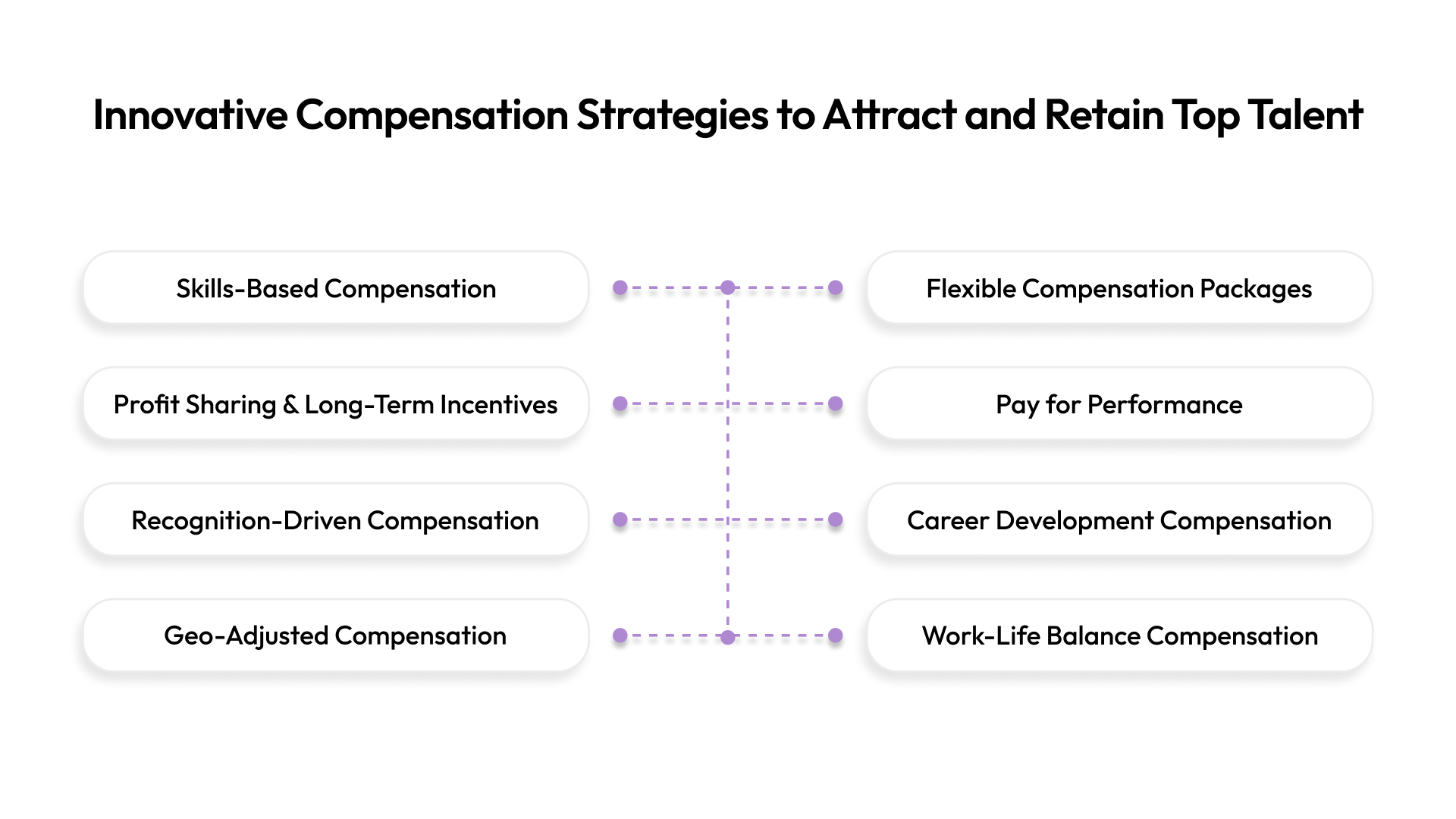
1. Skills-Based Compensation
Skills-based pay focuses on compensating employees for the specific skills they bring to the table, rather than just the roles they occupy. This approach is especially effective in fast-evolving industries like tech or marketing, where the value of specialized skills often exceeds the traditional job title or seniority.
- Why it works: It aligns compensation with the market value of skills, ensuring employees are rewarded for their expertise.
- How to implement: Create pay bands based on skill level, certifications, and experience, allowing compensation to be dynamic and reflective of an employee’s capabilities.
2. Flexible Compensation Packages
Today’s workforce is diverse, and so are their needs. Employees want flexibility in their compensation packages, allowing them to choose what matters most to them—whether that’s additional time off, wellness benefits, or financial incentives.
- Why it works: Offering tailored benefits increases employee satisfaction by catering to individual needs, improving both engagement and retention.
- How to implement: Let employees personalize their compensation package, choosing benefits like healthcare, childcare stipends, or remote work allowances, based on their lifestyle and preferences.
3. Profit Sharing and Long-Term Incentives
A great way to boost employee engagement is by offering profit-sharing plans or stock options. This approach gives employees a sense of ownership in the company, aligning their goals with long-term success.
- Why it works: Ownership mentality increases loyalty and encourages employees to stay focused on the company’s success over time.
- How to implement: Set up profit-sharing schemes where employees receive a percentage of the company’s profits, or offer stock options that vest over time.
4. Pay for Performance
Performance-based compensation helps businesses align employee efforts with company goals. Whether it’s through bonuses, commissions, or profit-sharing, compensating employees based on their individual or team performance drives productivity and motivation.
- Why it works: Employees are more likely to stay engaged and productive when they know their efforts directly contribute to their financial rewards.
- How to implement: Link compensation to specific, measurable goals: KPIs, quarterly targets, or company-wide milestones and reward employees based on performance.
5. Recognition-Driven Compensation
Beyond monetary compensation, recognizing employee achievements can serve as a powerful retention strategy. Offering non-financial rewards, such as public recognition, extra vacation days, or gift cards, can complement traditional compensation.
- Why it works: Employee recognition boosts morale and engagement, making employees feel valued and appreciated beyond salary alone.
- How to implement: Incorporate regular recognition into your company culture, such as awarding monthly accolades or celebrating milestones with personalized rewards.
6. Career Development Compensation
Investing in an employee’s career growth can be as valuable as investing in their salary. Offering learning stipends, tuition reimbursement, or leadership training programs shows employees that you’re committed to their long-term success.
- Why it works: When employees see that a company cares about their professional development, they’re more likely to stay and continue contributing.
- How to implement: Provide educational stipends or sponsor certifications and courses that allow employees to enhance their skill set.
7. Geo-Adjusted Compensation for Remote Work
With the rise of remote work, many companies are now offering geo-adjusted pay. This strategy takes into account cost of living and local salary standards to ensure fairness in pay for remote employees across various regions.
- Why it works: Geo-adjusted compensation ensures employees are compensated fairly based on where they live, making it a more equitable approach in a global workforce.
- How to implement: Use cost-of-living data to adjust salaries for employees in different locations, maintaining competitiveness while respecting budget constraints.
8. Flex Time and Work-Life Balance Compensation
Compensation isn't just about financial rewards. Offering flexible working hours, work-from-home options, and generous paid time off (PTO) can make a significant impact on employee satisfaction and retention.
- Why it works: Work-life balance has become a top priority for employees, and companies that provide this flexibility attract and retain top talent.
- How to implement: Create policies that allow employees to set their own schedules, take paid personal days, or adjust their hours based on personal needs.
To ensure these strategies are working, it's important to track key metrics. Let’s look at the metrics that matter most in talent acquisition compensation.
Metrics That Matter in Talent Acquisition Compensation
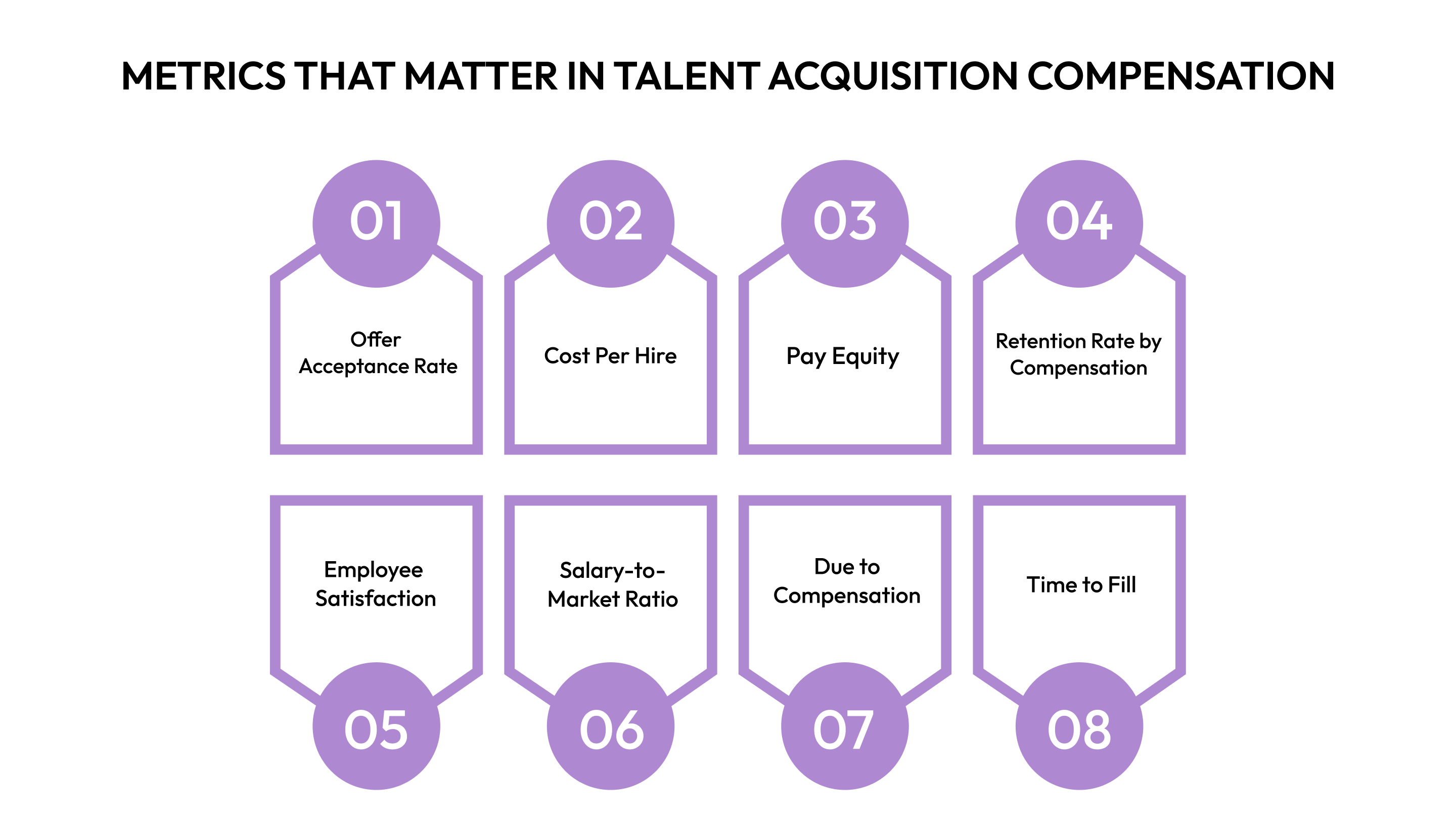
To evaluate the effectiveness of your compensation strategy, it's essential to track key metrics that provide insight into how well your approach is attracting and retaining top talent. Here are the most important metrics to track:
1. Offer Acceptance Rate
This metric measures the percentage of candidates who accept your job offers. A low acceptance rate can indicate that compensation isn’t competitive enough or that your offer is missing important elements like benefits or equity.
2. Cost Per Hire
Cost per hire tracks the total cost of recruiting and hiring a new employee, including advertising, recruitment fees, and onboarding. High costs can suggest that your compensation is out of alignment with the market or that you’re overspending to attract candidates.
3. Pay Equity
Pay equity ensures that employees are compensated fairly regardless of gender, race, or other factors. Tracking pay equity helps prevent disparities that can lead to legal issues and dissatisfaction within the workforce.
4. Retention Rate by Compensation Band
This metric looks at retention rates across different pay bands to determine if employees in specific salary ranges are staying longer. If employees in lower compensation bands leave more frequently, it may signal the need for adjustments in your pay structure.
5. Employee Satisfaction and Engagement
Employee surveys and engagement metrics provide insight into whether your compensation strategy is meeting employee expectations. Low satisfaction with pay can lead to decreased motivation and higher turnover.
6. Salary-to-Market Ratio
This ratio compares your company’s salaries with industry standards. Ensuring that your compensation is in line with the market prevents overpaying or losing talent to competitors offering more competitive wages.
7. Turnover Due to Compensation
Tracking turnover specifically due to dissatisfaction with compensation helps identify if your pay strategy is contributing to high employee churn. This metric allows you to directly link compensation to retention.
8. Time to Fill
Time to fill measures how long it takes to hire someone from when the job is posted to when an offer is accepted. A long time to fill may indicate that compensation isn’t competitive enough or that the hiring process is too slow.
While measuring compensation success is crucial, CandorIQ takes it a step further by integrating those metrics into a more effective and data-driven talent acquisition strategy.
.png)
How CandorIQ Enhances Talent Acquisition through Smarter Compensation Planning
CandorIQ offers powerful tools designed to streamline compensation and headcount planning, aligning these functions with business goals. Here’s how CandorIQ supports your compensation strategy:
- Compensation & Pay-Band Builder: Defines pay bands by level, location, and department, ensuring consistency and transparency. Incorporates benchmark data, version control, and historical tracking to base decisions on reliable data.
- Candidate Offers Tool: Generates total compensation letters, including salary, equity, and benefits. Integrated with ATS data, it allows recruiters to send out clear, complete offers quickly, reducing friction in the hiring process.
- Total Rewards Portal: Provides employees with visibility into their full compensation package, promoting transparency and trust.
- Headcount Scenario Planning: Models hiring decisions and budget impact, helping organizations forecast workforce costs and ensure alignment with business growth.
- Headcount Requests & Approvals: Streamlines the headcount approval process, ensuring requests are aligned with budgets and priorities. This tool reduces bottlenecks and speeds up hiring decisions.
- AI-Powered Insights: Analyzes compensation data, spots pay discrepancies, and offers recommendations for alignment. Real-time dashboards provide actionable insights for HR, Finance, and leadership teams.
For Chief People Officers (CPOs), CFOs, HR Business Partners (HRBPs), and Recruiting Managers, CandorIQ simplifies compensation management and provides tools for better decision-making, ensuring that your compensation strategy supports business goals.
Conclusion
Compensation is a crucial factor in attracting and retaining top talent. Traditional models no longer meet the needs of fast-growing, global companies. To stay competitive, organizations must adopt innovative strategies like skills-based pay, flexible benefits, and performance-driven incentives.
CandorIQ offers the tools to streamline compensation management, ensuring alignment with both business goals and employee expectations. With data-driven insights and automated workflows, it helps businesses build transparent, fair, and scalable compensation strategies.
By refining your approach to compensation, you set the stage for long-term success in talent acquisition. Book a demo today and see how CandorIQ can help you attract and retain the talent you need to scale effectively.
FAQs
1. How do I ensure my compensation strategy is competitive in a global market?
To stay competitive, regularly benchmark your compensation packages against industry standards and consider geo-adjusted pay to accommodate cost-of-living differences in different regions.
2. What role does pay transparency play in talent acquisition?
Pay transparency helps build trust between the company and candidates by setting clear expectations. It ensures that all employees are aware of how compensation is determined, which can lead to increased employee satisfaction and retention, especially for diverse workforces.
3. How do I balance compensation with my company’s financial goals?
Balancing compensation with financial goals requires careful planning and forecasting. Using tools like CandorIQ allows HR and Finance teams to model hiring costs, track compensation trends, and adjust strategies in real-time to ensure alignment with budgetary constraints.
4. How can performance-based compensation improve employee engagement?
Performance-based compensation, such as bonuses or profit-sharing, ties pay to measurable outcomes. This incentivizes employees to achieve individual and team goals, increasing motivation, engagement, and alignment with company objectives.
5. What is the best way to communicate compensation changes to employees?
Clear communication is key. Be transparent about why changes are being made and how they align with company goals. Using platforms like CandorIQ can help HR teams automate and communicate compensation decisions, making it easier to keep employees informed and engaged.
Ready to modernize your workforce and compensation strategy?
See how CandorIQ brings workforce planning and compensation together with AI.