
Powerful Performance Management Synergy Tips for Better Teams
Learn how performance management synergy aligns performance, compensation, and workforce planning to enable faster, data-driven HR and finance decisions.

Performance management systems break down when each part of the process runs in isolation. Goals are set in one system, feedback is tracked elsewhere, and compensation decisions happen in spreadsheets.
For a CPO, this disconnect creates inconsistent pay outcomes and limited visibility into how performance affects workforce costs. A 2025 Mercer survey shows that 85% of organizations still rely on performance ratings for key talent decisions, even though the underlying systems are often fragmented.
This is where performance management synergy becomes important. Instead of treating performance, compensation, and workforce planning as separate workflows, synergy connects them into a single, data-driven system. When these elements work together, teams can make clearer, faster, and more aligned decisions.
This blog explores how to build that connection, what it requires, and how it supports clearer, faster decisions across HR and Finance.
Key Takeaways:
- Performance management synergy connects goal setting, feedback, compensation, and workforce planning into one integrated system instead of siloed processes.
- It helps HR and Finance make faster, more consistent, and better-aligned decisions by using shared performance and workforce data.
- Core pillars include goal alignment, continuous feedback, performance-linked compensation, workforce planning integration, and unified data visibility.
- A strong framework requires shared HR-Finance ownership, standardized performance data, continuous feedback cycles, and structured approval workflows.
- Technology enables synergy through real-time dashboards, automation, scenario planning, and integrated systems that reduce manual effort and improve decision-making.
What Does Synergy Mean in Performance Management?
Synergy in performance management refers to the integration of performance-related processes so they work as one connected system rather than separate functions. It brings together goal setting, continuous feedback, compensation planning, and workforce decisions into one continuous flow of information.
Here’s why it matters:
- Faster decisions: When performance, compensation, and headcount data are connected, teams can act quickly without waiting for manual data consolidation.
- Consistent pay: Integrated systems align performance outcomes with compensation decisions, improving consistency across roles and departments.
- Budget visibility: Finance teams gain clearer insight into how performance-driven actions impact workforce costs and overall budgets.
- Better hiring plans: Linking performance data with headcount planning helps teams decide when and where to hire more accurately.
- Team alignment: HR and Finance operate from shared data, reducing miscommunication and improving collaboration during planning cycles.
- Employee clarity: Transparent links between performance and pay give employees a clearer understanding of decision-making.
- Scalable processes: Connected workflows support growth while maintaining consistency in performance and compensation management.
.png)
Core Pillars That Create Synergy in Performance Management
Building synergy requires more than process alignment. It depends on a set of core pillars that connect performance data, decision-making workflows, and organizational planning.
- Goal Alignment: Individual and team goals should directly reflect company priorities. Clear alignment helps managers evaluate performance consistently and connect outcomes to real business impact.
- Continuous Feedback Loops: Ongoing feedback keeps performance data current and actionable. It allows managers to adjust expectations and address gaps before formal review cycles take place.
- Performance-Linked Compensation: Compensation decisions should reflect actual performance outcomes. This connection helps create consistency in merit increases, bonuses, and promotion decisions across the organization.
- Integration with Headcount Planning: Performance insights should inform hiring, promotions, and restructuring decisions. This helps teams plan workforce changes based on real capability and actual business needs.
- Shared Data Visibility for HR and Finance: Both teams need access to the same performance and compensation data. This reduces misalignment and supports more coordinated decision-making between functions.
- Structured Approval Workflows: Clearly defined approval processes improve consistency and reduce delays. They also create accountability across HR, Finance, and leadership teams in practice.
Together, these pillars reduce fragmentation and support performance management synergy across HR and Finance workflows.
These pillars also define how organizations should structure their performance framework, which we’ll explore next.
Also Read: Best Employee Management Systems for Performance Tracking
Building a Synergistic Performance Management Framework
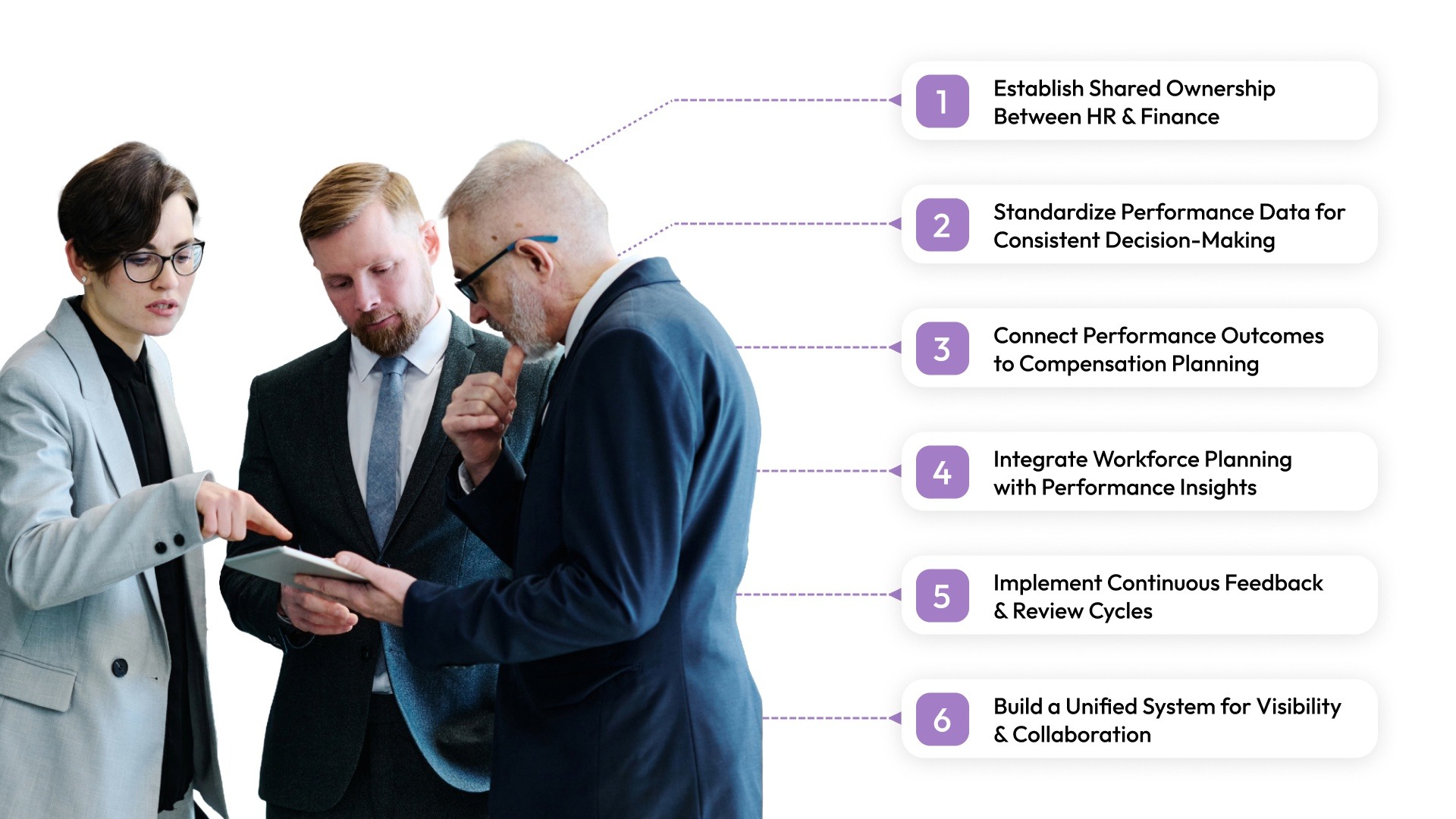
A synergistic performance management framework connects people, processes, and systems into a unified workflow. It replaces fragmented decision-making with structured, cross-functional collaboration.
Below are key strategies to build a framework that is both practical and scalable.
1. Establish Shared Ownership Between HR and Finance
Performance management cannot remain an HR-only process when compensation and workforce costs are involved. Shared ownership creates alignment between people, strategy, and financial planning.
- Define clear roles for HR and Finance in performance, compensation, and planning workflows
- Align evaluation timelines with budget cycles to reduce delays
- Create joint review checkpoints for compensation and headcount decisions
This approach reduces disconnect between teams and helps CFOs gain visibility into how performance outcomes influence workforce spend. It also supports more consistent decision-making across departments.
2. Standardize Performance Data for Consistent Decision-Making
Inconsistent data structures often lead to subjective evaluations and misaligned compensation decisions. Standardization creates a reliable foundation for linking performance with planning workflows.
- Use consistent performance metrics across teams and roles
- Align rating systems with compensation frameworks
- Maintain a centralized source of truth for performance data
Standardized data improves clarity and reduces bias in evaluations. It also makes it easier to connect performance outcomes with pay adjustments and hiring plans.
3. Connect Performance Outcomes to Compensation Planning
One of the most critical gaps in performance systems is the lack of direct linkage to compensation decisions. Without this connection, pay decisions often rely on manual interpretation.
- Define clear guidelines for translating performance ratings into compensation changes
- Align pay bands with performance expectations and growth levels
- Track compensation impact in real time during review cycles
This strategy supports fairness and transparency while helping Finance teams maintain better control over compensation budgets.
4. Integrate Workforce Planning with Performance Insights
Performance data provides valuable signals for workforce planning decisions. High-performing teams may require expansion, while underperforming areas may need restructuring or support.
- Use performance trends to guide hiring priorities
- Align headcount planning with team productivity and output
- Evaluate workforce gaps based on performance data
Connecting performance insights to workforce planning improves hiring accuracy and supports better resource allocation across the organization.
5. Implement Continuous Feedback and Review Cycles
Annual performance reviews often delay critical insights. Continuous feedback creates a more responsive system that supports ongoing alignment between performance and planning.
- Schedule regular check-ins instead of relying only on annual reviews
- Capture real-time feedback to identify trends early
- Use interim reviews to adjust compensation and workforce plans
This approach improves responsiveness and helps teams address issues before they affect larger planning decisions.
6. Build a Unified System for Visibility and Collaboration
A fragmented toolset makes it difficult to achieve true synergy. A unified system connects performance, compensation, and workforce data in one place.
- Consolidate data across HR and Finance systems
- Enable real-time collaboration between stakeholders
- Reduce reliance on spreadsheets and manual processes
A unified system improves visibility and supports faster, more informed decisions. It also creates a consistent framework that scales as the organization grows.
This framework strengthens performance management synergy by connecting planning, execution, and outcomes in one continuous loop.
The Role of Technology in Enabling Synergy
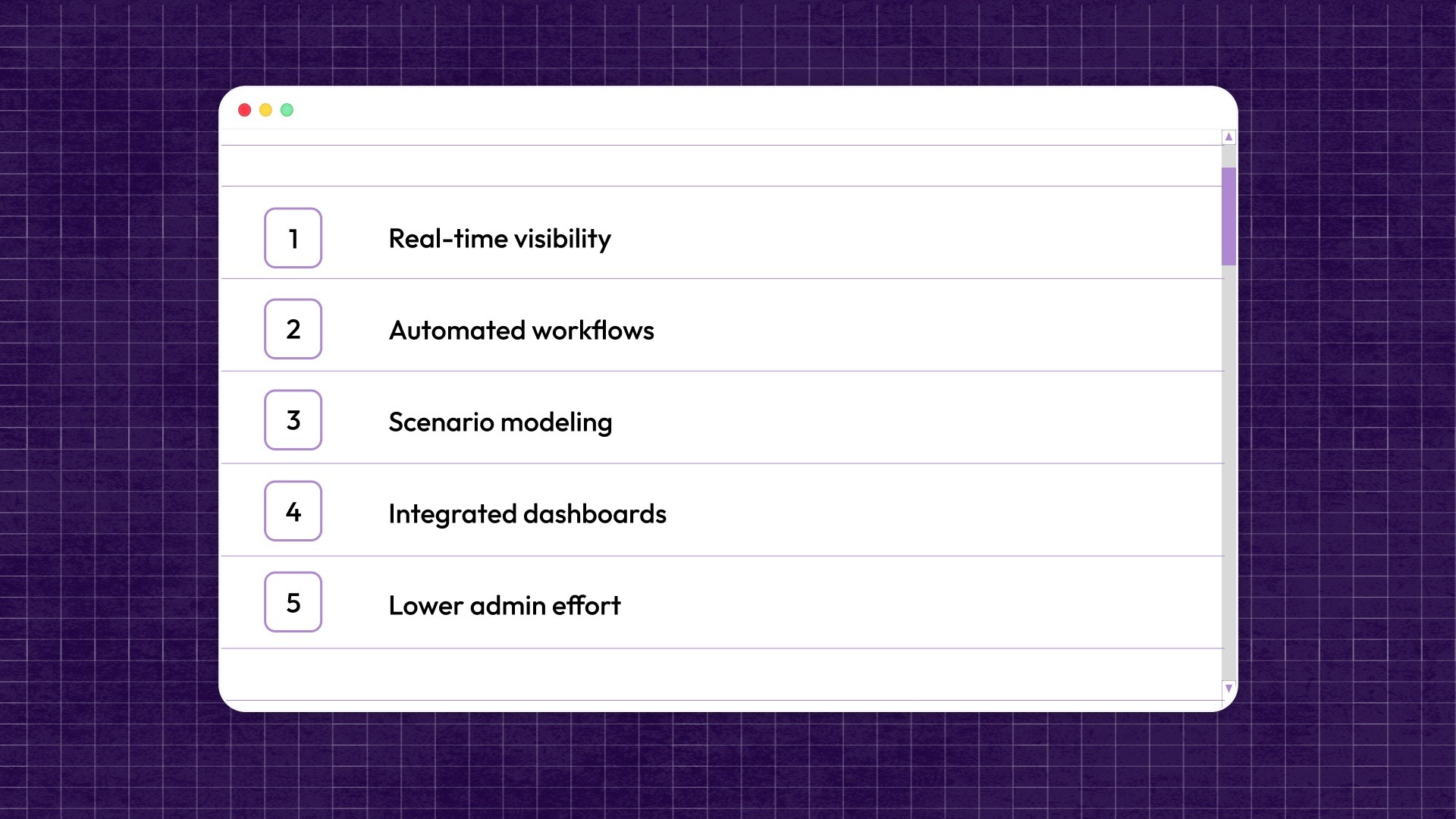
Technology acts as the backbone of performance management synergy by connecting data, automating workflows, and enabling real-time collaboration between HR and Finance teams in a structured way.
- Real-time visibility: Tracks goals and performance continuously instead of relying on periodic reviews. This keeps data current and improves decision quality across cycles.
- Automated workflows: Streamlines approvals for compensation cycles, promotions, and hiring requests. This reduces delays and improves coordination across teams operationally.
- Scenario modeling: Allows teams to test hiring and compensation scenarios before execution. This supports better planning and reduces financial uncertainty during decision-making.
- Integrated dashboards: Combines performance, compensation, and workforce metrics in real time. This helps leaders identify trends and act quickly based on live data.
- Lower admin effort: Reduces manual tracking and reporting tasks through automation. This allows HR teams to focus more on strategic work rather than repetitive administration.
When technology supports integration across workflows, organizations move closer to a fully connected performance ecosystem.
Also Read: Performance Management Calibration: How to Do It Right in 2026
Measuring the Success of Synergized Performance Strategies
Measuring synergy requires tracking how well performance, compensation, and workforce planning systems are aligned. Success is reflected in decision speed, consistency, and business impact rather than isolated HR metrics.
- Decision Speed: One of the clearest indicators is how quickly organizations can make compensation and hiring decisions. Faster cycles suggest better integration across systems.
- Budget Alignment: When performance management is aligned with Finance, budget overruns tend to decrease in practice. CFOs gain better control over workforce spend and compensation cycles.
- Consistency in Compensation Decisions: Consistency across teams indicates that performance data is being applied in a uniform and consistent way in compensation planning.
- Workforce Planning Accuracy: Accurate forecasting of headcount needs shows that performance trends are effectively integrated into planning models.
- Employee Engagement Signals: Improved clarity in performance expectations and compensation decisions often leads to higher engagement and retention.
Together, these indicators show how performance management synergy improves both operational efficiency and financial control across day-to-day business execution.
Challenges in Building a Synergistic Strategy
Building synergy is not a simple process. Most organizations face structural and cultural barriers that slow down integration efforts.
- Limited visibility: Finance teams often lack real-time insight into how performance-driven decisions impact budgets and future hiring plans.
- Tool overload: Organizations use multiple HR and Finance tools, but without integration, these systems add complexity instead of improving clarity.
- Change resistance: Teams familiar with traditional review cycles may struggle to adopt continuous and integrated performance workflows.
- Inconsistent approvals: Compensation and hiring approvals vary across teams, which slows decision-making and reduces accountability.
- Misaligned metrics: HR and Finance often track different metrics, making it harder to evaluate performance and workforce outcomes consistently.
Overcoming these challenges requires both process redesign and technology alignment. This is where integrated platforms play a critical role in enabling transformation.
How CandorIQ Enables Synergy in Performance Management
CandorIQ helps centralize compensation planning and headcount workflows into one structured system. It supports better alignment between performance outcomes, workforce planning, and compensation decisions.
Here’s how we can help you:
- Compensation & Payband Builder: Defines salary ranges, job levels, and location-based pay structures. This keeps performance-linked compensation decisions consistent across teams.
- Compensation Cycle: Runs merit and bonus reviews with structured workflows and real-time budget tracking. This aligns performance decisions with financial constraints.
- Employee Total Rewards: Shows employees their full compensation, including salary, equity, and benefits. This supports clearer performance conversations and transparency.
- Headcount Scenario Planning: Models hiring plans and shows budget impact instantly. This connects performance outcomes with future workforce decisions.
- Headcount Requests & Approvals: Standardizes hiring approvals with role and budget alignment. This reduces delays and keeps decisions consistent.
- Workforce Management: Tracks headcount, attrition, and workforce costs against plans. This gives shared visibility across HR and Finance.
- Candidate Offers: Creates structured offers using pay bands and approval logic. This keeps external hiring aligned with internal compensation.
- AI Agent: Analyzes compensation data and forecasts workforce needs quickly. This supports faster, data-backed decision-making.
By connecting these capabilities, CandorIQ helps HR and Finance teams operate within a unified system.
Contact us today to get started.
FAQs
1. How does cultural alignment contribute to synergy in performance management?
Cultural alignment ensures employees share common values, behaviors, and expectations, which reduces friction in goal execution. It strengthens collaboration, improves trust across teams, and creates consistency in performance standards, leading to smoother coordination and stronger overall performance outcomes.
2. What is the impact of leadership buy-in on synergistic performance strategies?
Leadership buy-in is critical as it sets the tone for adoption and accountability. When leaders actively support performance strategies, it improves alignment, drives consistent execution, encourages participation, and ensures resources and priorities are directed toward achieving shared organizational goals.
3. How can remote and hybrid teams achieve synergy in performance management?
Remote and hybrid teams achieve synergy through clear communication, well-defined goals, and digital collaboration tools. Regular check-ins, transparent performance metrics, and structured feedback loops help maintain alignment, ensuring teams stay coordinated despite physical distance or flexible work arrangements.
4. What are emerging trends in AI-driven synergistic performance strategies?
AI is enabling real-time performance tracking, predictive analytics, and personalized feedback systems. Emerging trends include automated goal alignment, sentiment analysis for engagement, and intelligent dashboards that help managers identify gaps and optimize team performance more proactively and efficiently.
5. What role do diversity and inclusion play in synergistic strategies?
Diversity and inclusion enhance synergy by bringing varied perspectives, improving problem-solving, and fostering innovation. Inclusive environments build trust and psychological safety, enabling better collaboration and ensuring performance strategies reflect the strengths and needs of a diverse workforce.
Ready to modernize your workforce and compensation strategy?
See how CandorIQ brings workforce planning and compensation together with AI.