

Headcount Request Approvals: How HR and Finance Structure Hiring in 2026
Most hiring delays start before recruiting begins. See how HR and Finance leaders structure headcount request approvals in scaling companies.

A role opens up. The hiring manager sends a Slack message. HR forwards it to Finance. Finance asks for a budget number. Someone digs up last quarter's spreadsheet. Two weeks pass. The candidate you wanted has already accepted another offer.
This is not a hiring problem. It is an approval problem.
Gartner found that 86% of HR leaders have not implemented strategic workforce planning, even though it sits at the top of their priority list. The intent is there. The process is not.
When headcount requests approval happens through email chains and manual follow-ups, every hire costs more time than it should. Decisions get made without full information. Finance and HR stay out of sync. And the business pays for it in delayed hires, budget surprises, and missed growth targets.
The good news is that fixing this does not require a complete overhaul. It requires a clear, repeatable process that the right people can follow every time.
This headcount request approvals guide covers exactly that: how to structure your approval workflow, how HR and Finance can stay aligned, and how to build a process that holds up as your company grows.
Key Takeaways
- Headcount request approvals ensure new roles are reviewed for business need, budget impact, and organizational fit before hiring begins.
- Tracking metrics such as approval cycle time, approval rate, and headcount variance helps teams evaluate the efficiency of the approval process.
- Structured requests with complete role and compensation details reduce delays and improve the quality of approvals.
- Centralized systems help organizations manage headcount requests and approvals more efficiently as hiring scales.
What Is a Headcount Request Approval?
A headcount request approval is the formal process by which a company reviews, evaluates, and authorizes the addition of a new role or the backfill of an existing one.
It goes beyond a manager asking HR to post a job. A structured approval process involves multiple stakeholders, including the hiring manager, HR, Finance, and sometimes executive leadership, each reviewing the request through their own lens before the role moves forward.
Here is what a headcount request typically addresses:
- The business justification for the role.
- The job title, level, and department.
- Budgeted salary range and total compensation impact.
- Planned start date and impact on team structure.
- Whether the role is net new or a backfill.
Without this structure, hiring decisions get made in silos. A well-run approval process changes that. It creates a shared record that everyone can reference, a clear path for each request, and accountability to keep hiring aligned with what the business can actually support.
Why Structured Headcount Approvals Matter for Growing Companies?
Growth creates pressure. When a company scales quickly, hiring demand picks up, and the informal systems that worked at 50 employees start to break down at 200. Requests fall through the cracks. Budget overruns happen before anyone flags them. And HR ends up playing catch-up instead of leading the conversation.
Structured headcount approvals solve for this by bringing discipline to the hiring process before it becomes reactive.
Here is why it matters for growing organizations specifically:
.png)
Budget Control Happens Before the Hire
Without a formal approval process, departments often request roles that were never part of the annual plan. By the time Finance reviews actual spend, the damage is done.
A structured process requires budget confirmation upfront. Every request is reviewed against the approved headcount plan, keeping spending predictable and giving CFOs real-time visibility into how hiring is tracking against the forecast.
Cross-Functional Accountability Gets Built In
When a request has to pass through HR, Finance, and a business leader before it is approved, each stakeholder takes ownership of their part of the decision. That prevents the scenario where one team makes a commitment that another team cannot support.
Hiring Velocity Improves Over Time
It may seem counterintuitive, but a formal process actually speeds things up. When everyone knows the steps, who owns them, and what is required at each stage, delays caused by missing information or unclear ownership go away. Recruiters can start sourcing earlier, and hiring managers get faster answers.
It Reduces Risk During Audits and Compliance Reviews
For companies with investors, board oversight, or compliance requirements, documented approval records are not optional. A structured workflow creates a paper trail that shows every role was reviewed and approved through a defined process.
How Does the Headcount Approval Workflow Function?
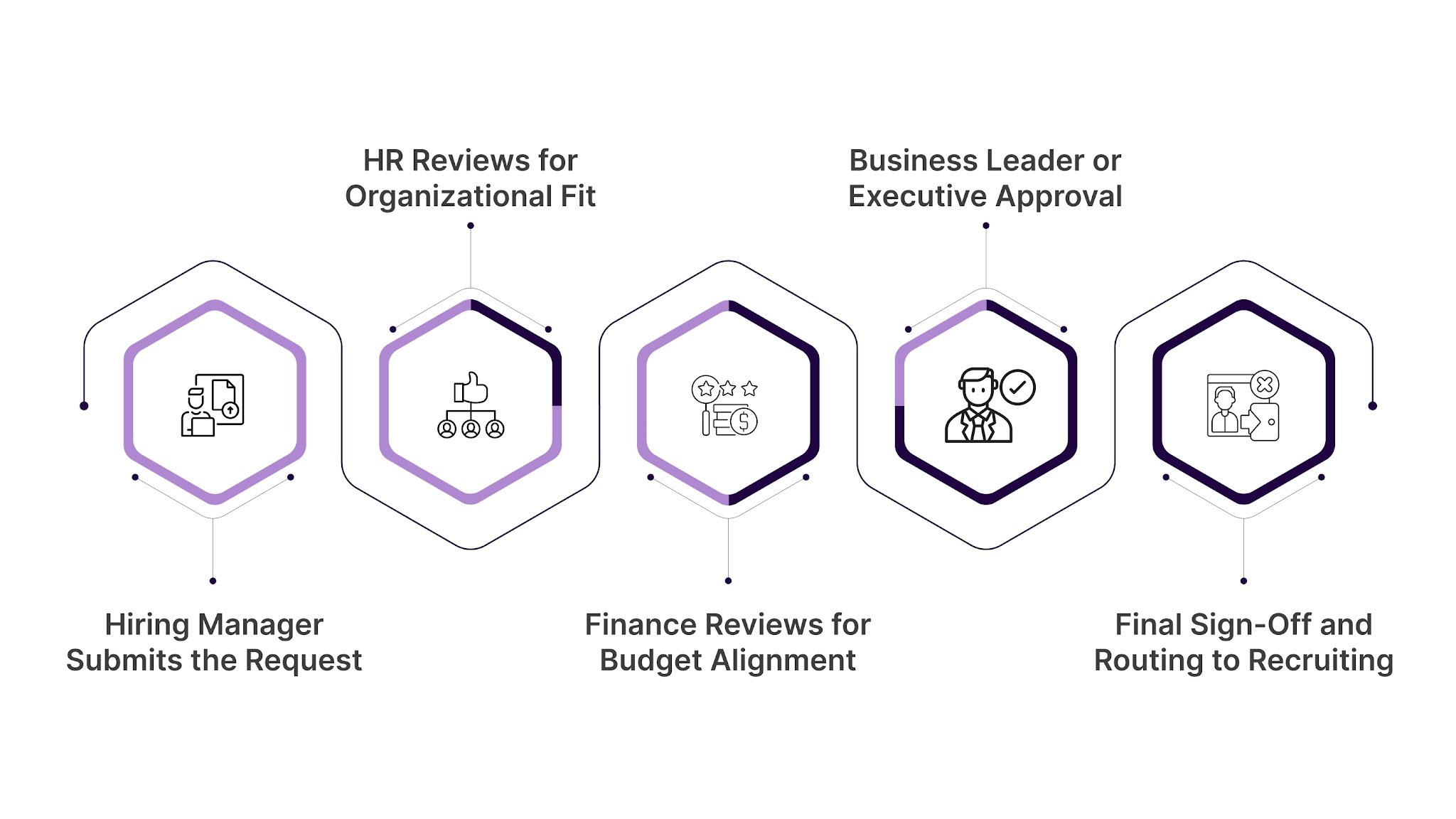
A headcount approval workflow is the step-by-step path a request takes from the moment a manager identifies a hiring need to the start of recruiting. The exact steps will vary by company size and structure, but most effective workflows follow a similar pattern.
Step 1: Hiring Manager Submits the Request
The process starts with the hiring manager. They fill out a structured request form that captures the role details, business justification, proposed start date, and budget parameters. A good request form leaves no room for vague answers. The more specific it is, the faster it moves through the approval process.
Step 2: HR Reviews for Organizational Fit
HR reviews the request to assess whether the role makes sense within the current team structure. They check for duplicate roles, alignment with the job architecture, appropriate leveling, and whether a backfill or internal promotion could address the need instead.
Step 3: Finance Reviews for Budget Alignment
Finance evaluates whether the requested role is within the approved headcount budget. They assess the total compensation impact, including salary, benefits, and any equity component, and confirm whether the role is already budgeted or requires a budget exception.
This step is where many processes stall, usually because the hiring manager did not include enough financial detail upfront. A standardized request form prevents this.
Step 4: Business Leader or Executive Approval
For roles above a certain level or cost threshold, the request escalates to a business leader or executive. This step ensures that high-impact or high-cost hires are reviewed by someone with full context on business priorities.
Step 5: Final Sign-Off and Routing to Recruiting
Once all approvals are collected, the request is marked as approved and routed to the recruiting team. The recruiter receives all the context they need, including the job details, compensation range, and approved start timeline, and can begin sourcing immediately.
Cross-Functional Collaboration Between HR and Finance
The most common breakdown in headcount approvals happens at the HR-Finance handoff. HR sees the role as a talent need. Finance sees it as a cost. When these two teams are not working from the same data, approvals slow down, and decisions get made without full information.
Effective collaboration between HR and Finance requires a few things to be true:
- Both teams work from the same headcount plan and budget data.
- Requests include enough financial detail for Finance to review without going back to the hiring manager.
- Approval status is visible to both teams in real time, so neither is waiting on the other for updates.
- Any budget exceptions are documented and approved before the role moves to recruiting.
When HR and Finance operate from a shared system, the handoff becomes a checkpoint rather than a bottleneck.
Looking to streamline how your teams collaborate on headcount decisions? CandorIQ brings HR, Finance, and leadership together on one platform, so approvals move faster, and everyone stays aligned. Book a demo to see how it works.
Key Information Every Headcount Request Should Include
A headcount request is only as strong as the information it contains. Incomplete requests are the single biggest reason for approval delays. When a Finance leader or executive has to chase down missing details, the whole process stalls.
Here is what every request should include, no matter the role:
The goal is to give every approver everything they need to make a decision without needing to follow up for more information. When that happens, approvals that used to take two weeks can be completed in two days.
Common Headcount Approval Use Cases Across Organizations
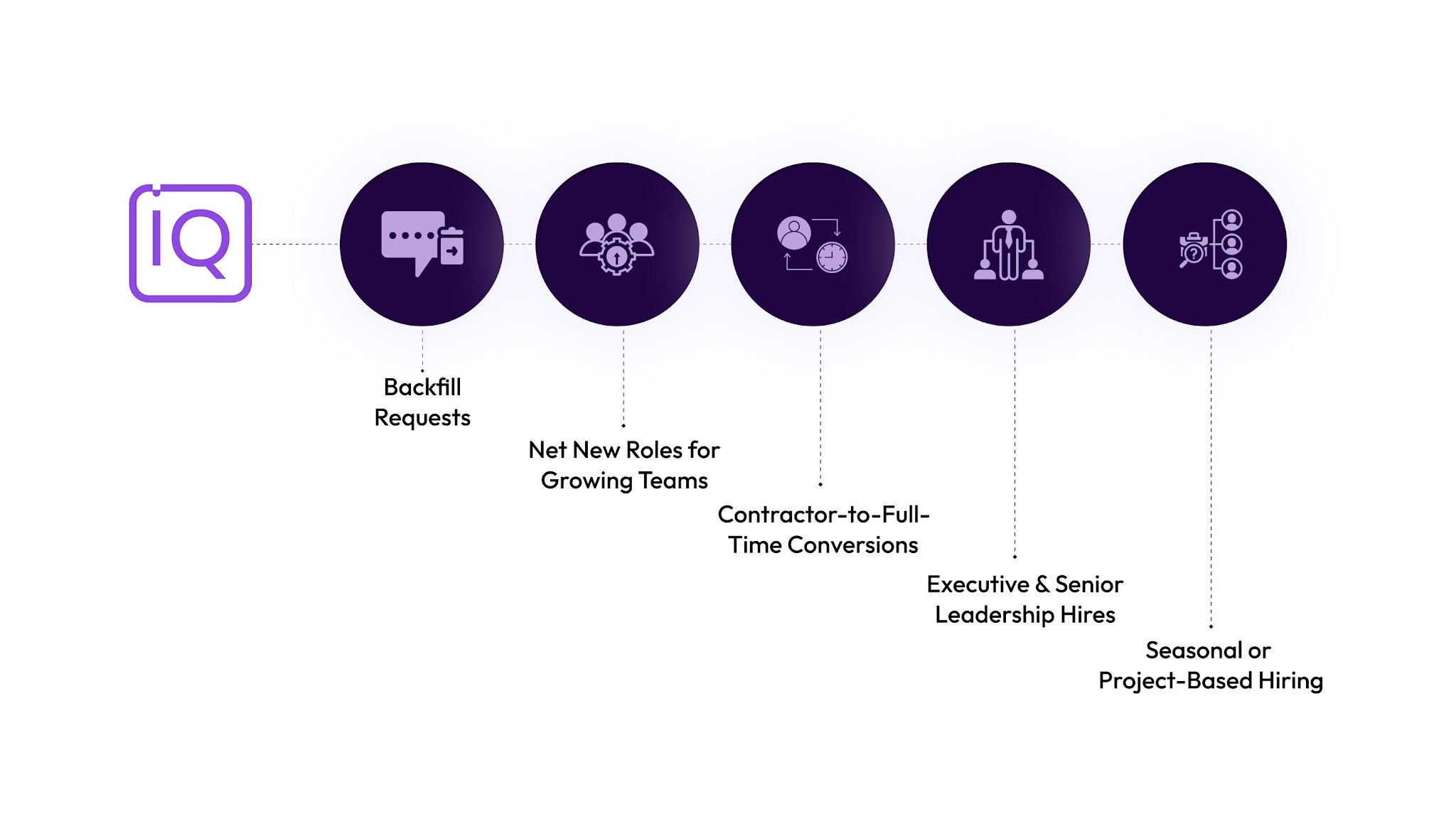
Not every headcount request looks the same. Here are the most common scenarios where a structured approval workflow makes a measurable difference.
Backfill Requests
When an employee leaves, replacing them is not always automatic. Some companies use attrition as an opportunity to restructure the role, redistribute responsibilities, or let the position sit unfilled for a period. A formal backfill request ensures that a decision is made intentionally and with Finance's input, rather than defaulting to a like-for-like replacement every time.
Net New Roles for Growing Teams
A department head wants to add a new function or expand an existing team. This is where unplanned headcount spend most often happens. Structured approvals require the manager to make a business case, which leads to better decisions and fewer roles that do not actually move the needle.
Contractor-to-Full-Time Conversions
A contractor who has been delivering strong work gets flagged for conversion to a full-time role. This looks simple on the surface, but it involves budget impact, benefits costs, equity eligibility, and sometimes a renegotiated compensation package. Running it through the approval workflow keeps Finance and HR aligned before an offer is extended.
Executive and Senior Leadership Hires
High-cost, high-impact hires need additional scrutiny. A VP or C-suite addition can affect team structure, budget, and company direction. These requests benefit from an additional escalation step to ensure alignment with leadership before any recruiting commitments are made.
Seasonal or Project-Based Hiring
Some teams need to ramp up for a specific quarter or initiative. Approval workflows help define the duration, budget envelope, and expected headcount at each phase, so there are no surprises when the project ends.
What Metrics Should Teams Track in Headcount Approval Reporting and Analytics?
A structured headcount approval process generates valuable operational data. When tracked correctly, this data helps teams understand how efficiently hiring decisions move through the organization.
1. Approval Cycle Time
Approval cycle time measures how long it takes for a headcount request to move from submission to final decision. This metric helps identify whether the approval workflow is slowing down hiring.
Formula: Approval Cycle Time = Date of Final Approval – Date of Request Submission
You can calculate this for individual requests or average it across multiple approvals.
Example
Average approval cycle time:
(5 + 7 + 3) ÷ 3 = 5 days
What this metric reveals
- Approval bottlenecks in HR, Finance, or leadership reviews.
- Departments where hiring approvals move slowly.
- Whether the approval workflow is delaying recruitment.
2. Request Approval Rate
Request approval rate measures the percentage of headcount requests that are approved without revisions or rejection. This metric evaluates the quality of submitted requests and alignment with hiring plans.
Formula: Request Approval Rate = (Number of Approved Requests ÷ Total Requests Submitted) × 100
Example
Approval Rate = (32 ÷ 40) × 100 = 80%
What this metric reveals
- Whether hiring managers submit well-prepared requests.
- If the request forms capture enough information.
- Whether departments are requesting roles outside approved plans.
3. Headcount vs. Plan Variance
Headcount vs. plan variance compares the number of approved roles with the workforce plan established earlier in the year. This metric helps leadership determine whether hiring activity remains aligned with strategic hiring goals.
Formula: Headcount Variance = Approved Headcount – Planned Headcount
Example
What this metric reveals
- Departments exceeding hiring plans.
- Teams are hiring more slowly than expected.
- Budget pressure caused by unplanned hiring.
This metric is particularly important for CFOs and FP&A teams managing workforce costs.
4. Time to Recruit After Approval
Time to recruit after approval measures how quickly recruiting teams begin sourcing candidates once a role has been approved. It highlights delays between the approval process and the execution of recruiting.
Formula: Time to Recruit = Date Job Posting Opens – Approval Date
Example
What this metric reveals
- Slow handoffs between HR, recruiting, and hiring managers.
- Delays in activating roles in the ATS.
- Resource constraints in recruiting teams.
5. Approval Volume by Department
Approval volume measures the number of headcount requests each department submits during a given period. This metric helps organizations understand hiring demand across teams.
How to track it: Create a simple report that groups requests by department and counts submissions within a specific timeframe.
Example
What this metric reveals
- Which departments drive the most hiring demand
- Where approval workflows may require additional oversight
- How hiring demand changes over time
Tracking these metrics does not require complex analytics tools. What it requires is a consistent approval workflow where every request is logged and tracked in a centralized system.
If your team is still managing headcount approvals through emails and spreadsheets, you're leaving speed and visibility on the table. CandorIQ's structured approval workflows connect HR, Finance, and leadership in one place, so requests move faster, and nothing falls through the cracks. Request a demo.
Best Practices for Building a Scalable Headcount Approval Process
Building a process that works for 100 employees should also work for 500. Here is what that looks like in practice.
Standardize the Request Form
Every request should start from the same template. This prevents incomplete submissions and makes it easier to review requests quickly. Build the form to require the information that Finance and HR need, not just what the hiring manager wants to share.
Define Approval Thresholds by Role Level and Cost
Not every hire needs the same level of scrutiny. A junior individual contributor role at a standard salary does not need an executive sign-off. A VP hire at a higher compensation level does. Define clear thresholds for when to escalate and stick to them.
Set SLAs for Each Approval Stage
Each approver should have a defined window to review and respond to a request. Without SLAs, one slow approver can hold up the entire process for weeks. Two to three business days per stage is a reasonable starting point for most organizations.
Keep the Headcount Plan Visible to All Stakeholders
Hiring managers should be able to see whether a role they want to request is already in the approved plan before they submit. When this visibility is in place, the number of out-of-plan requests drops significantly, and Finance spends less time reviewing requests that were never going to be approved.
Connect Approvals to Your ATS and HRIS
Once a role is approved, it should flow automatically into your recruiting and HR systems. Manual handoffs create errors and delays. When an approval triggers an ATS requisition and an HRIS record update automatically, the recruiter gets started faster, and the data stays clean.
Review the Process Quarterly
Your approval workflow should evolve as the company grows. What works at 150 employees may create bottlenecks at 400. Set a regular cadence to review approval cycle times, request volumes, and stakeholder feedback, and adjust the process accordingly.
How CandorIQ Streamlines Headcount Requests and Approvals
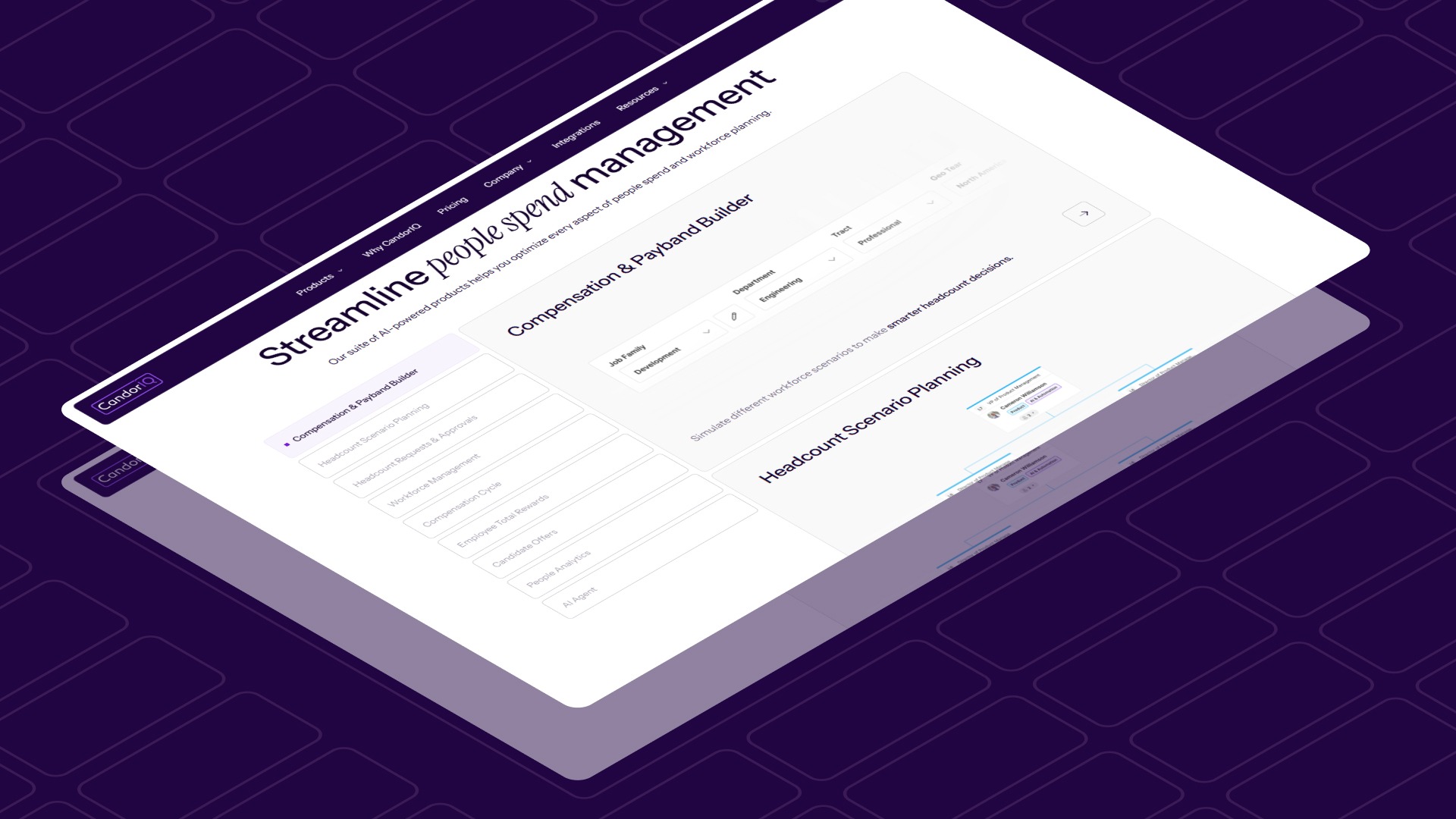
CandorIQ is a unified compensation and headcount planning platform built for HR and Finance teams scaling and needing more than a spreadsheet to manage it. The tool brings the entire headcount request and approval process into one structured, collaborative system.
Let’s get into the details of what it offers.
Standardized Requests with Embedded Context
With CandorIQ, hiring managers submit requests through a structured workflow that captures job details, compensation data, rationale, and budget context in one place. Every request arrives at the next stage complete, so reviewers can act without having to chase down missing information.
Dynamic Approval Routing Based on Role and Location
Approval paths in CandorIQ are configurable. You can route requests based on department, location, compensation level, or role type, so the right stakeholders are always involved and nothing goes to someone who does not need to see it.
Real-Time Budget Visibility for Finance
Finance teams can see live headcount data, including how approved and pending requests compare to the plan, without waiting for HR to send a report. When a request would push a team over budget, that flag surfaces immediately, before an approval is granted.
ATS and HRIS Sync
Once a role is approved in CandorIQ, it syncs directly to your applicant tracking system and HRIS. No manual transfers. No data entry errors. The recruiter gets the context they need and can start sourcing the same day.
Headcount Scenario Planning Built In
CandorIQ's scenario planning tools let HR and Finance model different hiring paths and see the financial impact before committing to a plan. This means decisions are based on data rather than estimates, and leadership can compare options side by side before approving a headcount change.
For People Ops teams, CFOs, and FP&A leaders who need a reliable, structured way to manage hiring decisions at scale, CandorIQ keeps every stakeholder aligned on a single source of truth.
Conclusion
Hiring will always move fast. The headcount request approval process is what keeps that speed from turning into chaos.
When the workflow is clear, requests arrive complete, approvers know their role, and Finance is never caught off guard. The business moves faster because decisions are made with the right information, not despite the absence of it.
That is what a well-run process actually buys you: less firefighting, fewer budget surprises, and a hiring function that earns its seat at the strategy table.
CandorIQ is built to make exactly that happen. From structured request forms to real-time budget visibility and ATS sync, it gives HR and Finance a single system to run approvals without back-and-forth.
See how CandorIQ works and how quickly your team could move with the right process in place.

FAQs
1. Who usually owns the headcount approval process in an organization?
Headcount approvals are typically owned by HR and Finance together, with hiring managers initiating requests.
2. How long should a headcount approval process typically take?
Most companies aim to complete headcount approvals within three to seven business days, depending on complexity.
3. What happens if a headcount request is rejected?
Rejected headcount requests are usually revised with additional justification or resubmitted after aligning with budget priorities.
4. Can headcount approvals be automated in growing companies?
Yes, many organizations automate headcount approvals using workforce planning platforms to reduce manual coordination and delays.
5. How do companies track the status of pending headcount requests?
Companies track request status through centralized approval systems that show pending, approved, rejected, or on-hold roles.
Ready to modernize your workforce and compensation strategy?
See how CandorIQ brings workforce planning and compensation together with AI.