

Why an Organization Needs a Clear Compensation Philosophy
Discover why defining a compensation philosophy is key for your organization's success. Attract talent, ensure fairness, and align pay practices with goals. Click to learn more.

Every employee wants to feel valued, not just through recognition but in how their pay reflects their contribution. Yet, many organizations still treat compensation as a numbers game, overlooking its deeper impact on motivation, trust, and retention.
An unclear compensation philosophy often leads to confusion, inequity, and quiet frustration. According to reports, 42% of employees who quit feel their company could have done more to keep them. Pay is one of the main reasons they leave. Meanwhile, 86% of HR leaders now view pay equity as a top priority.
A well-defined compensation philosophy helps close this gap by turning pay into a transparent and fair process that reflects company values. It enables HR and finance teams to make consistent, unbiased decisions and strengthens employee confidence in how rewards are determined.
In this guide, we’ll explore why every organization needs a clear compensation philosophy and how it supports trust, retention, and long-term business alignment.
Key Takeaways
- A well-documented compensation philosophy ensures every pay decision is fair and aligned, no matter the role, team, or location.
- When compensation decisions reflect strategy and budget priorities, every raise, bonus, and offer drives organizational growth.
- Clear communication about pay and promotion criteria keeps employees motivated, confident, and committed to the company.
- Regular reviews and structured pay frameworks prevent unfairness and reduce legal or regulatory risks.

What a Compensation Philosophy Is (and Is Not)
A compensation philosophy is the foundation of how an organization decides to reward its people. It defines the beliefs and principles behind pay, what the company values, how it views fairness, and how it positions itself in the market.
Think of it as the organization’s north star for compensation decisions. It answers questions like:
- Do we want to lead, match, or follow the market?
- How do we balance pay equity with performance-based rewards?
- What role do transparency and career growth play in how we pay?
Many HR and Finance teams confuse a compensation philosophy with a strategy or policy, but they serve different purposes:
- Philosophy outlines the why. It reflects beliefs such as “we reward based on impact, not tenure.”
- Strategy defines the how. It turns those beliefs into measurable objectives, like setting pay ranges or market positioning.
- Policy explains the what and when. It includes the procedures and approval workflows that keep pay practices consistent.
Having clarity between these three ensures that pay decisions are structured, fair, and defensible. For organizations scaling quickly or managing distributed teams, a documented philosophy helps maintain alignment across multiple managers, geographies, and departments.
Why Compensation Decisions Get Messy
Even with experienced HR and Finance teams, pay decisions can become inconsistent when there is no clear philosophy. A few small exceptions, like offering a slightly higher salary to close a candidate, can escalate into unpredictable patterns across teams and regions.
Common issues that arise include:
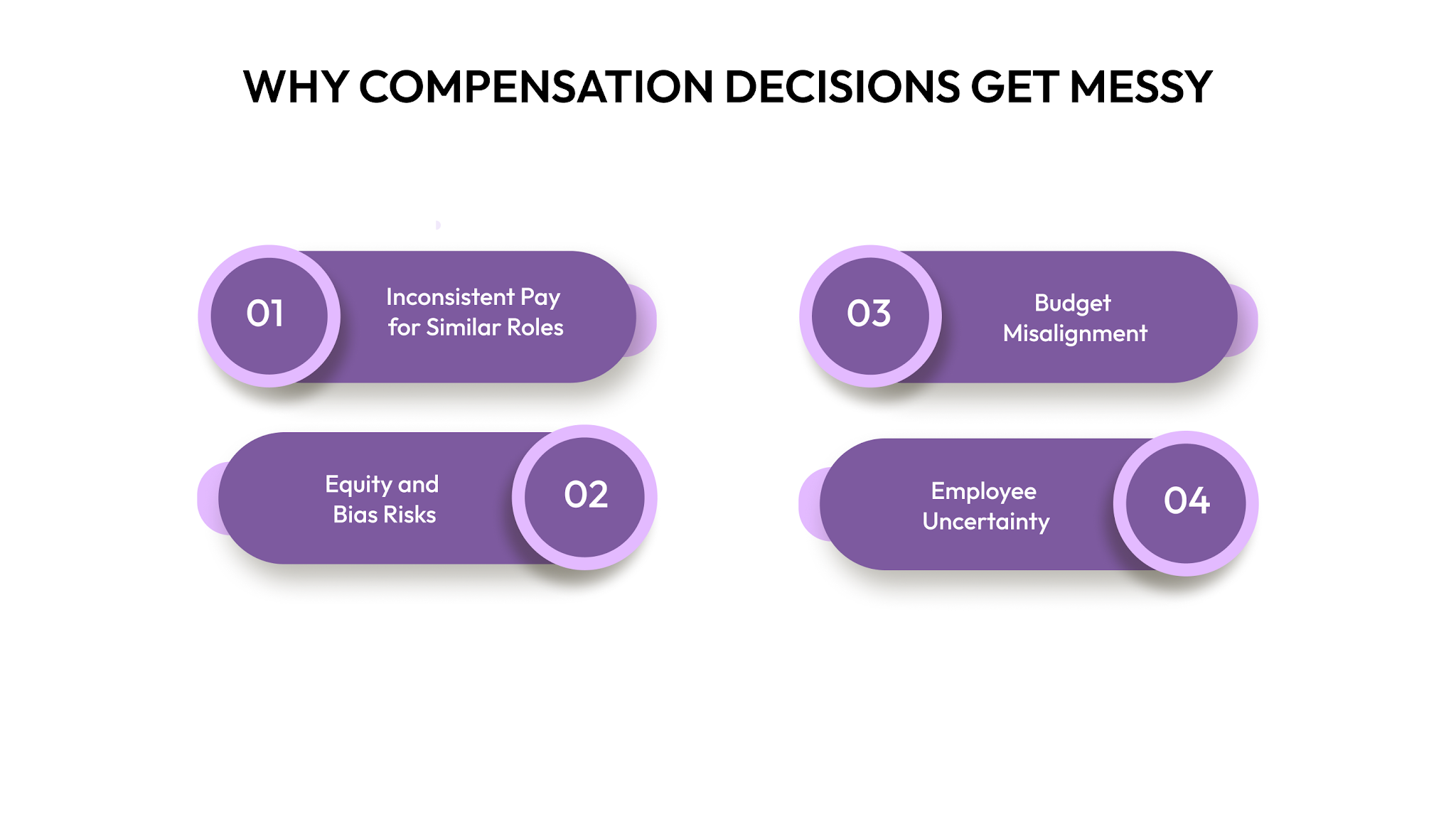
- Inconsistent pay for similar roles: Two employees in identical roles may receive very different offers depending on their manager or location.
- Equity and bias risks: Without structured principles, decisions can be influenced by unconscious bias, undermining fairness and trust.
- Budget misalignment: Ad hoc raises or unplanned offers make it difficult for Finance to forecast costs and maintain headcount budgets.
- Employee uncertainty: When employees don’t understand how compensation decisions are made, even fair pay can feel arbitrary, affecting engagement and retention.
A well-documented compensation philosophy acts as an anchor. It ensures that all pay decisions, from new hire offers to promotions, are consistent, transparent, and aligned with the company’s values and budget constraints.
With clarity on what a compensation philosophy entails, let’s explore the reasons organizations must establish one.
Why is it Important for an Organization to Define its Compensation Philosophy
Fast-growing organizations face challenges in managing pay. Lean HR teams, budget pressures, and geographically spread managers can lead to inconsistent decisions. A compensation philosophy provides a clear framework that ensures fairness and aligns pay with business priorities.
Here’s why organizations, especially those with distributed teams and tight budget governance, need a well-defined compensation philosophy:
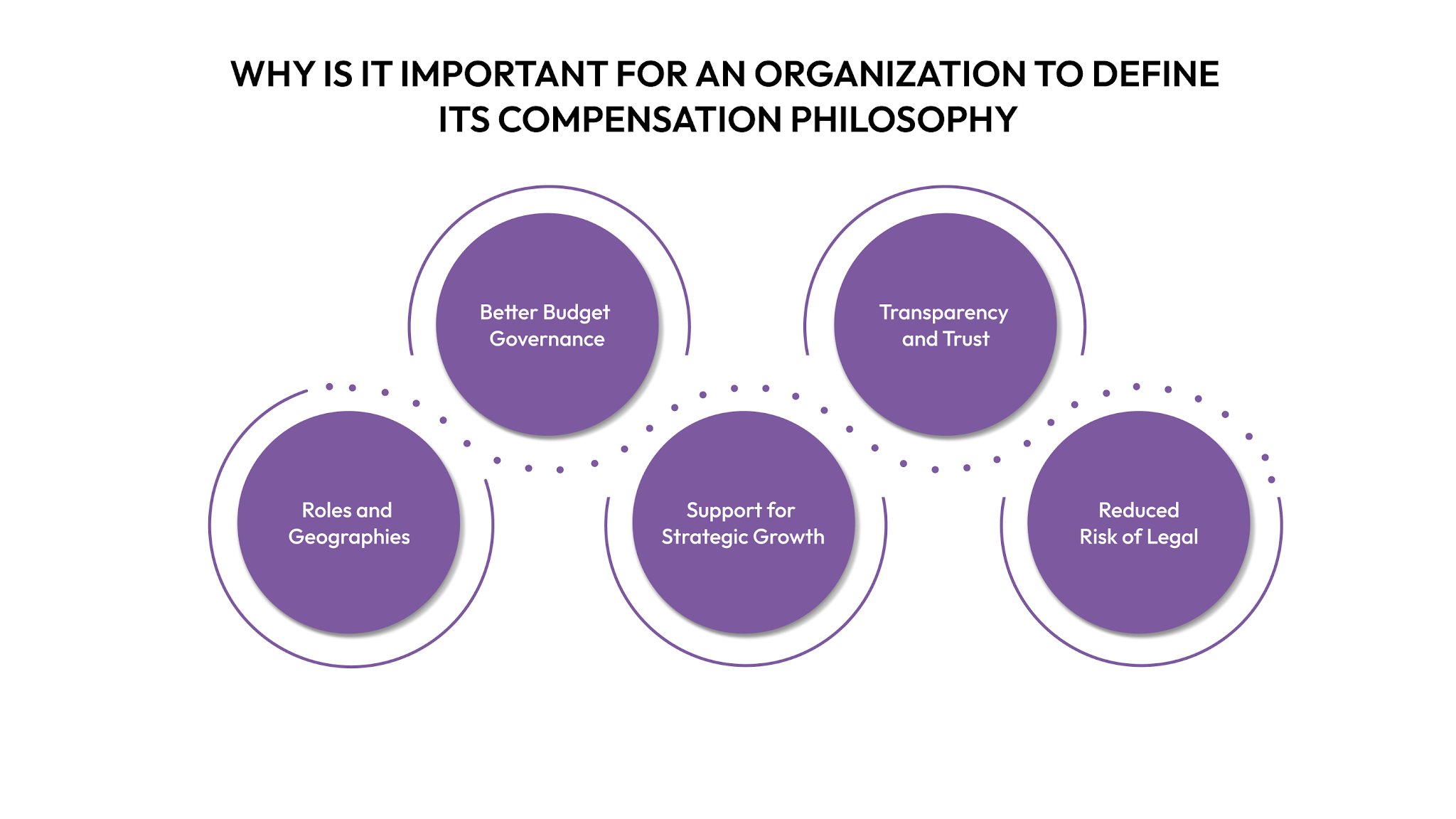
1. Consistency Across Roles and Geographies
For companies managing employees across different locations or remote-first teams, compensation inconsistencies are a common challenge. Two employees performing similar work may receive very different pay if managers rely on personal judgment or local market norms alone.
A compensation philosophy sets clear principles for pay bands, market positioning, and location-based adjustments. Platforms like CandorIQ help enforce these standards by centralizing pay data, visualizing pay distribution, and guiding managers with structured workflows. This ensures decisions are fair, equitable, and aligned company-wide, reducing disputes and confusion.
2. Better Budget Governance
Rapidly scaling organizations often struggle to forecast compensation costs accurately. When pay decisions are made ad hoc, Finance may face overspending or unplanned budget pressure, while HR struggles to justify raises and new hire offers.
A documented philosophy ties pay decisions to defined principles, giving Finance visibility into headcount and compensation costs. HR teams can plan offers, promotions, and bonus cycles while staying within budget limits. This alignment reduces financial risk and supports scalable growth.
3. Support for Strategic Growth
Organizations growing at 2–3× headcount per year need pay frameworks that scale. A compensation philosophy helps link every pay decision to broader business objectives, whether attracting top talent in competitive markets or controlling costs in budget-sensitive areas.
By defining guiding principles, organizations can prioritize where to lead the market, where to match it, and how to structure pay mixes across roles and locations. This ensures that compensation supports strategic objectives rather than creating reactive challenges.
4. Transparency and Trust
Employees in distributed or rapidly growing teams often struggle to understand how pay decisions are made. Lack of transparency can lead to frustration, disengagement, and turnover.
A clear compensation philosophy explains the principles behind salary, bonuses, and promotions. Employees understand what drives their pay and how they can progress in their careers. This clarity builds trust, reduces repetitive HR queries, and strengthens employee retention.
5. Reduced Risk of Legal or Compliance Issues
Pay inequities can expose organizations to legal or regulatory scrutiny, particularly in markets with strict pay transparency and anti-discrimination laws.
A compensation philosophy provides documented guidance for all pay decisions, creating an auditable trail. Standardizing pay practices reduces the risk of inequity and supports compliance, ensuring fairness while protecting the company from potential legal challenges.
Now that we know why a compensation philosophy is essential, let’s explore a step-by-step approach to building one that works for your organization.
How to Build a Compensation Philosophy — Step-by-Step
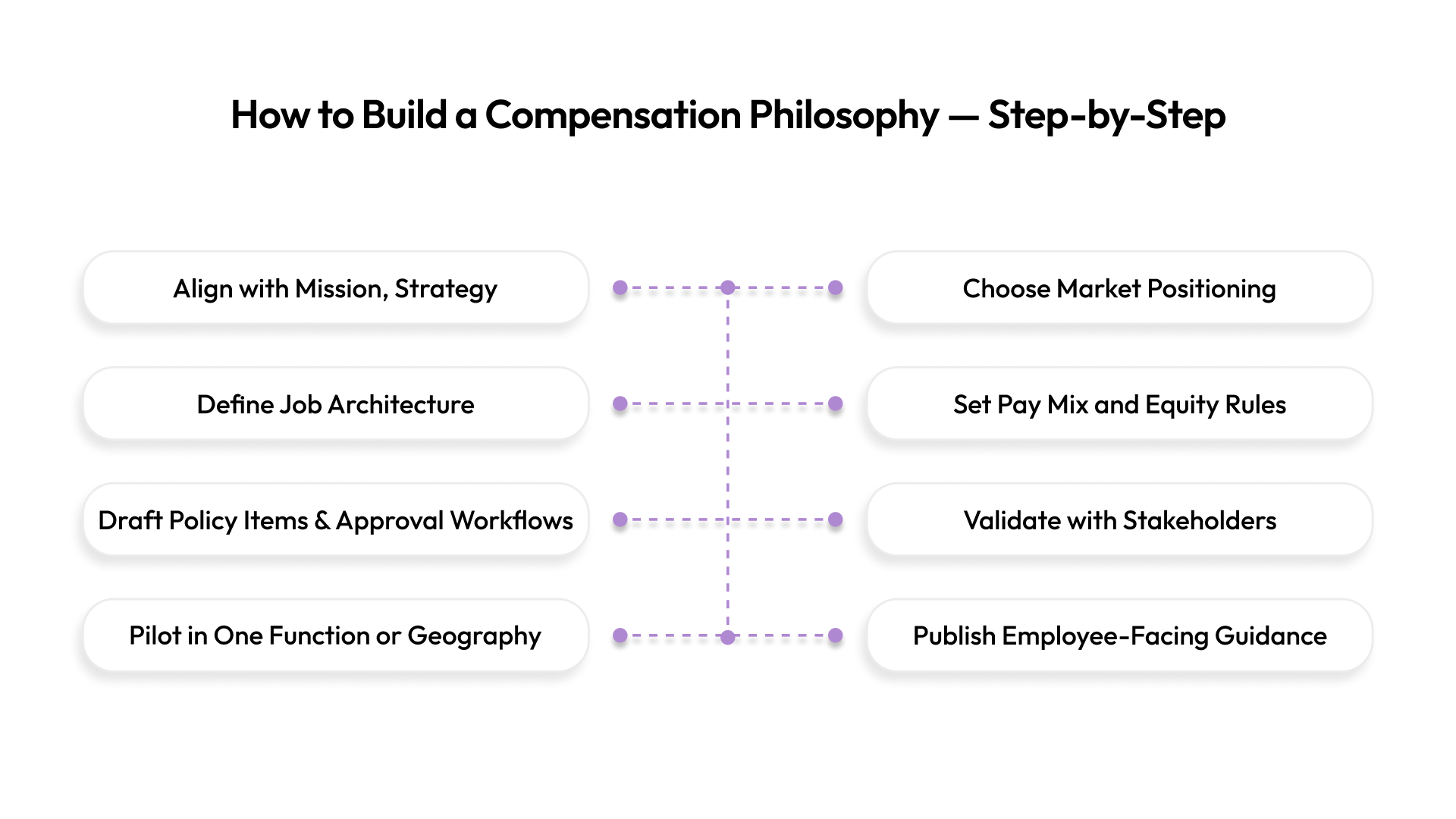
A compensation philosophy provides a structured framework for making pay decisions that are consistent, fair, and aligned with organizational goals. Below is a detailed step-by-step approach.
Step 1: Align with Mission, Strategy, and Financial Constraints
Start by understanding how your compensation philosophy should reflect the organization’s purpose, objectives, and financial realities. This step ensures that every pay decision reinforces the company’s growth trajectory and operational goals.
- Identify critical roles: Pinpoint positions that directly influence business outcomes, such as revenue-generating or product-critical roles.
- Link compensation to business strategy: Decide which skills and roles need market-leading pay to drive performance and retention.
- Set budget parameters: Collaborate with Finance to define a sustainable total payroll, factoring in base salary, variable incentives, and equity.
- Document guiding principles: Clearly outline what your company values in compensation decisions, such as rewarding performance over tenure or ensuring pay equity across teams.
Step 2: Choose Market Positioning and Benchmarking Approach
Deciding how your company positions pay in the market helps attract and retain talent while keeping budgets under control. Market positioning ensures that critical roles are competitive and justifies pay ranges to stakeholders.
- Select benchmark peers: Identify relevant companies in your industry, size, and region to provide a reliable comparison.
- Define pay strategy per role: Determine whether to lead, match, or lag market rates depending on the importance of the role and scarcity of talent.
- Adjust for geography and remote teams: Incorporate cost-of-living differences and location-based pay adjustments for distributed teams to maintain fairness.
- Analyze role criticality and risk: Prioritize higher pay for roles that are harder to hire or retain, such as specialized engineers or senior sales professionals.
Step 3: Define Job Architecture and Leveling Basics
A structured job architecture organizes roles into families and levels, providing clarity on responsibilities, expectations, and pay ranges. This step ensures internal equity and helps employees understand career progression.
- Organize roles into families: Group similar roles, such as Engineering, Marketing, and Product, to establish consistent pay structures.
- Define levels and expectations: Specify responsibilities, skills, decision-making authority, and expected impact for each level.
- Map pay ranges to levels: Align internal ranges with market benchmarks and internal equity considerations.
- Support career progression: Make promotion paths clear to employees, so they understand how their contributions impact compensation and growth opportunities.
Step 4: Set Pay Mix and Equity Rules
The pay mix defines how compensation is distributed between base salary, variable incentives, bonuses, and equity. Equity rules ensure fairness and consistency across teams, geographies, and levels.
- Determine base vs. variable pay: Customize ratios based on role and business priorities; for example, sales roles may emphasize commissions, while engineering roles focus on base pay with equity grants.
- Define equity eligibility and allocation: Establish who qualifies for stock options or performance shares and how grants are distributed across levels.
- Ensure internal and external fairness: Adjust for geography, performance, and role criticality to prevent disparities.
- Align pay mix with organizational objectives: Use incentives to promote desired behaviors and outcomes, such as retention, high performance, or innovation.
Step 5: Draft Policy Items and Approval Workflows
Operational policies convert the compensation philosophy into actionable guidelines that managers and HR teams can consistently apply. Approval workflows reduce errors, bias, and misalignment.
- Document policies: Outline procedures for promotions, raises, bonuses, and handling exceptions.
- Define approval hierarchies: Specify who approves offers and salary adjustments at each level.
- Create escalation paths: Ensure exceptions or disputes follow a clear, documented process.
- Integrate with HR systems: Use HRIS, ATS, and Finance tools to track approvals, maintain records, and enforce compliance.
Step 6: Validate with Stakeholders
Validation ensures the philosophy is practical, sustainable, and compliant. Stakeholder input increases buy-in and identifies potential operational or financial gaps.
- Engage Finance: Confirm pay bands, budgets, and variable incentives are feasible.
- Involve legal and compliance teams: Ensure policies meet labor laws, tax requirements, and regional regulations.
- Collect HRBP and manager feedback: Verify that workflows and policies are easy to understand and implement.
- Refine based on input: Make necessary adjustments to pay ranges, approval workflows, or equity rules before rollout.
Step 7: Pilot in One Function or Geography
Testing the philosophy in a smaller environment allows you to identify issues before scaling organization-wide. Pilots provide real-world insights into workflow effectiveness and employee perception.
- Select a pilot group: Choose a representative department, team, or geographic region.
- Apply pay ranges and approval workflows: Test the operational side of the philosophy.
- Gather feedback: Collect input from managers and employees on clarity, fairness, and process usability.
- Refine before full rollout: Use pilot insights to adjust policies, workflows, and communication materials.
Step 8: Rollout, Train Managers, and Publish Employee-Facing Guidance
A successful rollout requires communication, training, and transparency to ensure consistent application across the organization.
- Train managers: Explain the philosophy, workflows, and pay decision rationale to ensure consistency.
- Communicate to employees: Provide clear guides on how pay decisions are made, promotion paths, and total compensation.
- Monitor and review: Track pay equity, budget adherence, and employee satisfaction to evaluate effectiveness.
- Update regularly: Adjust policies and ranges based on market trends, business changes, and employee feedback.
With a structured compensation philosophy established, organizations can focus on applying it consistently while maintaining compliance and pay equity.
How Can Organizations Ensure Pay Equity and Stay Compliant?
Ensuring fair and compliant pay practices is critical for protecting employees and the organization. For companies managing distributed teams, inconsistencies across geographies can lead to dissatisfaction and legal risks.
- Establish Clear Pay Structures: Define pay bands, levels, and salary ranges for each role. Structured frameworks reduce ambiguity and ensure employees in similar positions are compensated fairly.
- Monitor Pay Equity Regularly: Use data analytics to identify disparities by gender, experience, or geography. Periodic reviews allow organizations to take corrective action before inequities escalate.
- Align with Legal Requirements: Follow labor laws, minimum wage standards, overtime rules, and pay reporting regulations in every region where employees work. Document all pay decisions to ensure transparency and compliance.
- Promote Transparency: Communicate how pay is determined, including performance criteria, bonus structures, and equity eligibility. When employees understand the rationale, trust and engagement increase.
- Integrate into Daily Operations: Automate calculations, standardize approvals, and conduct regular audits. Embedding equity and compliance into workflows ensures consistent pay practices across distributed teams and supports strategic growth.
Even with a clear compensation philosophy and compliance measures in place, organizations can encounter obstacles that affect pay consistency and employee trust. Identifying these common pitfalls helps prevent costly mistakes.
Common Pitfalls and How to Avoid Them
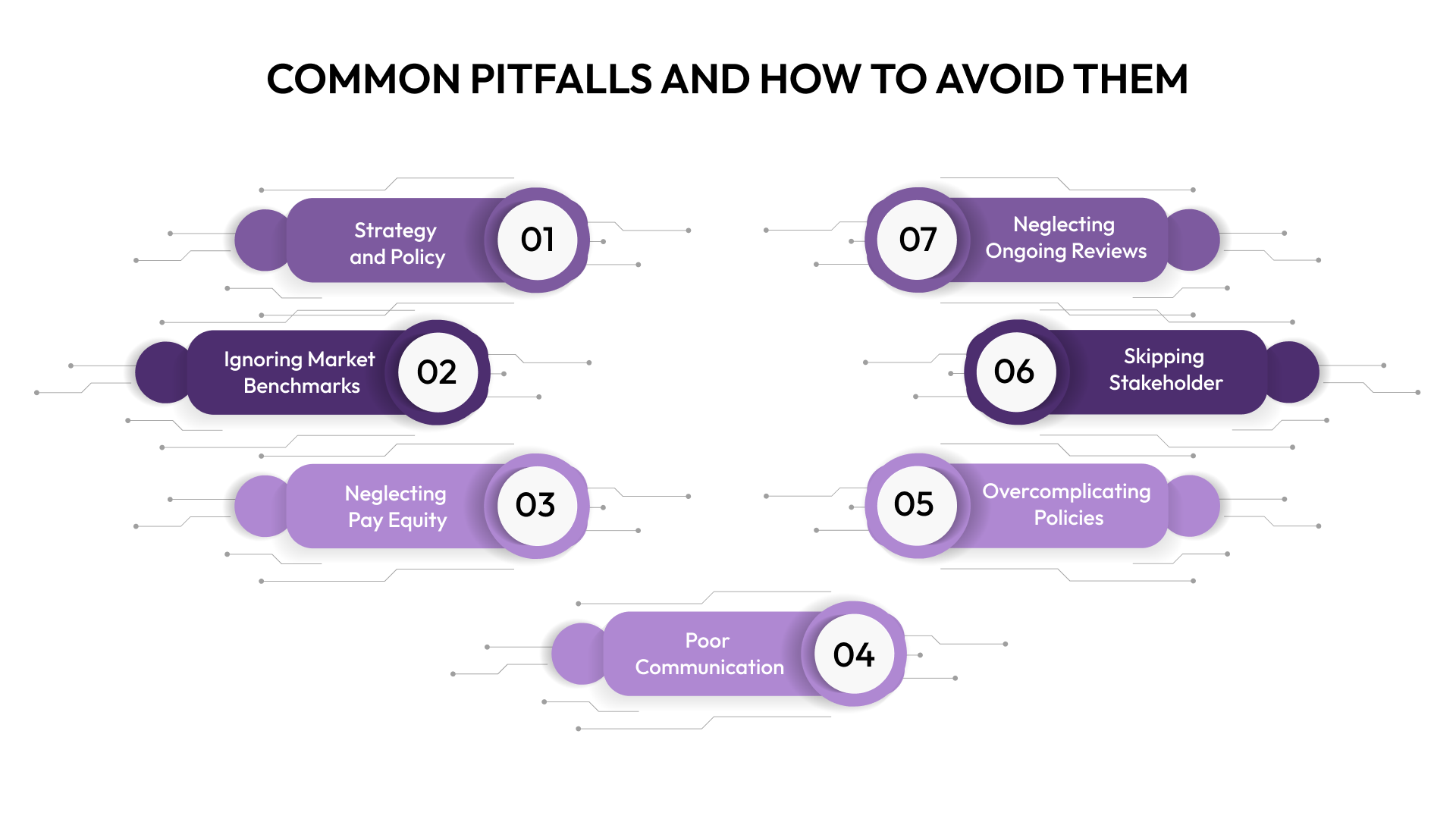
Even with a well-defined compensation philosophy, organizations can stumble if certain challenges are overlooked. Recognizing these common pitfalls helps HR and Finance teams prevent mistakes that impact fairness, budget, and employee trust.
1. Lack of Clarity Between Philosophy, Strategy, and Policy
Confusing these elements leads to inconsistent pay decisions. Ensure each is documented, communicated, and understood by managers and HR teams.
2. Ignoring Market Benchmarks
Without regular benchmarking, salaries can drift below or above market rates, affecting talent acquisition and retention. Regularly compare pay ranges with industry peers.
3. Neglecting Pay Equity
Failing to monitor equity across roles, geographies, or demographics can result in disparities. Conduct periodic equity reviews and adjust pay where necessary.
4. Poor Communication:
Employees and managers may misinterpret pay decisions if the rationale isn’t clear. Transparently share the philosophy, pay bands, and promotion criteria.
5. Overcomplicating Policies and Workflows
Complex approval processes or unclear policies slow down decision-making and increase errors. Streamline workflows and provide clear guidance to managers.
6. Skipping Stakeholder Validation
Rolling out pay changes without consulting Finance, HRBPs, or legal teams can lead to budget misalignment or compliance issues. Include relevant stakeholders early.
7. Neglecting Ongoing Reviews
Compensation should evolve with market trends, business goals, and workforce changes. Schedule regular reviews to ensure your philosophy remains relevant and effective.
By identifying these challenges early and addressing them proactively, organizations can ensure compensation remains fair, compliant, and aligned with business goals. Tools like CandorIQ make it easier to put this philosophy into practice, providing structure, visibility, and automation across all pay decisions.
How CandorIQ Supports Fair and Strategic Compensation
Building a compensation philosophy is one thing, but executing it consistently across distributed teams is another. CandorIQ provides HR and Finance leaders with a single platform to manage pay, equity, and headcount with clarity and control.
With CandorIQ, organizations can align compensation decisions with business priorities, reduce errors, and ensure fairness at every step. The platform consolidates payband management, compensation cycles, headcount planning, and offer approvals, eliminating the reliance on spreadsheets and disconnected workflows.
- Streamlined Payband and Compensation Management: Define pay bands, adjust for location differences, and visualize pay distribution in real time to maintain internal and external equity.
- Automated Compensation Cycles: Track merit increases, bonuses, and approvals with built-in collaboration tools, reducing manual effort and speeding up cycle completion.
- Data-Driven Headcount Planning: Model future workforce scenarios, assess budget impact, and make strategic hiring decisions with full visibility into financial implications.
- Transparent Offer Management: Employees and candidates can view total compensation, including salary, equity, and benefits, fostering trust and engagement.
- AI-Powered Insights: CandorIQ’s AI agent provides recommendations, forecasts, and analytics, helping HR teams make strategic, evidence-based decisions.
By using CandorIQ, organizations can bridge the gap between compensation philosophy and execution, ensuring that pay decisions are fair, compliant, and aligned with company goals. This is especially critical for fast-growing businesses managing distributed teams and multiple approval workflows.
Conclusion
A well-defined compensation philosophy is essential for growing organizations. It ensures fairness, transparency, and consistency across distributed teams, helping manage budgets and support strategic growth. Without it, pay decisions can become inconsistent and affect employee trust and retention.
Platforms like CandorIQ make executing these principles easier, offering centralized pay management, automated workflows, and real-time insights. Every pay decision can align with business goals while maintaining equity and compliance.
Ready to simplify your compensation process? Book a demo with CandorIQ today and see how your organization can manage pay, equity, and headcount with clarity and control.

FAQs
1. How often should an organization review its compensation philosophy?
Compensation philosophies should be reviewed at least annually, or whenever there are significant business changes such as scaling teams, entering new markets, or updating pay structures. Regular reviews ensure pay remains competitive, equitable, and aligned with organizational goals.
2. Can a compensation philosophy adapt to different regions or countries?
Yes. A well-designed philosophy accounts for geographic differences in labor markets, cost of living, and local regulations. Tools like CandorIQ allow organizations to apply location-based adjustments while maintaining consistency across the global workforce.
3. How does a compensation philosophy impact employee engagement?
Clear principles around pay, promotions, and bonuses help employees understand how their contributions are valued. This transparency builds trust, motivates performance, and reduces turnover, particularly in distributed or rapidly growing teams.
4. What role do managers play in implementing a compensation philosophy?
Managers act as the link between policy and execution. They use the philosophy to make informed pay decisions, communicate transparently with employees, and ensure consistent application across teams. Training and clear guidance are critical for their effectiveness.
5. How can technology support a compensation philosophy?
Platforms like CandorIQ streamline pay management, automate approvals, track budgets, and visualize equity. Technology reduces errors, ensures compliance, and allows HR and Finance to focus on strategic decision-making rather than manual processes.
Ready to modernize your workforce and compensation strategy?
See how CandorIQ brings workforce planning and compensation together with AI.