

Understanding Employee Compensation: Beyond Just Salary
Is employee compensation just salary? Explore base pay, incentives, and benefits that motivate and retain talent. Learn more now.

When companies talk about employee compensation, most people immediately think of base salary. While it is the biggest part of total compensation, it makes up only about 70% of employer costs for private‑industry workers in the U.S. The rest, around 30%, comes from benefits and other types of pay.
Looking beyond salary to include bonuses, benefits, equity, and perks allows HR and Finance teams to make fairer decisions, track workforce budgets more accurately, and maintain transparency with employees. This clarity is especially critical for mid-sized or fast-growing organizations managing distributed teams and lean HR operations.
This blog explains what employee compensation truly includes, why it matters, and how organizations can structure complete packages that support both employees and business goals.
Key Takeaways
- Total compensation is more than salary. It includes incentives, equity, benefits, perks, recognition, and learning opportunities that shape employee satisfaction.
- A well-planned rewards strategy keeps your team motivated, loyal, and performing at their best.
- Aligning HR, Finance, and leadership ensures your compensation decisions are fair, transparent, and budget-conscious.
- Regularly reviewing and adjusting compensation strategies lets your company stay competitive while scaling efficiently.
Why Compensation Is More Than Just Salary
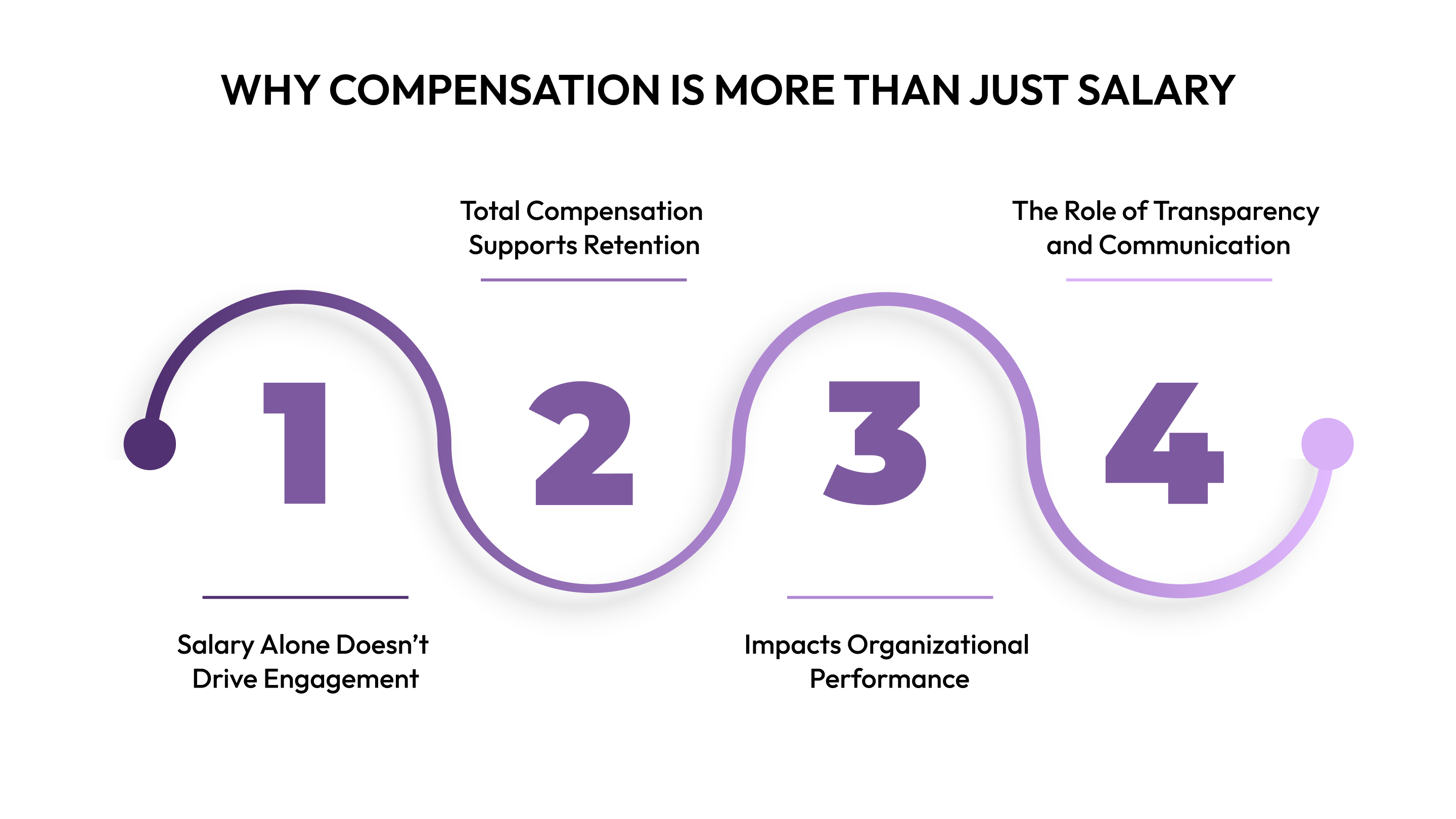
When people hear “compensation,” they often think only of the paycheck that hits their account. While base salary forms the foundation, a true compensation package extends far beyond pay. It encompasses bonuses, equity, benefits, perks, paid time off, and opportunities for growth. Each of these elements plays a role in attracting, motivating, and retaining talent, especially in fast-growing companies with distributed teams.
1. Salary Alone Doesn’t Drive Engagement
A competitive base salary is essential, but research shows employees increasingly value non-salary benefits. Compensation that goes beyond pay signals that the organization cares about their overall wellbeing, career growth, and work-life balance.
- Employees evaluate total rewards when deciding to join or stay with a company.
- Lean HR and Finance teams need structured systems to balance base pay with other elements while staying within budget.
2. Total Compensation Supports Retention
High turnover can be costly, especially for companies scaling headcount rapidly. A well-rounded package that includes benefits, equity, and recognition reduces attrition by aligning employee interests with the organization’s goals.
- Incentives and equity encourage long-term commitment.
- Benefits and perks improve day-to-day satisfaction, particularly in remote or distributed teams.
3. Compensation Impacts Organizational Performance
Employees who perceive fairness and transparency in their total rewards tend to perform better. Structured compensation planning helps:
- Reduce disparities across teams and geographies.
- Support HR and Finance collaboration to align budgets with workforce strategy.
- Ensure equitable pay decisions during promotions, hires, and raises.
4. The Role of Transparency and Communication
A key reason compensation is more than salary is visibility. Employees want to understand how their total rewards are determined. Sharing clear statements that outline salary, bonuses, equity, benefits, and perks fosters trust and clarity.
- Transparent communication prevents misperceptions.
- Helps employees appreciate the full value of their compensation beyond their base pay.
With this understanding of why total compensation extends beyond salary, it’s important to break down each component and examine its role in motivating, engaging, and retaining employees.
Also Read: The Complete Guide to Employee Compensation and Benefits
Core Components of Compensation Beyond Salary
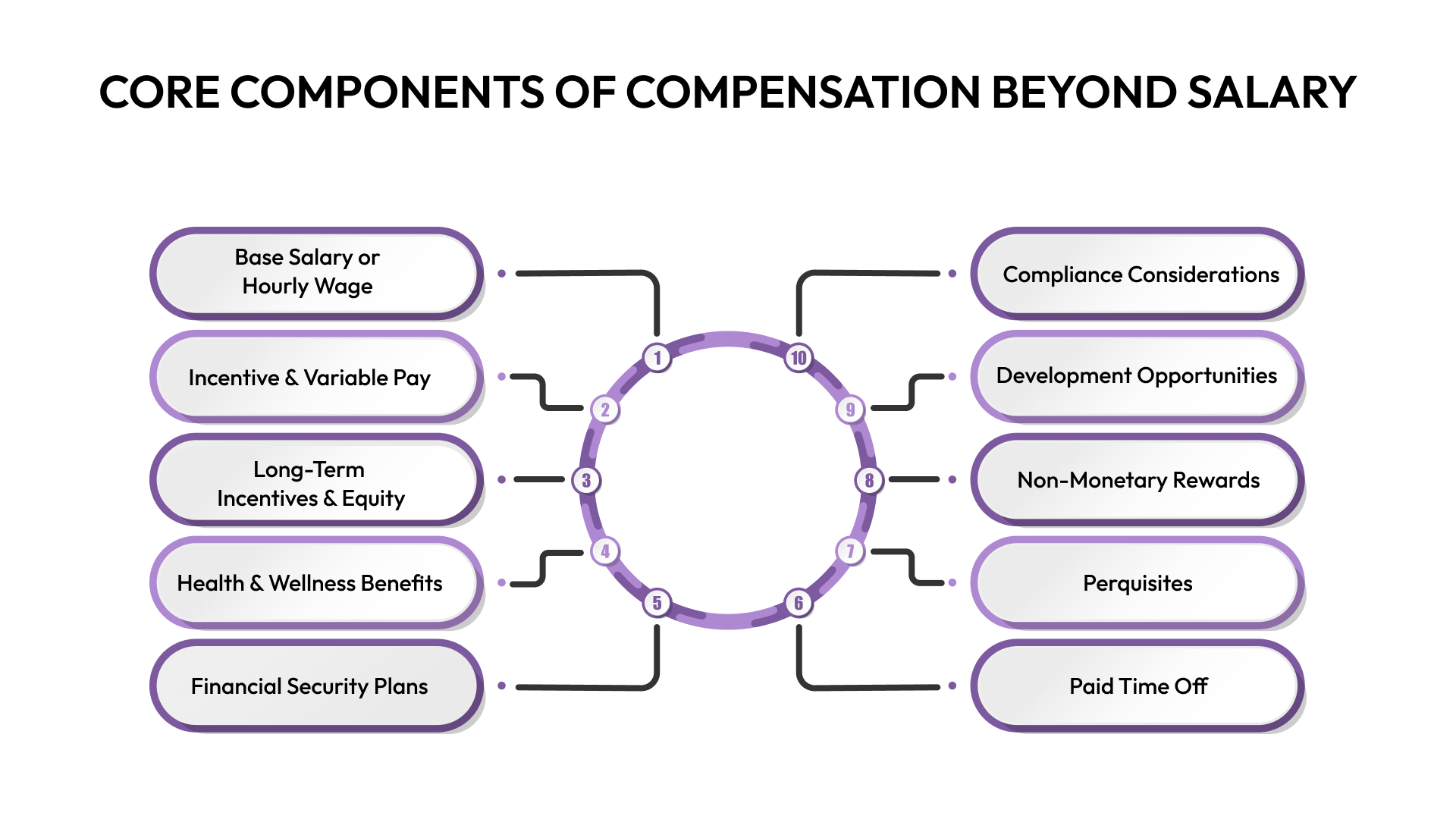
Compensation extends beyond a paycheck, combining salary, benefits, perks, and opportunities for growth. A well-rounded package engages employees, improves retention, and aligns workforce efforts with organizational goals.
1. Base Salary or Hourly Wage
The base salary or hourly wage is the foundation of any compensation package. It establishes financial security, reflects the market value of a role, and sets expectations for fairness. A competitive base pay signals that employees are valued and provides a reference point for additional rewards. Key aspects to consider include:
- Market Competitiveness: Salaries should reflect industry standards, geographic location, and role responsibilities. Regular benchmarking ensures fairness.
- Employee Security: A predictable base pay provides financial stability, reducing stress and fostering loyalty.
- Career Progression Alignment: Clear pay structures support promotions and internal mobility, motivating employees to grow within the organization.
2. Incentive and Variable Pay
Incentive and variable pay includes performance bonuses, commissions, and project-based rewards that tie compensation to results. This component motivates employees to achieve goals and drives alignment between individual contributions and company objectives. Considerations include:
- Performance Alignment: Bonuses and commissions link rewards to measurable achievements.
- Motivation Driver: Variable pay encourages employees to exceed expectations and contribute to organizational success.
- Transparency: Clear communication of performance metrics ensures employees understand how rewards are earned.
3. Long-Term Incentives and Equity
Long-term incentives, including stock options and profit-sharing, connect employee rewards to company performance. They cultivate a sense of ownership, align employee interests with business growth, and are particularly valuable in high-growth companies. Key aspects include:
- Ownership Mindset: Equity-based incentives make employees stakeholders in the company’s success.
- Retention Impact: Long-term rewards strengthen loyalty, reducing turnover.
- Alignment with Growth: Linking rewards to company performance encourages strategic thinking and shared responsibility.
4. Health and Wellness Benefits
Health and wellness benefits support employees’ physical and mental wellbeing. These offerings, from insurance to wellness programs, show that the company values its people and contributes to overall job satisfaction and productivity. Key aspects include:
- Comprehensive Coverage: Medical, dental, and vision insurance protect employees and their families.
- Mental and Emotional Support: Wellness programs and mental health resources reduce burnout and improve productivity.
- Employee Perception: Benefits demonstrate that the company cares about employee wellbeing, increasing satisfaction.
5. Retirement and Financial Security Plans
Retirement and financial security plans prepare employees for the future. Employer-sponsored contributions, matching, and pensions help build long-term financial stability, reinforcing loyalty and retention. Key aspects include:
- Future Planning: 401(k), pension contributions, and matching programs help employees secure financial stability.
- Employee Retention: Access to retirement benefits encourages longer tenure.
- Reduced Stress: Financial security programs alleviate anxiety, allowing employees to focus on work.
6. Paid Time Off (PTO)
Paid time off includes vacation, sick leave, and personal days that support work-life balance. PTO prevents burnout, increases productivity, and is critical for remote or hybrid employees. Key aspects include:
- Work-Life Balance: PTO allows employees to rest, recharge, and attend to personal needs.
- Burnout Prevention: Adequate leave helps maintain energy and engagement.
- Flexibility for Distributed Teams: Remote and hybrid employees benefit from flexible PTO policies.
7. Perquisites (Perks)
Perks enhance daily work experiences and reflect company culture. They can range from flexible schedules to lifestyle allowances and create a more enjoyable, supportive environment. Key aspects include:
- Daily Convenience: Commuting support, meals, or equipment allowances make daily work smoother.
- Lifestyle Integration: Benefits like gym memberships or childcare assistance improve work-life harmony.
- Cultural Expression: Thoughtful perks reflect company values and build employee engagement.
8. Recognition and Non-Monetary Rewards
Recognition and non-monetary rewards acknowledge effort and achievements beyond financial incentives. Public praise, awards, and peer recognition foster motivation and a positive workplace culture. Key aspects include:
- Acknowledgment of Effort: Awards and shout-outs reinforce achievements.
- Motivation and Morale: Regular recognition encourages continued high performance.
- Culture Building: Recognition programs cultivate appreciation and collaboration.
9. Learning and Development Opportunities
Learning and development programs equip employees with skills for current and future roles. They demonstrate investment in growth, improve retention, and support internal mobility. Key aspects include:
- Skill Enhancement: Training, certifications, and workshops expand employee capabilities.
- Career Advancement: Development programs prepare employees for promotions and new roles.
- Employee Engagement: Investing in professional growth strengthens loyalty and satisfaction.
10. Legal and Compliance Considerations
Ensuring fair, compliant compensation protects both employees and organizations. Transparent policies and adherence to regulations build trust and reduce risk. Key aspects include:
- Fairness and Equity: Compliance with labor laws and pay equity standards ensures fairness.
- Transparency: Open communication about policies fosters trust.
- Risk Mitigation: Following regulations prevents disputes and protects the company and employees.
Understanding these core components helps organizations see how total compensation impacts employee satisfaction and retention. Next, we’ll explore strategies to design compensation packages that balance salary with these additional elements, ensuring fairness, motivation, and alignment with business goals.

Also Read: Total Compensation vs. Salary: A Complete Guide for Employees and Candidates
How Do You Structure Total Employee Rewards Effectively?
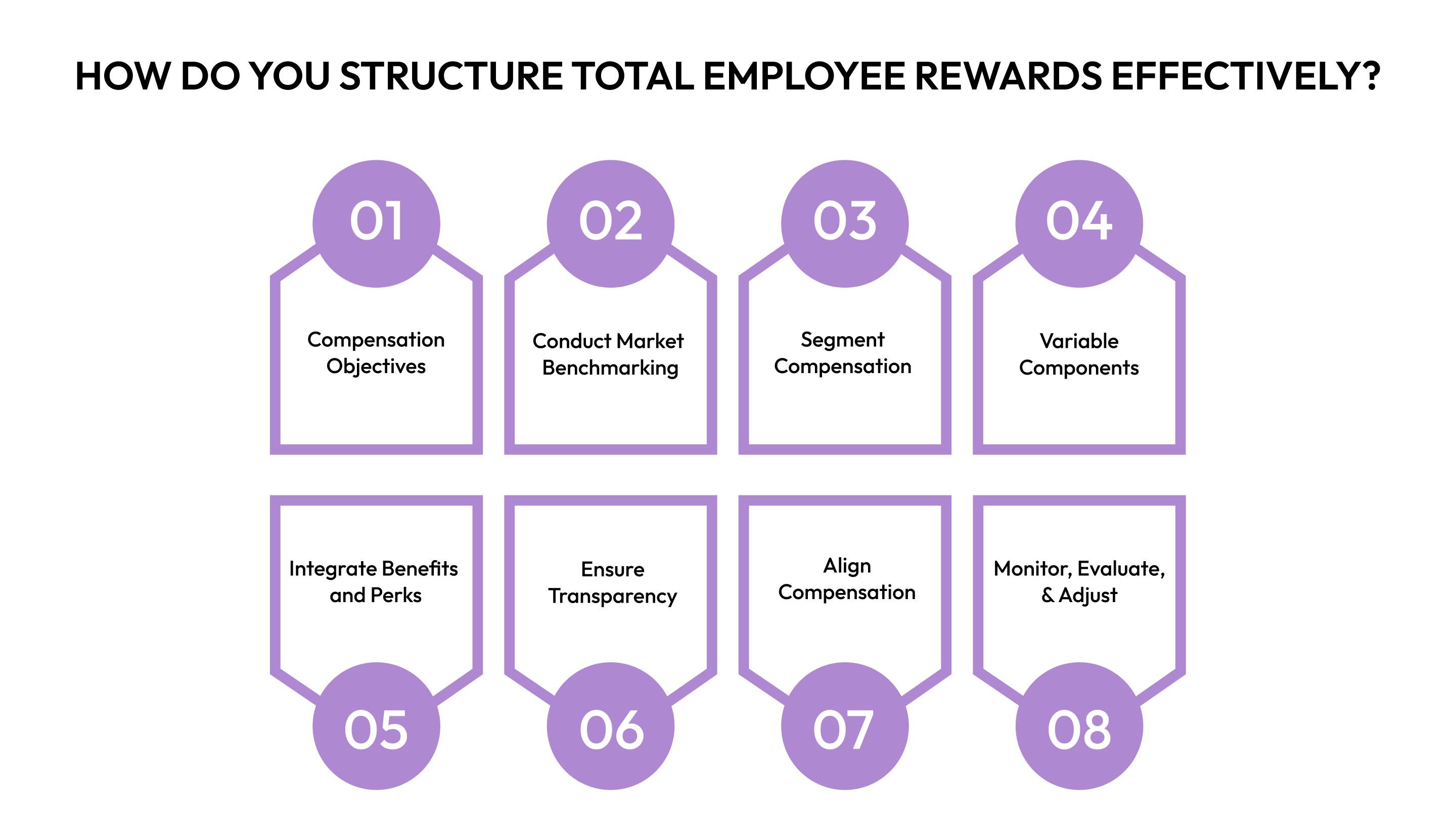
A total compensation strategy defines how an organization rewards its employees across base pay, benefits, incentives, and other perks. A thoughtful approach ensures alignment with business goals, workforce needs, and market standards, while helping attract and retain talent.
1. Define Compensation Objectives
Every organization must establish clear objectives before crafting a compensation strategy. Objectives can focus on attracting top talent, retaining employees through long-term incentives, motivating performance, and promoting fairness. By articulating these goals upfront, organizations create a consistent framework for decisions around salary, bonuses, and benefits, which guides all subsequent compensation planning.
2. Conduct Market Benchmarking
Understanding market standards is critical to designing competitive and fair pay structures. Organizations analyze compensation trends in their industry, consider geographic cost-of-living differences, and examine role-specific benchmarks. This research ensures that pay remains attractive to candidates while staying financially sustainable, particularly for mid-sized and growth-stage companies scaling rapidly with lean HR teams.
3. Segment Compensation by Employee Roles
Different roles require tailored compensation approaches. Leadership positions often include long-term incentives or equity, while operational roles may prioritize base salary and variable pay. Critical or high-impact roles might require specialized bonus structures. Segmenting by career stage, responsibility, and strategic importance ensures fairness, clarity, and alignment with both employee expectations and organizational priorities. Key considerations include:
- Leadership Roles: Often include long-term incentives, equity, and performance-based bonuses.
- Operational Roles: Typically focus on base salary and short-term variable pay.
- Critical Roles: High-impact positions may have targeted bonuses or retention rewards.
- Career Stage: Compensation can vary for entry-level, mid-career, and senior employees to reflect experience and responsibility.
4. Balance Fixed and Variable Components
A robust compensation package combines predictable base pay with performance-linked variable elements. Base salary ensures financial stability, whereas performance-based rewards drive employees to meet goals and exceed expectations. Long-term incentives, such as stock options or profit-sharing, connect employees with the organization’s growth. Balancing these components maintains motivation without compromising predictability.
5. Integrate Benefits and Perks
Non-cash components play a crucial role in total rewards. Health insurance, wellness programs, retirement plans, paid time off, flexible schedules, and professional development opportunities collectively enhance employee satisfaction. Thoughtful perks demonstrate organizational care, contribute to retention, and help employees feel valued beyond just their paycheck.
- Health insurance
- Wellness programs
- Retirement plans
- Paid time off (PTO)
- Flexible work schedules
- Professional development opportunities
- Lifestyle perks (e.g., gym memberships, commuting support)
6. Ensure Transparency and Communication
Employees engage more when they understand how compensation is structured. Transparent communication about salary ranges, bonus calculations, and available benefits reduces confusion and strengthens trust. Making information accessible through internal portals or dashboards allows employees to see their total rewards clearly, fostering confidence and satisfaction in their overall package.
7. Align Compensation with Performance Management
Effective compensation strategies reinforce organizational goals through performance alignment. Rewards tied to measurable outcomes at individual, team, and company levels ensure that employees see a clear connection between their contributions and the rewards they receive. Integrating compensation with regular feedback cycles encourages sustained high performance and engagement.
8. Monitor, Evaluate, and Adjust
Total compensation strategies require continuous review. Organizations should track retention trends, assess equity across roles and locations, and gather employee feedback. Adjustments based on market changes, business growth, or evolving workforce needs ensure the strategy remains effective, competitive, and aligned with organizational objectives over time.
With a clear understanding of how to structure total employee rewards, companies can now focus on practical strategies and best practices to implement these approaches effectively, especially in growth-stage and mid-sized organizations.
Best Practices for Growth-Stage and Mid-Sized Companies
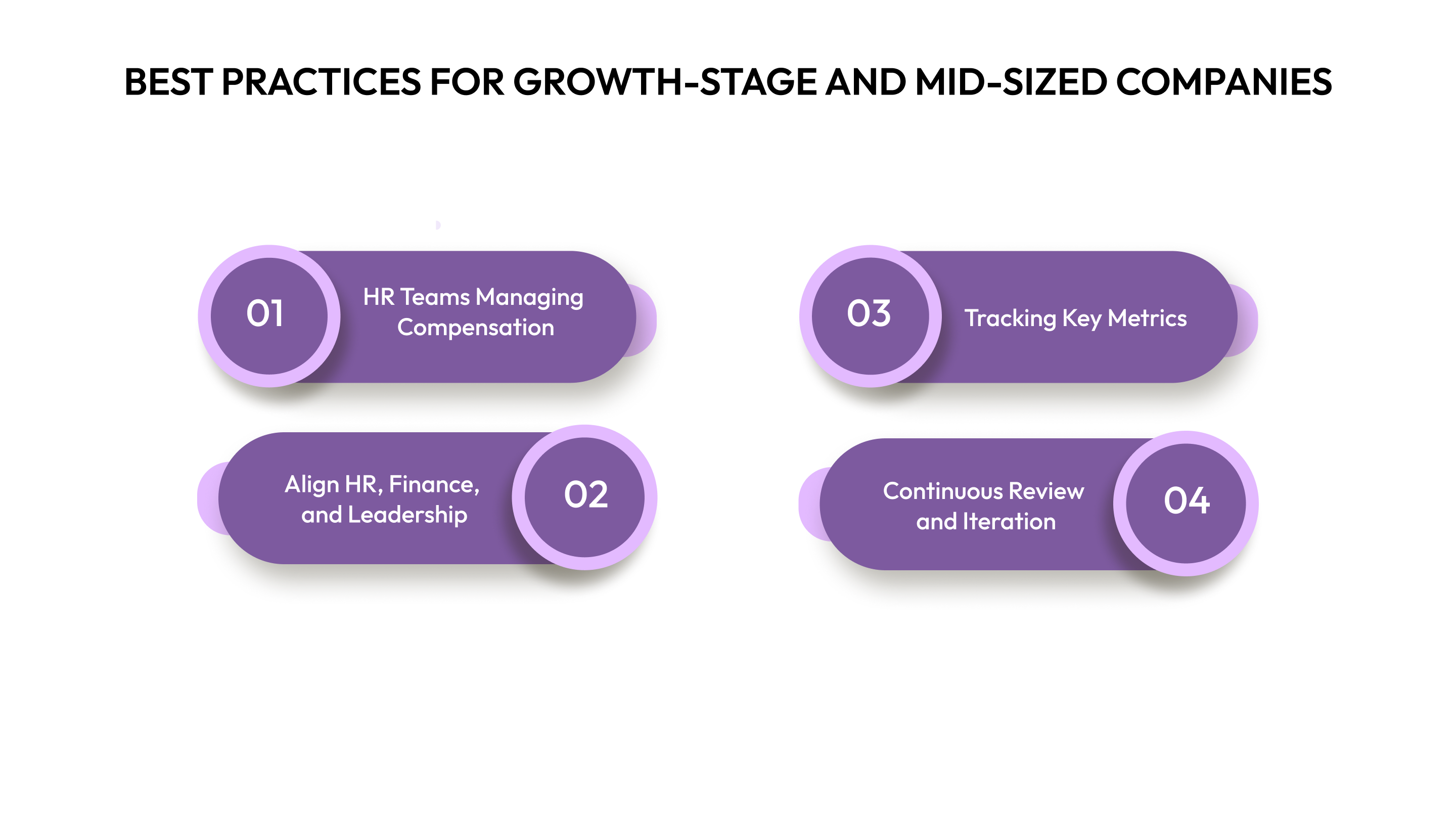
Growth-stage and mid-sized companies face unique challenges in managing compensation beyond salary, especially when HR teams are small, often just 1–10 people. Implementing structured processes, aligning teams, and monitoring key metrics ensures compensation strategies remain effective and scalable.
1. Stepwise Approach for HR Teams Managing Compensation
HR teams can manage total rewards efficiently by following a clear, stepwise approach.
- Start by documenting current compensation structures and identifying gaps in base pay, incentives, benefits, and long-term rewards.
- Next, establish workflows for approvals, candidate offers, and headcount planning.
- Using automation tools reduces manual errors, speeds up processes, and provides real-time visibility into budgets and pay equity.
A platform like CandorIQ takes this further. By consolidating multiple tools into a unified system, it allows HR teams to manage pay bands, compensation cycles, and headcount forecasting from a single interface. Automated workflows speed up approvals, reduce errors, and provide instant visibility into budgets and equity, helping teams make faster, data-driven compensation decisions and improve overall operational efficiency.
2. Align HR, Finance, and Leadership
Unified strategies require collaboration between HR, Finance, and leadership. Regular meetings and shared dashboards allow all stakeholders to view the financial impact of compensation decisions, headcount scenarios, and bonus allocations. Alignment ensures that salary adjustments, promotions, and incentive programs meet both employee expectations and organizational objectives without creating budget conflicts.
3. Tracking Key Metrics
Monitoring critical metrics helps organizations maintain competitive and fair compensation. Key indicators include:
- Attrition Rates: Identify roles or departments at risk of turnover.
- Employee Engagement Scores: Evaluate how compensation and benefits impact motivation.
- Total Cost per Employee: Track financial efficiency of compensation packages.
- Equity Metrics: Ensure fairness across levels, departments, and locations.
4. Continuous Review and Iteration
Compensation strategies should evolve with the company. For growth-stage organizations scaling headcount 2–3x annually, regular reviews are essential. Evaluate the effectiveness of base pay, bonuses, perks, and benefits, making adjustments based on market trends, employee feedback, and organizational priorities. This iterative approach ensures competitiveness, retention, and alignment with strategic goals.
With a clear framework and best practices in place, utilizing the right tools can make executing a total compensation strategy faster, more accurate, and easier to manage.
.png)
How CandorIQ Simplifies Total Compensation Management
Managing compensation beyond salary can be complex, especially for fast-growing companies with distributed teams. CandorIQ provides a unified platform that consolidates multiple tools into a single system for pay bands, compensation cycles, offer management, and headcount planning. By replacing spreadsheets and disconnected processes, it helps HR teams become strategic partners in workforce planning.
Key Benefits of CandorIQ:
- Unified Compensation Platform: Access pay bands, merit cycles, bonus allocations, and equity management all in one place.
- Compensation & Payband Builder: Define clear, fair pay structures across roles, departments, and locations. Benchmark datasets ensure competitive pay, while version tracking maintains accountability and consistency.
- Real-Time Collaboration: HR and finance teams can work together seamlessly. Real-time updates and approvals reduce miscommunication and help decisions align with budgets and company priorities.
- Geo-Adjusted Compensation: Account for cost-of-living differences across regions. Ensure fair, competitive pay for distributed teams while maintaining internal equity.
- Data-Driven Insights: Analyze pay equity, bonus allocation, and total compensation trends. Forecast budgets, identify gaps, and optimize reward structures for strategic planning.
For mid-sized and growth-stage organizations, CandorIQ ensures that compensation strategies are transparent, equitable, and aligned with business goals, even as headcount scales rapidly. By integrating compensation, benefits, and workforce planning in one system, companies can retain talent and strengthen employee satisfaction.
Conclusion
Compensation goes far beyond base pay. A well-rounded total rewards strategy, including incentives, benefits, perks, and professional development, shapes employee satisfaction, retention, and engagement. For growth-stage and mid-sized companies, managing this complexity requires careful planning, cross-functional alignment, and data-driven insights.
Platforms like CandorIQ make it easier to execute a holistic compensation strategy. By centralizing pay bands, headcount planning, offer management, and equity tracking, CandorIQ enables HR teams to operate efficiently while maintaining fairness, transparency, and compliance.
Focusing on total compensation, not just salary, helps organizations attract top talent, reward performance, and scale confidently.
Book a demo today to automate compensation workflows, save hours of HR time, and make data-driven pay decisions with confidence.
FAQs
1. What does total compensation include beyond salary?
Total compensation includes base pay, incentives and variable pay, long-term rewards like equity, health and wellness benefits, retirement plans, paid time off, perks, recognition, and learning and development opportunities.
2. Why is compensation more than just salary important for employees?
Employees consider the full value of their rewards package when evaluating job satisfaction and loyalty. Benefits, perks, and professional growth opportunities significantly influence retention, motivation, and engagement.
3. How can companies ensure equity and transparency in total compensation?
Organizations can use structured pay bands, benchmark data, and clear communication policies. Platforms like CandorIQ help track pay equity, approval workflows, and global adjustments to maintain fairness and compliance.
4. What challenges do mid-sized and growth-stage companies face in managing compensation?
Common challenges include balancing budget constraints with market competitiveness, managing distributed or global workforces, maintaining compliance, and avoiding errors from manual processes.
5. How can CandorIQ help streamline total compensation management?
CandorIQ centralizes pay bands, compensation cycles, headcount planning, and offer workflows in one platform. It automates approvals, provides real-time insights, and supports equitable, data-driven decisions for HR, Finance, and leadership teams.
Ready to modernize your workforce and compensation strategy?
See how CandorIQ brings workforce planning and compensation together with AI.