

Pros and Cons of Compensation: Key Insights for HR Teams
Understand the pros and cons of compensation models. Balance predictability and motivation, avoid rigidity; see if hybrid options suit your needs. Explore more!

Designing a fair and scalable compensation model is one of the biggest challenges for growing companies. As teams expand across regions, ensuring pay consistency and budget control becomes more complex. HR and Finance leaders often struggle to balance transparency, equity, and cost predictability, especially when compensation data sits in multiple systems or depends on manual updates.
Only 19% of organizations feel fully prepared for pay transparency initiatives, while 43% list pay equity as a top HR priority. These numbers reflect a clear reality: most businesses are still refining their approach to compensation, trying to connect strategy with sustainability.
This article examines the pros and cons of employee compensation models in depth. It explains how each model affects pay fairness, retention, and workforce planning, and what distributed, fast-scaling organizations can do to choose a structure that supports both their people and financial goals.
Key Takeaways
- Each compensation model has trade-offs; selecting one depends on company goals, workforce structure, and growth stage.
- Structured pay supports motivation, retention, and equitable treatment across distributed teams.
- Frequent assessment of compensation structures ensures alignment with budgets, market trends, and organizational priorities.
- Data-driven pay decisions connect workforce planning to overall company objectives, supporting sustainable growth and employee trust.
What Is a Compensation Model?
A compensation model is the framework a company uses to determine how employees are paid. It outlines how base salaries, bonuses, equity, and benefits are distributed across roles and levels.
A clear model helps employees understand how their responsibilities, experience, and performance influence pay. It also gives leadership a way to plan budgets and allocate resources effectively.
Key Components
- Base Pay: Fixed salary or hourly wage based on role and experience.
- Variable Pay: Bonuses or incentives tied to individual, team, or company performance.
- Equity: Stock options or ownership rewards that link employee success to company growth.
- Benefits: Health insurance, retirement plans, and other perks that improve satisfaction.
Why It Matters
- Ensures fairness and transparency in pay.
- Helps align workforce strategy with business goals.
- Supports budget control and forecasting for HR and Finance teams.
- Increases employee satisfaction and reduces turnover.
Now that we understand what a compensation model is and why it matters, let’s explore the different types of employee compensation models and how each functions in practice.
Also Read: Choosing the Right Compensation Management Software for Your Organization
Types of Employee Compensation Models

Choosing the right compensation model is not just about pay structures—it directly impacts retention, engagement, and budget control. For distributed teams and rapidly growing organizations, every decision on pay can ripple across multiple geographies, departments, and leadership priorities.
1. Traditional (Graded) Pay Structures
Employees are assigned to defined levels or grades, each with a set salary range. This structure provides clarity on progression and simplifies payroll planning. Organizations can forecast salary growth and promotions with precision, which is particularly useful for budgeting in fast-growing companies. However, in distributed teams, ensuring fair application of grades across different geographies may require location-adjusted pay scales.
2. Variable Pay (Performance-Based Compensation)
Compensation is linked to individual, team, or company performance, often delivered through bonuses, merit increases, or profit-sharing. This model motivates employees to achieve measurable goals and aligns workforce performance with organizational objectives. For distributed teams, clearly defined performance metrics and transparent evaluation processes are critical to maintain equity and avoid misunderstandings across locations.
3. Commission-Based Models
Typically used in sales and business development, employees earn a percentage of revenue or deals they generate. This creates a direct link between effort and reward, encouraging productivity. For companies with remote or distributed sales teams, tracking performance and providing real-time reporting ensures consistency in pay and avoids disputes.
4. Skill-Based / Competency-Based Pay
Employees are compensated based on the skills they acquire or competencies they demonstrate. This approach supports continuous learning, career development, and innovation. Organizations must maintain accurate skill assessments and standardized evaluation methods, especially for geographically dispersed teams, to ensure fairness and manage administrative overhead.
5. Market-Based Compensation
Salaries are benchmarked against external market data to remain competitive and attract high-demand talent. This helps companies retain employees in competitive industries like SaaS, fintech, e-commerce, and professional services. Budget-sensitive CFOs need to monitor market trends closely to balance competitiveness with internal financial constraints.
6. Job-Based Pay
Compensation is tied to the responsibilities and requirements of the role rather than individual performance. This promotes standardization and reduces pay disparities. For distributed teams, this approach requires careful consideration of regional cost-of-living differences and currency adjustments to maintain fairness.
7. Hourly Wages
Employees are paid per hour worked, with overtime included where applicable. This model provides flexibility for both employers and employees and ensures fair compensation for extra hours. In global teams, organizations must track hours accurately and comply with local labor regulations to avoid compliance risks.
8. Equity and Stock Options
Employees receive ownership stakes or stock-based incentives, linking compensation to company performance. This encourages long-term commitment and aligns employee interests with organizational success. However, market volatility can affect perceived value, and organizations must clearly communicate equity benefits to remote or distributed employees.
9. Flexible / “Cafeteria” Benefit Plans
Employees can select from a menu of benefits, such as healthcare, retirement contributions, or additional leave. Customizable benefits increase satisfaction and retention. Administering these plans across multiple regions requires robust systems to manage eligibility, compliance, and cost controls.
10. Hybrid Compensation Models
Combines fixed salary with variable components like bonuses, commissions, or equity. This approach balances financial stability with performance incentives. Distributed teams and multi-location organizations benefit from centralized systems to manage pay transparency, approvals, and scenario planning effectively.
For growing, distributed organizations, choosing the right mix of these models can improve employee satisfaction, enforce pay equity, and strengthen budget governance. Platforms like CandorIQ bring pay bands, compensation cycles, and headcount planning into one place. This makes it easier for HR and Finance to manage complex structures.
After exploring the different types of employee compensation models, it’s important to understand their advantages and potential drawbacks to make informed decisions for your organization.

Also Read: Effective Compensation Benchmarking for HR Teams in 2025
Pros and Cons of Employee Compensation Models
Employee compensation models are not just tools for paying staff. They are strategic levers that influence talent acquisition, retention, performance, and financial planning. The right model can boost engagement and drive results, while the wrong approach can create inequities, operational inefficiencies, and disengagement.
Pros of Employee Compensation Models
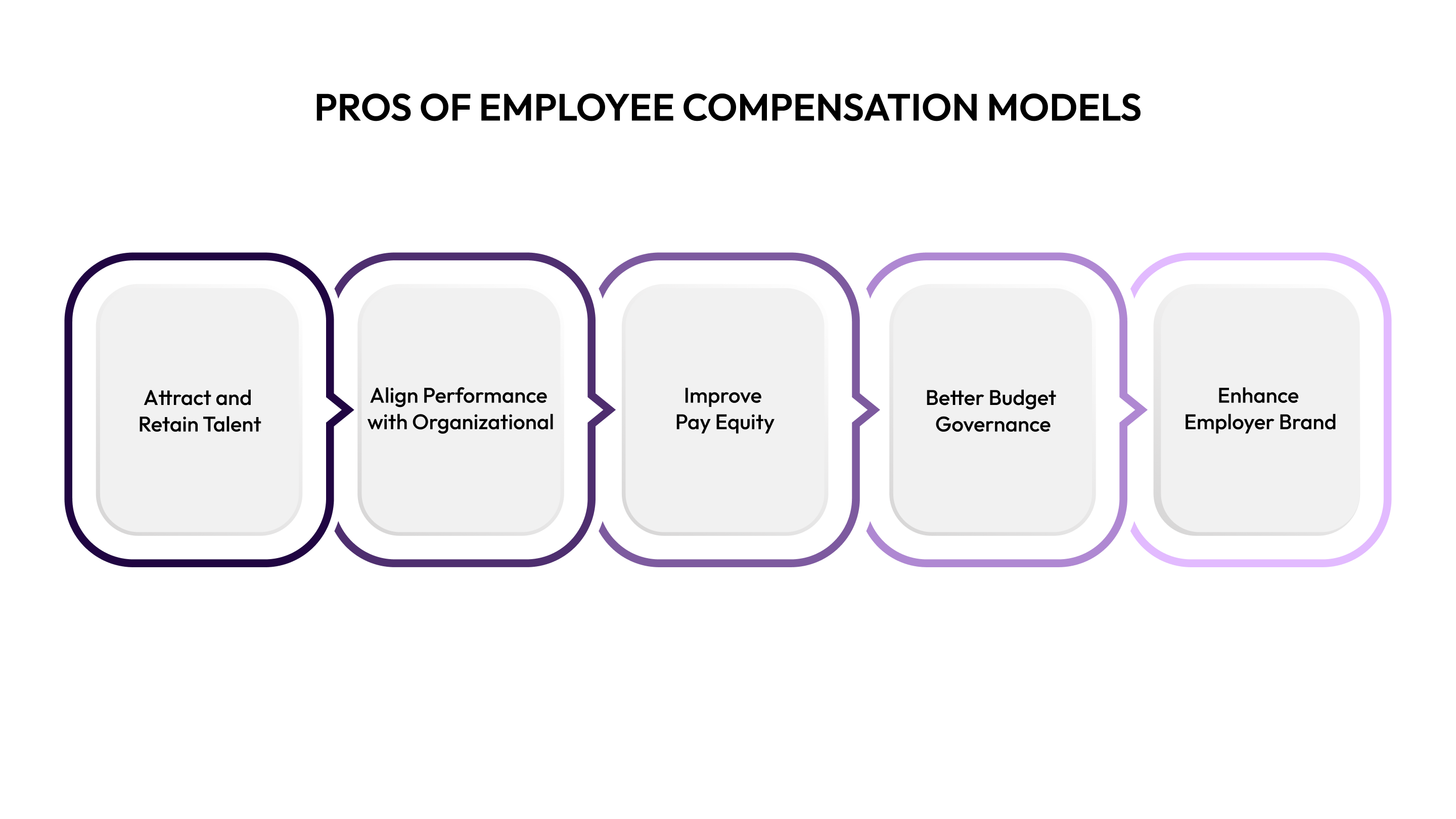
Well-designed compensation models provide multiple advantages for organizations and employees. Key benefits include:
1. Attract and Retain Talent
A well-structured compensation model makes a company competitive in the job market. For example, a software developer may compare offers based not just on base pay but also on equity, bonuses, and benefits. Companies with clear, structured compensation models often see lower turnover rates because employees understand their earning potential and growth path.
2. Align Performance with Organizational Goals
Performance-based incentives, such as bonuses or profit-sharing, help align employee efforts with business objectives. For instance, sales teams rewarded on revenue growth tend to focus on high-impact deals. When designed carefully, these models also encourage collaboration, since team-based performance rewards can complement individual incentives.
3. Improve Pay Equity and Transparency
Clear compensation frameworks help reduce bias and ensure fairness. Structured pay bands and equity programs make salary decisions more predictable, communicate fairness to employees, and minimize the risk of disputes.
4. Enable Better Budget Governance and Forecasting
Structured compensation models allow Finance teams to accurately forecast payroll, benefits, and bonus allocations. This is particularly important for organizations scaling rapidly or managing multiple geographies. With predictable models, CFOs can plan hiring waves, promotions, and salary increments without jeopardizing budgets.
5. Enhance Employer Brand and Internal Confidence
Fair and transparent compensation reinforces trust in leadership. Employees feel confident that promotions and raises are based on measurable criteria. This consistency strengthens the employer brand externally, making the company attractive to potential hires, especially in competitive industries like SaaS, fintech, and e-commerce.
Cons of Employee Compensation Models
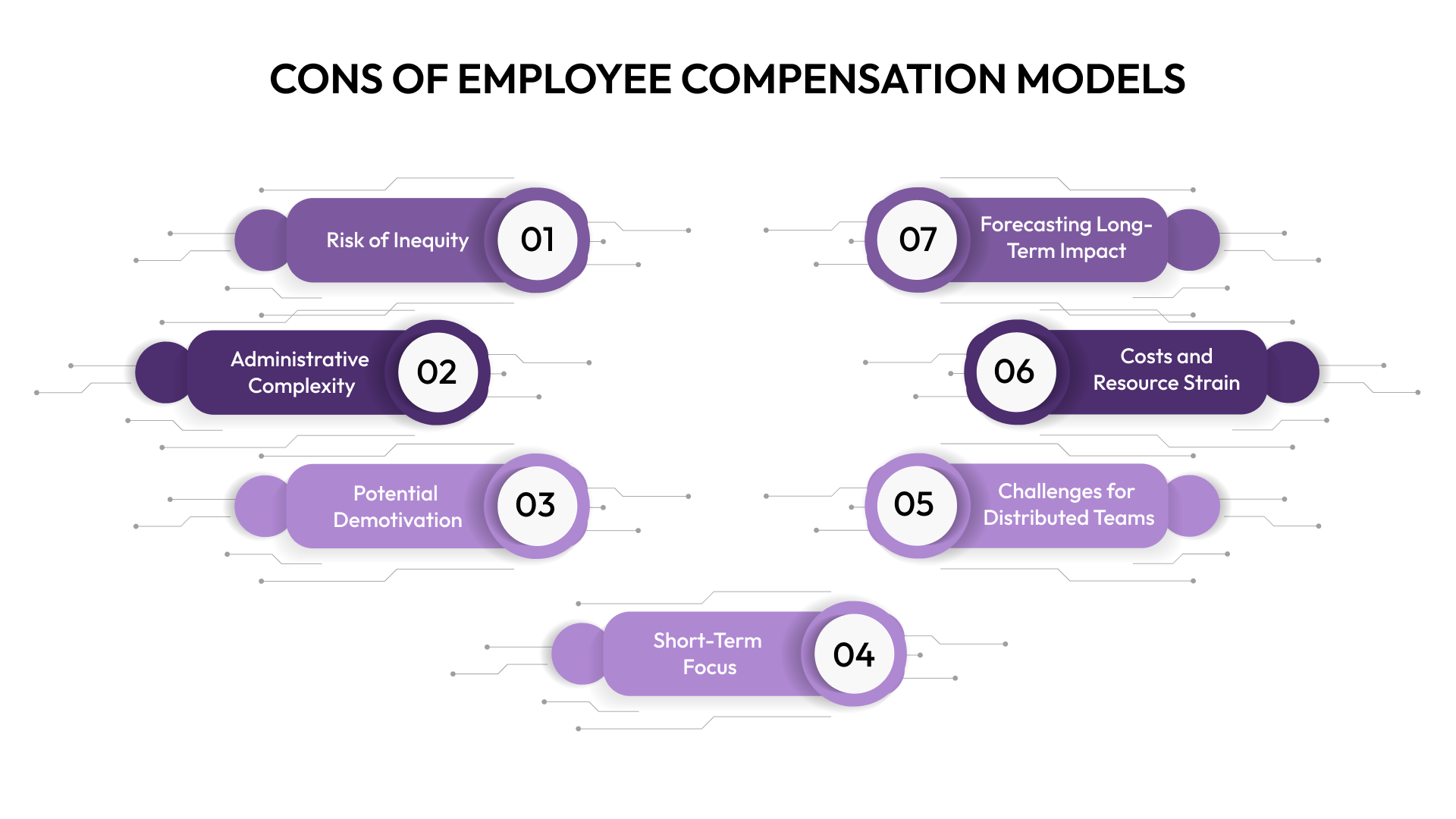
Even well-intentioned models can pose challenges if not managed carefully. Key drawbacks include:
1. Risk of Inequity
Improperly designed models can create pay gaps. For example, employees in different locations performing similar roles may receive inconsistent compensation due to poorly adjusted pay bands. This is especially risky for remote-first teams, where perceptions of unfairness can impact engagement and retention.
2. Administrative Complexity
Compensation management involves multiple moving parts, including base salary, performance bonuses, equity, benefits, and approval workflows. Without a unified system, HR teams spend excessive time updating spreadsheets, coordinating approvals, and tracking historical changes. This manual work increases the risk of errors and slows decision-making.
3. Potential Demotivation
Employees may feel demotivated if criteria for raises or bonuses are unclear. Ambiguous performance metrics or inconsistent implementation can cause frustration. For distributed teams, unclear communication about pay adjustments can worsen these feelings, affecting morale and productivity.
4. Short-Term Focus or Unhealthy Competition
Incentive-heavy models may drive employees to focus on short-term targets at the expense of long-term goals. For example, a sales representative might push immediate revenue deals while neglecting customer relationships or cross-team collaboration. This can create unhealthy competition and reduce team cohesion.
5. Challenges for Distributed Teams
Paying globally distributed employees requires adjustments for cost-of-living, currency fluctuations, and local labor laws. Without centralized tools, HR may struggle to maintain equity across regions. Misalignment between pay bands in different geographies can lead to dissatisfaction and perceived unfairness, impacting retention and engagement.
6. Operational Costs and Resource Strain
Complex compensation models increase administrative overhead. Small HR teams managing 1–10 employees in compensation roles may find it difficult to scale these processes efficiently. Manual tracking, approval cycles, and historical reporting can consume significant time, reducing focus on strategic initiatives.
7. Difficulty in Forecasting Long-Term Impact
While structured models help with budgeting, incentive-heavy and skill-based pay can complicate long-term forecasting. Companies may underestimate the financial impact of rapid growth, bonus payouts, or skill-based increments, leading to budget overruns or delayed hiring approvals.
With a clear understanding of the pros and cons of each compensation model, the next step is to explore how growth-stage companies with distributed teams can choose or refine a model that aligns with their workforce strategy and budget priorities.
Read More: How to Develop a Comprehensive Compensation Strategy: Practical Guide
Choosing or Refining a Compensation Model for Growth-Stage, Distributed Companies
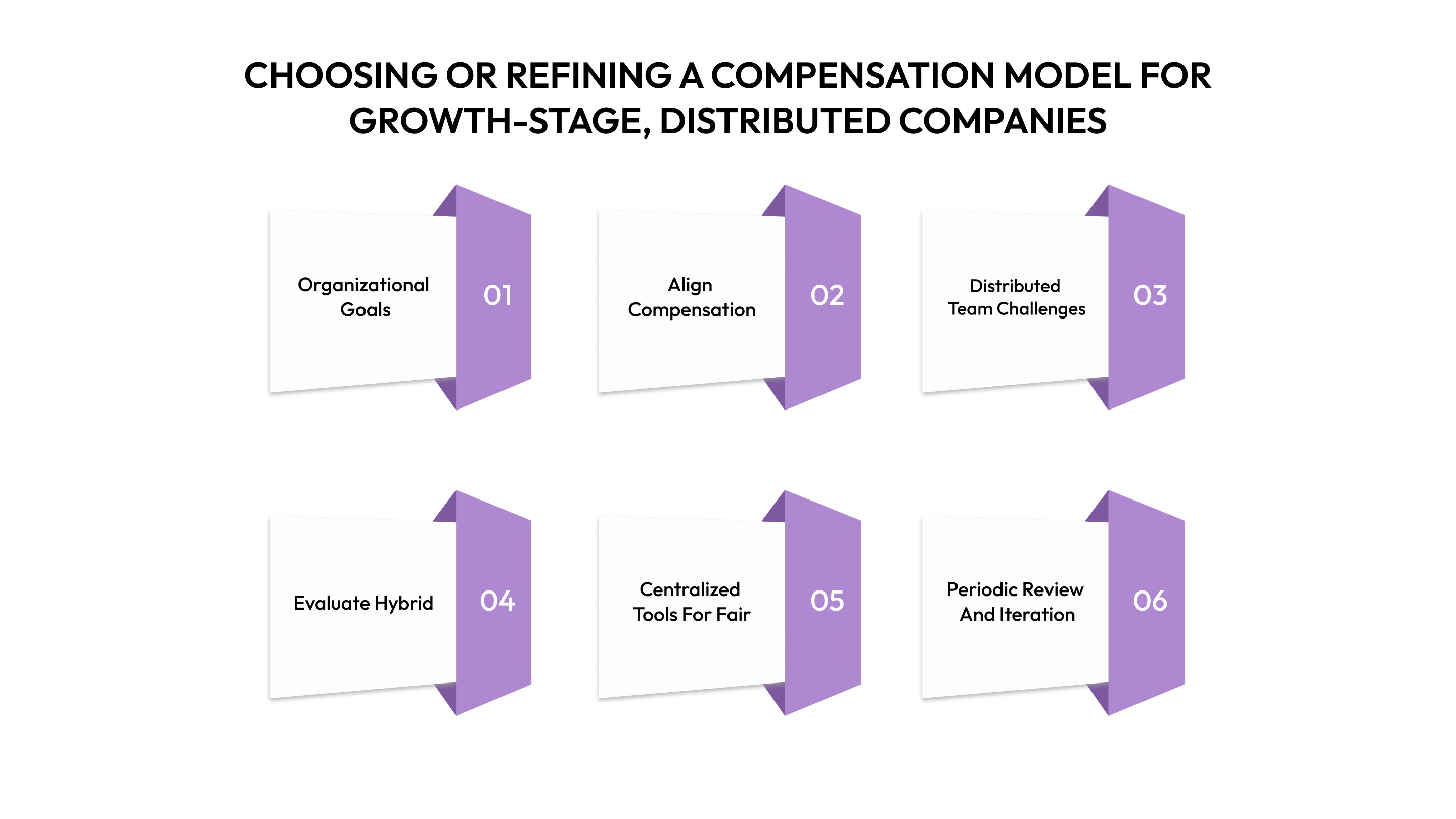
For companies scaling rapidly, especially those with distributed or remote teams, designing the right compensation model is both critical and complex. The goal is to attract and retain talent, align pay with performance, and maintain budget predictability while accounting for geographical and operational differences.
1. Assess Organizational Goals and Growth Stage
Before selecting a model, leadership must clarify objectives:
- Are you prioritizing rapid talent acquisition or long-term retention?
- Do you want to motivate performance through incentives or ensure pay equity across teams?
- How aggressive is your growth trajectory, and what headcount scaling is planned over the next 12–24 months?
2. Align Compensation with Budget Governance
Fast-growing companies often face tight budgets and fluctuating cash burn. Key considerations include:
- Ensuring variable or performance-based components are sustainable.
- Forecasting total compensation spend per department, role, and geography.
- Integrating real-time headcount and budget tracking to prevent overspending.
3. Factor in Distributed Team Challenges
Globally distributed teams add complexity:
- Geo-adjusted pay: Compensation should reflect local cost-of-living and market benchmarks.
- Currency fluctuations: For teams across countries, accounting for exchange rates and potential volatility is critical.
- Remote work equity: Ensure transparency so employees in different locations feel fairly compensated.
4. Evaluate Hybrid and Flexible Approaches
For growth-stage organizations, no single model may suffice. Many companies adopt a hybrid approach combining:
- Base salary for stability.
- Performance bonuses or variable pay to drive results.
- Equity or stock options to foster long-term commitment.
- Flexible benefits tailored to diverse workforce needs.
5. Centralized Tools for Fair and Transparent Compensation
For distributed and fast-growing companies, using technology ensures consistency, fairness, and efficiency in compensation decisions. CandorIQ supports this by:
- Unified Platform: Consolidates pay bands, compensation cycles, headcount planning, and offer workflows in a single system.
- Scenario Modeling: Allows teams to test different compensation structures and forecast budget impact before implementation.
- Real-Time Collaboration: Enables HR, Finance, and leadership to review, approve, and adjust decisions seamlessly.
- Geo-Adjusted Pay: Supports cost-of-living and market-based adjustments for distributed teams to maintain fairness and transparency.
- Historical Tracking: Provides version control and audit-ready records of past compensation decisions for iterative improvements.
6. Periodic Review and Iteration
Compensation strategies should not be static. Growth-stage companies must:
- Review pay structures regularly against market trends and organizational performance.
- Monitor employee satisfaction and retention metrics.
- Adjust incentive and benefits programs based on feedback and operational goals.

Conclusion
Choosing the right compensation model is crucial for growth-stage companies managing distributed teams and tight budgets. Each model, whether traditional, variable, commission-based, or hybrid, has trade-offs affecting motivation, retention, and performance.
Technology like CandorIQ brings compensation and headcount planning into one platform. It also offers real-time collaboration, location-based pay support, scenario modeling, and history tracking.
Structured, data-driven compensation aligns workforce strategy with organizational goals, reduces operational complexity, and builds employee trust.
Ready to simplify your compensation and headcount planning? Book a demo today and see how it can streamline pay decisions for your organization.
FAQs
1. How often should companies review their compensation models?
Companies should review compensation structures at least annually, or more frequently during rapid growth, to ensure pay remains competitive, equitable, and aligned with budget constraints.
2. Can hybrid compensation models work for remote teams?
Yes. Hybrid models combining base salary, performance incentives, and benefits can be tailored to accommodate remote employees by including geo-adjusted pay and flexible benefits.
3. How do companies ensure pay equity across different locations?
Using tools like CandorIQ, companies can apply location-based adjustments, benchmark salaries against local markets, and maintain transparency, reducing disparities in pay for distributed teams.
4. What role does technology play in managing complex compensation plans?
Modern platforms consolidate pay bands, incentive programs, headcount planning, and approvals, enabling real-time collaboration, scenario modeling, and data-driven decisions without relying on spreadsheets.
5. How can performance-based pay impact employee motivation?
Performance-based pay can boost motivation by linking rewards to results, but unclear metrics or inconsistent application may lead to stress or perceived unfairness. Clear communication and structured evaluation help mitigate these risks.
Ready to modernize your workforce and compensation strategy?
See how CandorIQ brings workforce planning and compensation together with AI.