

Ultimate Guide to Effective Employee Career Pathing and Growth
Boost employee growth with effective career pathing! Maximize retention, align goals, and empower progression. Start guiding success now!


Clear employee growth and pay pathways are essential for retaining talent and keeping teams motivated. When employees know how their roles can grow, they feel more confident. They also understand how their pay can progress and contribute more effectively.
Organizations are increasingly recognizing the value of structured pay and career frameworks. Over 50 % of employers recently benchmarked market pay levels or updated salary structures, and nearly half conducted a pay‑equity analysis.
For HR and Finance leaders, designing clear pathways ensures alignment between career development, budget planning, and workforce strategy. It also reduces the risk of inequities and miscommunication, especially for distributed teams.
In this guide, we’ll break down how to build effective growth frameworks, link compensation to career progression, and create pathways that support both employee satisfaction and organizational goals.
Key Takeaways
- Career growth isn’t just vertical. It now includes lateral and specialist paths aligned with evolving skills.
- Structured pay pathways create fairness. They connect compensation to clear performance and skill milestones.
- Clarity drives retention. Transparent frameworks help employees see long-term opportunities within the company.
- Tech simplifies pay planning. Platforms like CandorIQ bring data, analytics, and benchmarking into one place.
- Scalable systems build accountability. Growth and pay frameworks align people, performance, and budgets effectively.
The New Framework for Employee Growth and Pay Pathways
In distributed and fast-scaling organizations, career advancement and pay progression can quickly become inconsistent if not structured. A clear framework links employee growth with how they’re rewarded. It also builds trust, transparency, and better financial control for HR and Finance.
What does Career Growth Mean Today?
Career growth isn’t only about promotions anymore. It now includes different routes that reflect how employees want to develop and how businesses can support that growth.
Types of career growth include:
- Vertical growth: Moving into roles with greater responsibility and decision-making authority.
- Lateral growth: Transitioning across functions to build broader skills.
- Specialist growth: Deepening expertise in a particular domain or technology.
Employees want to see how new skills or certifications translate into meaningful advancement. When HR defines clear pathways, growth feels achievable and aligned with company goals. This clarity keeps employees engaged and helps leaders plan promotions, hiring, and budgets more effectively.
What Pay Pathways Mean Beyond Salary Increases?
A pay pathway outlines how compensation changes as employees move through different stages of their careers. It connects pay progression to performance, role value, and market benchmarks.
Core elements include:
- Pay bands and grade ranges: Structured salary brackets tied to roles.
- Geo-based adjustments: Reflecting cost-of-living differences across regions.
- Total rewards: Covering bonuses, stock, and non-cash benefits.
- Progression models: Linking milestones to pay changes for clarity and fairness.
Pay pathways turn compensation into a predictable, equitable process. They ensure pay decisions reflect real contribution, simplify reviews, and help organizations manage budgets more effectively across distributed teams.
Once the purpose of a structured growth and pay system is clear, the next step is to identify the key elements that bring it to life.
.png)
Core Components of an Effective Growth & Pay Pathway Framework
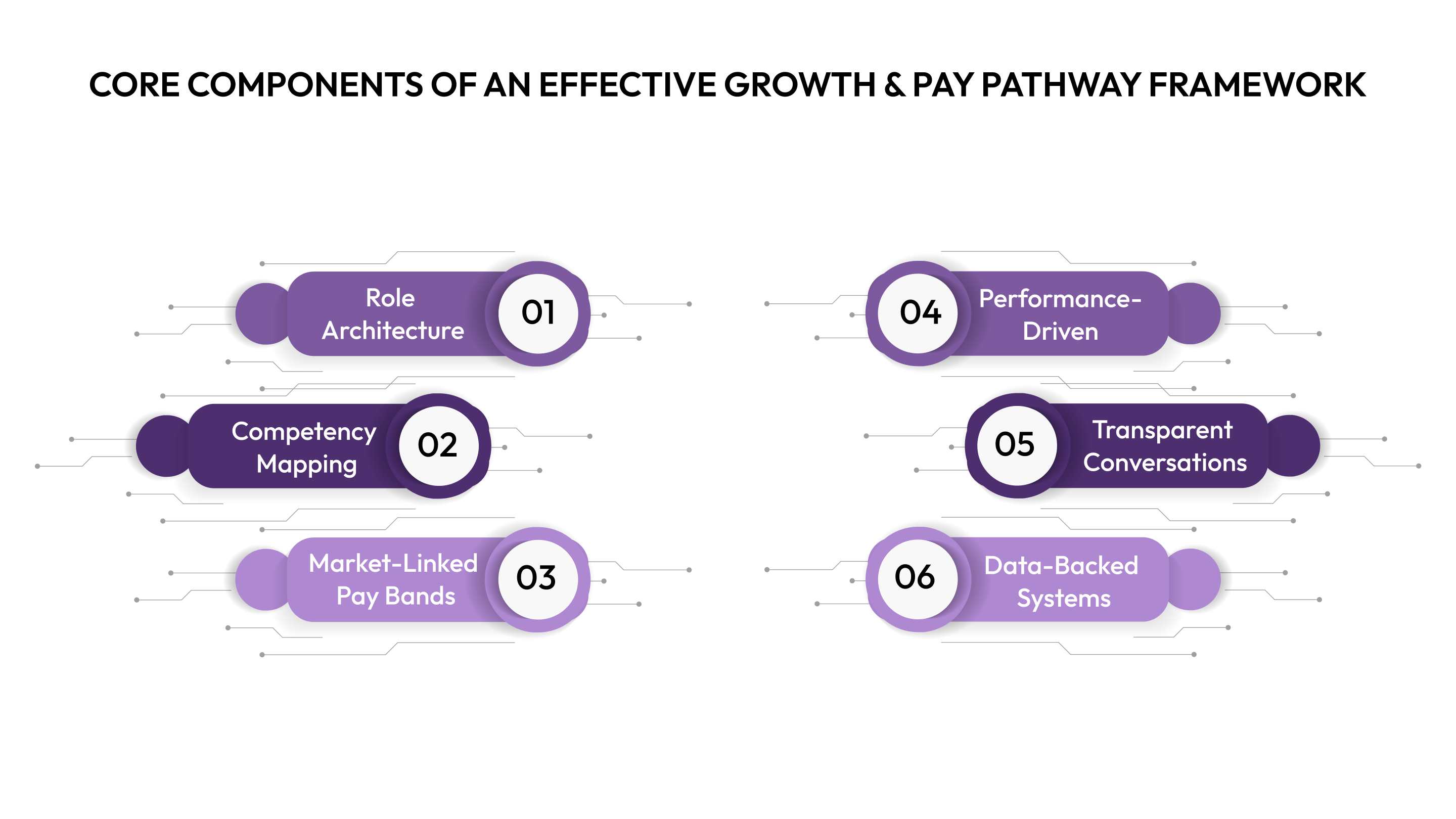
Building a structured growth and pay framework is not just about standardizing compensation. It is about giving employees a clear direction for professional advancement while helping organizations plan talent investments with confidence. A well-defined framework creates alignment between performance, skill development, and financial recognition.
Here are the key components that hold this framework together:
- Role Architecture That Defines Clarity: Every employee should know where they stand and where they can go next. Defining clear job levels, scopes, and expectations brings structure to career growth and ensures consistency in how roles are evaluated across departments or regions.
- Competency Mapping to Measure Readiness: Beyond titles, it is essential to define what skills, behaviors, and results each level demands. Competency frameworks help managers evaluate readiness for progression and give employees tangible goals to work toward.
- Market-Linked Pay Bands for Fairness and Retention: When compensation bands reflect market data and internal equity, they strengthen trust and reduce attrition risks. Regular benchmarking keeps pay structures relevant across diverse geographies, which is especially important for distributed or hybrid teams.
- Performance-Driven Progression Models: A growth pathway should reward impact, not just tenure. Linking pay adjustments and promotions to performance metrics builds a merit-based culture where effort and outcomes drive recognition.
- Transparent Conversations Around Growth and Pay: Clarity in communication is what turns structure into trust. Employees should know how decisions are made, what milestones matter, and how to plan their next move. Regular manager check-ins supported by reliable data make these discussions more meaningful.
- Data-Backed Systems for Consistency and Control: Technology plays a central role in ensuring fairness and scalability. CandorIQ brings all pay, performance, and growth data into one place. This gives HR and Finance a clear view of every role, team, and location. Automating benchmarking, pay bands, and planning cuts manual work and reduces pay mistakes. It also helps leaders make faster, data-based decisions. The result is a smoother review cycle, better cost control, and a more consistent employee experience.
With the key elements outlined, let’s look at the reasons structured growth and pay pathways have become a strategic priority for modern organizations.
Why You Should Invest in Structured Growth & Pay Pathways
A structured approach to employee growth and pay gives organizations a stronger foundation for long-term success. Instead of treating promotions or salary changes as isolated events, it connects skill development, performance, and compensation under one transparent system.
1. Builds Trust and Retention
Employees want clarity about how their growth impacts pay. When expectations are transparent, they’re more engaged and less likely to look elsewhere. This trust strengthens retention and creates a culture where performance discussions feel objective, not subjective.
2. Promotes Pay Equity and Fair Decisions
Unclear pay practices often lead to discrepancies across teams or regions. Structured pay pathways ensure every adjustment aligns with role value, experience, and verified market data, helping maintain internal fairness and compliance, especially for organizations managing global teams.
3. Improves Budget Control and Predictability
Ad-hoc salary changes can disrupt financial planning. A defined system aligns HR’s talent strategies with Finance’s budgeting needs, offering real-time visibility into compensation distribution and helping forecast costs more accurately across departments.
4. Strengthens Collaboration Between HR and Finance
HR drives employee development, while Finance ensures budget discipline. Structured frameworks bridge these priorities, enabling data-backed decisions on promotions, pay progressions, and headcount without repetitive reconciliation or guesswork.
5. Enables Scalability for Distributed Workforces
For teams spread across regions, pay variations are inevitable. A structured system introduces consistency, setting global standards while allowing regional flexibility. It ensures fairness, supports compliance, and preserves equity even as new markets are added.
In essence, structured growth and pay pathways don’t just streamline HR processes; they connect people, performance, and budgets into one sustainable model for long-term growth.
After recognizing why structured growth and pay systems matter, it’s time to explore how organizations can build and roll them out effectively.
Step-by-Step Implementation Process
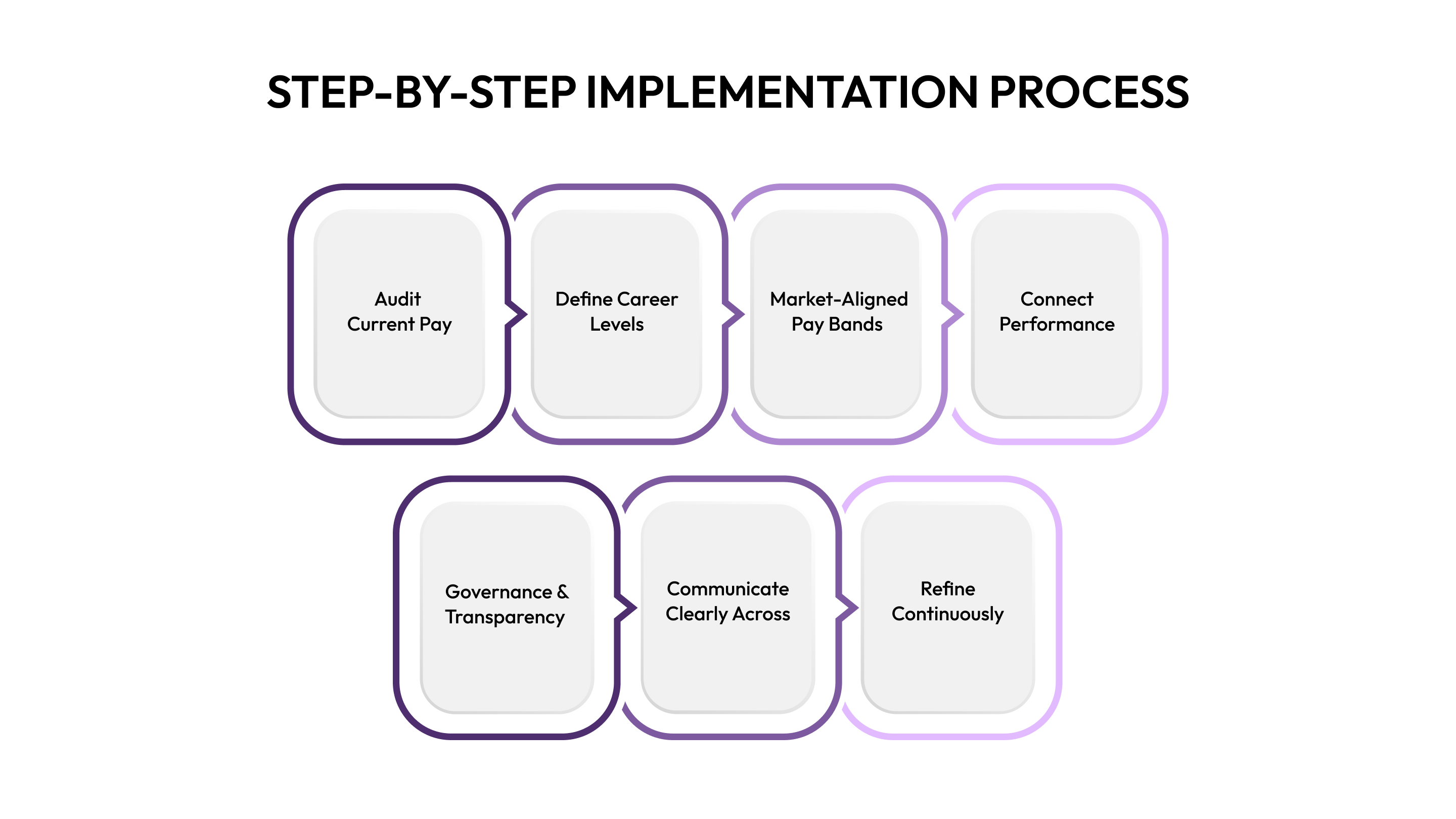
Creating a structured growth and pay pathway isn’t just about building a policy. It’s about creating a system that connects employee development with financial accountability. For HR and finance leaders in distributed and fast-growing organizations, the process must balance people priorities with budget discipline, compliance, and transparent decision-making.
Here’s how to approach it effectively:
1. Audit Current Pay and Progression Practices
Start by taking stock of your existing setup. Many scaling companies find that pay structures evolve inconsistently across regions or teams. Identify where pay decisions lack transparency, where roles have unclear progression, and where pay compression has crept in. This review gives you a factual starting point for change.
2. Define Career Levels and Growth Milestones
Employees want clarity on how they can advance, not just in title but in responsibility and skill. Define what growth looks like for every role family. Include both management and specialist tracks so employees see multiple paths forward.
- Outline the competencies required at each level.
- Add measurable indicators for promotions.
- Keep criteria consistent across departments and locations.
3. Develop Market-Aligned Pay Bands
A fair pay structure reflects both market data and internal equity. Benchmark each role against reliable compensation surveys and adjust for location when teams are distributed. Transparent pay bands not only improve retention but also build trust between leadership and employees.
- Review benchmarks regularly.
- Document pay ranges and progression rules.
- Share the structure with HR and finance jointly for budget validation.
4. Connect Performance and Pay Progression
Growth pathways only work when tied to measurable performance and skill development. Encourage managers to discuss both short-term performance and long-term potential during reviews. Link compensation decisions to these insights for accountability.
- Use structured review cycles.
- Include development goals in appraisal discussions.
- Recognize both performance and readiness for advancement.
5. Centralize Data for Governance and Transparency
Without a unified view, compensation and growth decisions often become siloed. A platform like CandorIQ connects HR and finance systems, enabling teams to plan, forecast, and manage compensation cycles in one place. It provides full visibility into pay ranges, headcount plans, and budget impact before decisions are finalized.
- Track equity across roles and locations.
- Automate approval workflows.
- Enable real-time collaboration between HR, finance, and leadership.
6. Communicate Clearly Across the Organization
Once your structure is ready, communication becomes critical. Employees should understand how pay decisions are made and what’s expected for the next step in their career. Managers must be equipped to have open, consistent conversations.
- Publish internal documentation on growth and pay structure.
- Host Q&A sessions or town halls for teams.
- Train people managers to use data confidently in discussions.
7. Monitor and Refine Continuously
Growth and pay systems evolve as your business does. Conduct periodic reviews to evaluate market competitiveness, internal fairness, and employee satisfaction. Distributed teams especially need frequent data checks to avoid regional inequities.
- Run annual pay equity audits.
- Track turnover and engagement metrics.
- Adjust levels and ranges based on new roles or skill shifts.
After setting up the framework and execution plan, organizations need ongoing strategies to strengthen and adapt their employee growth and pay models.
Key Strategies for Employee Growth & Pay Pathways
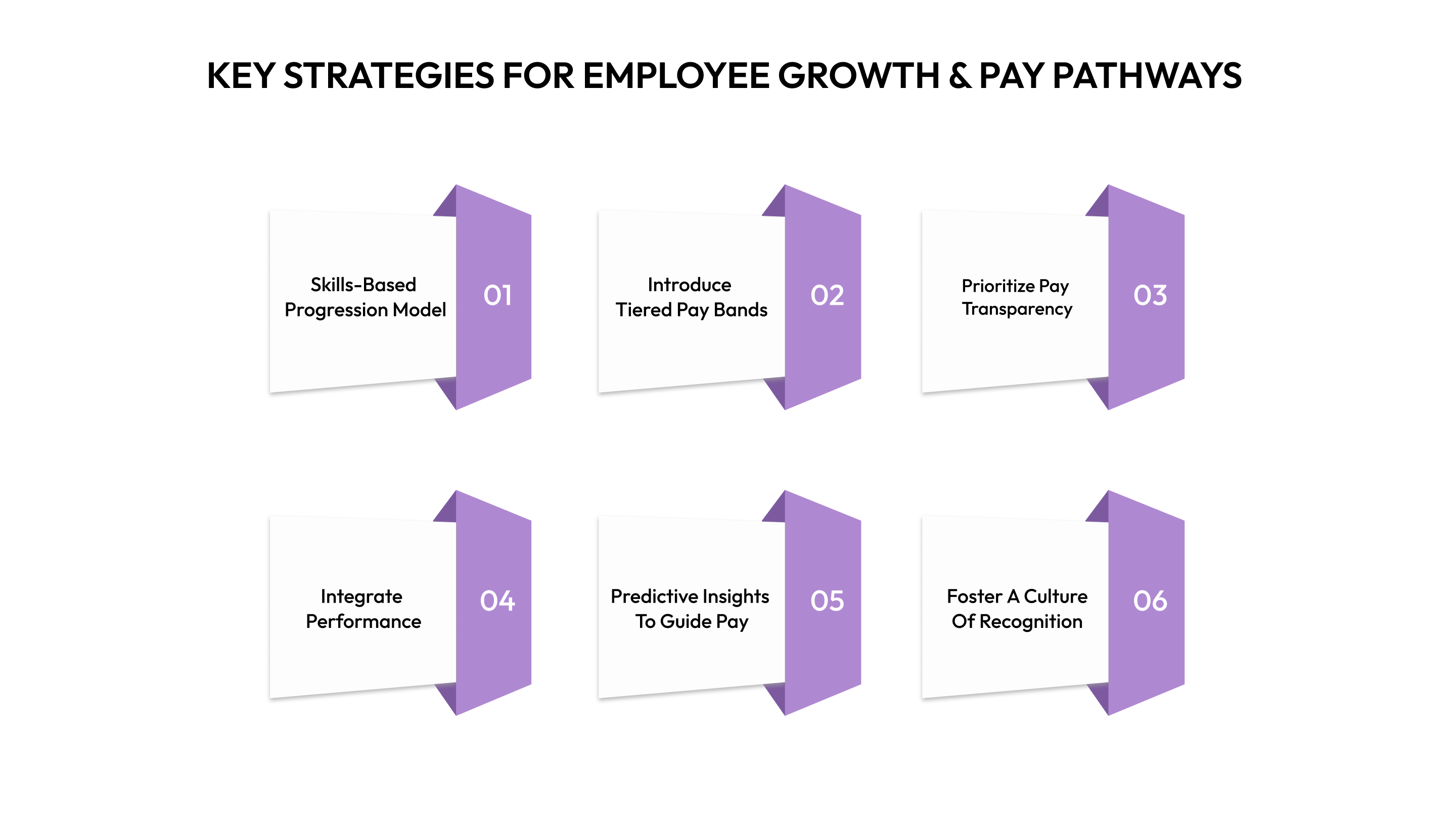
Building effective growth and pay pathways in 2026 requires a forward-looking approach that aligns employee aspirations with business goals. The modern workforce expects transparency, flexibility, and recognition, while organizations must manage pay equity, cost predictability, and compliance across regions.
Here’s how companies can create pathways that work, both for people and performance:
1. Adopt a Skills-Based Progression Model
Instead of relying solely on tenure or job titles, define growth based on skill acquisition and impact. Map core competencies to each role and identify what “next-level performance” looks like. This allows employees to see a clear roadmap for career movement and pay progression.
2. Introduce Tiered Pay Bands Linked to Role Scope
Establish tiered pay bands that align compensation with scope, complexity, and business value. For example, a senior analyst managing a regional portfolio would have a different range than one working on a single market. This approach ensures fairness while simplifying compensation benchmarking across locations.
3. Prioritize Pay Transparency and Communication
In 2026, employees value clarity over guesswork. Communicate how pay decisions are made, what performance indicators matter, and how internal equity is maintained. Open communication builds trust and reduces turnover, especially in hybrid and remote teams.
4. Integrate Performance and Learning Pathways
Link growth opportunities directly to learning and development milestones. For instance, completing a new certification or leading a key project could trigger eligibility for role advancement or salary review. This creates a continuous development cycle rather than annual one-time evaluations.
5. Use Data and Predictive Insights to Guide Pay Decisions
Utilize data-driven insights to anticipate market shifts, identify pay gaps, and model future budget scenarios. Predictive analytics can help HR and finance teams make informed decisions about where to invest in talent and how to maintain competitiveness.
6. Foster a Culture of Recognition Beyond Monetary Rewards
Growth isn’t always about salary increases. Encourage recognition programs, mentorship opportunities, and lateral moves that broaden exposure. A balanced rewards framework supports both engagement and retention in cost-sensitive environments.
Even with the right strategies in place, organizations often face real-world barriers that slow progress and impact consistency.
Key Barriers to Effective Growth and Pay Pathways
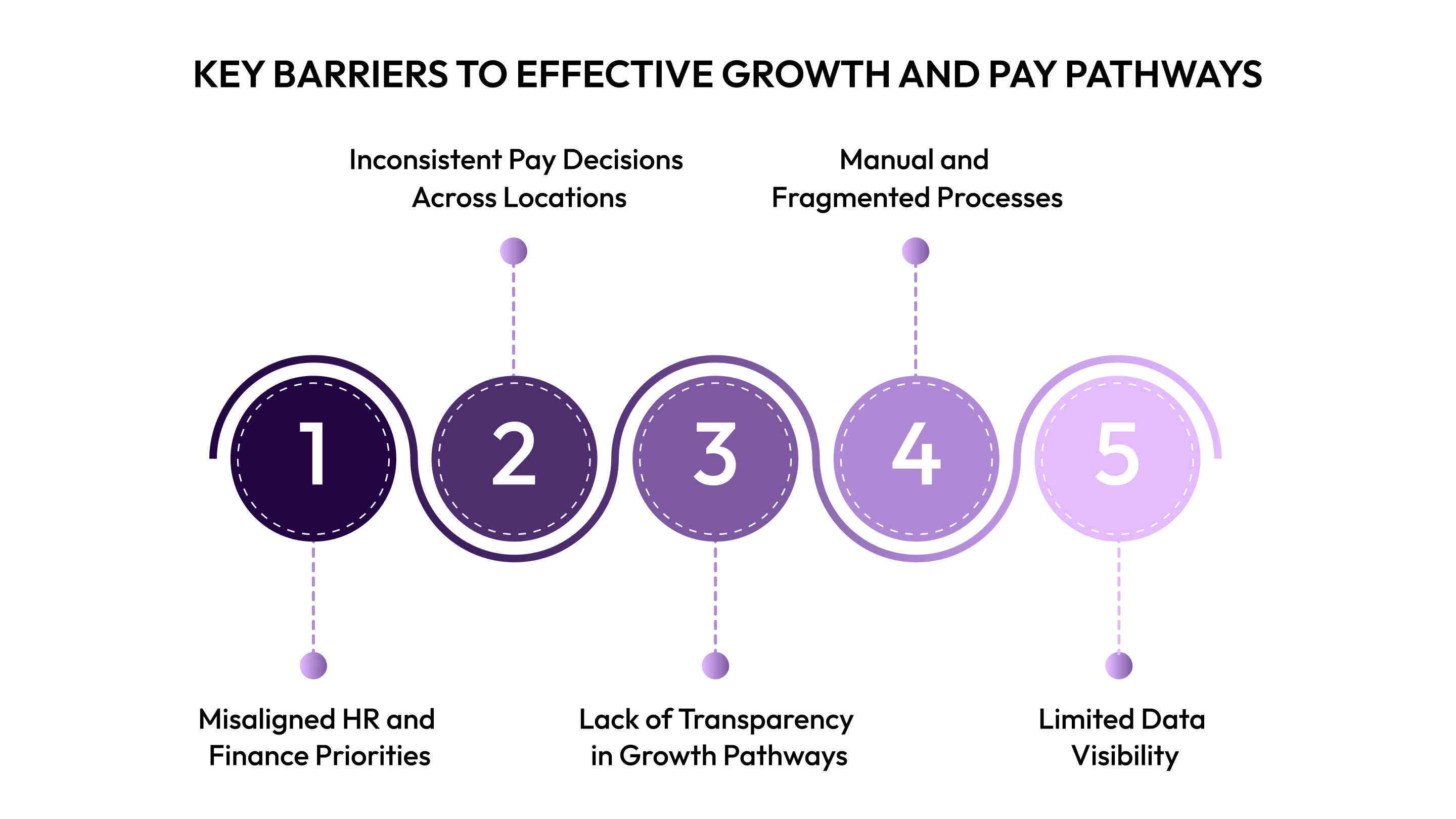
Even with clear intent, organizations often face hurdles when establishing structured growth and pay pathways. These challenges are common among distributed and scaling teams where multiple departments manage overlapping responsibilities and data sources.
1. Misaligned HR and Finance Priorities
HR teams aim to enhance employee experience and internal equity, while finance teams focus on budget control and cost predictability. Without alignment, both functions operate independently, leading to confusion and delayed decisions.
Solution: Build a shared framework where both teams access the same data for pay structures, approvals, and workforce plans. This ensures consistent decisions and financial accountability.
2. Inconsistent Pay Decisions Across Locations
Distributed organizations frequently deal with regional variations in pay due to market differences, currency fluctuations, and local regulations. This often leads to inequities that affect morale and retention.
Solution: Standardize pay bands with regional adjustments and clear benchmarking criteria. This approach balances fairness with competitiveness, keeping compensation consistent across locations.
3. Lack of Transparency in Growth Pathways
When employees can’t see how their skills and contributions translate into progression, motivation and engagement decline.
Solution: Design career maps that clearly outline growth opportunities, required competencies, and performance expectations. Linking these pathways with pay structures helps employees see tangible outcomes of their efforts.
4. Manual and Fragmented Processes
Relying on spreadsheets and emails often results in data loss, version control issues, and approval delays.
Solution: Automate core processes such as pay reviews, budget tracking, and headcount planning. A centralized workflow reduces dependency on manual inputs and speeds up communication between teams.
5. Limited Data Visibility
Without integrated analytics, teams struggle to analyze pay gaps, monitor budget utilization, or forecast hiring needs.
Solution: Consolidate compensation and workforce data into a unified system that allows real-time insights. This supports informed, forward-looking decisions across HR and Finance.
.png)
Conclusion
In 2026, growth and pay pathways are evolving into strategic frameworks that align employee aspirations with organizational goals. For HR leaders, finance heads, and compensation managers, the focus is on building fair, data-backed systems that drive retention and performance while maintaining budget control.
Transparent pay structures and well-defined growth frameworks build trust, strengthen engagement, and make compensation planning a continuous, insight-driven process.
CandorIQ helps teams achieve this balance by unifying compensation, analytics, and headcount planning into one platform. It enables faster, smarter, and more equitable pay decisions.
Book a demo with CandorIQ to see how you can cut review cycle time, improve pay accuracy, and plan growth with confidence.
FAQs
1. How can HR teams ensure pay pathways stay aligned with market trends?
HR teams can use real-time compensation benchmarking and industry analytics to review pay bands annually or biannually. This ensures salary structures stay competitive and reflect current market standards.
2. What’s the difference between career frameworks and pay pathways?
Career frameworks define how employees progress through roles and skill levels, while pay pathways outline how compensation changes alongside that growth. When used together, they create clarity and consistency in advancement and pay decisions.
3. How do pay pathways help improve employee retention?
When employees clearly understand how their performance, skills, and milestones influence pay, they’re more likely to stay engaged and plan their long-term careers with the organization. It builds transparency and trust across teams.
4. What role does technology play in ensuring equitable pay decisions?
Modern platforms use automation and analytics to minimize bias, standardize reviews, and flag inconsistencies in pay data. This supports fair, data-backed decisions instead of subjective or ad-hoc adjustments.
5. How often should organizations review and update their pay pathways?
Ideally, compensation structures should be reviewed annually, with mid-year checks when major business or market shifts occur. Regular reviews keep pathways relevant and aligned with evolving roles, performance metrics, and industry pay standards.
Ready to modernize your workforce and compensation strategy?
See how CandorIQ brings workforce planning and compensation together with AI.