

Defining an Effective Compensation and Reward System
Learn how to define an effective compensation and reward system that motivates employees and drives organizational success. Discover key strategies. Learn more!

A company’s reward strategy is crucial to attracting and retaining talent. Nearly 80% of employees say their pay hasn’t kept up with the cost of living. For mid-sized and rapidly growing organizations, designing an effective compensation and reward system goes beyond pay. It’s about fairness, alignment, and growth clarity.
Lean HR and finance teams must balance budget governance with performance-driven pay. Defining a clear compensation structure is key to boosting engagement, controlling costs, and building trust, especially with globally distributed teams.
In this blog, we’ll explore what defines an effective compensation and reward system, why it matters for growing teams, and the key steps to design one that truly drives organizational success.
At a glance:
- 80% of employees feel their pay hasn't kept pace with the cost of living, making a well-designed compensation system critical for retention and engagement
- Compensation goes beyond salary, includes bonuses, benefits, recognition programs, and non-financial rewards like career development and work-life balance.
- Effective systems use multiple reward types strategically, direct financial (salary, bonuses), indirect financial (benefits), and non-financial (recognition, growth opportunities)
- Design starts with business alignment. Match your reward strategy to company goals, then add market research, internal equity, and transparent pay structures.
- Common pitfalls sink good intentions. Ignoring market data, overcomplicating systems, neglecting internal fairness, and poor communication destroy trust.
- Implementation matters as much as design. Secure leadership buy-in, pilot before full rollout, leverage technology, and continuously gather feedback
- The payoff is substantial. Better talent attraction, lower turnover (replacing employees costs 50-200% of salary), higher performance, and stronger employer brand.
- One-size-fits-all doesn't work. Customize approaches for different roles while maintaining consistent fairness principles across the organization.
What Makes Up Your Compensation and Reward System?
A compensation and reward system is how a company rewards its employees for their work. It includes both financial and non-financial incentives designed to motivate, recognize, and retain talent.
Key components of this system include:
- Base Salary: The fixed payment employees receive.
- Bonuses & Incentives: Performance-based rewards that boost motivation.
- Benefits: Health insurance, retirement plans, and other perks.
- Recognition Programs: Non-monetary rewards like praise, awards, and career development opportunities.
A well-designed system aligns with company goals and ensures fairness, driving employee engagement and satisfaction. Now that you understand the foundation, let's explore your options.
Also Read: Compensation and Benefits: Essential Concepts Explained
Different Types of Reward Systems That Drive Motivation
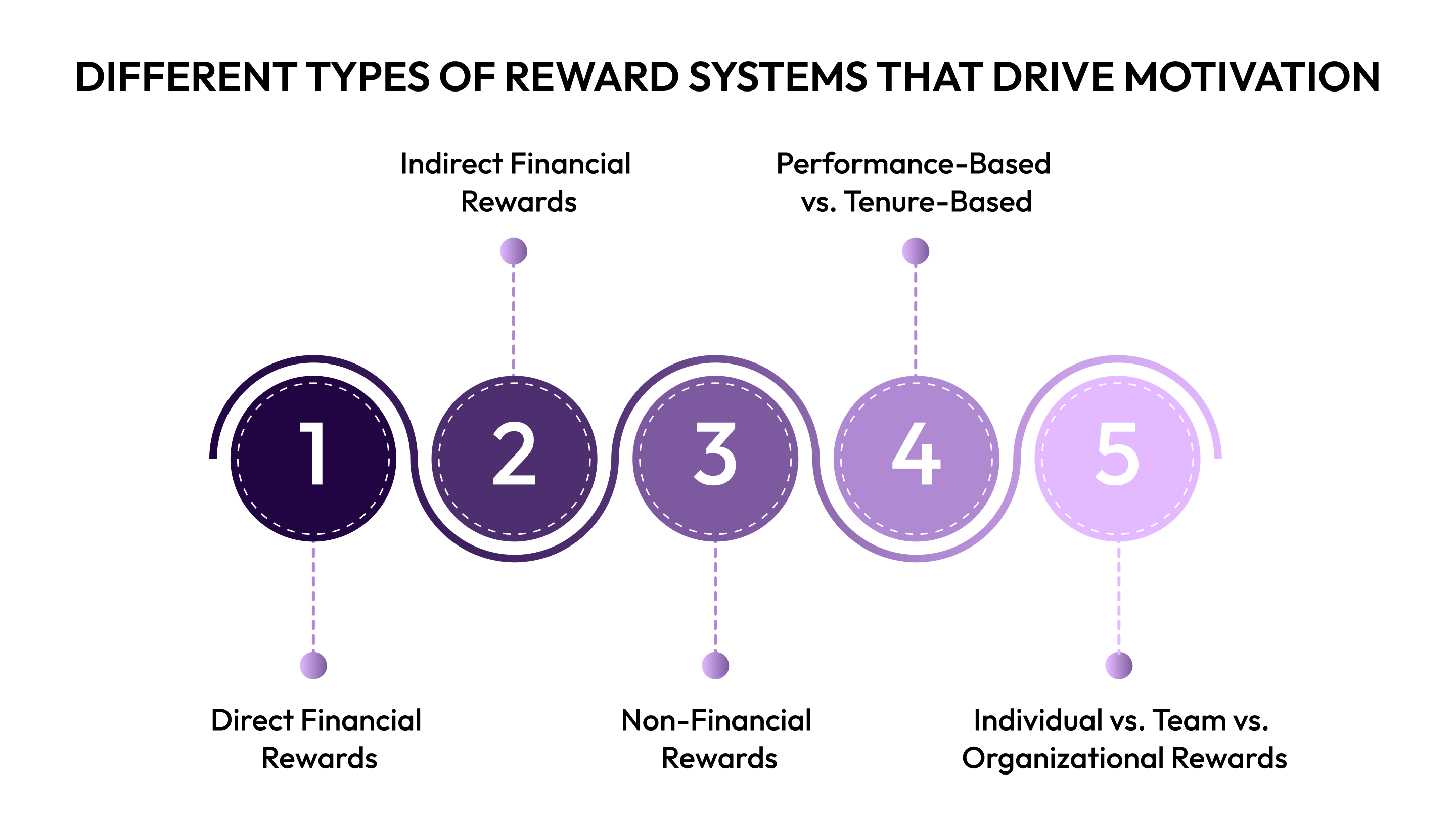
Different reward systems serve different purposes. Each type is designed to meet specific company needs and employee motivations. Let’s explore the most common ones:
Direct Financial Rewards
These are the money-based rewards that hit employee accounts.
- Base Salary: The predictable, fixed amount employees earn.
- Variable Pay: Bonuses, commissions, profit-sharing, and stock options, linking pay to performance.
- Overtime & Shift Differentials: Extra pay for extra hours or tough schedules, recognizing additional effort.
Indirect Financial Rewards (Benefits)
These rewards add value beyond salary.
- Health, dental, and vision insurance
- Retirement plans and pensions
- Paid time off and sick leave
- Life and disability insurance
- Tuition assistance and educational support
Benefits often make up 30-40% of total compensation, and employees notice when they’re missing.
Non-Financial Rewards
Not all rewards come with a price tag.
- Recognition: Celebrating achievements, whether through awards, thank-you notes, or shout-outs.
- Career Development: Training, mentorship, and growth opportunities.
- Work-Life Balance: Perks like flexible hours, remote work, wellness programs, and more time off.
- Workplace Culture: A positive, collaborative environment that fosters meaningful work.
Performance-Based vs. Tenure-Based
- Performance-Based: Rewards for achievements and results, motivating top performers.
- Tenure-Based: Rewards for loyalty and experience, promoting stability.
Most systems combine both; salary reflects experience, while bonuses reward current performance.
Individual vs. Team vs. Organizational Rewards
- Individual Rewards: Celebrate personal achievements, but can discourage teamwork.
- Team Rewards: Foster collaboration, though top performers might feel frustrated by weaker team members.
- Organizational Rewards: Profit-sharing or company-wide incentives align everyone to shared goals, though they might feel disconnected from daily work.
Each type of reward serves a different purpose. The smart move? Use all three strategically based on what each role requires. Read on to know how to design one.
Also Read: Creating an Effective Employee Compensation Plan
Step-by-Step Process to Design an Effective Compensation and Reward System
Creating an effective reward system requires a strategic approach. Here’s your roadmap to success:
Step 1: Start with Clear Business Objectives
Align your reward system with your company’s goals. Ask yourself: What are we aiming for? Growth? Innovation? Customer satisfaction? Your strategy should dictate your structure. If collaboration matters, reward teamwork. If sales are key, emphasize commissions.
Step 2: Conduct Market Research
Know the competition to stay competitive. Research salary data, industry reports, and benefits packages. Understand what others pay for similar roles. This helps you decide whether to lead, match, or lag in compensation. Modern platforms like CandorIQ provide access to global compensation data across 60+ countries.
Step 3: Define Job Roles and Requirements
Clear roles mean fair rewards. Document each position’s responsibilities, required skills, and success outcomes. Clear job descriptions help both managers and employees understand how rewards are earned.
Step 4: Establish Internal Equity
Fairness within your organization is just as important as external competitiveness. Evaluate jobs by complexity, skill level, decision-making authority, and impact on business results. Avoid internal inequity, employee comparison, and unfairness to keep them engaged.
Step 5: Create Transparent Pay Structures
Clarity breeds trust. Define salary bands and criteria for raises, bonuses, and promotions. When employees understand how to grow, they’re motivated to reach their goals. Centralized pay band management of CandorIQ eliminates the need for cumbersome spreadsheets and ensures everyone works from the same source of truth.
Step 6: Balance Fixed and Variable Compensation
The right mix depends on your goals. Fixed pay offers stability, while variable pay motivates performance. Use both to provide financial security and reward exceptional contributions.
Step 7: Include Meaningful Benefits
Benefits are a big part of total compensation. Survey employees to understand their preferences. Offer tailored benefits that match their needs, like healthcare for parents or retirement plans for near-retirees.
Step 8: Design Performance Metrics Carefully
What you measure, you get. Set metrics that are specific, measurable, achievable, relevant, and time-bound. Make sure your metrics encourage the right behaviors and outcomes without negative side effects.
Step 9: Build in Flexibility
Your system must adapt over time. Include mechanisms for adjustments based on performance reviews or market shifts. Flexibility ensures your system stays relevant without major overhauls.
Step 10: Communicate the System Clearly
If employees don’t understand the system, it won’t work. Explain how compensation decisions are made. Share salary bands and clarify how performance links to rewards. Transparency builds trust and reduces speculation.
Step 11: Test and Refine
No system is perfect from the start. Pilot your system with one department, gather feedback, and adjust. Continuously refine based on results to ensure the system stays effective as your company grows.
By following these steps, you’ll build a reward system that’s clear, motivating, and aligned with your goals. So, what is the payoff?
Also Read: Customized Employee Reward Strategies for Motivation
Why an Effective Reward System Matters
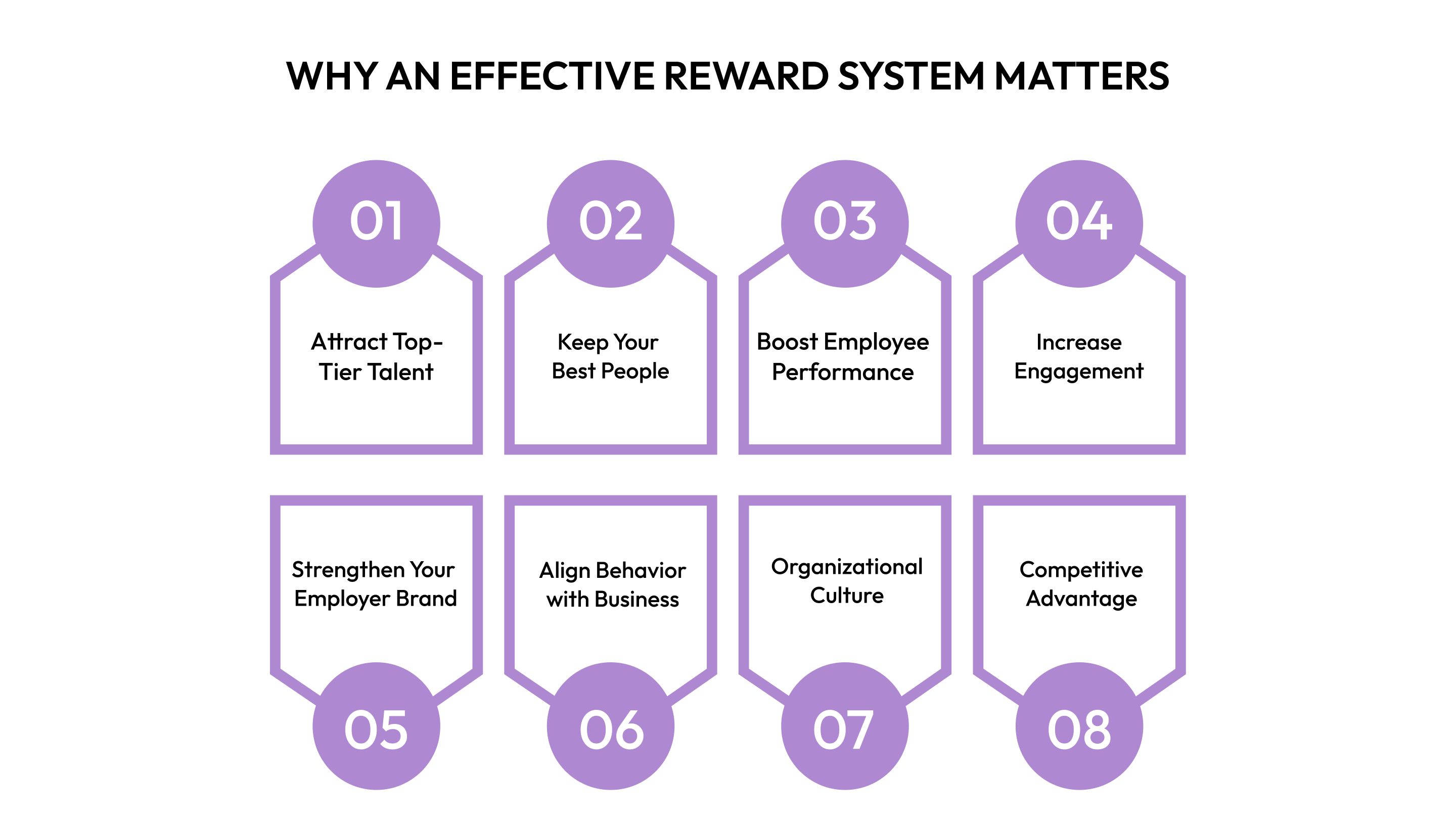
A well-designed reward system can transform your organization. It’s not just about pay; it’s about creating an environment where employees feel valued and motivated.
Here’s the payoffs:
- Attract Top-Tier Talent: Competitive compensation gets you noticed. Talented professionals research salary ranges before applying. If you’re not competitive, you won’t even be considered. A strong rewards package shows you value employees as a whole, making your company stand out.
- Keep Your Best People: Turnover is costly. Replacing an employee can cost 50-200% of their annual salary. Fair compensation helps retain your best talent. When employees feel valued, they stay longer, saving your company the costs of constant rehiring.
- Boost Employee Performance: Clear rewards tied to goals motivate employees. Performance-based incentives create focus and drive. Recognition reinforces good work. The result? Higher productivity and better-quality output.
- Increase Engagement and Motivation: Engaged employees care about their work. They go above and beyond, contributing ideas and solving problems. Reward systems that recognize effort fuel this engagement, encouraging employees to give their best.
- Strengthen Your Employer Brand: A competitive rewards package boosts your company’s reputation. Word spreads, and candidates seek you out. When your compensation stands out, you spend less on recruitment marketing and attract top candidates.
- Align Behavior with Business Goals: Reward systems guide employee actions. Want more sales? Offer commissions. Need innovation? Reward creative problem-solving. Strategic rewards keep everyone aligned and moving in the same direction.
- Improve Organizational Culture: Fair compensation builds trust and transparency. Recognition programs create positive environments. Celebrating wins and strengthening team bonds become a part of your company’s culture, making work a place employees enjoy.
- Gain Competitive Advantage: In the battle for talent, an effective reward system gives you the edge. You attract the best candidates, keep them longer, and motivate them to perform at their highest level. This translates into better market performance and greater profitability.
When you get your reward system right, the results speak for themselves. However, even with a solid blueprint, organizations stumble.

Also Read: How to Create Customizable Compensation Plans That Drive Results
The Pitfalls: Where Compensation Systems Go Wrong
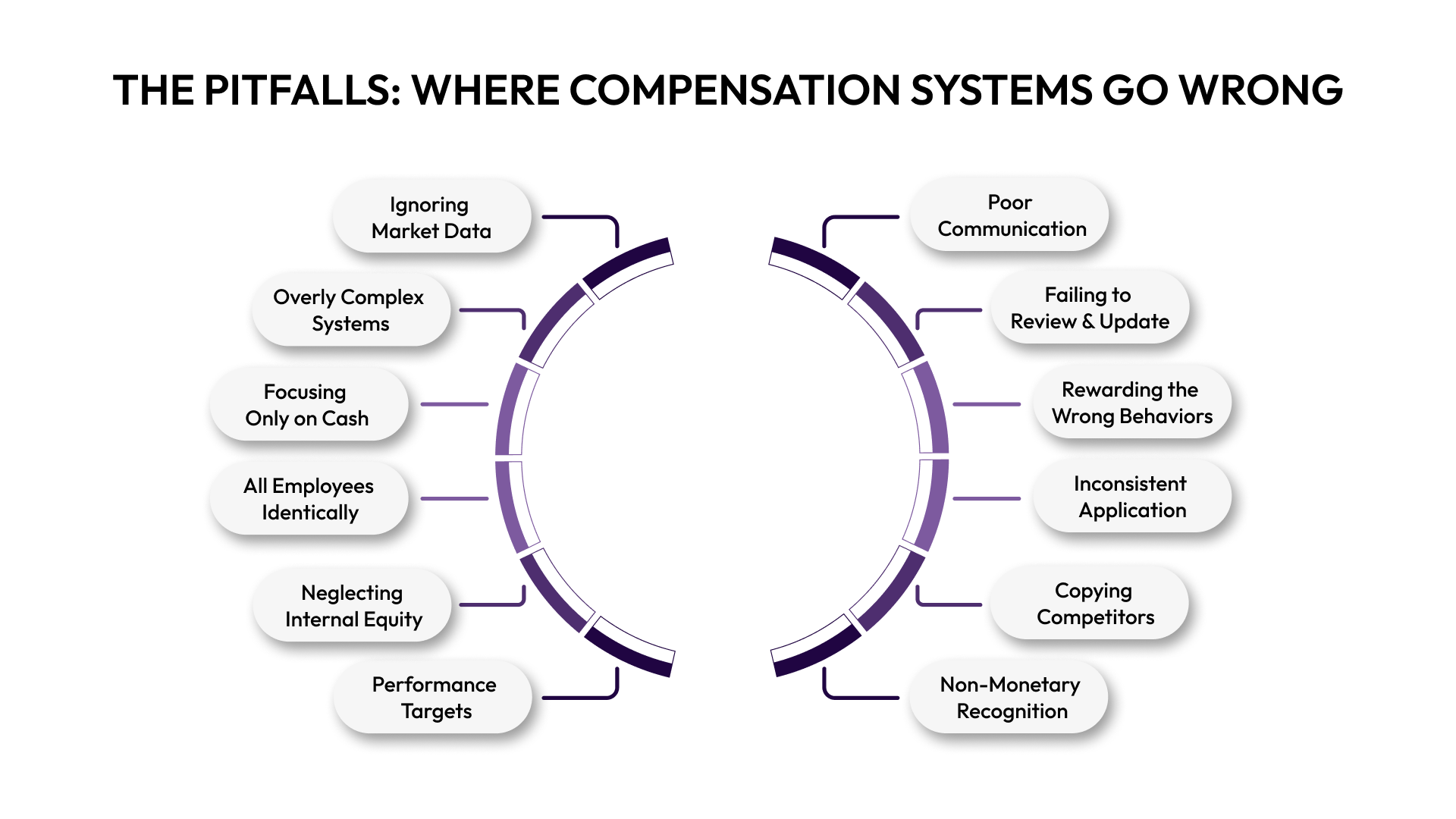
Knowing what to avoid is just as important as knowing what to do. Here's where compensation systems often fail and how to avoid them:
- Ignoring Market Data: Relying on outdated data or gut feelings can cost you.
Salaries change fast, especially in tech, healthcare, and skilled trades. Regular market research is a must. Update it annually, or quarterly for high-demand roles. - Creating Overly Complex Systems: If employees need a manual to understand how they’re paid, it’s too complicated. Complex systems confuse employees and disengage them. Simple, straightforward systems work best.
- Focusing Only on Cash: Money matters, but it's not everything. Ignoring benefits, recognition, and work-life balance can drive top talent away. A well-rounded rewards package keeps employees happy.
- Treating All Employees Identically: Fair doesn’t mean identical. Sales teams need performance-based pay, finance teams need stability, and creative teams value recognition. Customize your approach to different roles.
- Neglecting Internal Equity: Competitive pay is important, but fairness inside matters too. If employees discover new hires are paid more for the same work, trust is broken. Balance market rates with internal fairness. CandorIQ’s AI-powered tools can identify compensation outliers and assess equity risk across your organization before problems arise.
- Setting Unrealistic Performance Targets: Goals should challenge, not overwhelm. Unrealistic targets demotivate employees. Set achievable goals and adjust them as circumstances change.
- Poor Communication and Transparency: Secrecy breeds suspicion. Employees will assume unfairness if they don’t understand how pay decisions are made. Be transparent about your process to build trust.
- Failing to Review and Update Regularly: What worked yesterday may not work today. Business priorities and market conditions change. Review your system annually and adjust based on feedback and evolving needs.
- Rewarding the Wrong Behaviors: Incentives can backfire if not carefully designed. Rewarding speed over quality, individual performance in team roles, or activity instead of results can lead to unintended consequences. Think through how rewards impact behavior.
- Inconsistent Application: Inconsistency destroys credibility. When rules are applied differently, employees notice. Train managers to apply the system fairly and consistently.
- Copying Competitors Without Adaptation: What works for big companies may not work for yours. Tailor your system to fit your company’s size, industry, and culture. Learn from others, but make the system your own.
- Neglecting Non-Monetary Recognition: A simple thank you can go a long way. Recognition, like career development, meaningful work, and appreciation, is invaluable. Make it a regular part of your culture.
By avoiding these pitfalls, you can create a compensation system that truly supports your business goals and keeps employees motivated and loyal.
Knowing what to do and what to avoid sets the foundation. The next step is crucial, making it work in your organization.
Tips To Effectively Implement Compensation and Reward Systems
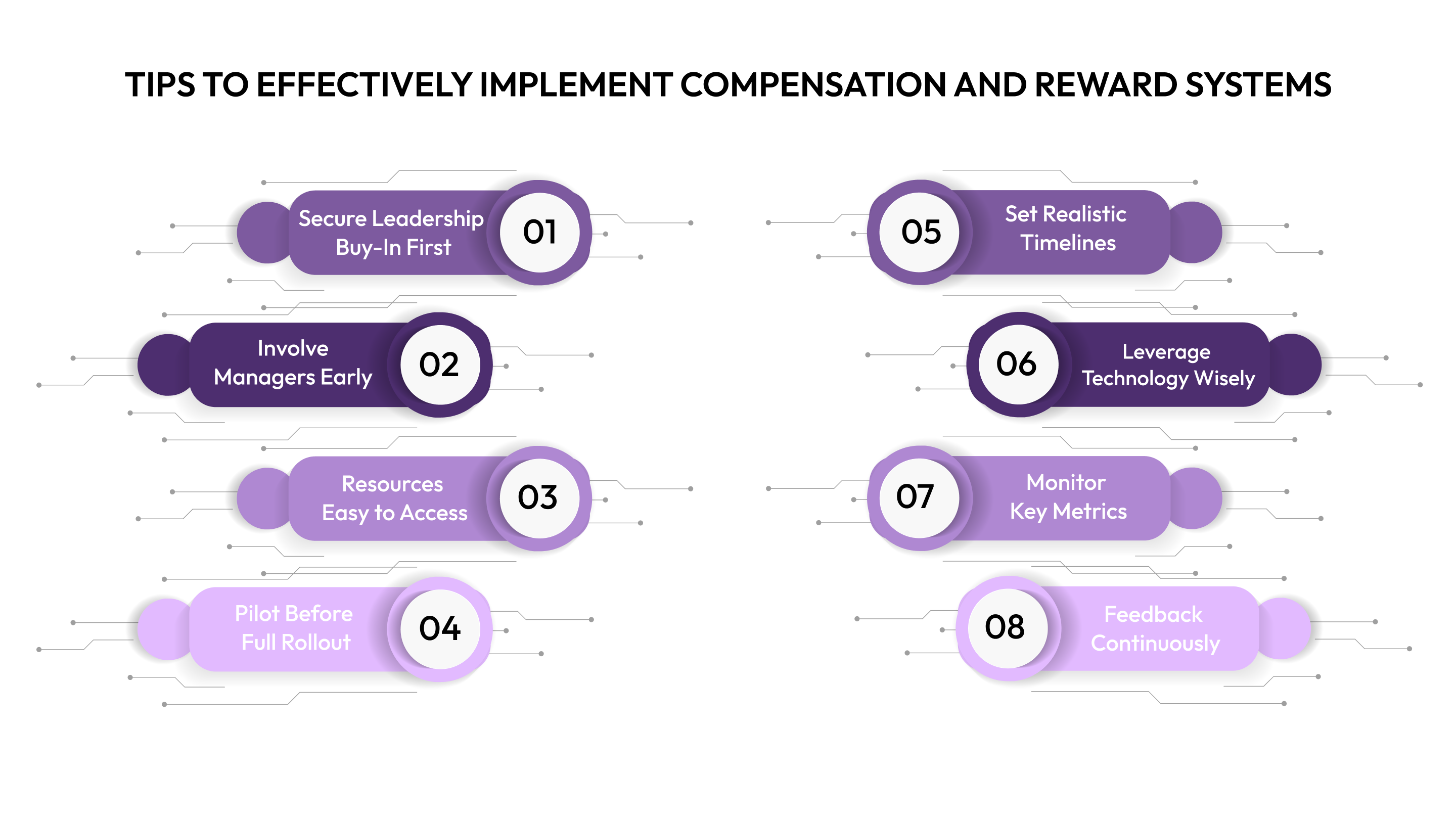
Implementing a successful compensation and reward system requires careful planning and execution. Here are some tips to get it right:
- Tip 1: Secure Leadership Buy-In First: Executive support is crucial. Leaders must understand the system, endorse it, and model the desired behaviors. Present a clear business case to show how the system drives results.
- Tip 2: Involve Managers Early: Managers are key to success. Get them involved from the start. Explain the strategy, train them, and address concerns. Well-prepared managers will champion the system, while surprised ones might resist.
- Tip 3: Make Resources Easy to Access: Employees will have questions. Provide clear documentation and self-service tools. Make sure answers are easy to find to reduce anxiety and avoid misinformation.
- Tip 4: Pilot Before Full Rollout: Test the system with a small group. Pilot the new system in one department, gather feedback, and fix issues before a company-wide rollout. A successful pilot builds confidence.
- Tip 5: Set Realistic Timelines: Don’t rush, but don’t drag it out. Plan out each step, design, training, communication, and technology setup. Give yourself extra time for unexpected delays and communicate milestones clearly.
- Tip 6: Leverage Technology Wisely: The right tools streamline the process. HRIS systems can automate compensation calculations and track metrics. Choose tools that fit your needs, don’t overcomplicate things.
- Tip 7: Monitor Key Metrics: Track your system’s effectiveness. Watch turnover rates, offer acceptance rates, employee engagement, and performance trends. These metrics show if your system is working.
- Tip 8: Gather Feedback Continuously: The process doesn’t stop after launch. Create channels for feedback, surveys, focus groups, and one-on-ones. Listen to employees and make adjustments based on their input.
By following these steps, you’ll turn your strategy into a rewarding system that truly works for your organization.
Also Read: Compensation Management Software Guide for HR Teams in 2025
Final Thoughts!
Building an effective compensation and reward system isn't a one-time project; it's an ongoing commitment to your people and your business. You've seen the framework, the pitfalls, and the implementation roadmap. Now comes execution.
The complexity can feel overwhelming, especially as your organization scales. Managing salary bands, ensuring equity, tracking market changes, and maintaining transparency across hundreds or thousands of employees requires sophisticated tools and processes.
That's where platforms like CandorIQ come in. Purpose-built for compensation management, it helps organizations design, implement, and maintain fair, competitive systems without drowning in spreadsheets.
If you're ready to modernize how you approach compensation, book a demo to see your next logical step.
Frequently Asked Questions
1. Should we disclose salary ranges in job postings?
Increasingly, yes. Many states now require it legally. Beyond compliance, transparency attracts serious candidates and reduces wasted time on misaligned expectations. It also signals fairness and builds employer brand credibility. Just ensure your ranges are defensible and competitive.
2. How do we reward performance when the budget is tight?
Get creative beyond cash. Offer flexible work arrangements, additional PTO, professional development opportunities, better projects, or public recognition. Fast-track high performers for promotion when budgets improve. Communicate budget constraints honestly, and transparency maintains trust even when you can't give raises.
3. What's the difference between merit increases and cost-of-living adjustments?
Merit increases reward individual performance and contributions—they're earned and should vary by employee. Cost-of-living adjustments (COLA) offset inflation and maintain purchasing power; they're typically uniform across the organization. Best practice: do both, but separately and clearly labeled.
4. How do we prevent pay discrimination in our compensation system?
Start with objective job evaluations and clear salary bands. Regularly audit compensation data by gender, race, and other protected characteristics. Train managers on bias recognition. Document all compensation decisions with a clear rationale. Consider blind resume screening in hiring. Make pay transparency the default.
5. Can we have different compensation strategies for different departments?
Yes, with caution. Different functions may need different approaches—sales versus engineering versus operations. However, maintain consistent principles around fairness, transparency, and decision-making processes. Document why different strategies exist to prevent perceptions of favoritism.
Ready to modernize your workforce and compensation strategy?
See how CandorIQ brings workforce planning and compensation together with AI.