

Complete Guide to Company Strategy Training, Wages & Salary Analysis
Align wages with company strategy through efficient job analysis and market research. Identify pay gaps and develop actionable plans. Click to optimize salaries now.

Managing pay, training, and job responsibilities can feel overwhelming, especially for fast-growing companies with distributed teams. HR and Finance leaders often struggle to align salaries, training investments, and workforce plans while keeping budgets under control.
Only 19% of U.S. companies have a formal pay-transparency strategy, even though 75% of candidates expect clarity on compensation. This gap creates confusion, impacts retention, and slows decision-making for leaders trying to scale efficiently.
This guide helps you connect company strategy, job analysis, training, and wages to make smarter workforce decisions. You’ll learn how to design fair pay structures, link training to performance, and ensure collaboration between HR, Finance, and leadership.
Key Takeaways
- When job analysis, training, and compensation all support your company’s goals, every workforce move creates real impact.
- Clear role definitions remove guesswork, ensuring salaries, promotions, and training programs are consistent and equitable across teams.
- Skill-building programs shouldn’t just upskill employees; they should also inform pay raises and promotions, rewarding growth and performance.
- Standardized expectations, training, and geo-adjusted pay make sure remote or multi-location employees feel valued and fairly compensated.
What Is Job Analysis and How Does It Affect Wages and Training?
Job analysis is the structured process of defining a role’s responsibilities, required skills, and performance expectations. It forms the foundation for fair pay, targeted training, and workforce planning.
For companies with distributed teams or rapid growth, job analysis ensures consistency in pay and training across locations. Platforms like CandorIQ help solve this by giving HR and Finance a single source of truth. Leaders can evaluate roles, pay structures, and training needs in one place, reducing manual work, cutting approval delays, and improving the accuracy of compensation and promotion decisions.
Key ways job analysis impacts wages and training include:
- Establishing fair pay structures: A Clear understanding of a role’s complexity and responsibilities helps determine competitive and equitable salaries.
- Guiding training programs: Identifies skill gaps so organizations can design programs that prepare employees for current and future roles.
- Supporting career progression: Structured role definitions clarify the competencies needed for promotions and growth.
- Strengthening budget planning: Understanding each role’s requirements enables accurate headcount and compensation forecasts.
- Aligning workforce with business goals: Ensures that skills, responsibilities, and pay decisions match organizational priorities.
Understanding how job analysis shapes wages and training lays the foundation for a bigger picture; aligning strategy, training, job analysis, and pay ensures every workforce decision drives business goals and employee growth.
Why Should Companies Align Strategy, Training, Job Analysis, and Pay?
While job analysis provides insights into roles, aligning these insights with company strategy ensures that every workforce decision supports broader business objectives. For HR and Finance leaders, this alignment reduces friction and improves collaboration across teams.
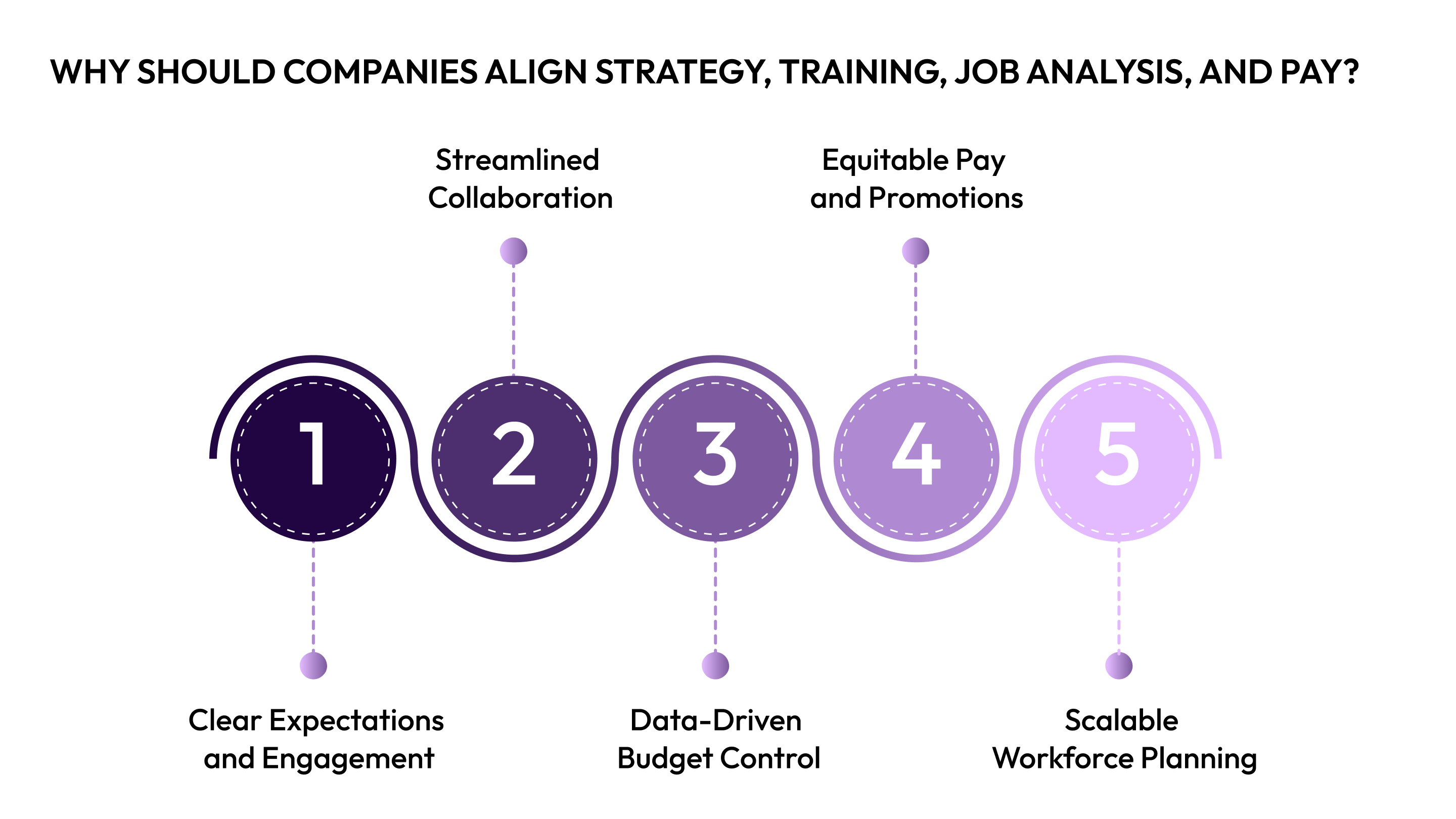
Key benefits of strategic alignment include:
- Clear expectations and engagement: Employees understand their roles, career paths, and how compensation is determined, increasing motivation and retention.
- Streamlined collaboration: HR, Finance, and leadership share a unified view of workforce plans, reducing miscommunication.
Platforms like CandorIQ help teams move from manual coordination to real-time alignment. By bringing compensation data, training insights, and role structures into one place, companies cut approval delays, minimize rework, and improve the accuracy of budgeting and workforce planning. This leads to faster cycles, fewer errors, and better governance across distributed teams.
- Data-driven budget control: Linking compensation and training to business objectives prevents overspending and ensures predictability.
- Equitable pay and promotions: Alignment reinforces fairness across teams and locations, reducing pay gaps.
- Scalable workforce planning: Companies growing rapidly can plan headcount 2–3x per year without compromising structure or transparency.
Once organizations understand why aligning strategy, job analysis, training, and pay is critical, the next step is designing training programs that actively influence compensation and career growth.

How Can Training Programs Be Designed to Impact Compensation?
Training programs have the greatest impact when they are directly tied to employee skills, performance expectations, and compensation outcomes. For HR and Finance leaders managing distributed teams or scaling rapidly, linking training to pay ensures investments in learning translate into measurable business results, fair reward systems, and employee satisfaction.
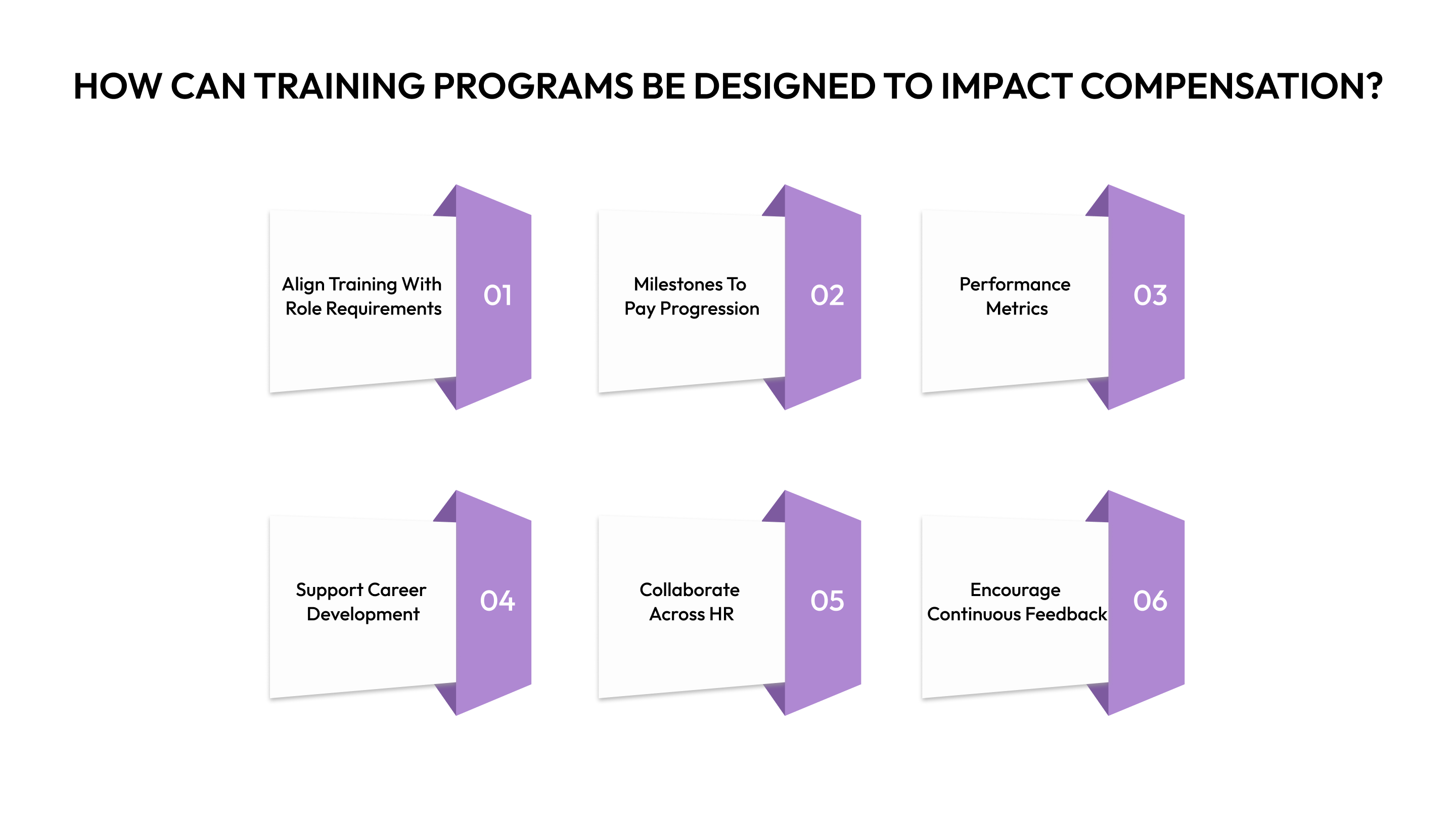
Here are some key strategies to design training programs that influence compensation include:
1. Align training with role requirements
Begin by analyzing the skills and competencies critical for success in each role. For example, a sales associate may require advanced negotiation training, while a software engineer may need upskilling in a new programming language. By aligning learning objectives with these role-specific needs, employees develop skills that directly impact their current responsibilities and qualify them for higher pay.
2. Link certifications or milestones to pay progression
Establish clear incentives by tying the completion of courses, certifications, or performance milestones to compensation benefits. Employees who achieve key training goals can become eligible for promotions, salary increases, or bonus payouts. This creates a visible, merit-based pathway from learning to earning, motivating employees to invest in their development.
3. Integrate performance metrics
Measure the effectiveness of training programs using quantifiable indicators such as productivity gains, project completion rates, sales performance, or customer satisfaction scores. These metrics provide an evidence-based approach for HR and Finance to adjust compensation, making pay decisions transparent, fair, and data-driven.
4. Support career development paths
Design training programs that prepare employees for future roles or leadership positions. For example, leadership training for junior managers can set them up for team lead roles, while technical upskilling prepares staff for senior positions. Employees then clearly understand how acquiring specific skills translates into career progression and increased compensation.
5. Collaborate across HR and Finance
Close coordination between HR and Finance ensures training programs align with budget constraints and compensation frameworks. By working together, teams can balance skill development with financial sustainability, ensuring pay adjustments are justified, fair, and scalable across the organization.
6. Encourage continuous feedback and evaluation
Regularly assess training impact and employee progress through check-ins, performance reviews, and skill assessments. This feedback loop allows managers to refine training programs, ensure they remain aligned with business objectives, and confirm that compensation adjustments reflect actual skill development and performance improvements.
When training programs are carefully connected to compensation, organizations achieve multiple benefits: employees gain clarity on growth opportunities, HR teams can justify pay decisions confidently, Finance can forecast budgets accurately, and the company builds a culture of fairness, skill development, and retention.
After aligning training programs with skill development and career growth, companies need a clear salary framework to reflect these efforts fairly.
How Should Companies Build a Comprehensive Wages and Salary Framework?
A well-structured wages and salary framework ensures fair, transparent, and consistent compensation across roles, teams, and locations. For HR and Finance leaders managing distributed teams or scaling rapidly, a comprehensive framework reduces miscommunication, supports budget governance, and aligns pay with business objectives.
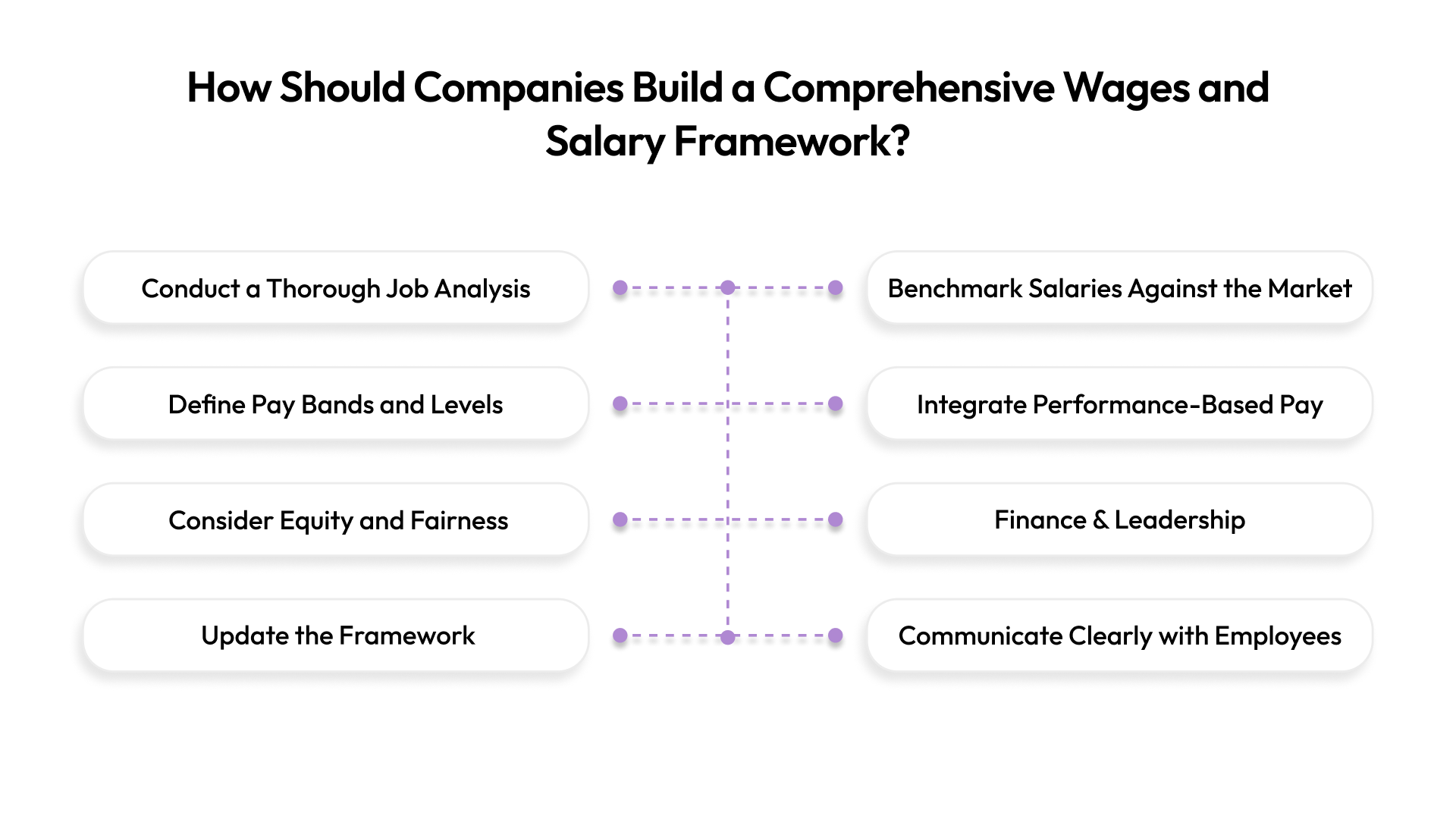
Here’s how you can build an effective wages and salary framework:
1. Conduct a thorough job analysis
- Define role responsibilities, required skills, and performance expectations.
- Assess the relative complexity and impact of each role on business objectives.
- Standardize role descriptions to ensure consistency across departments and locations.
2. Benchmark salaries against the market
- Use industry surveys and reliable compensation data to determine competitive pay ranges.
- Consider regional cost-of-living adjustments for distributed teams.
- Identify salary gaps to proactively address pay disparities.
3. Define pay bands and levels
- Establish salary ranges for each role or job level, considering experience, responsibilities, and market rates.
- Include minimum, midpoint, and maximum values for clarity and flexibility.
- Create clear guidelines for promotions, merit increases, and lateral moves.
4. Integrate performance-based pay
- Link bonuses, incentives, and salary adjustments to measurable performance outcomes.
- Use objective criteria, such as KPIs, productivity, or project delivery, to determine rewards.
- Ensure employees understand how performance impacts compensation.
5. Consider equity and fairness
- Conduct regular pay audits to identify and correct gaps.
- Ensure gender, location, or team-based disparities are addressed proactively.
- Align with legal requirements and industry best practices to maintain compliance.
6. Collaborate with Finance and Leadership
- Work with Finance to assess budget constraints and forecast workforce costs.
- Involve leadership to ensure pay decisions align with business strategy and growth plans.
- Use collaborative planning to balance fairness, market competitiveness, and financial sustainability.
7. Regularly review and update the framework
- Adjust pay bands based on market trends, organizational growth, and evolving role requirements.
- Review incentive structures and merit increase policies annually.
- Gather feedback from employees and managers to identify areas for improvement.
8. Communicate clearly with employees
- Explain how compensation is determined, including pay bands and performance metrics.
- Share pathways for career progression and growth opportunities.
- Promote transparency to improve engagement, retention, and trust.
With a well-structured pay framework established, companies can now link job analysis and training to compensation, creating a unified approach to workforce planning.
How Can Job Analysis, Training, and Compensation Be Integrated into Workforce Planning?
Integrating job analysis, training, and compensation into workforce planning ensures HR decisions are strategic, consistent, and aligned with business goals. For fast-growing companies or those managing distributed teams, this integration improves visibility, strengthens budget governance, and enhances collaboration between HR, Finance, and leadership.
Key ways to achieve this integration include:
- Align job roles with workforce needs: Job analysis defines responsibilities, skills, and performance expectations for each role, helping leaders plan headcount and allocate resources effectively.
- Link training to skill gaps and growth plans: Training programs should target competencies identified through job analysis, ensuring employees develop the skills required for current and future roles across all locations.
- Integrate compensation planning into workflows: Map pay structures, promotions, and incentives to role requirements and performance metrics, ensuring alignment with budget forecasts and business strategy.
- Enable cross-team collaboration and approvals: Streamlined workflows allow HR, Finance, and leadership to review and approve hiring, training, and compensation decisions, reducing delays and miscommunication.
- Monitor, review, and adapt continuously: Track performance, training outcomes, and compensation adjustments to identify gaps and make proactive changes, ensuring workforce alignment with business objectives.
By connecting job analysis, training, and compensation with workforce planning, companies can achieve scalable growth, maintain budget control, and deliver a consistent, fair employee experience, even for distributed or remote-first teams.
Once workforce planning incorporates roles, training, and pay, companies must tackle the practical hurdles of distributed teams and global compensation management.
What Are the Challenges of Managing Distributed Teams and Global Pay?
Managing distributed teams and global pay brings multiple challenges that affect employee engagement, budget control, and operational consistency. Companies with employees across locations must maintain fairness, transparency, and compliance while scaling efficiently.
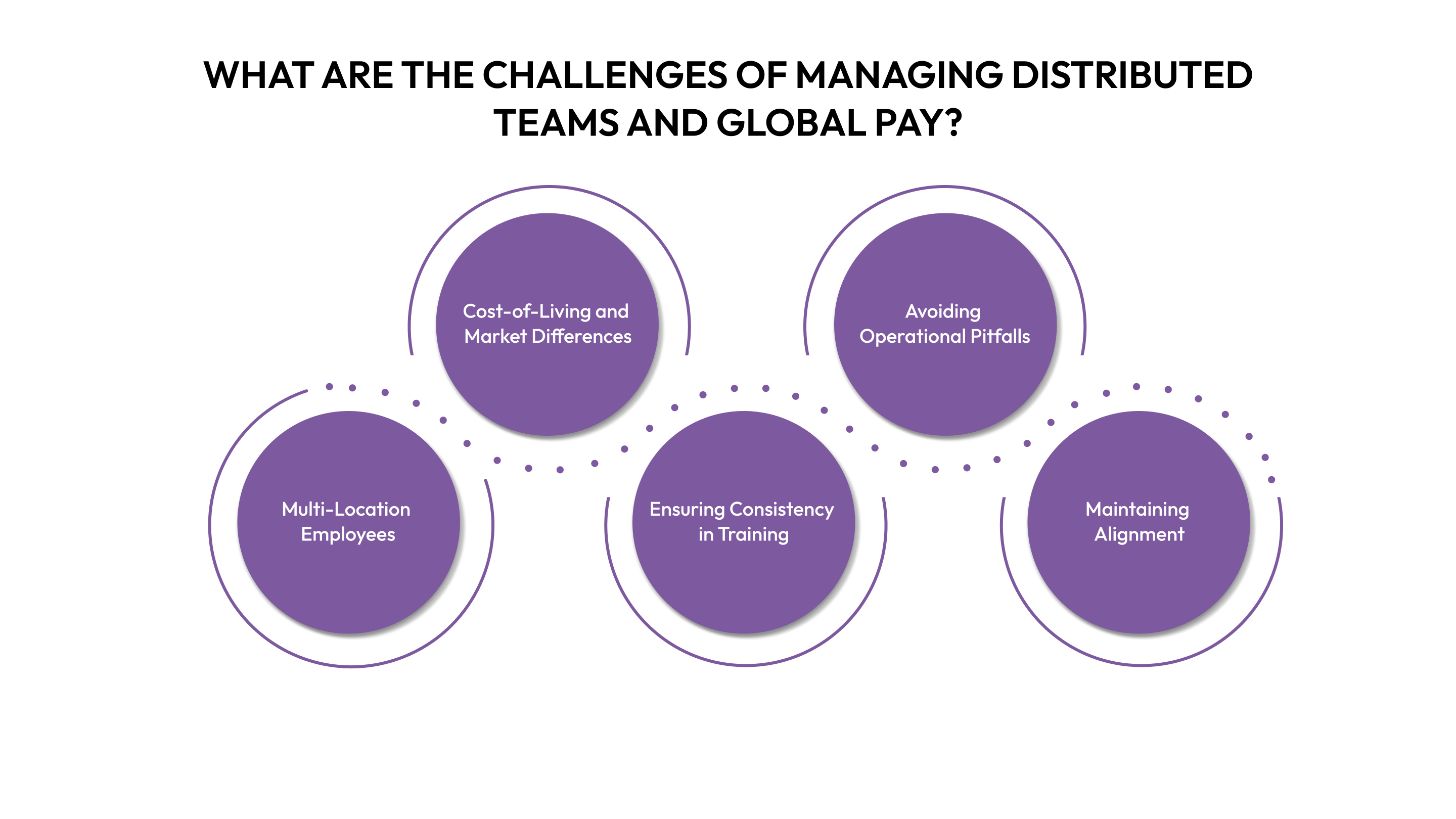
Key challenges include:
- Managing remote or multi-location employees: Differences in labor laws, tax rules, and benefits requirements make workforce planning complex. HR and Finance must ensure compliance while providing competitive and equitable compensation.
- Geo-adjusting pay for cost-of-living and market differences: Regional benchmarks and local economic conditions directly affect salaries. Without a structured approach, organizations risk overpaying in some regions and underpaying in others, impacting retention and morale.
- Ensuring consistency in training, promotions, and pay equity: Distributed teams may experience unequal access to career growth if skill development and performance evaluation processes are inconsistent. Standardized frameworks help maintain fairness and transparency across locations.
- Avoiding operational pitfalls: Relying on spreadsheets or disconnected tools can create miscommunication, errors in payroll or headcount planning, and uneven policy application. Ignoring local nuances, unclear pay structures, or unaddressed skill gaps can reduce employee motivation and increase turnover.
- Maintaining alignment with budgets and strategy: Distributed operations make it harder to track headcount, salary costs, and training investments. Without integrated tools and processes, companies risk overspending or failing to allocate resources efficiently.
Addressing the complexities of global pay and distributed teams naturally leads to exploring practical approaches for integrating strategy, training, job analysis, and compensation.
Best Practices and Examples of Linking Strategy, Training, Job Analysis, and Pay
Integrating company strategy, training, job analysis, and compensation ensures workforce decisions drive both employee growth and business objectives. Companies that align these elements create consistency, fairness, and clarity across distributed teams while maintaining budget control.
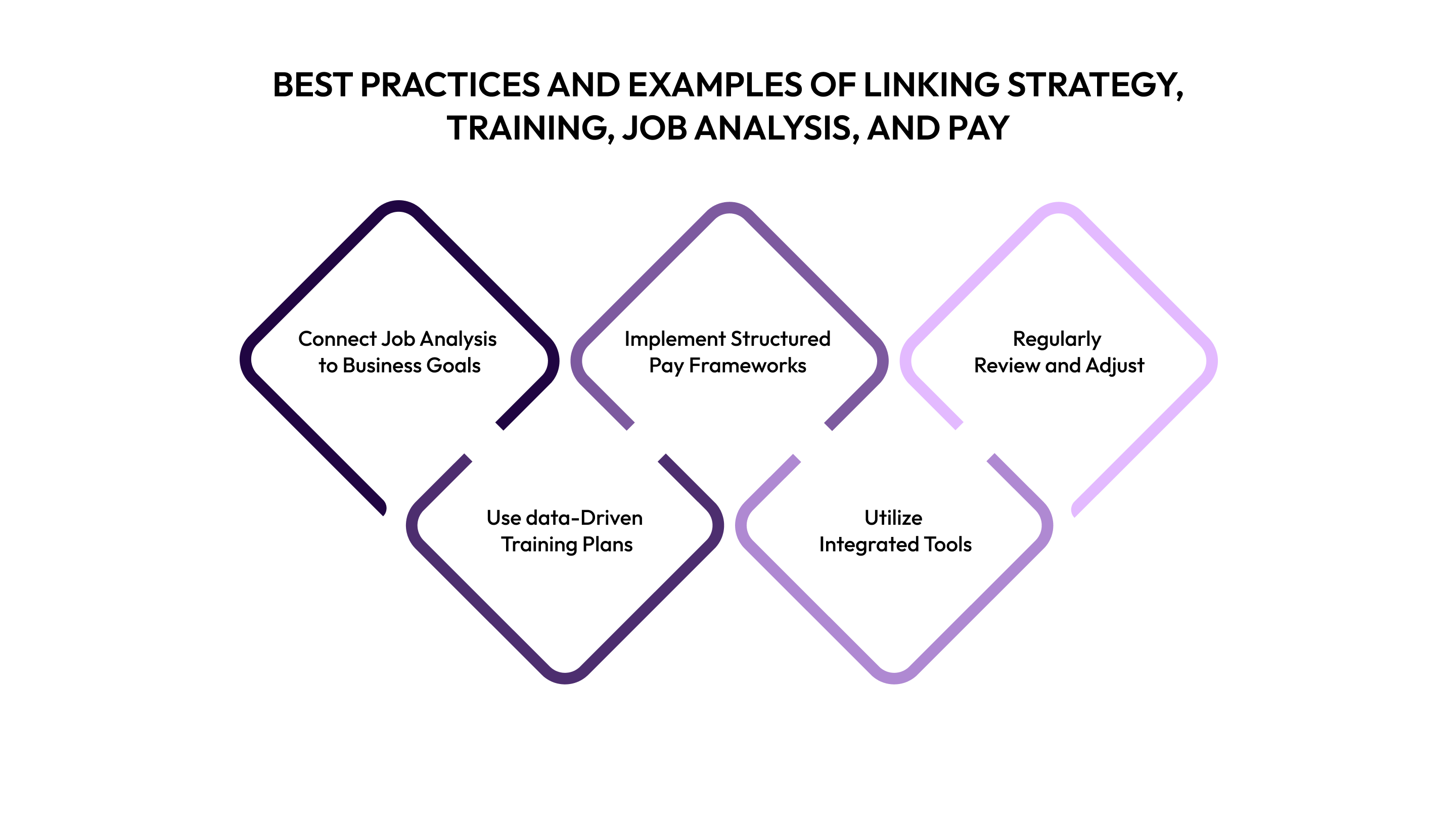
Best Practices:
1. Connect job analysis to business goals
Define each role’s responsibilities, competencies, and performance expectations in the context of organizational strategy. This ensures pay and training decisions directly support the company’s objectives.
2. Use data-driven training plans
Identify skill gaps through job analysis and performance reviews. Design training programs that prepare employees for current roles and future growth, linking outcomes to promotions and salary adjustments.
3. Implement structured pay frameworks
Align compensation with internal role value, market benchmarks, and training outcomes. Clearly defined pay bands and bonus policies reduce pay inequities and promote transparency.
4. Utilize integrated tools
Use platforms that unify HR, Finance, and leadership workflows for job analysis, compensation planning, and training tracking. This provides real-time visibility into budgets, approvals, and employee development.
5. Regularly review and adjust
Conduct periodic audits of job roles, pay structures, and training effectiveness. Adjust frameworks to address market changes, evolving skill needs, and budget considerations.

Examples in Practice:
- Tech companies with distributed teams often create role scorecards linking responsibilities, required skills, and market pay data. Training investments target areas with skill gaps, and pay adjustments are made when employees demonstrate competency growth.
- Fast-growing startups use unified compensation platforms to plan headcount 2–3x per year. Job analysis informs hiring and pay, while training programs are tied to promotion readiness, ensuring fairness and retaining top talent.
- Professional services firms regularly benchmark roles against industry standards. Employees participate in targeted training programs, and transparent pay bands are communicated across regions, promoting equity and engagement.
By following these best practices and examples, HR and Finance leaders can ensure workforce decisions are strategic, equitable, and scalable. Linking job analysis, training, and pay to company strategy minimizes inconsistencies, strengthens retention, and keeps budgets aligned with organizational goals.
Conclusion
Effective workforce management goes beyond simply setting salaries or offering training programs. Companies that link strategy, job analysis, training, and compensation build a stronger system. This helps every decision support business goals and employee growth.
For HR and Finance teams, this approach ensures distributed teams receive fair pay, access to consistent training, and clarity on career progression. It also provides leadership with real-time insights into budgets, headcount, and workforce alignment, reducing the risk of overspending or miscommunication.
By using structured job analysis, data-driven training, and clear compensation frameworks, companies can maintain fairness and keep top talent. These practices also help them scale smoothly, even in fast-growing or global teams.
To simplify this process and empower your HR and Finance teams, CandorIQ provides a unified platform for compensation planning, job analysis, and headcount forecasting.
Book a Demo today to see how CandorIQ helps you plan faster, control budgets better, and keep distributed teams aligned.
FAQs
1. How can companies measure the impact of compensation and training alignment on employee retention?
Organizations can track retention rates before and after implementing structured pay and training programs, analyze promotion timelines, and assess employee engagement surveys to see improvements.
2. What common mistakes do companies make when integrating job analysis with compensation?
Mistakes include relying solely on market benchmarks without considering role complexity, inconsistent documentation across teams, and ignoring training outcomes when setting pay.
3. How often should compensation frameworks be reviewed?
Compensation frameworks should be reviewed at least annually, or more frequently in fast-growing companies, to account for market changes, role evolution, and workforce scaling.
4. How can small HR teams manage compensation for a rapidly scaling workforce?
By using unified platforms that automate workflows, approvals, and pay calculations, small HR teams can efficiently manage pay, training, and headcount across multiple locations.
5. Can performance data be linked directly to pay adjustments and promotions?
Yes, combining job analysis, performance metrics, and training outcomes allows HR to make data-driven decisions for promotions, merit increases, and incentive programs.
Ready to modernize your workforce and compensation strategy?
See how CandorIQ brings workforce planning and compensation together with AI.